

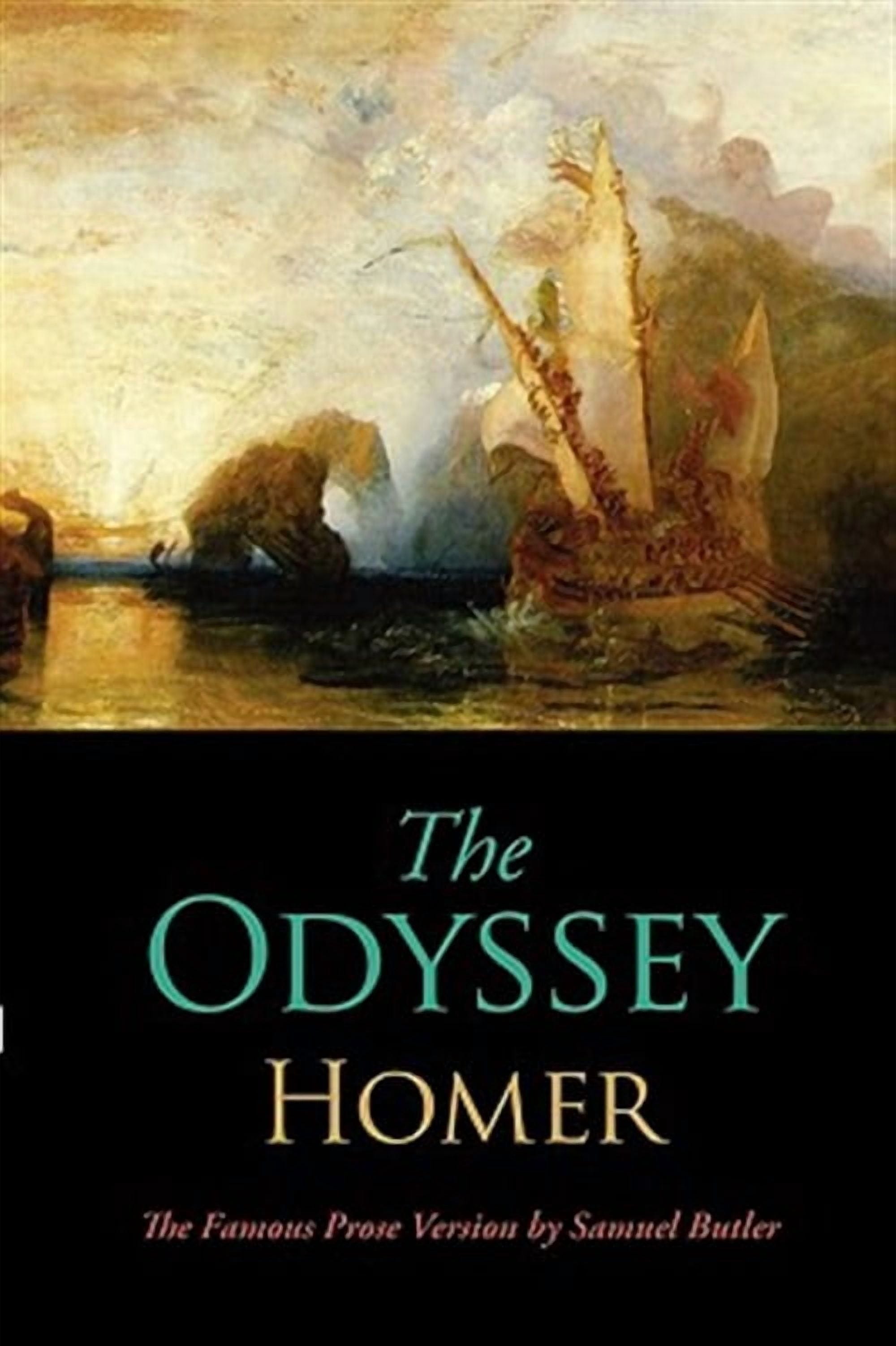
Like the Five-Minute Iliad, this series will cover Homer’s other famous poem, but in fewer installments. Part 1 | 2 | 3 | 4 | 5 |
I am using the Butler translation. Subscribe to follow along. For another excellent story about a man trying to get home to his wife amidst a divine conflict, read HEARTLANDERS.
And finally, here we are. Odysseus returns home, kills a lot of dudes, and ends his absence. Whoops. Spoilers. Sorry Homer.
Book 21
Penelope gets it in her head (with help from Athena) to put the suitors to a test: whoever can string Odysseus’ legendary bow (this thing is epic and there’s a long story behind it) and fire an arrow through the holes of twelve aligned axes will be king of Ithaca. Just one catch: the bow is insanely hard to string and even harder to fire. Telemachus takes a crack at it (he’s not trying to Oedipus his mom, he’s just taking a run at the throne) but Odysseus gives him the subtle shake of the head and he withdraws from contention. After a few bum suitors try and fail to even string the thing, they decide to boil it in oil to soften it up, effectively cheating at the contest.
Odysseus steps in and takes his shot, enduring much ridicule from the suitors, including Antinous who threatens to kill him if he makes it. Unfortunately for him, Odysseus strings the bow with ease and plucks it dry, eliciting a loud thrum that coincides with a thunderclap from Zeus. Ominous sign? Boy, the suitors sure think so.
He nocks an arrow, aims, fires, and threads that needle like [uncomfortable and unchaste simile.]
Book 22
Instantaneous terror grips the suitors as Odysseus whips off his hood, reveals who he is, and for good measure, puts an arrow through Antinous’ throat as the dude is drinking Odysseus’ wine. Just bam, period at end of sentence.
What comes next is a bloodbath, with Odysseus, Telemachus, and Eumaeus stacking bodies. Melanthius, a livestock herder who has been a jerk to Odysseus, takes sides with the suitors and shuttles weapons/armor to them. They outnumber Odysseus and his fellows, but he has Athena in his corner and she’s not new to this at all. Before long he has the suitors vanquished, and then he sets in on the unfaithful maids for their thot behavior. Hilariously he makes them clean the mess in the hall before killing them.
Cherry on top, he and the boys mutilate Melanthius before executing him. Don’t be a tool, fool.
Book 23
With all that out of the way, Odysseus finally sits down with Penelope and tells her who she is. Naturally she doesn’t believe him, even though he’s showered, tanned, rested, and ready, with a little extra oomph courtesy of Athena working her magic. As high-maintenance women are wont to do, she decides to test him, playing mind games and such, while he’s being blunt and direct, saying things like “I am Odysseus,” etc.
She says they have to move her bed out of her bedchamber, which Odysseus scoffs at because it’s not physically possible. The bed is built out of a living olive tree, he knows because he made it himself all those years ago, you cannot move it anywhere. Surprise, he passed the test, and the married couple have themselves an emotional and teary reunion. Then they run upstairs to the aforementioned bed where very marital things (presumably) take place.
Athena continues her favoritism toward Big O by preventing the sun from rising so he can get a really long night in with the missus. When the sun finally comes up, Odysseus heads inland to find his father Laertes.
Book 24
Meanwhile, down in Hell (because it’s that kind of story), Hermes leads the suitors to Achilles and Agamemnon, and we’re treated to some long speeches about shameful deaths. When Agamemnon learns how the suitors died, he offers up blessings to Odysseus and Penelope.
Up top, Odysseus finds Laertes in a vineyard and proves it’s him by showing that gnarly scar on his leg. They also have an emotionally loaded reunion but they don’t consummate it the same way as O did with Penelope (I have to specify that because this is a Greek tale).
Back in town, the families of the suitors roll up for a revenge bender, even though their kin were all in the wrong (and for a very long time), but Zeus settles it all by restoring Odysseus to his kingship and wiping the families’ memories of the bloodshed. The feud ends with Laertes killing Eupeithes (the father of Antinous). Athena imposes peace, and at long last, the conflict is truly over.
Conclusion
What can I possibly say in summary of a work like this? I’ve generally avoided doing “reviews” or videos of epic classics on this scale because they’re so huge and so essential to the larger web of Western canon that my individual opinion of them is somewhat irrelevant.
But since that’s the case, the more meaningful metric of assessment is what I learned or gained from this reading of the text. What did I learn from The Odyssey that I didn’t know before? How did it change me? If it’s that important, what did it do to me that it’s done to other readers for the past 2700 years?
I think one key to understanding it is actually the span of time itself. Mankind doesn’t really change. We’re more than flesh and blood and bone, more than the time and place we come from. We’re made of the same spirit going back to the beginning, and Homer grabbed spiritual truths out of the ether when he penned these poems (Odyssey and Iliad.) He wrapped those truths in words and put them down in a way that future generations could pick them up and recognize them—even keep them going.
Odysseus was a great man, the text tells us this in plain terms; then it shows us why. He was courageous, determined, inventive, loyal (except in the cases of being totally obligated against his will, wink wink, to have sex with nymphs and such), and benevolent. Most gods were in his corner, some were opposed to him, and his actions—mostly righteous, occasionally not—were clearly tied to the moods of those gods. Zeus and Athena helped him on his way, but he had to answer to Poseidon for blinding his son.
Despite the centuries that separate me from this author and the culture he was part of, there’s a timeless truth about divine justice in this story. In our infinite Space Age wisdom, out “Greatest Thinkers” try to debunk the existence of divine forces that they can’t see or measure in a lab, but it continues to be the experience of billions of souls that those forces are in play, and it’s up to us to act on the wills of the righteous ones. This is at the core of the humanities as a discipline: yes, we study language and the arts and history, but what is it that truly motivates people? They answer to their highest values. They answer to their gods, whether they have names and faces or not.
Ultimately it’s a story of the bill coming due. Poseidon and Calypso were Odysseus’ punishment for a few bad decisions on the way home from Troy, just as Odysseus was the punishment for Antinous and the other suitors while he was gone. Just as Odysseus couldn’t be kept from home—not even by the gods—no mortal man can outrun justice for his actions, in this life or the next.
The final point I want to make is about Achilles, who garnered the most “screen time” in The Iliad and grappled with his legacy in the middle of a war. The takeaway from that story was, among other things, what must a man do to live forever? Achilles had a clear choice between irrelevance at home, with a large family, great wealth, and much prosperity; or immortality in legend by dying at Troy. It’s easy to pump your fist for the immortality of legend when someone else claims that prize, but when Odysseus meets Achilles in the underworld, he learns that bitter truth: being nobody while being alive is better than ruling in Hell.
So, as a roundabout way of saying it: The Odyssey is a story about what matters the most in life. Being the best warrior? Being the richest man? Sure. Those things are nice and cool and such. But even better than those qualities was the title of husband and father, and a king loved by those under his stewardship. A man who pursues those things will have the gods behind him.
Maybe it’s just something that I already wanted to be true. I hope I’m living that way, because I think it is. And I recognized it in Homer’s works this year.
Thanks for reading, guys.

Visit Nauvoo Supply to order HEARTLANDERS, the most American novel I’ve ever written. It’s like if National Treasure happened during Fallout with G.I. Joes.

My Amazon page has my other books, including FOSSIL FORCE for young boys.
Find my video reviews on YouTube.
I finish around a hundred books a year, most of which are audio because of my job.
Subscribe for more reviews and articles on what I’m reading.