

“This Week in 1776” is an ongoing almanac of events from that year in the American Revolution. Be sure to check out my novel HEARTLANDERS.
This one’s for Thomas Tiernan who, way back in February, asked if I was going to cover this battle. That was only week 9 of this project! (I’ve since changed the numbering mechanism because it won’t come out to 52 clean weeks in the end.) Here it is, Thomas!
Side note, when I read Fossil Force to my kids last year, I knew they were gonna perk up at the title for chapter 11, “The Battle of Profunda Wash.” There’s now a chapter in book 2 called “The Battle of Zar’Tak Colmar.” (Oh yeah, baby—we’re going into the deep earth.) If you ever want to get someone’s attention, “The Battle of…” is easy bait. Thus, here we are.
New York
The Howe Brothers (one on land, one at sea) are maneuvering to surround Manhattan on all sides and take the Patriot army, putting an end to the war. Washington has to deal with desertion, as always, but so do the Brits. Turns out a lot of guys aren’t interested in starving in the cold without knowing the end date of all this, in the face of likely death. Washington also faces resistance from the locals when he tries to press their horses and wagons into his army, a problem that would dog him throughout the war. He sends correspondence to Hancock about the army’s material needs.
At the end of the week, Washington convenes a council of war with a pretty impressive brain trust: surnames present include Lee, Putnam, Heath, Spencer, Sullivan, Stirling, Mifflin, McDougall, Parsons, Nixon, Wadsworth, Scott, Fellows, Clinton, Lincoln, and Knox. They took a look at the logistics of their condition and all agreed (with the exception of one) that they couldn’t hold Manhattan and needed to get the army out while they still had communications. Destination: White Plains.
There was some brief action on Staten Island, courtesy of Brigadier General Hugh Mercer (his G.I. Joe name would be “Huge Merc”). Mercer sprung an attack on a party of Brits/Hessians/Loyalists, killing two and taking at least seventeen prisoner. They scored some good rifles, bayonets, and horses. The prisoners were yeeted off to Philadelphia for Congress to handle.
Now for the main course:
Lake Champlain
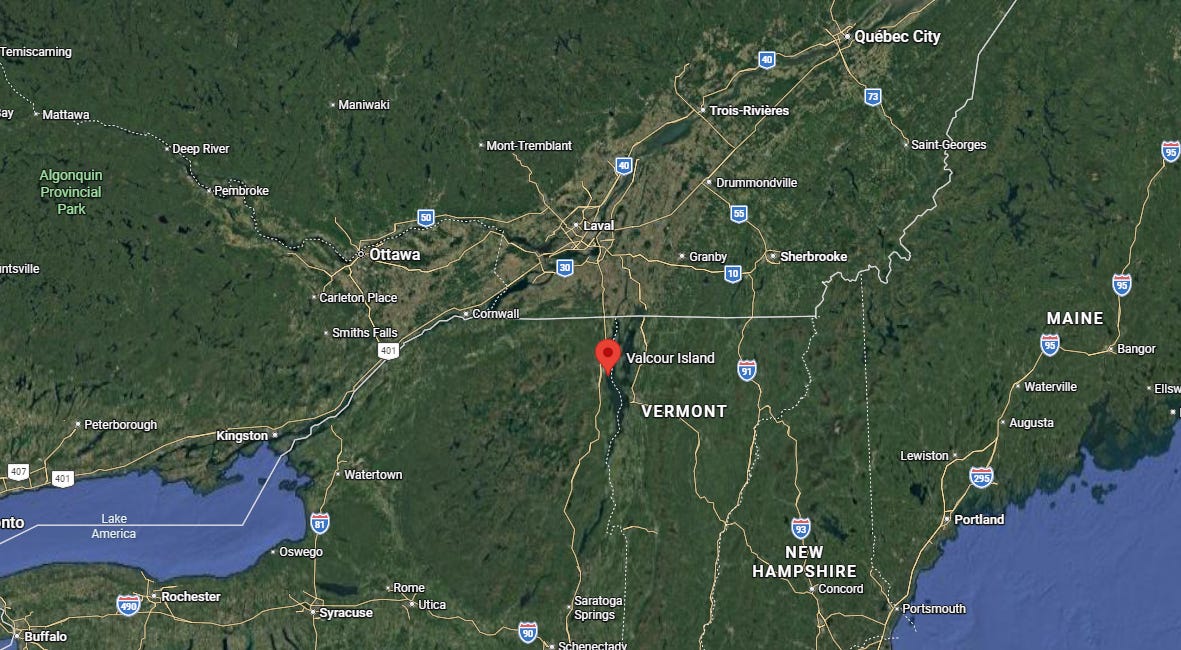
Way up north, Benedict Arnold is trying to make do with his slapdash patchwork Navy, comprised mostly of men who learned how to sail and drill in the last 3-4 weeks. Arnold had retreated to Ticonderoga earlier in the summer from Quebec, setting up on the New York side of Valcour Bay where the Americans had a small fleet of ships. He spent the rest of that summer building up the forts and overseeing the addition of ships, and the organization of America’s first navy—or the first that would see battle.
I didn’t want to just copy-and-paste my source for this but the account was so well-written that I want to steer you to it anyway. The battle began in earnest on October 11 and officially lasted until the 13th, with much of that being a fleeing action by Arnold, since his ships were outgunned and outmatched by the Brits. Most of the Americans’ vessels were damaged or destroyed.
Arnold’s main triumph was sneaking a beaten fleet past the Brits under cover of darkness, living to fight another day. He ordered his smaller vessel into the shallows of Schuyler Bay, where the heavier British ships couldn’t follow. He stripped his vessels of their valuable stock (guns, powder, whatever) and escaped to Ticonderoga with what was left. While the shootout on October 11th didn’t provide anything close to an American victory, the net benefit of this battle—other than giving the sailors experience—was to deprive the British of several strategic advantages, including the ability to move their huge army down into the Hudson Valley. Arnold stole or destroyed as much as he could, forcing the Brits to stop for the winter; they couldn’t build ships in the snow, they had to hunker down until it warmed up outside.
The British commander, Carleton, at least seemed a gentleman, which mattered in this era. He’d taken several American prisoners and rather than deal with the logistics of transporting them to Quebec, he returned them to the American army, where they talked about how cool and good the Brits were, and had neat stuff like food and clothing in their camp. Arnold was worried that their talk would embolden the cold, hungry men under his command to desert him, so he had the prisoners dismissed and focused on settling in for a Ticonderoga winter.
Because of Arnold’s actions at Valcour Island and beyond, the British weren’t able to sail a considerable force down to the Hudson Bay that winter, which would have doomed Washington and the army there. Arnold would absolutely go on to be a traitor and was, unquestionably, a scoundrel, but that doesn’t negate his contribution to the overall war effort, and how critical his performance was in this episode.
Visit Nauvoo Supply to order HEARTLANDERS, the most American novel I’ve ever written. It’s like if National Treasure happened during Fallout with G.I. Joes.
My Amazon page has my other books, including FOSSIL FORCE for young boys and Engines of Liberty for all ages.
I post several times per week on YouTube.
Subscribe here for more book reviews and for articles on what I continue to learn as I read.