

2026 is America’s 250th birthyear. To celebrate, I’m highlighting 50+ significant American documents from our history. So far I have covered The Mayflower Compact, Patrick Henry’s Speech, The Lee Resolution, The Declaration of Independence, the Articles of Confederation, the Treaty of Paris, the Virginia Plan, The Northwest Ordinance, The Constitution, the Bill of Rights, the Louisiana Purchase, the Star-Spangled Banner, the Monroe Doctrine, the Indian Removal Act, the Knickerbocker Baseball Club rules, Lincoln’s ‘House Divided’ Speech, the Emancipation Proclamation, Jefferson Davis’ inaugural address, the Appomattox Surrender Letters, the Homestead Act, the Gettysburg Address, and the Alaska Purchase.
Subscribe to get these articles in your inbox, along with my regular book/comic/movie reviews. I also like money, and if you like me having money, become a paid subscriber. There’ll be special content for you, including original fiction, and early access to posts.
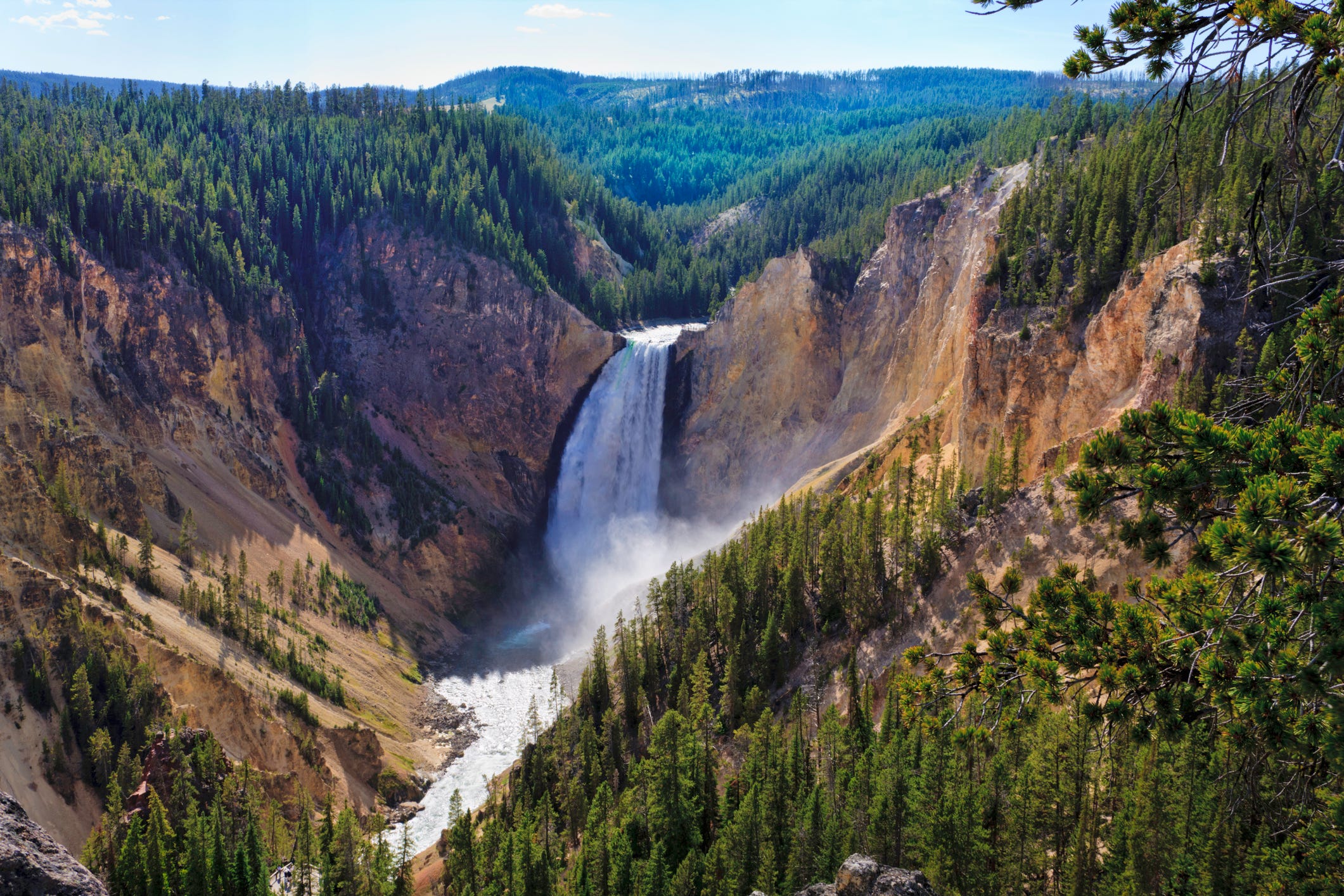
Typically we associate Teddy Roosevelt with the National Parks, but the world’s first one was established by Congress long before his presidency, and signed into law by Ulysses S. Grant in 1872. Yellowstone National Park exists primarily in the state of Wyoming, with a little overlap into Montana and Idaho. While other laws regarding land usage usually focused on settlement, development, or resource extraction, Yellowstone—and subsequent National Parks—was explicitly not to be used for these things, but rather to be maintained for its natural beauty and enjoyment. No mining, no logging, not even that much building.
(Although the U.S. Forest Service these days is primarily concerned with the building and maintaining of roads.)
Check out this short audiobook about Yellowstone by Michael Finney.
While Yellowstone was “under the exclusive control of the Secretary of the Interior,” this was still a novel practice and the government had to figure out how to manage two million acres of land as they went. The Interior secretaries often had limited funding or authority beyond what was on paper, so people could still trespass into the park and poach bison or other animals, which was a growing problem.
Side note: watch my video on LAST STAND, which covers the effort to save American bison from extinction, and how it relates to Yellowstone Park in this time period.
After 14 years of inefficacy under the Department of the Interior, the U.S. Army got involved and built a fort on site to help with management. This lasted from 1886 to 1916, which President Woodrow Wilson (that bastard) signed the National Park Service Organic Act into law—so far this is the only thing he did that I’ve ever approved of, and if you don’t hate Woodrow Wilson, you don’t know ball.
There was a two-year transition period, at which point (1918) the Park entered the full control of the NPS, and it’s been there ever since. I took a trip to Yellowstone in the summer of 2018 with my family and it kills me that I can’t find my pictures. I’m sure they’re on a hard drive around here somewhere. I didn’t know it was the centennial of the NPS’ involvement that year. In 2022, Yellowstone celebrated 150 years as America’s first National Park, and many more have been created in that time.
As is often the case, these legal documents are rather dry and brief. In fact, despite linking to it above, I’ll copy and paste the entire text of it below. More important than the verbiage of the document (which is not as poetic or beautiful as, say, the Declaration of Independence) is its impact, and its shift in priority in the middle of 19th-century expansion.
We cut down forests, built homesteads, fought Indians off the Plains, dug mines, diverted rivers, and put down the stakes that would mark the foundations of the modern U.S. as we know it—and in the thick of all that, we saw one beautiful parcel of land, and someone said “You know what…no. Not this.”
Other side note: Mannheim Steamroller has a whole album of music called “Yellowstone” and this track always punches me right in the soul.
Anyway, I’ve talked a lot about the preservation of heritage in terms of our great writings, but this act preserved the natural beauty of the Mountain West in one of the most geologically and topographically unique areas of the world. That took restraint, discipline, and will, especially in an age of land hunger and resource abundance. There’s a moral lesson in that.
Transcript of the Act
Forty-Second Congress of the United States of America;
At the Second Session, Begun and held at the City of Washington, on Monday, the Fourth day of December, one thousand eight hundred and seventy-one.
AN ACT to set apart a certain tract of land lying near the headwaters of the Yellowstone River as a public park.
Be it enacted by the Senate and House of Representatives of the United States of America in Congress assembled, That the tract of land in the Territories of Montana and Wyoming, lying near the headwaters of the Yellowstone River, and described as follows, to wit, commencing at the junction of Gardiner’s river with the Yellowstone river, and running east to the meridian passing ten miles to the eastward of the most eastern point of Yellowstone lake; thence south along said meridian to the parallel of latitude passing ten miles south of the most southern point of Yellowstone lake; thence west along said parallel to the meridian passing fifteen miles west of the most western point of Madison lake; thence north along said meridian to the latitude of the junction of Yellowstone and Gardiner’s rivers; thence east to the place of beginning, is hereby reserved and withdrawn from settlement, occupancy, or sale under the laws of the United States, and dedicated and set apart as a public park or pleasuring-ground for the benefit and enjoyment of the people; and all persons who shall locate or settle upon or occupy the same, or any part thereof, except as hereinafter provided, shall be considered trespassers and removed therefrom.
SEC 2. That said public park shall be under the exclusive control of the Secretary of the Interior, whose duty it shall be, as soon as practicable, to make and publish such rules and regulations as he may deem necessary or proper for the care and management of the same. Such regulations shall provide for the preservation, from injury or spoliation, of all timber, mineral deposits, natural curiosities, or wonders within said park, and their retention in their natural condition. The Secretary may in his discretion, grant leases for building purposes for terms not exceeding ten years, of small parcels of ground, at such places in said park as shall require the erection of buildings for the accommodation of visitors; all of the proceeds of said leases, and all other revenues that may be derived from any source connected with said park, to be expended under his direction in the management of the same, and the construction of roads and bridle-paths therein. He shall provide against the wanton destruction of the fish and game found within said park, and against their capture or destruction for the purposes of merchandise or profit. He shall also cause all persons trespassing upon the same after the passage of this act to be removed therefrom, and generally shall be authorized to take all such measures as shall be necessary or proper to fully carry out the objects and purposes of this act.
My Amazon page has all my novels, including the critically-acclaimed FOSSIL FORCE for young boys, and the Engines of Liberty series for all ages.
I post several times per week on YouTube.
Subscribe here for more book reviews and for articles on what I continue to learn as I read.