

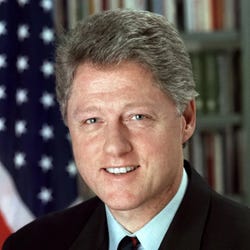
“Electoral Brawlage” examines the first election and inaugural address of each U.S. president from Washington to Trump. This project will conclude in December 2026.
If you like shootouts, car chases, dogfights, and American history, read Heartlanders!
Subscribe to get these articles via email. Become a paid subscriber to help me buy more books.
From 1861 to 1886 (six elections), the Republicans held the White House (although that last term with Hayes was won by a frog hair). Then from 1933 to 1953, the Democrats held it, and four of those five elections were won by FDR. Reagan took office in 1981 and enjoyed national popularity at a higher level—and with a larger electorate—than any Republican or Democrat in those multi-decade stretches of time. Even so, the Reagan GOP only managed to hold the Executive Branch for three terms/twelve years. Why?
There are multiple factors that came into play: first the economy. In fact this was probably the largest one. Second was demographics, and third (appropriately) was a third-party candidate.
The Primary
On the GOP side, it was a given that Bush would stand for a second term, but he faced opposition within his own party, including from Nixon ally Pat Buchanan—who was one of the earliest voices to sound the alarm on cultural changes in the country that would harm us over time. Conservatives liked a lot that Bush was doing but they had plenty to worry over too.
The Democrat primary was an open battle, and funnily enough the winner didn’t take Iowa OR New Hampshire. The major candidates included Senator Tom Harking (Iowa), Senator Paul Tsongas (Massachusetts), Governor Jerry Brown (California), Governor Bob Kerrey (Nebraska), and Governor Bill Clinton (Arkansas). North, deep south, east coast, west coast, midwest, you’ve got it all.
Harkin won his home state of Iowa but that was basically it and he was out by March. Tsongas went on to win New Hampshire since it was next door. Then Super Tuesday came along, and Clinton had a Southern strategy that catapulted him to the lead. The rest lingered and dropped out, and Clinton clinched the nomination.
The General
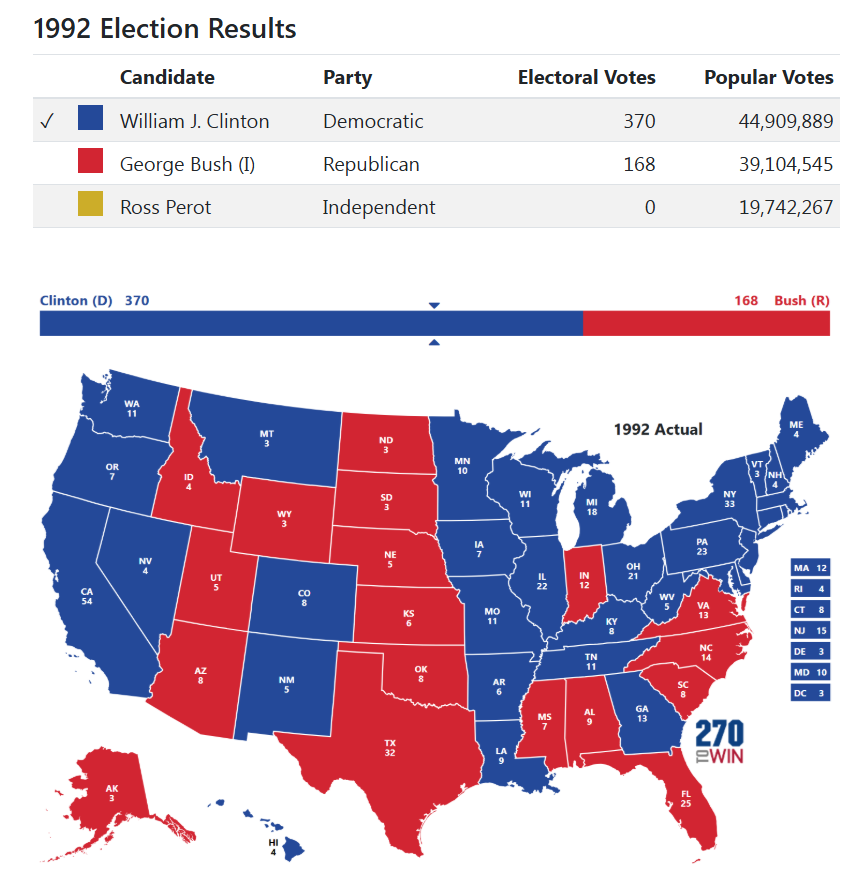
Overall, Bush was still popular, so whoever won the Democrat contest had an uphill battle, and there were sections of the Democrat voter base that expected Clinton to be a sacrificial lamb a la Mondale or Dukakis; he wasn’t well-known nationally, the South was its own animal, and there were rumors/reports of his rampant marital infidelity even before the more infamous affairs and even assault accusations came into play. That didn’t sit well with what was still a somewhat culturally conservative country.
Yet America plays the sportsball game with their political teams, and we’re good at ignoring things we don’t like about candidates we prefer. The same Democrat party that denied any of Clinton’s promiscuity would go on to accuse Donald Trump of outright rape twenty-five years later. One side gets into office and starts a war, and the other side makes all kinds of noise about it until they’re back in power, and then they forget their hang-ups when they start a war. That’s a generalization lacking context and nuance, but hey, so do a lot of voters.
The point is we like our teams…until they disappoint us.
Despite Bush’s success with foreign policy after Operation Desert Storm, his domestic policies had upset large swaths of the electorate. The country was in a recession and taxes had gone up, contrary to his campaign promise in 1988. (This was partly because of fiscal responsibility from the Democrat Congress and partly because of cunning political maneuvering, forcing Bush to sign a tax hike in order to achieve other concessions.)
Betraying the “read my lips” pledge did hurt him with voters. Iraq got curb-stomped in Kuwait, the Soviet Union had dissolved, the Cold War was over, and foreign concerns were far from our radar. Things weren’t going great at home so voters were open to a party they hadn’t relied on in a while. Clinton said it best during the campaign, with a chuckle and a smile: “It’s the economy, stupid.”
A key thing to remember is that the gap between the parties wasn’t as wide in the 90s as it is now. 90s Democrats could still be patriotic and fiscally sensible. Hell, you could even fly the Rebel flag as part of your campaign merch.
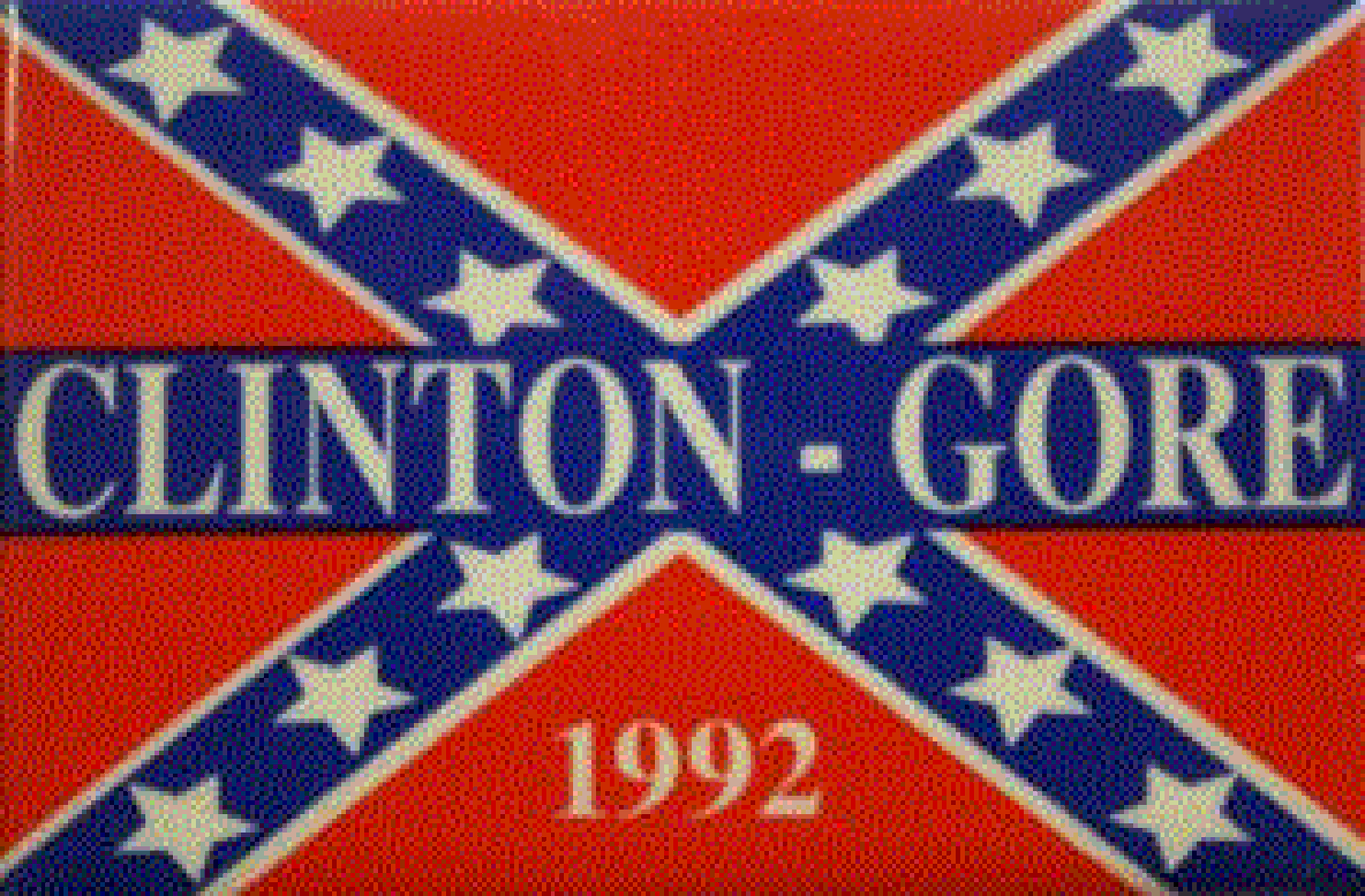
(Note: there is some dispute as to the authenticity and reach of this image.) The point is a 2020s Republican had a lot more to agree on with a 1990s Democrat than he does a 2020s one. Just take a look at the contents of…
The Speech
There was a bit of poetry and flowery speech in his opening, as these things tend to go, and Clinton talked optimistically about America’s future. He was cordial to Bush, who had spent fifty some-odd years in public service between his time in the Navy, the CIA, and the White House.
He acknowledged social unrest and economic hardship across the country; access to health care was difficult, and people forget how big a problem crime was (because it is common now). He did drop a banger that I like, “There is nothing wrong with America that cannot be cured by what is right with America.” Like all things, what is “right” will come down to what your values are, and we’re always arguing about that.
He mentioned other things that had become boilerplate topics for inaugural speeches—return the power to the people, end deadlock in Washington, make the government work, etc. During his time in office (and with the compulsion of a Republican Congress after 1994) the government actually did a lot of this, and even paid down a good chunk of the national debt, posting a budget surplus for four years. That didn’t last long (thanks, 9/11) but it was pretty cool for a minute there.
The Era
The 90s were, by and large, a time of peace and financial boom in the United States, thanks to the end of the aforementioned Cold War and the advent of home Internet, to name just a few things. The end of the century and the start of a new millennium were right around the corner and people were optimistic for what was to come.
As I’ve said, the 1992 election was the first one that I remember. I wasn’t old enough to understand the significance of one guy winning over the other, beyond the fact that my parents (and especially my mother) were upset that Clinton won, and they blamed Ross Perot for siphoning votes away from the GOP. Rush Limbaugh became a daily experience in our house, as he provided a sort of soft therapy for right-wingers who found themselves outside the circle of executive power for the first time in over a decade. (My parents were 21 when Reagan took office. They had four kids by the time Clinton took over in their mid-30s.)
I was 12 when Clinton was up for re-election and that was still too young for me to properly understand why someone would or wouldn’t want him in office. I just didn’t care beyond the fact that my parents didn’t like him. I knew they were voting for Bob Dole in 1996, but after reading up on several dozens of these elections, it’s easy to see why he didn’t really have a prayer of winning.
For one, he was a stale candidate, having thrown his hat into the ring multiple times in the preceding twenty years. He was also a bit of a dinosaur, being a WW2 veteran against Clinton’s younger, more cheerful Southern vibe. (It didn’t hurt that the media spent years doing to Clinton what Monica Lewinsky would get in trouble for, don’t discount that.) But we weren’t at war, the economy was doing well, and even though Republicans had taken back Congress for the first time in decades, that popularity varied from region to region and didn’t translate to a national consensus.
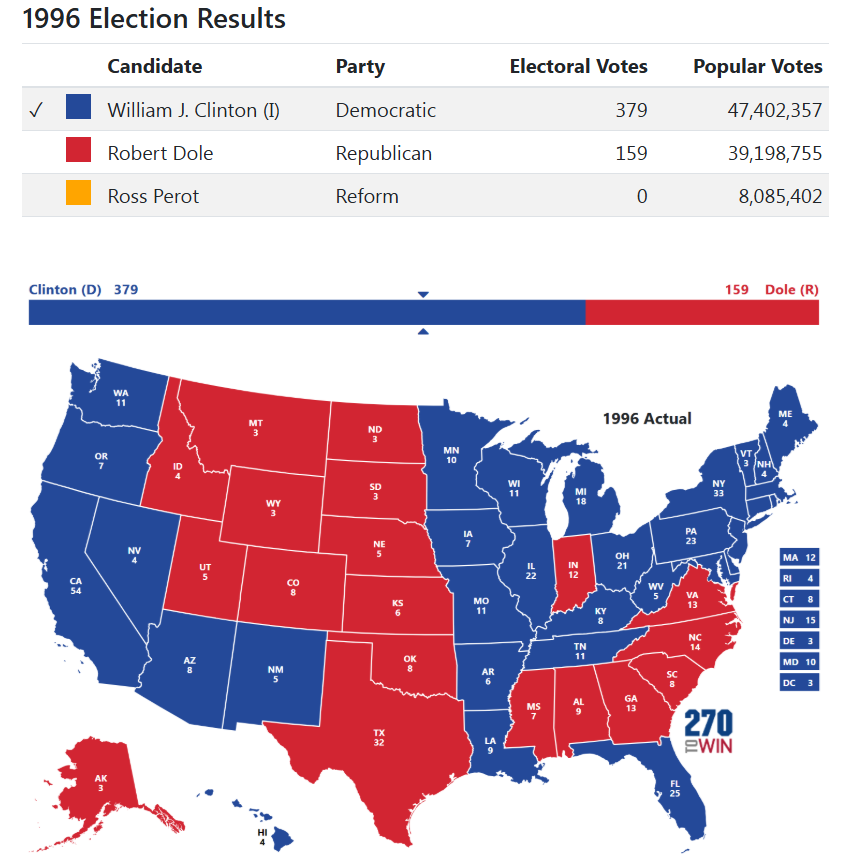
I reckon Dole knew this. The Republicans were going to lose and he wanted his turn on the ticket. He got it, and fared about as well as Bush did in ‘92. Clinton expanded his EV count by nine votes, losing some states he won before, and vice versa. Ross Perot ran again that year and took about half the popular votes he had on his first go-round, and after that he stopped running.
Maybe I have a personal bias because I have memories of these elections, but I think the events around them are more interesting than the substance of Clinton’s inaugural speech. He still enjoys broad popularity and he was an asset to Hillary when she ran, although he’s a more polarizing figure now than he was in the 90s, as these things tend to go.
Come back next week to see the end of his tenure in office, passing the torch to Gore…and the outright insanity of the 2000 election.
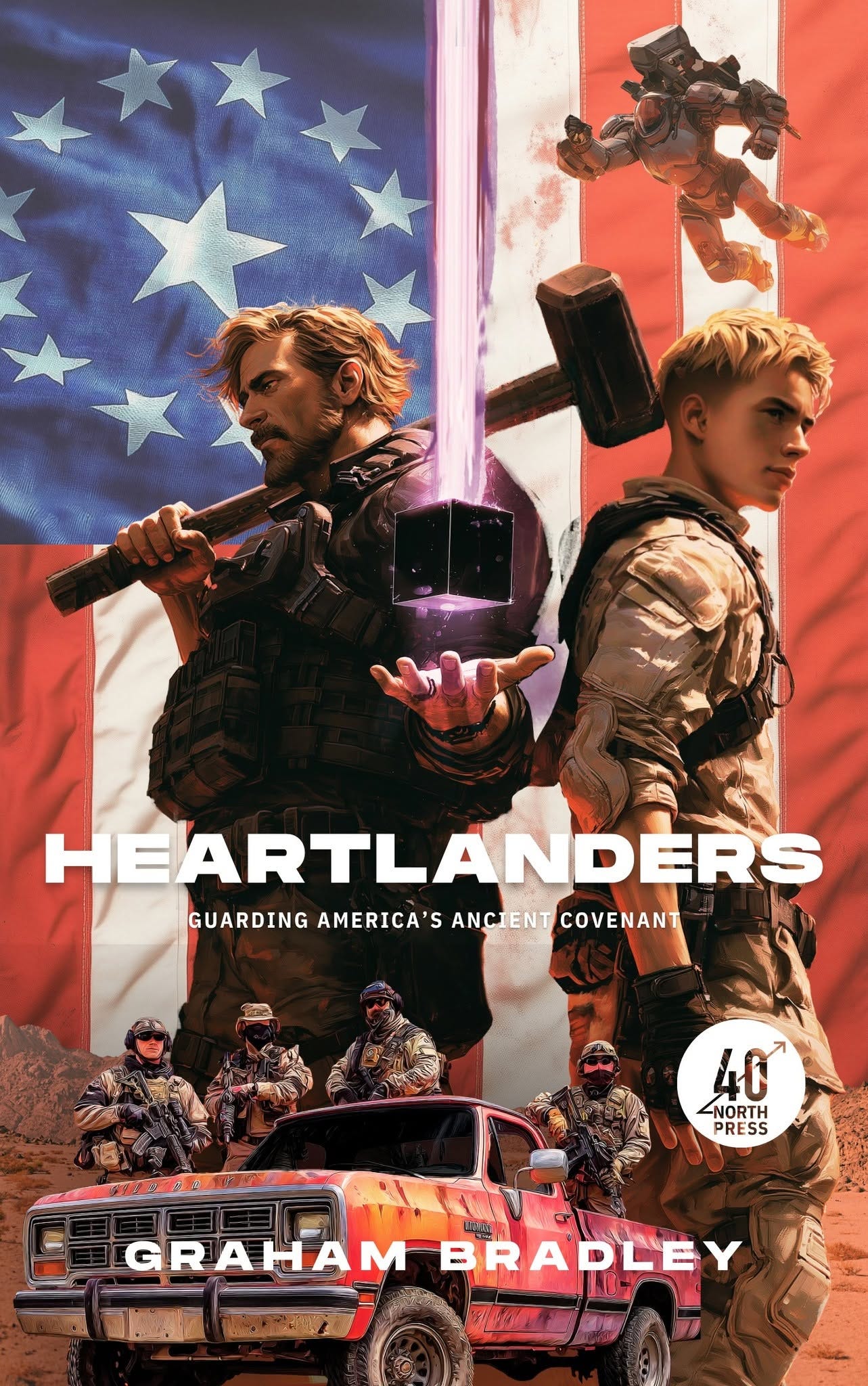
Visit Nauvoo Supply to order HEARTLANDERS, the most American novel I’ve ever written. It’s like if National Treasure happened during Fallout with G.I. Joes.
It’s short, it’s fast, it’s full of smarts and action, and you’ll love the characters.