

So hey. Y’all are gonna be mad at me for this one, but let’s see where it goes.
When I was in high school, there was a gigantic kid named Justin Lomprey who wrestled and played football. Dude was 6’4”, 275 lbs, and played defensive tackle in a year when our team made a deep playoff run.
One day at school there was a huge buzz going around that Lomprey had utterly destroyed some kid from another school at a wrestling meet. Just humiliated him. Toyed with him. Let him crawl to the edge of the ring, then dragged him back in and pinned him while waving to the kid’s mom and girlfriend in the stands. A textbook heel turn. The crowd went wild. The kid he beat wasn’t even in his weight class, but I guess he was feeling his oats that day because he decided to challenge up, thinking he could take on the biggest dude in the district.
It’s easy to laugh at him for his folly, especially since he lost. However: you know that Teddy Roosevelt quote about the man in the arena? Critics don’t matter, they’re just sitting in the stands flapping their gums while the gladiators are bleeding into the sand. Profound stuff, and very true. Think about that, and remember Justin Lomprey. We’ll come back to that in a second.
For those of us in the indie scene (authors and readers alike) we like to imagine ourselves as the gladiators, duking it out with wild animals and surviving elaborate Rube-Roman-Goldberg machines of death as we create art and introduce it to a reading audience. After all, we’ve been in the stands for years, right? We’ve watched the gladiators fight and get their heads handed to them, haven’t we? We can see everything they’re doing wrong, those idiots, and we’d never be so foolish.
We fancy ourselves as plucky underdogs with a secret talent nobody has discovered yet, but once they see us in action, they’ll be as impressed as we are with ourselves!
What many of us don’t realize is that we’re not Lomprey; we’re the kid punching up a class and getting our culos handed to us. We must be quite delusional to do this, yes? How did we become so delusional?
By watching a couple of critics have success in the creative space, and thinking we were just like them. (We were not.)
Who am I talking about?
Oh, there’s a lot of guys. I’ll give you the most obvious example: Will Jordan, aka The Critical Drinker. He’s a novelist and somehow an aspiring filmmaker. As a supplement to Drinker, I’ll include Eric July, who publishes comics. They’re YouTubers with respectable followings. They’re in the arena, surrounded by gladiators.
Both of these guys punched their tickets to the Coliseum as critics of culture. Both of them gained success and valuable reputations in that space. Both of them decided to publish as a result.
And both of them are bad at it. So bad that their opinions on culture need only carry as much weight as the nameless kid who thought he could pin Justin Lomprey, and paid dearly for that miscalculation.
Critical Drinker
You’re probably a fan of The Drinker. He’s funny. He’s insightful at times. He pushed back against a bad wave of culture when it needed to be done, and he did so with wit and charm. You may have been tempted to think that this means he’s capable of spinning a good yarn himself.
The problem is, you’d have no idea, because you haven’t read any of his books. You’re probably not even aware that he’s a novelist, and has been since before his channel took off. (His first Ryan Drake novel was released in 2012.) Like a lot of nameless underweight wrestlers authors, his first real taste of success was when he attached his name to a James Patterson novel in 2017, which you also haven’t read and never heard of.
I actually have read Will Jordan’s books—two of them to be precise. The first, DARK HARVEST, had a cool idea behind it; it connects to the Dyatlov Pass incident, which The Lore Lodge covered earlier this year in a 3-hour video. (Go sub to the Lore Lodge, Aiden and Aiden do incredible work.)
The Dyatlov Pass incident sort of brackets the plot to DARK HARVEST; it’s there for the prologue, and the back half of the climax. Without it, DARK HARVEST is basically Dan Brown’s INFERNO with better writing. I reviewed it on Upstream when it came out in 2022. I stand by my assessment that it was a good book…
…due largely to its connection to a real and unsolved mystery from Russia.
“Graham, you said he can’t write though?”
Correct, though to be specific, I should say novels. By and large, he’s just not good at it. DARK HARVEST is a standalone. Jordan’s main series is the Ryan Drake thrillers, which are basically Tom Clancy CIA adventures that have been run through the dishwasher a few times and then smeared across too much bread.
(They’re boring.)
It took me two tries to get through the first one, a slow and ponderous mess of well-trod ground that didn’t really have anything novel to offer. I made it to the end in 2021 and, due to my then-fandom of Drinker’s work, figured I would keep going because—then as now—I want indies to succeed. I want the underweight dreamers from Valley High School to score a few points against Justin “Mainstream” Lomprey.
But there’s a reason why the Lompreys of the world will continue to beat that little guy’s ass like a tambourine: they have the tools, they have the reach, and they have the mass. You don’t have to like it, but in real life, that matters. With Drinker’s Drake thrillers, he was reaching for something he wasn’t capable of delivering: entertainment that was superior to what bigger publishers and studios had to offer.
I abandoned the second Drake novel at around the 15% mark. I just couldn’t force myself through it. It was a derivative snoozefest, and reminded me of a made-for-TV version of a more popular thriller that came out when my dad still had hair. I didn’t want it to be that way. Drinker was in the arena, after all! Shouldn’t I want him to succeed?
Sure. But should I ignore the fact that he actually couldn’t beat anyone?
What you want and what you get are different animals. As funny as Drinker is, and as good as he is at writing scripts for his videos, he is not a talented novelist, and this is evidenced by the fact that nobody reads his novels. I have, and they bored the hell out of me.
“But Graham! Drinker makes movies now!”
Yes, yes, he does. He released a 45-minute “proof of concept” for a Ryan Drake show on YouTube last year. Did you watch it? No, you didn’t. It was rather unwatchable. Did you even watch the trailer? If you did, it’s probably why you didn’t watch the show. Will Jordan, a guy who built his brand on pointing out what Hollywood does wrong on the big screen, took his shot and missed. Badly.
The short film/pilot/whatever, Rogue Elements, was bad. Go look it up if you want and make up your own mind, just don’t expect to see Critical Drinker do a Critical Drinker-level takedown of it. Au contraire: he’ll argue why everything that went wrong with it wasn’t actually his fault. Then he’ll go back to trashing Hollywood. I’m not going to root for that. Justin Lomprey folded you in half and stole your girl. It’s over.
Why does this matter? I’m getting there.
Eric July
No cope, no lies: I wish I didn’t have to admit this. It’s kind of humiliating. I really wanted Eric July’s RippaVerse comics to succeed and gain popularity, but after three years, it’s clear that he lacks the creative vision and artistic talent to make his books worth buying, owning, and reading. I’m qualified to make this assessment because I gave them a more-than-fair shot. I bought the first six of them at a good-sized premium. I did videos about them that he clipped for his compilations. I even drove to Dallas last summer for a fan meetup and got to say hi.
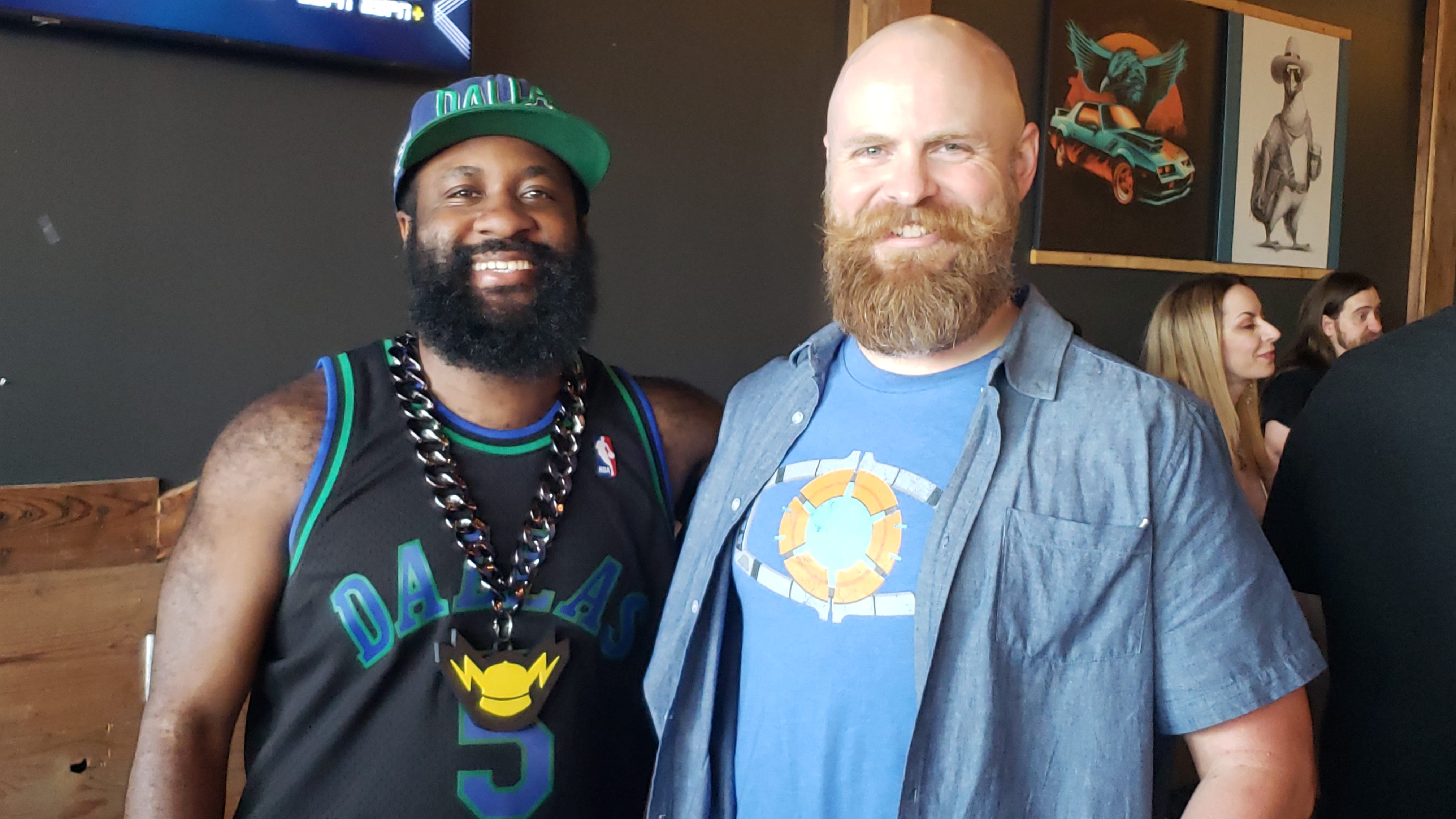
But after Isom, Yaira, Goodyng, Alphacore, and Horseman, it was clear that Eric’s idea of a compelling comic was just…people with superpowers punching other people with superpowers. No real story, only vibes and aesthetics. I thought he was taking his time establishing the basics, revealing little details as part of a ramp-up to something big, but no. There wasn’t anything there, at least not that you couldn’t get from Big Two characters that still have better stories.
Isom was just Eric himself in a costume. Yaira was a Wonder Woman clone, Horseman was a Punisher clone, Goodyng was Elon Musk without the flaws, and Alphacore kind of had something to offer, but none of it went anywhere. He was selling storebrand fan art and it pains me to admit that because I defended his books for those first two years, thinking the payoff was coming. (Payoff meaning a comic event that would tie it all together and give value to the previous issues.)
It never came. Like Drinker, Eric built his cred by trashing the mainstream companies—in this case DC and Marvel, the way Drinker trashed Hollywood. But when it came time to show he could make something better, it turned out all he could make was noise. I sold my comics on eBay earlier this year and took the financial loss as a lesson.
The Lesson
Whether you’re an indie reader or an indie writer, here’s your takeaway: the fact that you got in the arena only matters slightly more than being in the stands, if in the end you can’t change the outcome of the match. Drinker and July haven’t failed in novels, films, or comics due to sabotage or anything like that—the big studios and publishers don’t have to do anything to them. They’re not a threat. They make money off of complaining but those complaints are the peak of their creative talent. Their craft speaks for itself, and it does not offer praise.
For a few years there, it seemed like a new way forward existed: you could be an indie creator by being a successful critic of the mainstream. That would build you an audience. Then you steer them toward your work, which is of course superior, and away you go. Only…how many critics have actually pulled that off? How many guys in the larger orbit of Drinker, July, Nerdrotic, Geeks & Gamers, Heelsvsbabyface, and the rest, have made an entertainment product that’s even remotely on par with the mainstream, let alone superior to it?
And don’t tell me modern movies and comic books are woke trash, especially since their loudest critics in my orbit don’t watch or read them. I’ve had a pull file at my LCS for the last two years and there are plenty of great mainstream comics to read. Hell, I winced at the price of the seven books I picked up today (thirty six freaking dollars) because they’re all good and provide repeat entertainment. I’ve been to the movies six or seven times this year and haven’t regretted any of them.
Drinker, July, and their ilk have done a good job of coasting off the notoriety they gained from 2019-2021, but that momentum is long gone, and more of their followers are waking up to that. Indie creators who still follow Drinker still don’t read his books and haven’t watched Rogue Elements. Eric July hasn’t responded to his drooping sales numbers by retooling and revamping his books, he’s simply spammed out more of them under the auspices of “fighting the mainstream” or whatever.
All the while, the Justin Lompreys of the world have them in a creative arm bar, and their box office laughter is reverberating throughout the arena. Yes, you’ll have some “down months” like October, but as I said last month, y’all are sleeping on Tron: Ares. And you don’t know that because you haven’t seen it. (You should.)
The critic-creator gold rush is dead. It’s a model that indies ought to stop trying to emulate. Our marketing efforts cannot consist of “Mainstream sucks, read my stuff instead.” We all say that and statistically speaking, we’re all wrong. This is why you still struggle to sell, and most of your buyers are family members and fellow writers.
The Solution
The time is far gone that we should sever these two efforts, those being vocal criticism and indie marketing. Fans of critical productions (like Drinker’s videos) aren’t there to read books. That’s been proven by the fact that, once again, they don’t read his. Fans who want alternative options in comics are not finding them from Eric July, who has lost 95% of his buying audience since his first book in 2022 (this is not an exaggeration.)
What you need as an indie creator (and thus, as your own marketing arm) is a positive vision. You need to get back in the business of liking things. Your target audience already has. They gave another billion dollars to a seventh Jurassic Park movie this summer. I don’t give a damn if you didn’t see the movie or didn’t like it, you’re an obtuse and willful idiot if you don’t acknowledge that.
And by all means, don’t stop being critical of bad productions—but you can’t make it your whole marketing effort, any more than you can make it your entire identity. Nobody likes to hang out with the guy who just hates everything, ESPECIALLY WHEN HIS SOLUTION IS FOR YOU TO GIVE HIM MONEY.
You want your art to gain traction with readers?
You’d damn well better give them a reason to like your work. Paint a positive vision. Find things that you like and boost them. The critic-creator pipeline has ruptured and audiences have gone elsewhere for art. You can follow them and tell them about your book, or you can keep hating everything, but you can’t do both.
Just ask Drinker and Eric July.
I just write, man, just write.
I'll respectfully disagree with you, and say that the problem with TCD's novels / movie is the problem of anyone who's switching genres / mediums. He's put hundreds if not thousands of hours into writing and acting short comedic criticisms of visual mediums, and he's got a smooth, polished delivery that plays well to its medium and audience. That's not just criticism, that's a performance.
But he hasn't put out the same volume of work, with the same level of feedback, in another medium - and as you rightly point out, being great at deconstructing something is not the same as being great at doing it, especially when you're starting over in maybe a different medium, definitely different tone, different genre, and different audience expectations.
Even if you're staying in the same medium - JK Rowling was right to put out her adult novels under a pen name, because they were decent beginner novels in that genre... but could never live up to the expectations that she was going to put out something as good for that particular genre as her children's series were.
I recently went with friends to a pottery studio, and painted glaze on a premade ceramic teapot. No matter how much colour theory and art layout I know from working with cover artists, it didn't help with the doing. Once it was fired and I got the results back, I had to laugh, because it looks about as enthusiastic and terrible as you'd expect from anyone creating something for the first time without close supervision breathing down their neck. Doesn't matter how good my prose may be, my pottery painting skills are level 0, and I need a lot of directed practice in order to get better.
The lesson I walk away with isn't that the critic/creator model is dead, but that expertise at one thing, and broad reach for discovery, isn't going to drive sales on the other thing unless it's good enough to attract crossover market... and keep them coming back.