

Family Tree > Regular Tree
We’re covering chapters four and five here, because four is incredibly short and is on the same subject as five. It’s foundational Elf history—which is true of the entire book, but here we get a look at a specific group doing specific things. You’re about to start recognizing names.
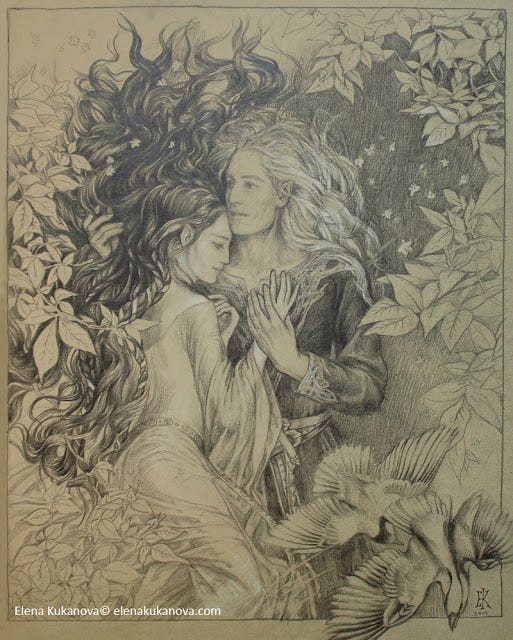
(Art by Elena Kukanova)
Of Thingol and Melian
This is chapter four, and it’s only a page and a half. Thingol is an Elf and Melian is a Maia. They fall in love and he’s greatly elevated by her aura and power. Remember that Maiar have the same status as angels in this lore, and since Thingol is still technically mortal, this union is a big deal. Their descendants would become the Sindarin Elves, among whom would be such essential figures as Galadriel and Elrond.
Remember that one of the Valar is named Lórien; his dominion is over dreams and visions. The forest of Lothlórien, where Galadriel lives, is Lórien’s own forest. Thus being descended from a Maia in service of Lórien is why Galadriel is able to show Frodo visions of the future in THE FELLOWSHIP OF THE RING. She can literally trace her ancestry back to the god of dreams.
Like most other stuff in The Silmarillion, Thingol has more than one name, but I won’t list all the others here. He was called Elwë before he assumed the name of Thingol. He will eventually die at the hands of a Dwarf, and given his importance to the Sindarin Elves, this explains their particular animosity toward that race.
Of Eldamar and the Princes of the Eldamië
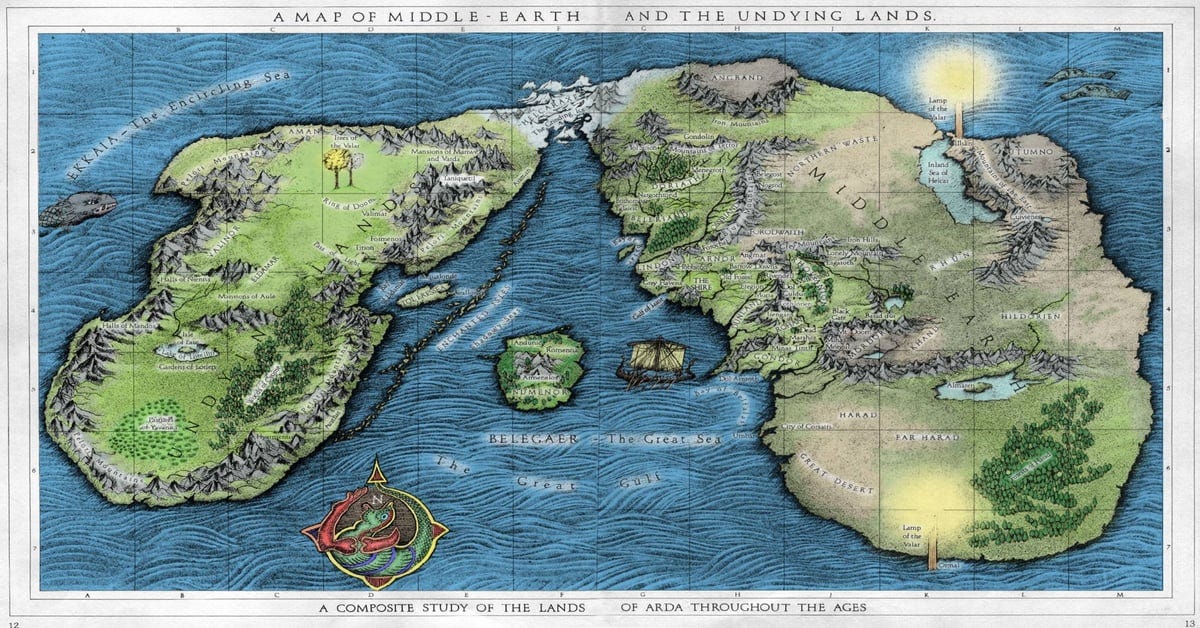
This is chapter five. It goes into a lot of specifics about the layout of Arda, which rivers split which lands and so forth. The major names that you need to know are Balar, Sirion, and Beleriand; Sirion is a river which flows into a bay called Balar, and the lands affected by that water system are called Beleriand. Other significant events will happen here later in the book, in a chapter called “The Lays of Beleriand,” which is the only reason why I’m mentioning it.
More of this chapter lays out the divisions between different groups of Elves who want to travel to Aman. That’s the continent across the sea where the Valar live; their city is called Valinor, and there’s a hall called Mandos, and there’s a throne called Taniquetil, where Manwë sits. He’s the chief Vala. Eldamar is a region of Aman where Elves get to live. Do you see why I don’t blitz you with proper nouns in every article? There’s a lot going on and the details are actually pretty simple in the text itself. This chapter is only eight pages, so Tolkien doesn’t belabor any points beyond what’s necessary.
Lonely Island? On a boat?
There’s one anecdote in this bit of lore that I thought was really cool: the Vanyar and the Noldor really wanted to cross the sea to Aman, so Ulmo (the Vala of the water) uprooted an island in the middle of the ocean and dragged it to Balar, where the Elves then stepped onto it, and from there he dragged it to Aman, using the island itself like a boat. Fantastic stuff. You also get a segment on the Teleri, called the “sea-Elves,” and why they distinguish themselves that way from other Elves.
With the passage of time, Elves split into more and more groups with more and more names. Eventually one Elf named Cirdan becomes a “shipwright” so they don’t need to keep moving around on islands using a minor god as their steed.
Origins of the White Tree
Cast your mind back to the early chapters where Yavanna, the Vala of trees and fruit, made two giant trees at the North and South Poles. Varda, the Vala of light, gave them her power so they’d light the world. Melkor destroyed the lamps, and when the Vala regathered in Aman, Yavanna planted two more trees that gave light in alternating cycles, so that Valinor wouldn’t be as dark as the rest of the world.
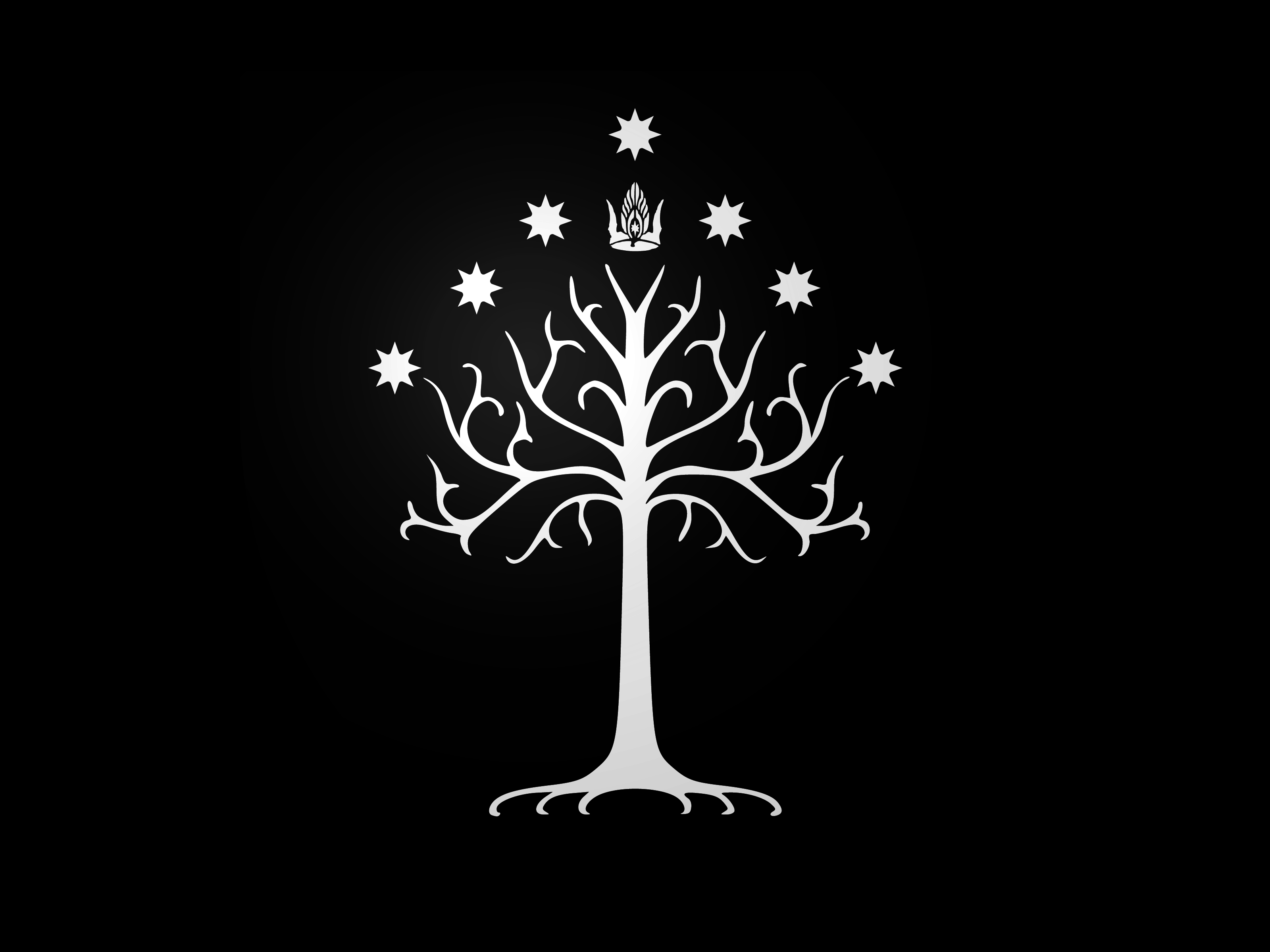
The Elves who came to Valinor really loved those trees, so Yavanna made a tree for them that was similar. It didn’t have the full power of Varda’s light but it was still very beautiful.
This tree would provide seeds that the Elves then planted in other places. One of them was Númenor, and eventually a descendant of that tree ended up in Gondor. That’s why Aragorn wears it as a symbol on his clothes and banners and such; if the gods gave your ancestors a gift like that, you’d hold on to it too.
The Linguist Emerges
So far Tolkien’s love of philology only comes through in the giving of many names to things, but now he approaches the idea of linguistic drift, what with so many groups of Elves isolating themselves from each other as they spread throughout the world. Their language changes from group to group, remaining internally consistent without any outside influence.
The most significant group of these is the Noldor, a branch of Elves that are also artisans and makers. Since they’re Elves, they like pretty things, and they make jewelry for its own sake. One of these elves is named Finwë, and he’s the father of Fëanor, whose legendary arc is about to begin.
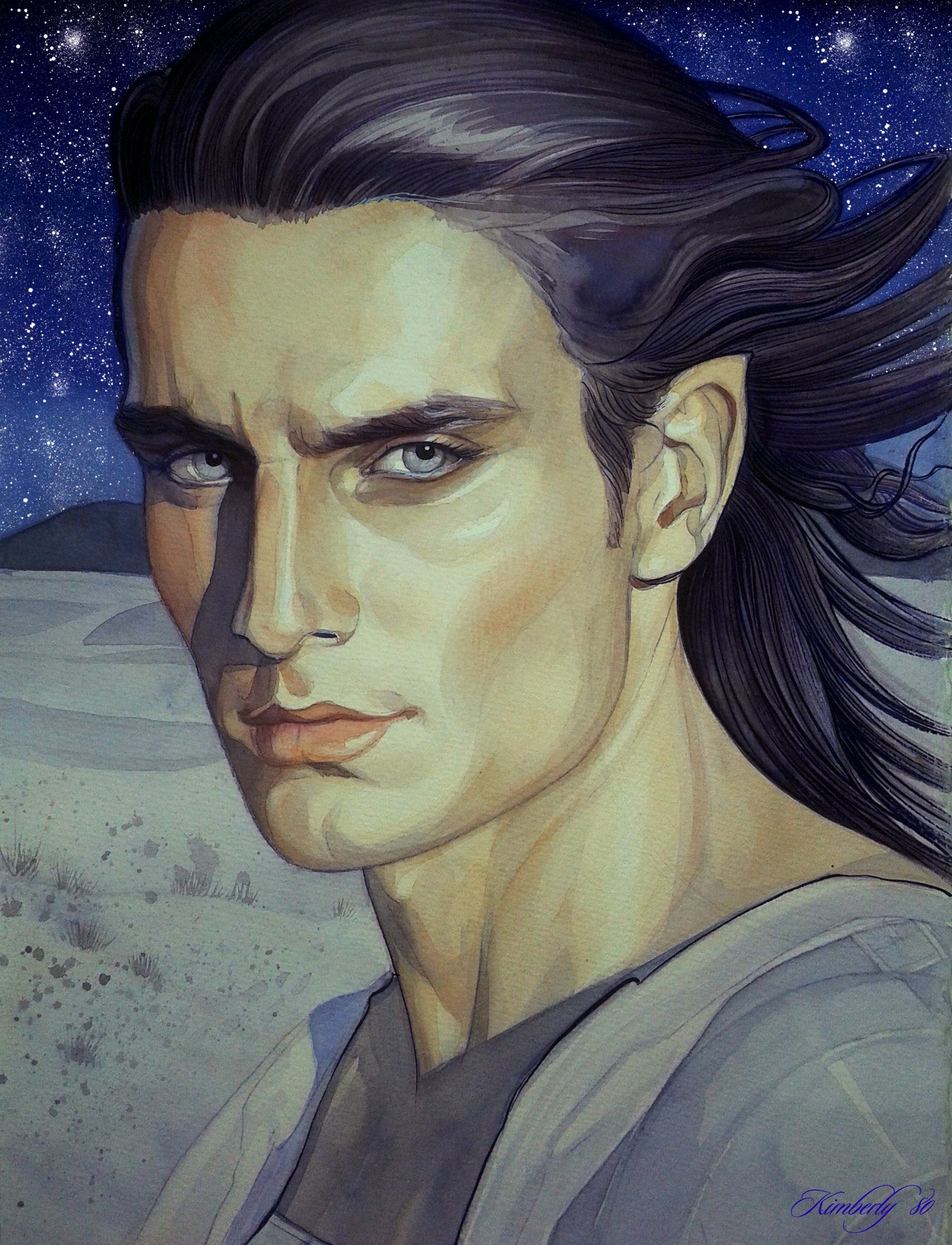
(Art by kimberly80.deviantart.com)
The Family Business
Finwë has sons with two different Elf women—he’s the rare instance of an Elf widower, more on that when we cover chapter six. Fëanor is his first son, and the only son born of his first wife Miriel. Fëanor also has two half-brothers from Finwë’s second wife, I’ll get into those names later. The three brothers are instrumental in the crux of the Silmarillion.
Of Fëanor we get the following description, that he “was the mightiest in skill of word and of hand, more learned than his brothers; his spirit burned as a flame.” So he’s smart, good at speaking, good at crafting things and fighting. Comparing his spirit to fire may yet be the most meaningful attribute if we’re to understand what comes next.
But I think that’s enough for now…