

2026 is America’s 250th birthyear. To celebrate, I’m highlighting 50+ significant American documents from our history. So far I have covered The Mayflower Compact and Patrick Henry’s “Liberty or Death” speech.
Subscribe to get these articles in your inbox, along with my regular book/comic/movie reviews. I also like money, and if you like me having money, become a paid subscriber. There’ll be special content for you, including original fiction, and early access to posts.
The Origin of an Idea
The American Revolution didn’t come out of nowhere. It was the end result of years of agitation, advocacy, and organized response to tyranny. The government created in the wake of Independence was also the result of a huge amount of debate and compromise by the greatest minds of their day.
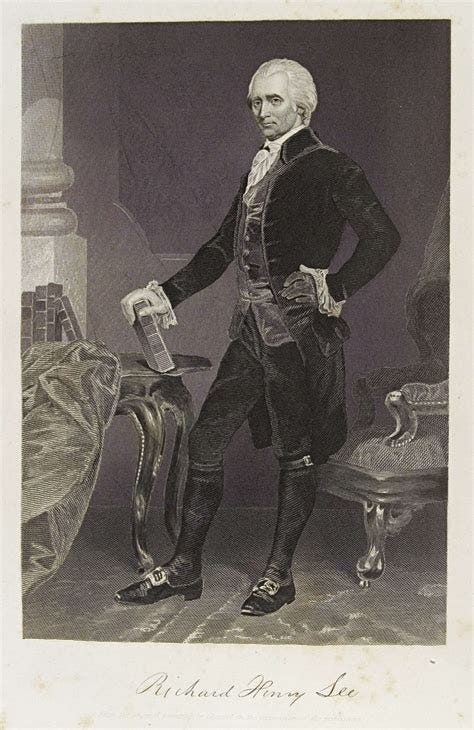
We revere the Declaration of Independence as one of our key founding documents, written by Thomas Jefferson, but what many of us don’t know (myself included until recently) is where the idea came from to draft just such a declaration. Jefferson did the legwork, but the spark is credited to Richard Henry Lee of Virginia.
The key events in the run-up to July 2, 1776 (when most of the signatures were penned) are as follows:
December 1773, Boston Tea Party
September 1774, First Continental Congress convenes (earliest form of a united colonial government intent on separation)
April 1775, Lexington & Concord, actual fighting breaks out and things go hot (The Shot Heard ‘Round the World)
May 1775, a Second Continental Congress Convenes, and more or less stays active throughout the remainder of the war.
In June of 1776, during one of their conventions, Richard Henry Lee put forth a simple resolution. The entire body of which is as follows:
Resolved, That these United Colonies are, and of right ought to be, free and independent States, that they are absolved from all allegiance to the British Crown, and that all political connection between them and the State of Great Britain is, and ought to be, totally dissolved.
That it is expedient forthwith to take the most effectual measures for forming foreign Alliances.
That a plan of confederation be prepared and transmitted to the respective Colonies for their consideration and approbation.
That first step was expanded and expounded upon by the man who would become our third president, Thomas Jefferson. Lee said it was well and proper to write it down so as to make it official. (John Adams and Benjamin Franklin would make editorial suggestions to the final body of text, which was then adopted in Philadelphia in July.)
The second and third steps—international alliances and intercolonial approbation—would have to wait, and were ultimately more complex as there were more parties involved with varied interests. But Congress could put the Declaration together and sign it themselves with relatively little fuss.
Seeds of the Confederacy
Richard Henry Lee and Thomas Jefferson were both Virginia men—and Lee’s great-great-grand-nephew would go on to lead the Confederate military during the Civil War. Robert E. Lee’s second great-grandfather was Richard Henry Lee’s brother.
On top of that, Robert E. Lee’s wife was the granddaughter of George Washington Parke Custis, who was Martha Washington’s grandson. Martha’s son (G.W.P.C.’s father) died when the boy was young, so George and Martha raised him as their own, giving him a solid connection to the Washington name, though not by blood. (George Washington never fathered any children—he was Martha’s second husband).
This is relevant because of Virginia’s historical standing in the Revolution, and its ties to such prominent figures as Washington and Jefferson (who was also, if distantly, related to Robert E. Lee.) Robert E. Lee’s own father, “Light-Horse” Harry Lee, was a mounted soldier who fought under George Washington’s command during the Revolutionary War. (Harry was 51 when he fathered Robert, and Robert was 57 when the Civil War Started.)
All of this is to say that Robert E. Lee’s decision to resign from the Army and lead the Army of Northern Virginia makes sense in the context of blood ties and “national” loyalty—especially in a time when one’s State was more of one’s own “country,” and the people he led into battle were in many cases blood relatives. He didn’t share this connection to the North. Furthermore he was married to a Washington, and his family planted the seed of the Declaration of Independence, which was later written by a Virginia man.
It’s no wonder that someone of that lineage would look to his ancestry and choose his loyalties accordingly. Rebellion was in their blood, and that blood had been there for the very beginning of America.
Food for thought.