

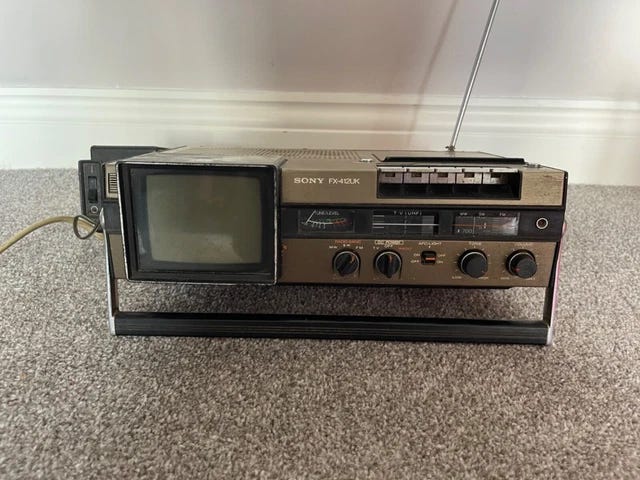
This month I turn 41. When I was but a wee lad, growing up in the foothills of Sunrise Mountain in Vegas, we had a dedicated bedroom in the house for Mom's sewing room. She had a little TV-radio thing that only put out black-and-white picture, and it could pick up standard channels. I still remember some of the station identification for CBS, Fox, and “KRLR TV 21, Cable 2.”
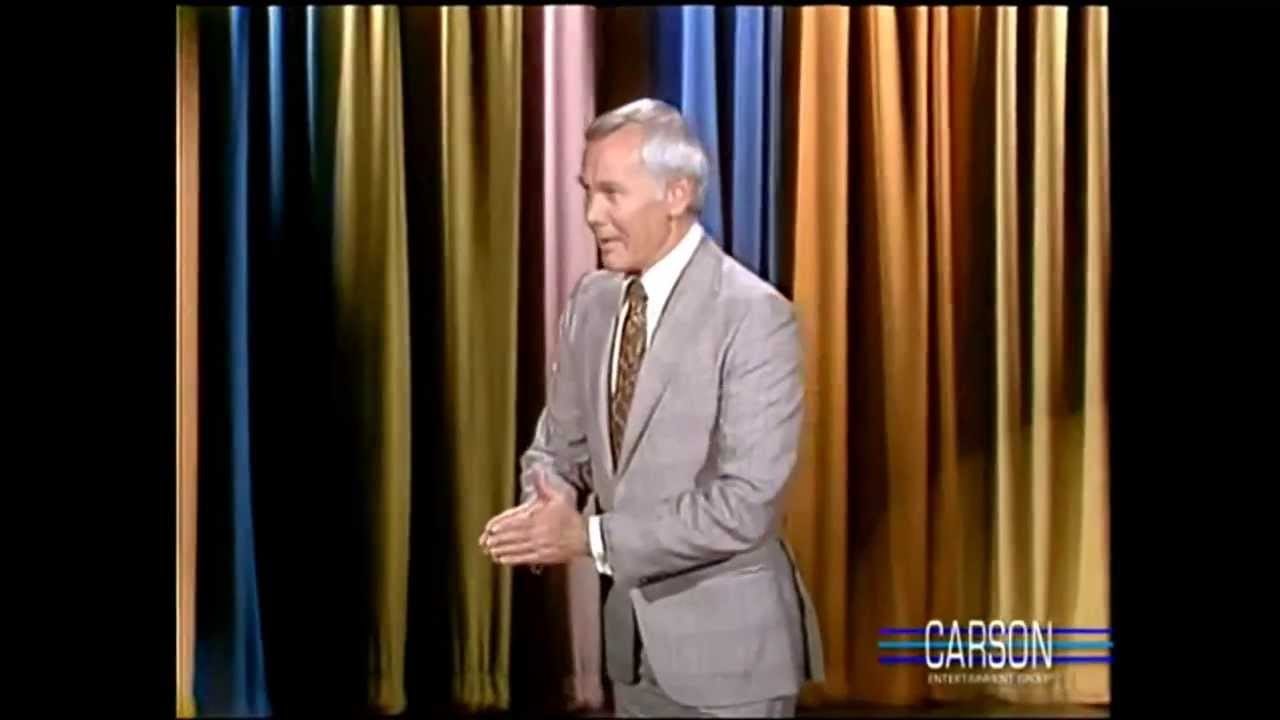
It wasn't the exact unit picture above. I think it did have a tape player though. Sometimes I'd stay up late and hang out in Mom's sewing room while she made stuff. She had a sofa against one wall, and she’d tune into the Late Show or the Tonight Show or one of those shows with Johnny Carson. I was around five then, I can’t remember any segments or guests (it’s not like Carson had the Ninja Turtles on), but I always remembered “Heeeeeere's Johnny!" as the old man came out from behind the curtain. He was an American institution.
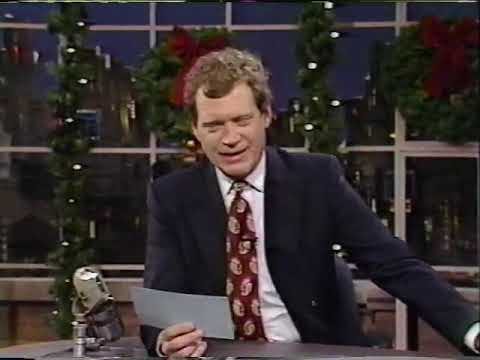
Later on I vaguely remember David Letterman getting big in Late Night, and in the 90s when my family got WAY into talk radio, Mom and Dad noticed Letterman edging into his political slants. Still mostly entertainment though. His Top Ten lists were a gag for the ages.
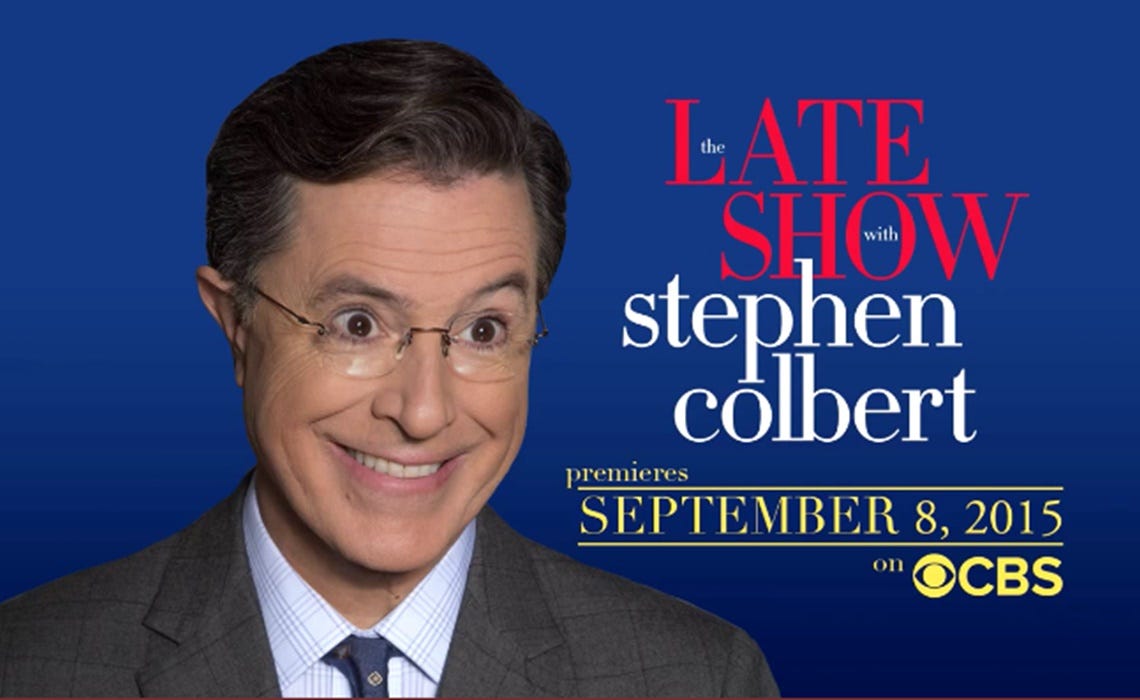
The genre hit some turbulence in the 2000s and 2010s as Internet Culture gained steam, and TV/Cable had to adapt to compete. As Letterman went out, Stephen Colbert came in to give late night TV a boost.
Colbert went hard in the paint when he took over. He was popular with the post-college Millennial crowd because of his work on Comedy Central. There's no way he wasn't hired to bring that audience to mainstream Late Night.
He failed. Now CBS is killing The Late Show at the end of his contract. They’re not even bringing in a new host, they’re outright cancelling it. “It’s for cost, not for performance” or something. (Bull crap. If it were performing, the cost wouldn’t be a problem.)
Late Night didn't die out because of the boomers, because of the Millennials, or because of any other large demographic block. It died because the hosts suck, the content sucks, and the programmers hated the audience. LA and NY are not America at large, but the show is written to appeal exclusively to the peers of the writers, producers, and staff who live in ever-tightening bubbles.
This is the age of the Internet and clip shows and YouTube. Late Night isn't dying because of its time slot; look at how much Japanese content has a lucrative Western audience. Late Night died because it stopped trying to be funny, stopped being an escape from the grind of life.
It wasn’t a vehicle to entertain. It was a bludgeon to beat you into submission. Colbert’s Comedy Central run was designed to shame Millennial college kids into voting a certain way lest they be on the receiving end of Colbert’s biting wit and humor. (Or rather, that of his writers.)
Johnny Carson looked at his audience as people. Stephen Colbert’s audience was the Left, and his non-human enemy was The Right. He took over in 2015, just in time to be a loyal mouthpiece for the Clinton 2016 campaign, only to complete crash out live when she lost on Election Night.
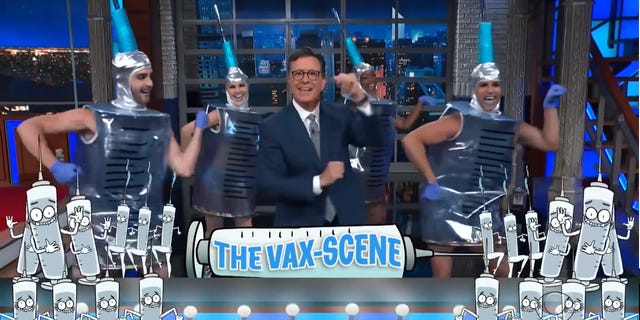
It didn’t have to be that way, but the show had stopped being about entertainment for Americans and was only about entertainment for an increasingly unpopular ideology. No little kids were staying up late in their mom’s sewing room to watch this crap. They were never going to grow up and look back at this with nostalgia glasses.
This happens in America. A party gets big, they succeed for a while, then they do something stupid, their popularity plummets, the opposition makes a few good moves, they take over, lather-rinse-repeat. From 2001-2004, George W. Bush was unstoppable. In 2008, his party got obliterated. For 4-6 years the Democrats were juggernauts. Then in 2016, the Upset of the Century happened. (We’re Americans, we’ll fight anybody, especially ourselves.)
When cultural institutions jump in to become part of that rise, they shouldn’t be surprised when they’re also part of the fall. Right and Left often fail to learn this.
Fifteen years ago it might have seemed unfathomable that the Right would make the cultural comeback that it has, or that the Left would be in such a state of disarray. This stuff is cyclical though. It has happened before. It will happen again. You avoid it as a creative by not playing the game.
But Graham! You’re a self-identified right wing creator!
Yes, Fictional Detractor, I am. Check out my books: which political parties do my main characters belong to? Brock Porter? Josie Penninger? How would Silas Proctor vote? Graveheart? Mickey? Calico Hind? Are Gautier and Danielle favorable to the aristos or the Republic of France? Nick Stavros is from Arizona (red state) but lives in Phoenix (blue capital). What are his politics?
You can’t tell. It doesn’t matter in my books. I tell stories.
Stay on target. Understand your genre, your medium, and your audience. Colbert forgot that, or rejected it, and went full-throttle into dividing his audience. Like other entertainment institutions in the last decade—cinema, comics, publishing—his medium suffered for it. The cancellation of the show and the end of his contract are the result.
Colbert doesn't care, he's got his bag, he's set. Ironic, for a guy who always characterized the right-wing mindset as "Screw you, I've got mine." Big or small, creators need to remember this: the ultimate value of entertainment is whether it uplifts.
CBS forgot that, Colbert forgot that, and a long-running institution collapsed because of it. Let's get back at it and make something people can enjoy.
"LA and NY are not America at large, but the show is written to appeal exclusively to the peers of the writers, producers, and staff who live in ever-tightening bubbles."
American television in the 20th century could deliver exactly the kind of thing their audiences wanted when they needed it. In the 21st century, it has become increasingly fat and lazy, and more beholden to corporate interests than viewers, making it easier for the latter to just leave them behind.