

“Electoral Brawlage” examines the first inaugural address of each president in U.S. history, with some commentary and analysis. This is the third installment. Check back on Mondays for more.
Subscribe to get these articles in your inbox. Become a paid subscriber to give me money, because I like money and I use it to buy books.
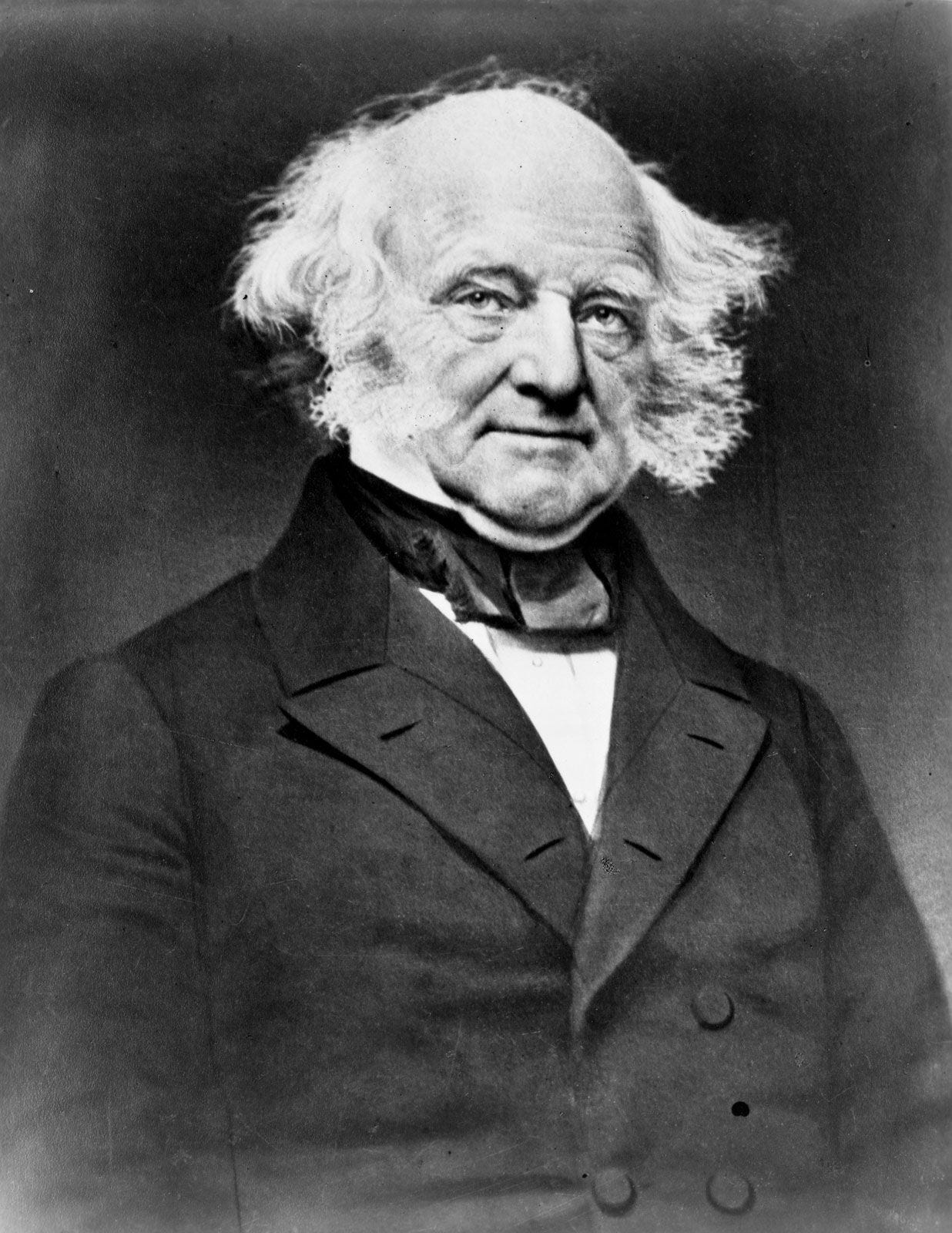
Martin Van Buren was the eighth president of the United States, and the first who didn’t fight in the Revolution at all. He was born in 1782, a year before the Treaty of Paris, and he was also the first not of British ancestry. He was only the third Northerner to assume the office of President, the other two both being named Adams. Like them, he would only serve one term.
His ascendancy to the office was largely due to his support for and alliance with Andrew Jackson, whose supporters immediately began planning his comeback the moment the House of Representatives declared him the loser in 1824—despite winning the Electoral Vote. If he thought he’d enjoy Jackson’s popularity forever, then he fell for the same trick many other Presidents would fall for, including George H.W. Bush 150 years later. But I digress.
Van Buren’s inaugural address echoed that of his predecessors, especially when it came to praising his predecessors and declaring his humility under the weight of this immense calling. He swore to uphold the Constitution, keep the Fed out of State affairs where appropriate, and maintain or augment healthy foreign relations.
He was also the first president to directly address slavery at the outset of his administration, in one of the longer paragraphs of his speech.
The last, perhaps the greatest, of the prominent sources of discord and disaster supposed to lurk in our political condition was the institution of domestic slavery. Our forefathers were deeply impressed with the delicacy of this subject, and they treated it with a forbearance so evidently wise that in spite of every sinister foreboding it never until the present period disturbed the tranquility of our common country…
"I must go into the Presidential chair the inflexible and uncompromising opponent of every attempt on the part of Congress to abolish slavery in the District of Columbia against the wishes of the slaveholding States, and also with a determination equally decided to resist the slightest interference with it in the States where it exists."
Opposing abolition was officially a stated goal of the Executive Branch. This would oscillate in the coming decades, and it would come to a head under Lincoln. The issue wasn’t going away…au contraire. What may have seemed like political pragmatism (and contemporary conservatism) was probably also an act of career preservation: abolition was a hot topic, people were getting more excited about it, there were heated conflicts about it, and those favoring and opposing it wanted the levers of power switched in their favor.
Van Buren—and this must be said of any executive—was interested in holding that power for his own ends, and if stating support for one side over the other was a threat to that power, he’d hold as straight a middle line as he could instead. That’s the substance of his quote in his inaugural address.
He showed this same pragmatism in 1839 when members of the Church of Jesus Christ of Latter-day Saints (Mormons) were expelled from Missouri by Governor Lilburn Boggs. Many of them were robbed, assaulted, and even executed. When Joseph Smith, the leader of the Church at the time, sought help from the Federal Government (since the State of Missouri basically put targets on them all), Van Buren is reported to have said:
“Gentlemen, your cause is just, but I can do nothing for you; if I take up for you I shall lose the vote of Missouri.”
There are different wordings of this recorded, the substance comes out to the same thing. What was right mattered less than what would empower him politically, and 1840 was an election year.
(An election that Van Buren would lose to William Henry Harrison—but that’s a story for next week.)
In the end, he closed his speech as the seven men before him were wont to do:
Beyond that I only look to the gracious protection of the Divine Being whose strengthening support I humbly solicit, and whom I fervently pray to look down upon us all. May it be among the dispensations of His providence to bless our beloved country with honors and with length of days. May her ways be ways of pleasantness and all her paths be peace!
My Amazon page has all my novels, including the critically-acclaimed FOSSIL FORCE for young boys, and the Engines of Liberty series for all ages.
I post several times per week on YouTube.
Subscribe here for more book reviews and for articles on what I continue to learn as I read.