

“This Week in 1776” is an ongoing almanac of events from the American Revolution, mostly political and military in nature.
Sorry for not getting this out yesterday, I had to cover for someone at work. On that note, thank you to all 230+ subscribers, and especially to the 9 paying subscribers. I’m going to keep adding value to this site. It feels good to finally make some money off my writing.
Now on with the show.
The Lee Resolution
I covered this earlier in the year, but June 7th was the original date. The short version is that the Richard Henry Lee Resolution was the spark that ignited the intellectual fire that would, later this very week in history, trigger the Declaration of Independence. More on that in a second.
Canadian Disaster
Let’s get the bad news out of the way: Benedict Arnold got his head handed to him in the Battle of Trois-Rivières. Brigadier General William Thompson led around 2,000 troops into battle at Quebec, and they got stomped by a combination of factors, including poor supplies, bad conditions (swamp), and superior organization among the British. Hundreds of Patriots were killed or taken prisoner. Benedict Arnold was in charge of the retreat out of Montreal with what forces he could rally.
Thus ended the Continental Army’s designs on a potential 14th Colony in the north. This was a crushing blow that took the wind out of the sails from the springtime victory in Boston, and people had to be getting nervous about New York now.
New York and the South
Not much to report here, you know the song by this point: Washington keeps fortifying his positions, because the regulars will roll up soon. Nothing big pops off in the south. Word will eventually spread about Quebec and the rest of the Patriots won’t have much time to mourn the defeat.
Bills and Declarations
On June 11th, the Committee of Five is formed, consisting of John Adams, Thomas Jefferson, Benjamin Franklin, and two other names you’re unlikely to know unless you’re really up on this era of history: Roger Sherman and Roger R. Livingston. (Side note: in HEARTLANDERS, Roger Sherman is a direct ancestor of President Mason Reynolds, who gets elected in 2052. In real history, Sherman is the only Founder to have signed the Declaration, the Constitution, and the Articles of Confederation—nobody else has all three, if my information is correct.—GB) The Committee’s job is to write the Declaration of Independence. Jefferson wrote the first draft.
The next day on June 12th, Virginia adopted the Declaration of Rights, which contains most of what eventually became the Bill of Rights 15 years later. In common with the Bill, the Declaration states that our rights and freedoms are natural, and thus predate the government, including speech/press/assembly/religion, armaments, and protections in the case of legal charges.
The difference was that the Declaration mostly consisted of moral statements and lacked legal enforceability, something that the Bill of Rights held more explicitly. The Declaration was also friendlier to the enslaved, and its language would have created a more immediate legal framework for emancipation—making it a huge hurdle for passage or adoption in the South. Congress would confront this again a decade later when the Three-Fifths Compromise was adopted. Subject for another time.
The Iroquois Delegation
Last week a couple dozen leaders from the Iroquois/Haudenosaunee confederation showed up in Philadelphia to meet with Congress and declare their official neutrality in our Revolution. They wanted to trade with us but they didn’t want to get into the fight. Congress was cool with that, so they received their guests with diplomacy and had a good couple of days together.
John Hancock, the President of Congress, even got a cool nickname from the Iroquois: Karanduawn, meaning “The Great Tree.” This happened during a cultural (arguably religious) naming ceremony, something the Iroquois practiced with international relations. The name mattered because in their culture, the Great Tree of Peace was a central symbol and one they used to bridge the divides between themselves and other nations. Call it a mark of alliance.
The presents being delivered, the Indians gave the president the name of Karanduawn, or the Great Tree, by which name he informed him the president will be known among the Six nations.
After which the Indians took their leave and withdrew.
So the Declaration is in the works, other important document have their prototypes established, and peace has been achieved with a significant neighboring nation. All told, it was a good week, as long as you weren’t with Benedict Arnold.
I wonder what next week will bring.
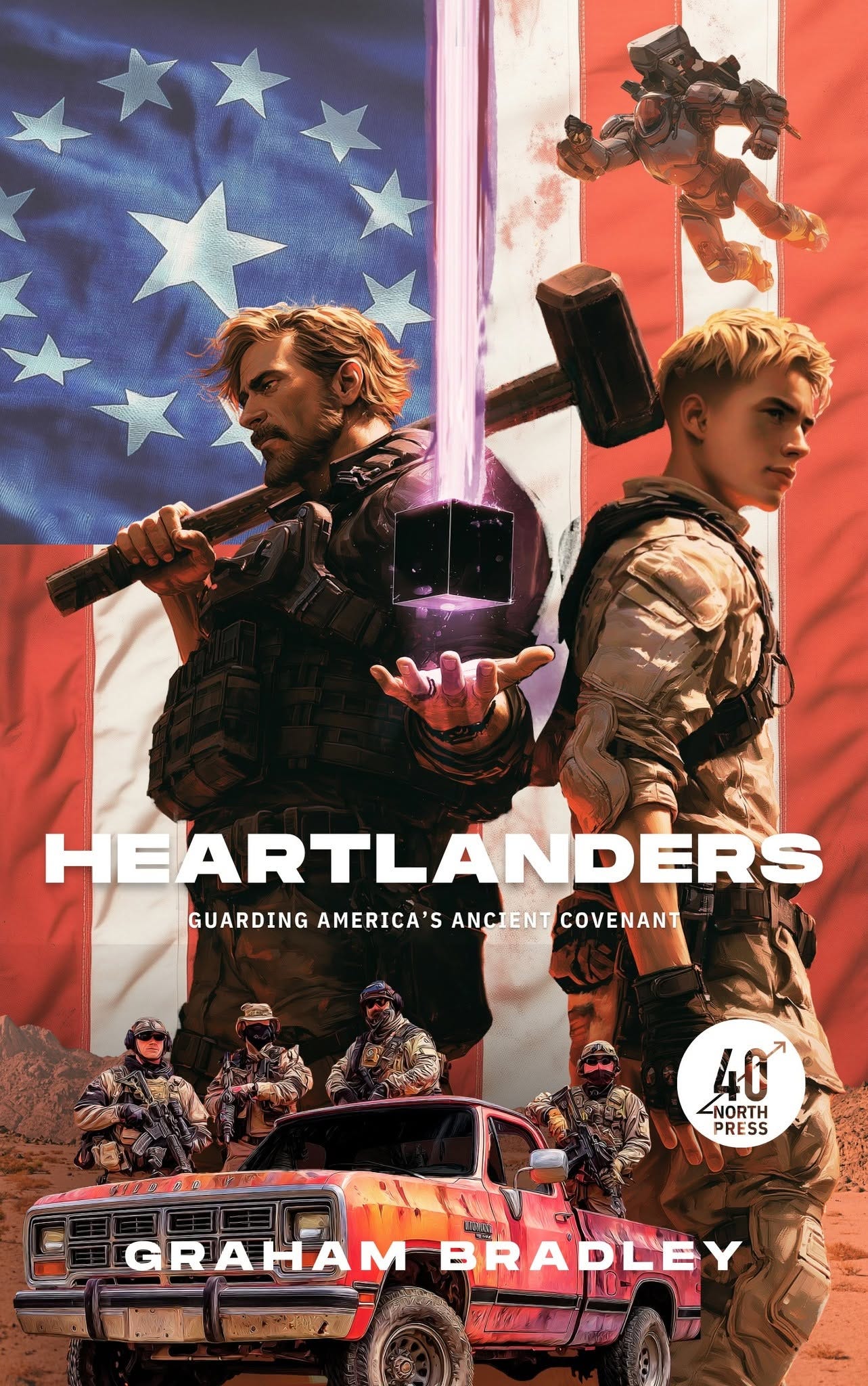
Visit Nauvoo Supply to order HEARTLANDERS, the most American novel I’ve ever written. It’s like if National Treasure happened during Fallout with G.I. Joes.
My Amazon page has my other books, including FOSSIL FORCE for young boys and Engines of Liberty for all ages.
I post several times per week on YouTube.
Subscribe here for more book reviews and for articles on what I continue to learn as I read.