

2026 is America’s 250th birthyear. To celebrate, I’m highlighting 50+ significant American documents from our history. So far I have covered The Mayflower Compact, Patrick Henry’s Speech, The Lee Resolution, The Declaration of Independence, the Articles of Confederation, the Treaty of Paris, the Virginia Plan, The Northwest Ordinance, The Constitution, the Bill of Rights, the Louisiana Purchase, the Star-Spangled Banner, and the Monroe Doctrine.
Subscribe to get these articles in your inbox, along with my regular book/comic/movie reviews. I also like money, and if you like me having money, become a paid subscriber. There’ll be special content for you, including original fiction, and early access to posts.
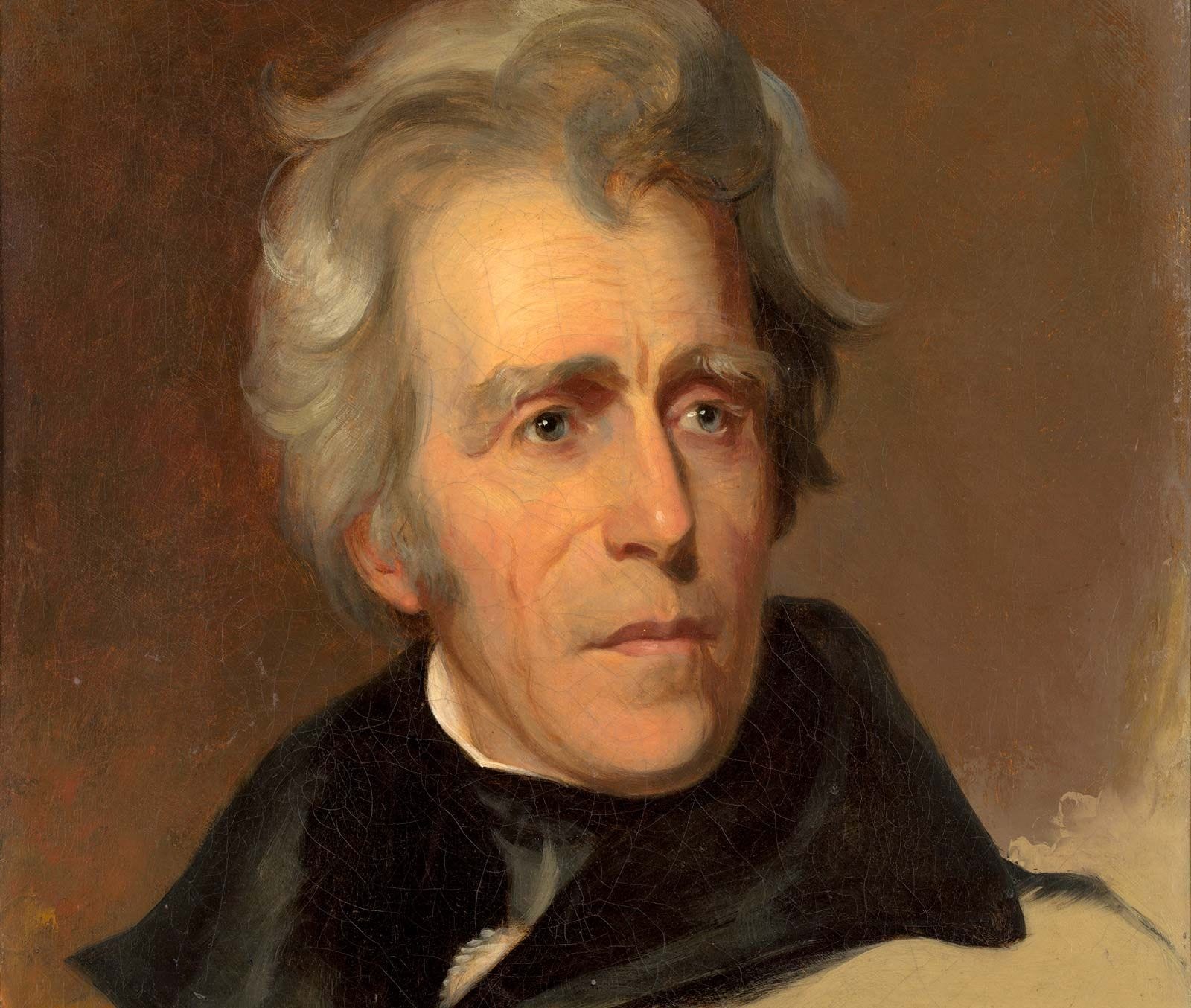
Alright boys. This is a big one. The Indian Removal Act of 1830. An order from a sitting president to remove an entire group of people from the southeast U.S. (Georgia) to the Indian Territory west of the Mississippi (Oklahoma) based purely on their ethnicity. The kind of thing we would not tolerate today, though it wouldn’t be the last time in our history that the government would do this.
The hell of it is…Andrew Jackson probably made the best choice he could with this act. And he made his case for it in an address to Congress in 1830, which you should read.
Why did he do this?
By 1830, Americans—the descendants of English settlers who had arrived in the 1600s—were their own ethnic and cultural group. They shared ancestral ties with England but those ties were far removed, and they had become their own people. There was no “back” for them to go to. That said, their identity was a fractured and unstable one at this point in time.
The Constitution that formed the legal basis of their nation was a difficult document to ratify, and it had taken our greatest legal minds several months of debating, drafting, and refining to get it to what it was. Three Founders, including a future president and Justice, wrote eighty-five papers in 1787 to persuade the public to endorse the Constitution. (These are the Federalist Papers.) Anti-Federalist detractors wrote over two hundred to rebut them. Arguments were fierce and well-reasoned. The Union was young and fragile. The paint had not dried, the mortar was not set, and the wrong shove could undo the whole thing.
In the middle of all this, you had two separate cultures and ethnic groups trying to occupy the same space at the same time, an endeavor that has never really worked out in the history of man. Whites were outbreeding the Natives, and with their relatively industrialized agricultural methods, they had a larger land footprint per person, so the demand for real estate was high. Native numbers were already dwindling from a number of causes, not least of which were disease, but there were other factors.
As a result, Native land plots were shrinking and American demand was growing. Andrew Jackson, as president, didn’t cause the problem and yet he had a role to play in solving it. If he ordered the more numerous Americans to abandon their designs on expansion in the South, they would just rebel and expand anyway. This would inevitably lead to armed conflict, especially if in the end Jackson had to lead the Federals into the States to enforce his orders.
The Indian nations, on the other hand, had a different relation to the federal government, and a diplomatic solution—on paper—was reached: Go west, resettle out there, and your culture can endure. Your numbers may even recover. You’re headed toward extinction and staying put will do you in. If I try to tell Georgia to back off, we’ll fracture and fall to civil war, and then even the hope of federal protection won’t exist for you. This is the best solution.
There are seldom any perfect answers in these situations, and sometimes there aren’t even great ones. You’re lucky for a good one. Given the context of the time period, I’m inclined to say this was the best that could be done to prevent bloodshed…
…but bloodshed still came.
Given the conditions of the Cherokee people and the time in which they were made to move, thousands of them died from starvation, exposure, and the plain difficulty of the trek. These problems were compounded by their age, health, and nutrition. History calls this the Trail of Tears, with good reason.
(Side note, in one of his Lost Treasures anthologies, Beau L’Amour found the beginnings of a “Trail of Tears” novel that Louis L’Amour had written before his death, and it’s a damn shame we never got to see a finished version. I digress.)
This brings us to the big question:
Was it right?
The primary defense I would make of the IRA would be to echo Jarrett Stepman’s 2015 article imploring America to keep Andrew Jackson on the twenty-dollar bill. It’s a Breitbart article, and they’re a hit-or-miss outlet, but ignore that and take the time to read Stepman’s reasoning. I think he says it better than I could:
…this narrative of Jackson as a mastermind of genocide—almost demonically hateful toward American Indians—is false. The story of Cherokee Indian removal is far more complex than the simple, but ideologically useful narrative of greedy American oppression that one often encounters in a modern classroom.
Furthermore, Jackson didn’t enact Indian Removal out of nowhere. He was asked by the governor of Georgia to solve a burgeoning problem that regularly resulted in interracial conflict between southern whites and Cherokee Indians. This was roughly 150 years after King Philip’s War up in Massachusetts and the lead-up was painfully similar. Nobody wanted to see that kind of death and devastation again.
In an 1831 letter to President Jackson, Georgia Governor George R. Gilmer, pleaded for Jackson to solve the worsening situation and made a case that Georgia could not bear the burdens placed on it while its own sovereignty remained dramatically restricted.
In the letter, Gilmer wrote:
…the Indians have neither been compelled to pay taxes nor perform any civic duties. The only operation of the laws since the extension of the jurisdiction of the State over them has been to protect them from injury by the punishment of crimes, & the removal of the whites who had been tempted into their Country by the attraction of the Gold Mines… If the Cherokees are to continue inhabitants of this State, they must be rendered subject to the ordinary operation of the laws with less expense and trouble and more effectually than heretofore.
You couldn’t have a cultural and legal system that declared everyone equally subject thereto, and then declare a boundary wherein it applied, and then endure a huge amount of people living inside that boundary who didn’t have to abide by that system. This was a core element of the conflict and it had to be resolved or they’d all start killing each other.
The federal government, caught between Georgia and the Cherokee, had difficulty maintaining security for the tribe and peace between the two societies. The discovery of huge gold deposits on tribal land in the 1820s created a massive challenge for the federal government as it attempted to maintain the border. Additionally, the sudden creation of a Cherokee government declaring itself independent and sovereign under a new constitution in 1827 made the tribal nation’s legal status ambiguous.
The Cherokee were now going through the same diplomatic carousel that France had tried out a few decades before, switching entire modes of government in the middle of international negotiations, demanding that treaties with a prior head of state be honored even as a new head of state cast off the old foundation. America had rightly rejected dealings with France after their Revolution resulted in a dead monarch. It shouldn’t be a shock that a new Cherokee constitution threw a wrench in the works as regards their Federal relationship.
…Jackson could have deployed a huge amount of government resources in an attempt to protect the Cherokee from the ravenous Georgians. Though this option appears to be the clear ethical solution to modern eyes, it too was fraught with complications and dangers, for both the Union and the Cherokee.
In 1830, the national government had neither the economic nor the military means to prevent widespread incursions into Cherokee Nation lands. The Federal government had to engage in a delicate balancing act between its obligations to the Cherokee and the practical and legal limits of its ability to control Georgian citizens. If Jackson had marched in with a federal army, there would have been an angry backlash coming, not only from Georgians, but from nearly all Americans. A large, standing, peacetime army, marching into a state and threatening state government would have been, not just politically untenable, but dangerous to the then-delicate integrity of the Union.
Alexander Hamilton, for all his bastardly verbosity, made it wholly clear that the Federal system was the only thing that could preserve the clusters of states as a union at large, otherwise they’d fragment and fall victim to larger European powers who still had a foothold in the Americas. (Britain, France, Spain.) The War of 1812 was still fresh in America’s memory; Andrew Jackson had earned all his military glory in that war and he knew Britain would swoop in on a fractured America to deal the final blow. Then where would the Cherokee be?
Was the Indian Removal Act right? It was likely more right than any of the alternatives, and there’s a powerful case to be made that Removal ultimately facilitated the endurance of the Cherokee Nation to this day. Indeed, this was one of Jackson’s stated aims in his address regarding the Act. From the text:
The consequences of a speedy removal will be important to the United States, to individual States, and to the Indians themselves. The pecuniary advantages which it promises to the Government are the least of its recommendations. It puts an end to all possible danger of collision between the authorities of the General and State Governments on account of the Indians…
The tribes which occupied the countries now constituting the Eastern States were annihilated or have melted away to make room for the whites. The waves of population and civilization are rolling to the westward, and we now propose to acquire the countries occupied by the red men of the South and West by a fair exchange, and, at the expense of the United States, to send them to land where their existence may be prolonged and perhaps made perpetual…
…is it supposed that the wandering savage has a stronger attachment to his home than the settled, civilized Christian? Is it more afflicting to him to leave the graves of his fathers than it is to our brothers and children? Rightly considered, the policy of the General Government toward the red man is not only liberal, but generous. He is unwilling to submit to the laws of the States and mingle with their population. To save him from this alternative, or perhaps utter annihilation, the General Government kindly offers him a new home, and proposes to pay the whole expense of his removal and settlement.
This trial was far more complex than just a bunch of people randomly moving onto a patch of land out of nowhere and killing the current residents so they could build farms. If the past is a foreign country, we need to understand it before we can even consider condemning it.
My personal assessment? It’s as I said above: Removal probably led to the preservation of the Cherokee in the end. I don’t like that thousands of them died on the Trail of Tears for it to happen. I’d like to know more about that particular event and what led to those deaths so I can make a fairer assessment of it. If that part of the Removal was preventable, I’ll have a take on it.
But it’s clear from what I have read that Jackson approached this conflict with an eye toward the preservation of the Union and the long-term well-being of Georgians, the Cherokee as a people, and the United States as a whole. These aren’t easy decisions, and people inevitably suffer no matter what an executive does.
As things stand right now, I don’t see how it was an act of intentional annihilation. To quote Robert V. Remini, who wrote at length about this exact subject:
It has been asserted that Andrew Jackson hated the Indians and that racial annihilation was his real objective. Nothing could be further from the truth. Jackson neither hated the Indians nor intended genocide. For a slaveowner and Indian fighter he was singularly free of racial bigotry. He killed Indians in battle, but he had no particular appetite for it. He simply performed his duty. Moreover, Jackson befriended many Indians; dozens of chiefs visited him regularly at the Hermitage. He adopted an Indian orphan boy (Lyncoya) and raised him as a son. He sanctioned marriages between whites and Indians. He believed citizenship inevitable for the more civilized Indians, and he argued that Indian life and heritage might be preserved (and should be preserved) through removal. [My emphasis]
Andrew Jackson was one of the better men in our history to hold the office of Chief Executive. A plain reading of the facts of his life will make that clear.
My Amazon page has all my novels, including the critically-acclaimed FOSSIL FORCE for young boys, and the Engines of Liberty series for all ages.
I post several times per week on YouTube.
Subscribe here for more book reviews and for articles on what I continue to learn as I read.