

Chapter 17 is called “Of the Coming of Men into the West.”
Finrod Meets the New Move-ins
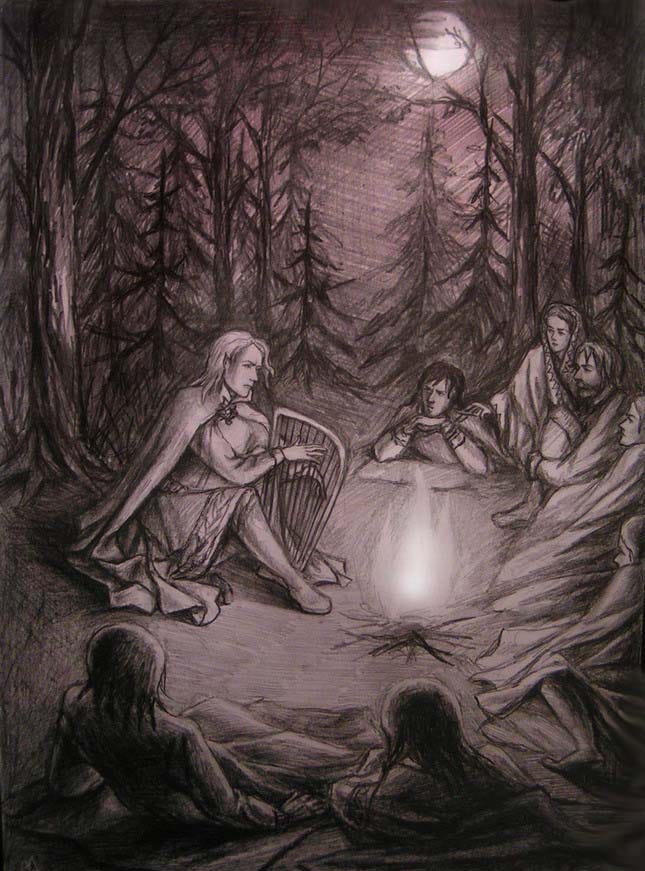
We get one of a few fixed dates here: it’s been 300 years since the Noldor arrived in Middle-earth. Finrod, son of Finarfin (one of Fëanor’s brothers) is off hunting with his kin, gets bored, and decides to keep riding north across Beleriand, where he suddenly comes across a village that is neither Elvish nor Orcish. He quickly becomes the first Elf to make contact with the race of Man in Middle-earth, also called the Second Children of Ilúvatar (the first being Elves. Dwarves are kind of the adopted children, since they were created by Aulë).
Tolkien’s philological roots show themselves here, as Finrod is able to communicate with the Men in their own language, and also use his mental prowess to know exactly what they’re saying so that nothing gets lost in their different styles of communication. Niche and nuance aren’t misconstrued so as to add confusion; they make themselves understood.
They become friends and he learns of their customs. Their leader is a man named Bëor, who tells Finrod that the Men don’t exactly know where they come from, that their past is dark, and instead they look to “the West” for enlightenment. (The Valar are in the West.)
Morgoth is Doing His Thing
Since Men are the shiny new thing in Middle-earth, everyone is at least curious about them, not least of whom is Melkor the Morgoth. His plan, naturally, is to meddle with the relationship between Elves and Men and get them to hate each other. However, he didn’t personally take charge of that mission and he left it to some of his lesser servants who weren’t up to the task, so the union of both races grew strong.
When he does get more directly involved, he falls back on his reliable tactics of lies and infiltration, impersonating leaders of Men and putting them into contentious meetings with the Elves, saying things that the kids these days would call “out of pocket.” Men and Elves were mostly able to clear the air of these misunderstandings, though some branches remained contentious, and one man in particular—Amlach—swore a lifelong quarrel with Morgoth for lying in his name.
Failing in this, Morgoth busts out the even-older-and-more-reliable tactic of open war and just starts killing Men in their lands, including a group called the Haladin; he slays their king and his son, but his daughter remains behind, and she’s no pushover…
Haleth: The OG Girlboss
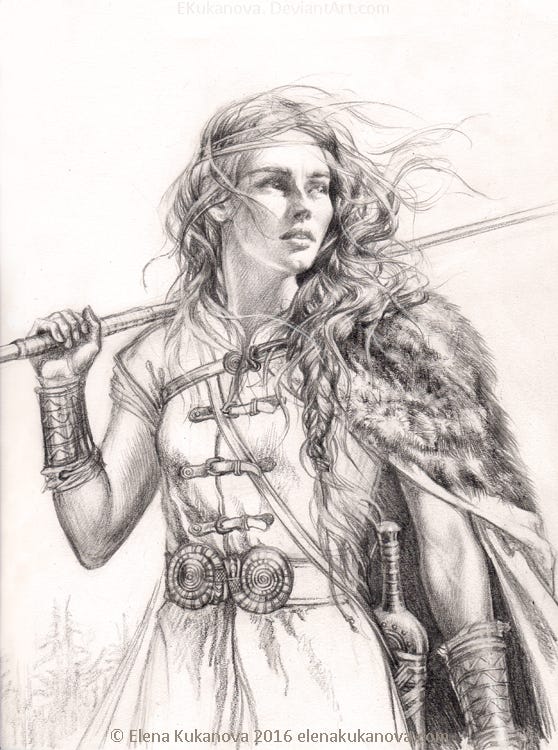
Despite losing her dad and brother to orcs, Haleth takes up a shield to defend her people. Some of them lack confidence in her but she’s able to hold out until an Elf named Caranthir can pull up to provide support and help her win.
Caranthir offers Haleth protection in his lands, though this would come at the cost of her people’s independence, which she turns down. They pick the hard way because freedom is superior to security. She goes with his good wishes at her back and leads her people through hard places and hard times. She doesn’t get married or have kids; the kingship eventually lands with her late brother’s son.
From there you get some genealogy and some tracking of this group of Men, and others; since they live shorter and reproduce faster, the lines of Men become more numerous, and we end up focusing on a king named Hador from another line, key among them being a boy named Beren, who will soon go on to do great things in this world.
Confronting Mortality
Bëor lived to be 93 years old, then he died. A long life for a man, an extremely short one for an Elf. This forces Elves to come to grips with the fleeting nature of their friendships with Men, and it helps them to know grief, which is one of two things that can kill an Elf if they experience it too much, or too intensely. Both races learn from each other and are invariably affected by the other.
I’m fascinated by Tolkien’s presentation of this idea, that death is a gift given by Ilúvatar to Men, because it greatly changes their motivations and how they spend their time in life, something the Elves don’t think about in the same way at all. It gives me (and I assume other readers) an alternate perspective on the value of our lives and what we do with them before we go on to the next phase of existence—and not even in Tolkien’s worlds do the Elves know what lies beyond, despite having once been in the very presence of the keeper of the dead. He also keeps his secrets, because there are some things you just don’t get to know until you’re ready.
Get your paperback copy of the Silmarillion and read along! This is an affiliate link, so if you buy a copy through here, I’ll get a small commission.
THIS is how to write a GirlBoss - no lectures, no moral posturing - just pure adventure and occassional elfery