

2026 is America’s 250th birthyear. To celebrate, I’m highlighting 50+ significant American documents from our history. So far I have covered The Mayflower Compact, Patrick Henry’s Speech, The Lee Resolution, The Declaration of Independence, the Articles of Confederation, the Treaty of Paris, the Virginia Plan, The Northwest Ordinance, The Constitution, the Bill of Rights, the Louisiana Purchase, the Star-Spangled Banner, the Monroe Doctrine, the Indian Removal Act, the Knickerbocker Baseball Club rules, Lincoln’s ‘House Divided’ Speech, and the Emancipation Proclamation.
Subscribe to get these articles in your inbox, along with my regular book/comic/movie reviews. I also like money, and if you like me having money, become a paid subscriber. There’ll be special content for you, including original fiction, and early access to posts.
Not Quite President
There are two men who have technically held the office of American President, but that technicality is lifting WAY more weight than it’s qualified to, with bad form, bad knees, and a death wish.
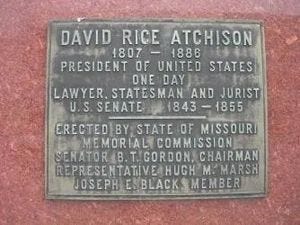
The first is David Atchison, a Missouri Senator whose main claim to fame is that he was “President For A Day.” James K. Polk’s presidency ended on March 4, 1849, which was a Sunday, and Zachary Taylor refused to be inaugurated until March 5, in observance of the Sabbath. Due to presidential succession rules established in 1792, the president pro tempore of the Senate—a senator appointed as President of the Senate by the VP when the VP couldn’t be there—was next in line for the Executive Branch.
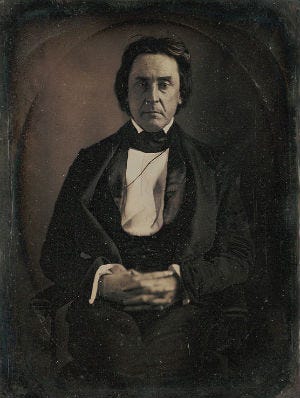
With Polk and his VP out, and no new president for a day, Atchison was, technically, president at that time. However he never took the Oath of Office, never put forth any policy, never did anything relevant to the office on that day. It was just another Sunday for the man. Law students and historians bring it up because it’s a unique occurrence in our history, that’s all.
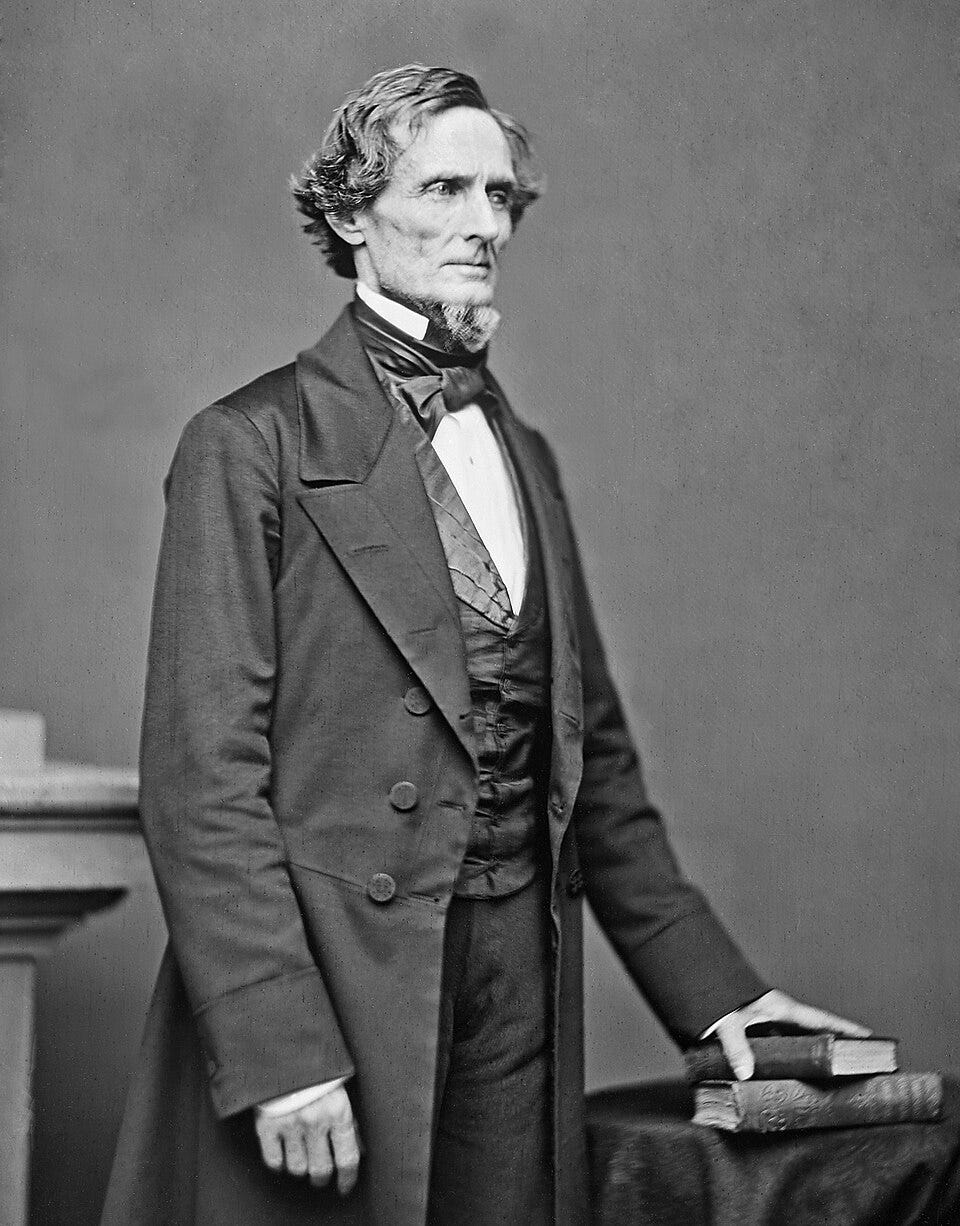
The other not-quite-American-President was a colleague of David Atchison, an uppity guy with an above-average military and political career (but only just) from Mississippi: Senator Jefferson Davis. Both men were extremely pro-slavery and were making political moves to ensure that new territories like Kansas would receive the practice.
(This sucks because there are actually reasons to like David Atchison, like his advocacy on behalf of the Mormon settlers who were violently assaulted and repelled from his state in the 1840s; the Mormons were, themselves, anti-slavery, and voted as such, which is part of what the locals didn’t like about them, but I digress. I shall have to read more about Atchison.)
From the moment Abraham Lincoln won in 1860, the South started to secede, and a hasty government was assembled. Jefferson Davis didn’t campaign for the Confederate Presidency, but it was decided by the Southern power brokers that he should be Their Guy, and the mantle was thrust upon him. He held the office for the duration of the Civil War, first in Alabama, then later in Virginia. And he gave at least one—technically two—inauguration addresses.
The first address, like any American inaugural, describes his feelings upon assuming office. Humility, virtue, patriotism, ra ra ra.
The more I study the Revolution and the Civil War, the more I understand that the South viewed the Civil War as an extension of the Revolution. They believed they held cultural, traditional, and legal ties to the Revolution. As I’ve said before, 5 of the first 7 presidents were from Virginia, and the 2 who weren’t happened to be father and son from the same part of Massachusetts. Many prominent Southerners were related to or descended from Virginia’s founders.
So statements like this made sense to Davis’ contemporaries:
Our present condition, achieved in a manner unprecedented in the history of nations, illustrates the American idea that governments rest upon the consent of the governed, and that it is the right of the people to alter or abolish governments whenever they become destructive of the ends for which they were established.
That’s basically paraphrasing the Declaration of Independence. They viewed that whole process and course of action as theirs to carry on.
The rest of that first speech is some table-setting, establishing a narrative, and laying out a few general policy points to pursue. All that was secondary to the war that everyone knew was coming. That had to be the main focus.
His second address was a little more thorough. Issued a year later in Richmond, and on Washington’s birthday, he invoked Father George and claimed him for the South.
Fellow-Citizens: On this the birthday of the man most identified with the establishment of American independence, and beneath the monument erected to commemorate his heroic virtues and those of his compatriots, we have assembled to usher into existence the Permanent Government of the Confederate States. Through this instrumentality, under the favor of Divine Providence, we hope to perpetuate the principles of our revolutionary fathers. The day, the memory, and the purpose seem fitly associated.
The general theme and tenor of the speech was one of animation: early 1862 had gone poorly for the Confederates and while they had enjoyed initial success in 1861, things were looking grim. Southern Grit could carry you far but couldn’t carry the day. It was mainly their ideas and their stories and buoyed them along—they were fighting for their nation, their people, and their way of life. If slavery hadn’t been such an entrenched institution in those things, they might have had a different result.
But alas, slavery had to end, and so it did, along with the career of a man who—with a massive asterisk next to his name—was an American President.
The count remains at 47 for now—and 45 men overall.
My Amazon page has all my novels, including the critically-acclaimed FOSSIL FORCE for young boys, and the Engines of Liberty series for all ages.
I post several times per week on YouTube.
Subscribe here for more book reviews and for articles on what I continue to learn as I read.