

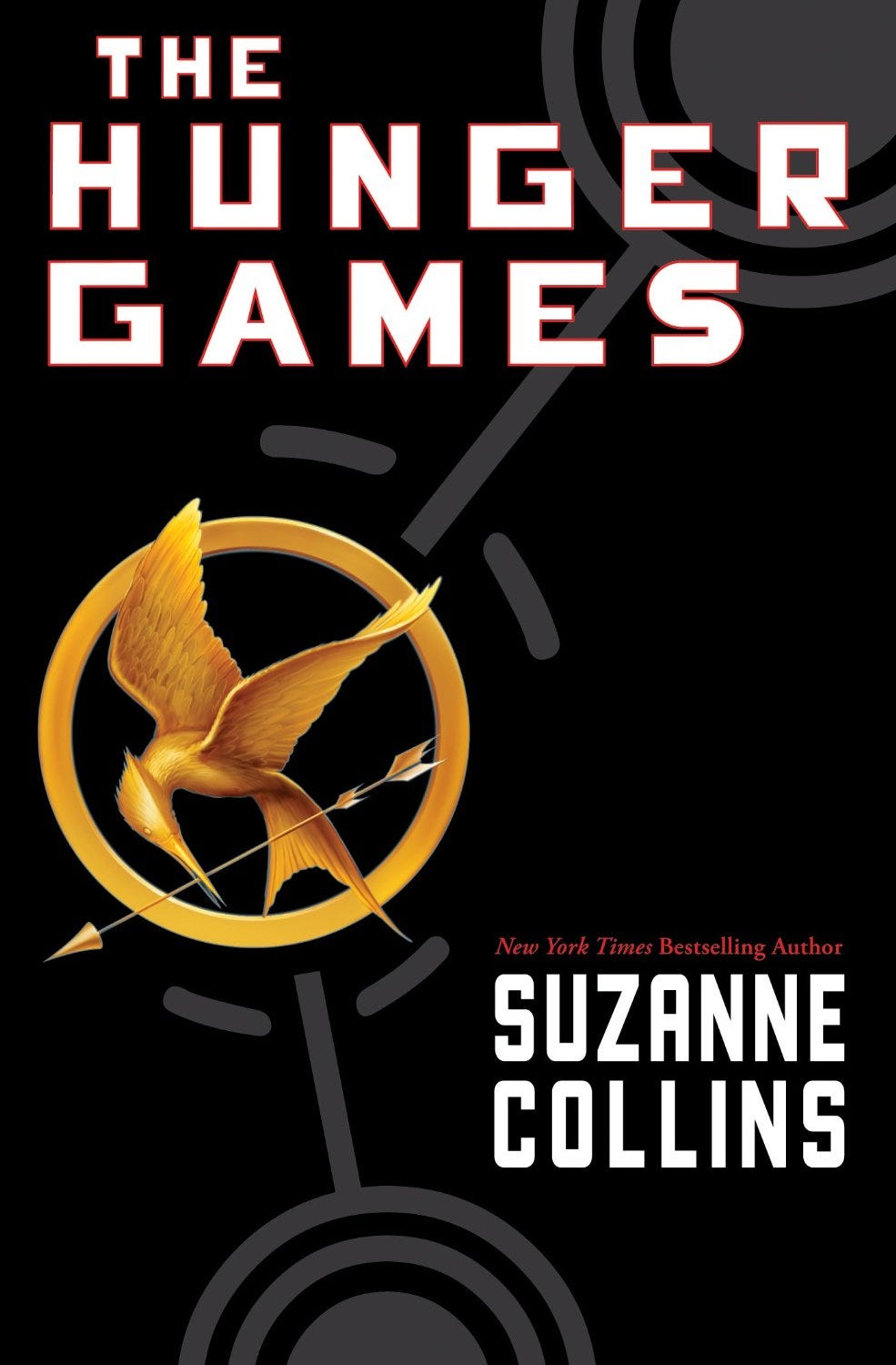
Welp, it’s September of 2024, which means it’s been 16 years THE HUNGER GAMES came out. In 2008 the market for young adult novels was juuuuust starting its downward slide; Twilight had concluded its inexplicably popular run in August, and Harry Potter had finished the year before. There were other best-sellers that had their niche and earned their success but none of them reached the level of a worldwide cultural sensation like those two. Within a decade, Young Adult as a genre would be at a fraction of its power.
However, The Hunger Games defied the trajectory. It remains the most mature of them all. At a time when every protagonist was compared to Bella Swan or Harry Potter, Katniss Everdeen proved that she was neither, in a saga that had something very real to say about the world we live in.
A decade and a half after the YA boom died, THE HUNGER GAMES is still relevant, and doesn’t look down on you from your bookshelf to fill you with the same sense of embarrassing dread as your dad’s disco suit does in his closet.
Why? The answer lies in the genesis of the story.
Where it came from
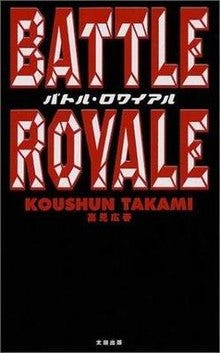
Despite what fans of Koushun Takami might tell you, Suzanne Collins didn’t come up with the idea for her book by reading BATTLE ROYALE. It’s entirely possible for authors who don’t know each other—and don’t read each other’s work—to produce similar ideas and even generate similar story beats within those ideas. This happens on a regular basis and I’ll write up another piece later to analyze it. For now I want to get that claim out of the way, because fans of BATTLE ROYALE are very vocal about their annoyance on this point.
No, Collins drew on a combination of things, one of which was her familiarity with the Greek legend of Theseus and the Minotaur, and how it forced people to give up children as tributes on a regular basis. Later she would catch herself channel surfing and toggling between coverage of the Iraq War and reality TV. These elements combined and permeated together to form the foundation of the world of The Hunger Games, wherein children were forced to fight each other to the death in order for the government to maintain its power.
On its face, BATTLE ROYALE has the same premise. Again I direct you to Theseus and the Minotaur, who told this story thousands of years before either Takami or Collins. BATTLE ROYALE came out in 1999 and received a film adaptation in 2000, in the Japanese language and with a Japanese cast. There had been plans for a western adaptation but studios at the time were hesitant to handle such a violent topic in the wake of the Columbine incident. Almost a decade later THE HUNGER GAMES came along and sucked up all the potential oxygen for that kind of story, bolstered by a willing audience for YA books and movies that had swelled since then.
I can understand being one of the niche western fans for a lesser-known book that probably won’t get its shot because something similar gained wider traction later on. This frustration, however, does not congeal into some kind of proof that Collins read or drew from Takami in the production of her work. The genesis of her story has remained consistent and I can say, after having read both books, that they’re not at all trying to say the same thing. Collins uses the underaged gladiator element as a cautionary tale against totalitarianism, while Takami is telling more of a horror story and the human will to survive mortal peril. His protagonists team up and hack the game in a technical sense to escape. Collins’ characters have to hack the audience and therefore undermine the very reason that the games exist in the first place: control of the populace.
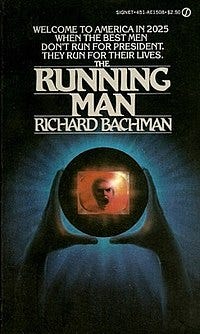
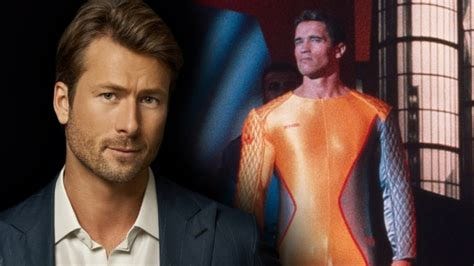
It’s also worth noting that Stephen King’s THE RUNNING MAN novel, which was released under a pen name in 1982, also focuses on a man in a game show to the death, and the show is televised, which is another core element of THE HUNGER GAMES. King had nothing but praise for Collins’ work, and there’s a remake of The Running Man film in the works right now, starring Glen Powell.
These things happen. Writers can stumble into similar ideas independent of each other and use them in different ways. Theseus and the Minotaur still go to war, but for different reasons and with a different outcome.
An allegory for the ages
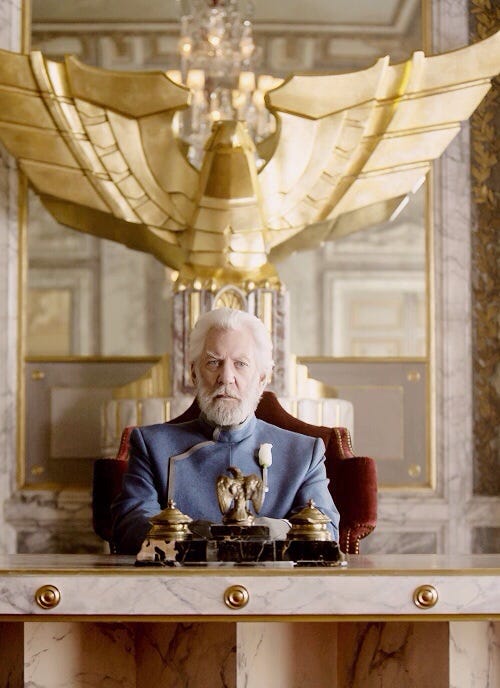
If a story is going to have any power as a metaphor or an allegory, it has to be subtle. Many authors fail this provision and, in their clumsiness, just beat you over the head with it. This requires a delicate hand and the rare quality of restraint, to say nothing of maturity in handling a subject that can be universally recognized. President Coriolanus Snow wasn’t some cheap stand-in for George W. Bush (the unpopular president at the time of the novel’s writing) and Katniss wasn’t some flawless overpowered girlboss. Snow was a manifestation of absolute tyrannical power, and Katniss was an example of the tens of thousands of people at the receiving end of that tyranny.
She just also happened to have a unique set of attributes and, combined with a unique set of circumstances, she found herself thrust into the limelight, into the heart of the games, and directly into contention with the president himself. That alone is the exceptional quality of THE HUNGER GAMES—not that it takes place in a post-downfall America, or that there are thirteen districts and severe class distinctions, or that everybody has funny names and they use technology for weird things. No, it’s the idea that there could be someone like Katniss in your neighborhood, even in your family, who would completely go to war if the right conditions were met.
That’s not to say that she suddenly became an unstoppable killing machine; Katniss took plenty of damage and had close calls along the way. She faced challenges that were not in her wheelhouse to face. While she was capable of being cold, technical, and indifferent to others, her entire raison d’etre for entering the Games was to protect her younger sister. If she didn’t volunteer to take Primm’s place, Primm would have died. If Katniss didn’t win the Games and get home, Primm was still likely to die because their mother was prone to mentally checking out. In a world defined by cruelty, exploitation, and indifference, she found one thing that she loved unconditionally, and through her example everyone else found the one thing that the Capitol couldn’t crush.
This particular aspect of Katniss’ character—and its impact on others—is a core component of what it means to be human. Just as often as we’ve seen tyranny and oppression take hold in the decadent stages of civilization, we’ve also seen acts of love that push people to make otherwise senseless decisions.
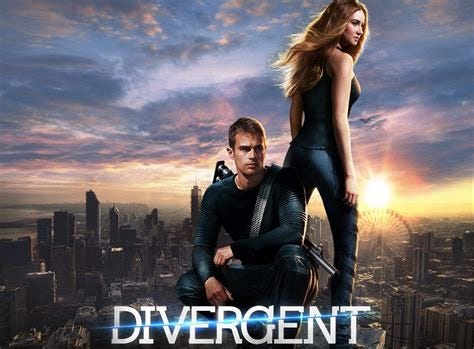
It’s the universality of this love that has given THE HUNGER GAMES its staying power over the last sixteen years. Other series in the same genre, while fluffy or enjoyable, didn’t have something so profound to pin them up. DIVERGENT was just a girl writing about a girl who was the specialest girl among all the other girls, and saved the world with her girlness. THE MAZE RUNNER was more or less the same thing with a boy as the main character—with a little bit of J.J. Abrams-style “ask and don’t answer” trickery to keep things moving.
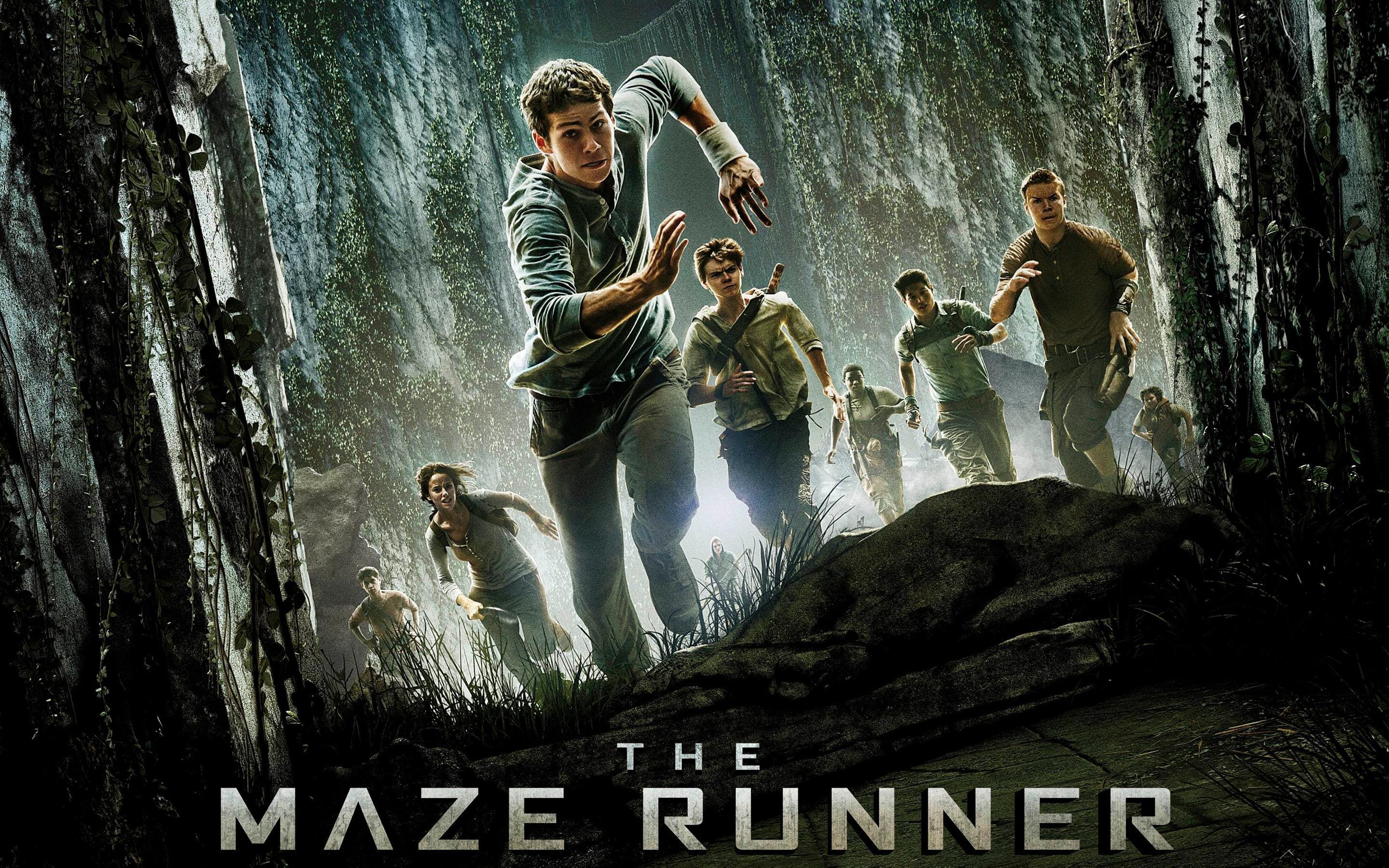
None of those books are really about anything. There’s a touch of an idea here and there and that’s it. The rest is about running from danger, winning a fight, being the Good Guy and fighting the Bad Guy and that’s it. Summertime popcorn stuff for its own sake.
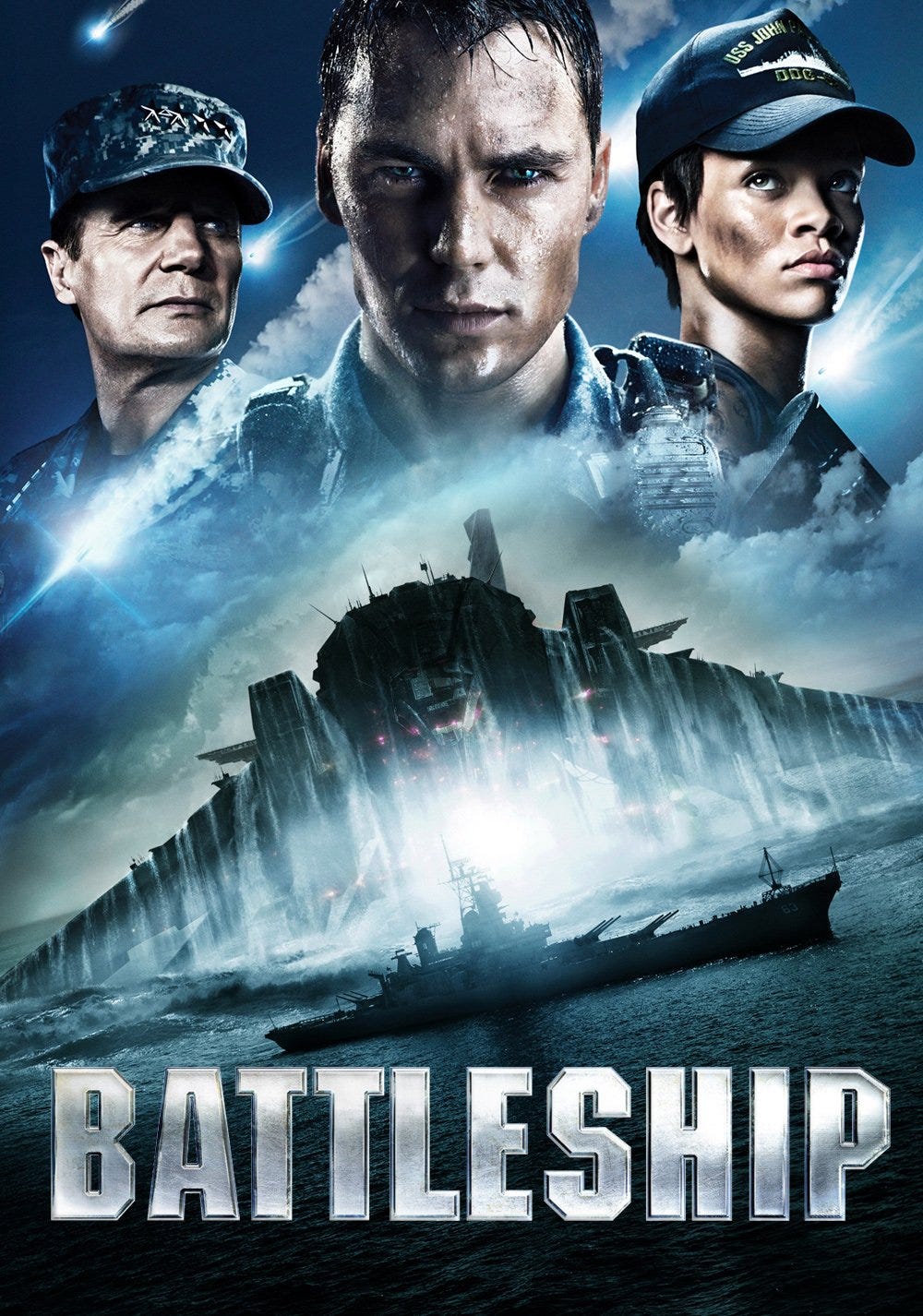
And let me be clear, I’m not opposed to that. Popcorn fluff has provided hours of pleasant distraction throughout my life. I’ll still defend the movie Battleship and I am right to do so. It just doesn’t mean anything for our day-to-day lives.
THE HUNGER GAMES wears all the right decorations to fit in among the popcorn stuff. There are arenas and monsters and futuristic vehicles and weapons. There are funny names for things, a unique in-world language with catchphrases and lingo. You can meme on current events with screenshots from the movies (which, for the most part, follow the books, although they omit a great deal).
But unlike the others of its kind, when you peel those decorations away, there are still solid bones and substantial muscle beneath it all, a very real echo of things that have happened (and still happen) in our world when tyrants take control over the masses. And when a story with this kind of proximity to reality can reach such a wide audience without insulting them, you’ve created something powerful: a way to disseminate an idea that people might otherwise not be open to analyzing.
Media Versus Militaria
Such is the power of propaganda. Yes, THE HUNGER GAMES is set in a world where the Capitol has all of the guns and tanks and hovercrafts and can kill on a whim without any legal repercussions—but of what use is that power when you need people to produce your resources? Your food, clothing, energy, and more? You need them compliant, which is a delicate balance to maintain. More to the point, you need them to be afraid, and constantly so.
The point of the Games, then, is to remind the Districts that they already tried rising up against the Capitol nearly a century ago and they got their heads handed to them. The war devastated the country and they won’t survive another one, so a balance is necessary to ensure their future. Every year the Districts are forced to sacrifice two children to the arena as a reminder that the Capitol has power over them, and that as long as they don’t try to revolt, this is the worst it will ever be. Besides, play the odds, okay? It’s probably not going to be you in the arena, and you’re only eligible to be drafted for six years in your teens. Just let it happen. The price is acceptable.
Until it isn’t. One of your loved ones is drafted. Suddenly there’s a name and a face on the tribute. The price skyrockets. You run through a cycle of mental exercises as you try to think your way out of the problem, but you always end up in the same place: if you fight to save your loved one, you will die, and other people you love will die, and is that really worse than the status quo?
Someone out there will eventually say yes, and when they finally do, others will jump onto that wagon. Whether they have the means to face the Capitol in a martial contest is irrelevant, because the more substantial fight—that for the will and the mind of the people—has already been lost. The entire purpose of the Games, which is to quell further uprisings, has failed. You suddenly find yourself in a situation where war can be an act of love, and love can be an act of war.
The warfare of THE HUNGER GAMES is first and foremost mental. It isn’t about what happens to the tributes, unless the masses get to see it.
Once you understand that, you’ve got to ask yourself: do I live in that situation? What’s oppressing me? What’s the basis of its power? What is the cost of resisting that power? And if enough people resisted it, what would happen? If enough people SAW that resistance, what would happen?
You can ask this question in the context of the Summer 2020 race riots or the January 2021 Capitol tours and come up with very intriguing answers. The point is, the question is applicable to both situations, and many more besides.
What shared belief is the basis of your civilization’s stability? Is it right? Is it wrong? Do you understand it correctly? Do you support it or oppose it? Why?
These are all things that you should understand in the realm of theory before you ever move into the realm of practice. THE HUNGER GAMES walks you through the answers to all of these questions if you take the time to think about it.
Pitfalls of the Genre
And here is where we run into some issues. Because of the timing of its release and the (nominal) target audience, THE HUNGER GAMES is often dismissed as being the same caliber of book as Percy Jackson or Twilight. There’s a resistance to read it for what it is because of what it is presumed to be.
Trust me, I get it. In the late 2000s I was not only a big reader of YA, I was also trying to break into publishing YA. From 2011 to 2013 I had an agent who exclusively dealt with Middle Grade and YA books, and some publishers even rejected one of my manuscripts because it had too many similarities to THE HUNGER GAMES. (There were faction-related elements, a contest, a rigged component to the contest, and more.) I know the genre. I was neck-deep with the audience.
But speaking as a guy who was 24 when the first book dropped and am now 40 at the time of this writing, I can tell you that I haven’t read many other YA series from that era more than once. I could force myself to do THE MAZE RUNNER again and have a decent enough time doing so, provided I didn’t bother with the sequels. Gun to my head I could probably read DIVERGENT a second time, but please remember that we have the Geneva Convention. There’s a reason I have read THE HUNGER GAMES series four times and in two different languages.
It’s worth the time and worth the analysis.
More to come
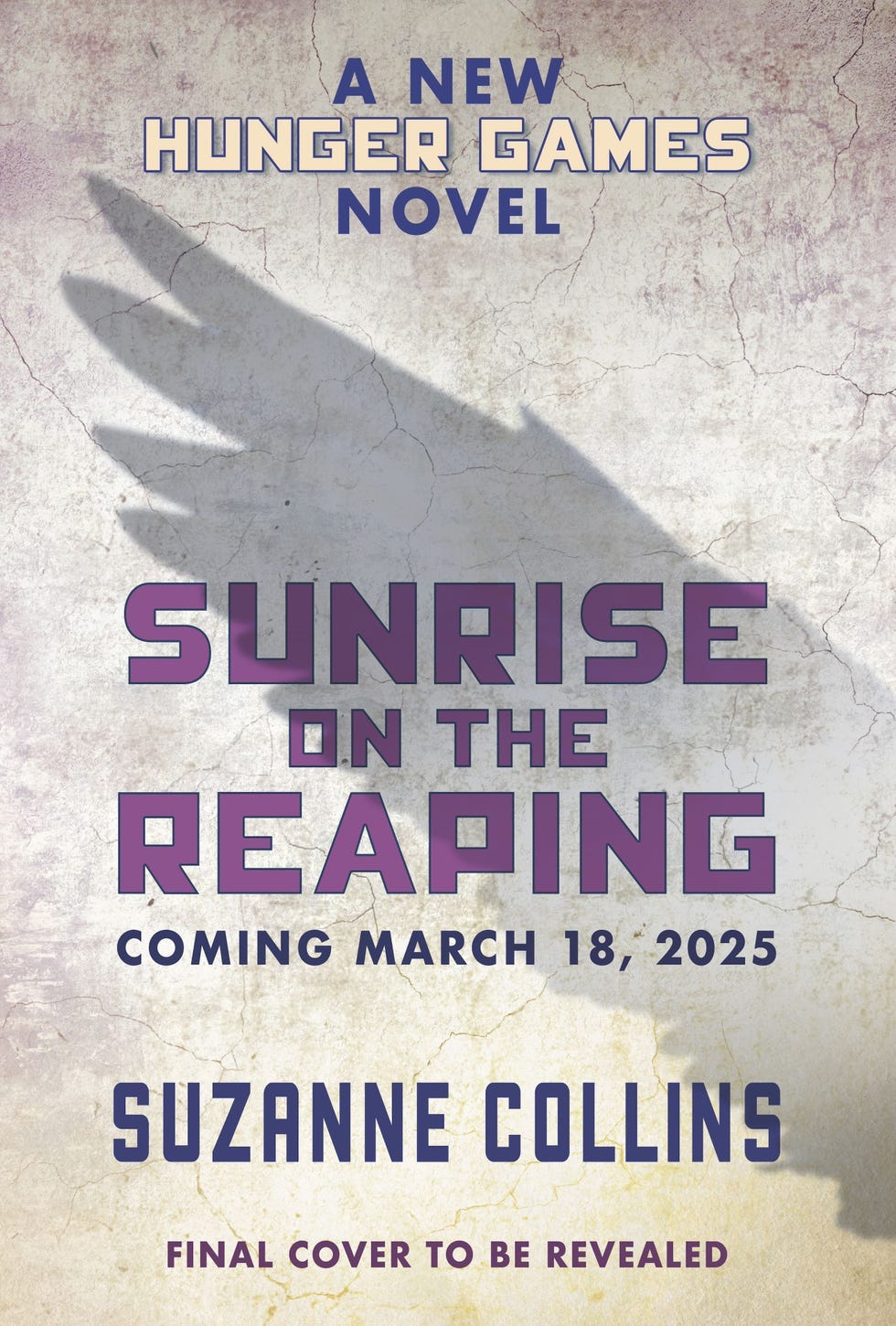
Next spring, Collins will release the fifth novel in the series, SUNRISE ON THE REAPING. It’s about the 50th Hunger Games, which had double the number of tributes in it. The winner, as we know later on, was Haymitch Abernathy from District 12, the alcoholic mentor to Katniss Everdeen. I’m unlikely to give an author an absolute hall pass and say that anything they write will be perfect—even L’Amour has produced stories that bored me.

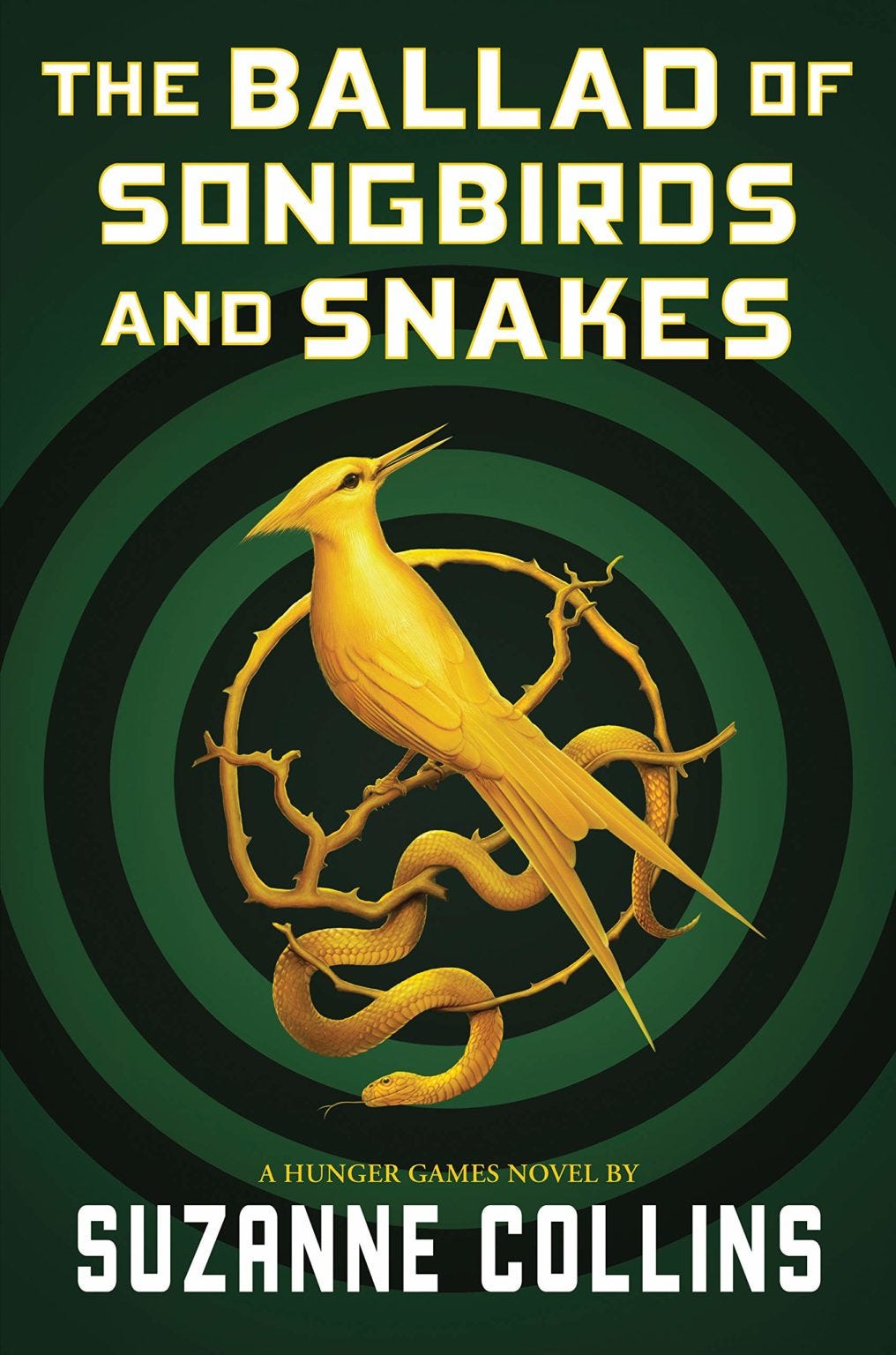
But I can say that in 2020 when THE BALLAD OF SONGBIRDS AND SNAKES hit shelves, any fears I had of a watered-down cash grab were allayed by Collins’ flawless execution. She went back to the well and she took good care of it, not doing any damage to the story she’d established a decade prior.
Before THE HUNGER GAMES came out, Collins had spent almost twenty years writing for film and television. Not only does this cinematic tone apply itself well to a fast-paced story, her skill and experience in writing are on plain display. She knows what she’s doing and she’s doing it well. This gives me every bit of optimism that a fifth book will do the job that readers want it to.
Over the next few months I’ll be re-reading the existing four books in their release order. While BALLAD is a prequel, its value derives from what pre-exists it, so we’ll go with that structure. I’ll be taking notes on a chapter-by-chapter basis for other longform videos and essays.
As always, to keep up to date on what I’m doing, make sure you’re subscribed here and on my YouTube channel. And if you want to support what I do here, consider becoming a paid subscriber. It’s $5 a month. I do weekly reading updates, regular videos on what I’m reading throughout the week, and paywalled pieces, including my CrackerStack archives that are older than six months.
Thank you. May the odds be ever in your favor.
First Contact: When I found out about it, when I became a true believer, and how it’s become a part of my own lore.
How It’s Done: When Collins went back to the well, she avoided the mistake of late sequels/prequels.