

“This Week in 1776” is an ongoing almanac of events from that year in the American Revolution. Be sure to check out my novel HEARTLANDERS.
Last week the army was still on Manhattan, licking wounds from Brooklyn, while Franklin, Adams, and Rutledge told Lord Howe on Staten Island that independence was not up for negotiation. Talks won’t resolve this because America won’t go back and England won’t just give them up. This week the Howes stop talking and start landing.
September 15 the Redcoats start running flatboats onto Kip’s Bay, delivering the first four thousand professional soldiers to grapple with Connecticut militia. The militia folds. Washington, who was in Harlem, runs down to KB to try to whip the men back to the lines but he fails. When he writes to Congress in the aftermath he describes the attack as a “great surprize and Mortification.” Casualties are a few dozen in number, while a couple hundred get wrapped up as prisoners. British lose almost nothing by comparison. By nightfall, New York is in British hands.
The one thing that saves the army is “Old Put,” aka Israel Putnam, who marched a couple thousand men up the west side of the island with the help of one Aaron Burr, who knows the layout of the city. Howe sets up office for himself on Manhattan while Washington’s headquarters is in Harlem. Logistically he’s positioned to be in another trap. The odds are against him. The next day he sends Thomas Knowlton and some Rangers to test the British lines, but they end up fleeing into woods and fields before tangling with the Brits and racking up some kills. Despite the W, Washington pulls them back. It’s a minor victory that won’t win them the war and he doesn’t want to lose any more men to British prisons. It boosts the men’s morale, though the Brits do kill Knowlton, to everyone’s regret.
This is more or less the week when New York was lost.
Meanwhile in Philadelphia, Congress does the thing they do best: paperwork. September 16 they pass the Eighty-Eight Battalion Resolve. Each state gets a quota of infantry regiments by population—fifteen from Massachusetts, fifteen from Virginia, one from Delaware, one from Georgia, and so on. Enlist for three years or the war. Raise your own “line.” This plan gives them continuity and an experienced Army instead of one that is basically a rebuild every January when their contracts renew.
I said last week that down south, the Cherokee War has become a real war all in its own right. It morphs into a multi-state burning tour. On September 19, Andrew Williamson’s South Carolina militia, marching through the mountains to join Griffith Rutherford, walk into an ambush in a gorge near present-day Franklin, North Carolina. Cherokee take potshots at them from the slopes, and Williamson has to fix bayonets to stab his way out. The fighting is ugly but the SC militia pulls off the W and carries on burning towns.
Speaking of burning towns: back in New York, the night of the 20th, fire starts near the waterfront and spreads into town with an assists from the wind. Even though Congress told Washington not to burn the place, someone went ahead and did it anyway. The Brits will call it sabotage and turn more public opinion against the Patriots, and nobody is looking forward to conditions caused by the smoke in the coming days.
That’s a metaphor, but also, it’s not. Don’t worry, everything gets worse next week. I hope you’re not attached to Nathan Hale.
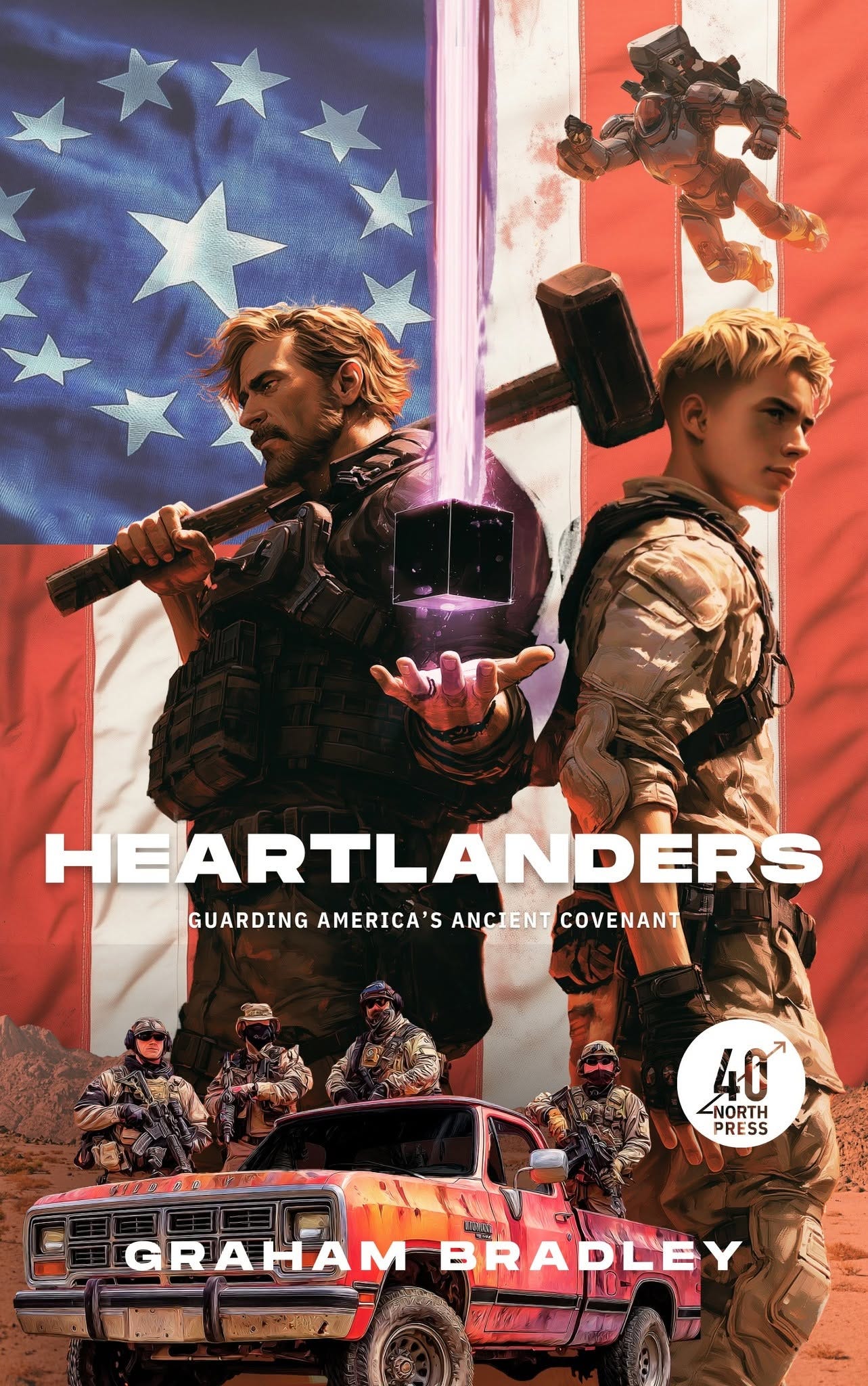
Visit Nauvoo Supply to order HEARTLANDERS, the most American novel I’ve ever written. It’s like if National Treasure happened during Fallout with G.I. Joes.
My Amazon page has my other books, including FOSSIL FORCE for young boys and Engines of Liberty for all ages.
I post several times per week on YouTube.
Subscribe here for more book reviews and for articles on what I continue to learn as I read.