

The final section of The Silmarillion is called “Of the Rings of Power and the Third Age.”
Subscribe for free and get the last six months of all posts. If you pay for the CrackerStack, you get the paywalled content and you help me buy books, so thank you.
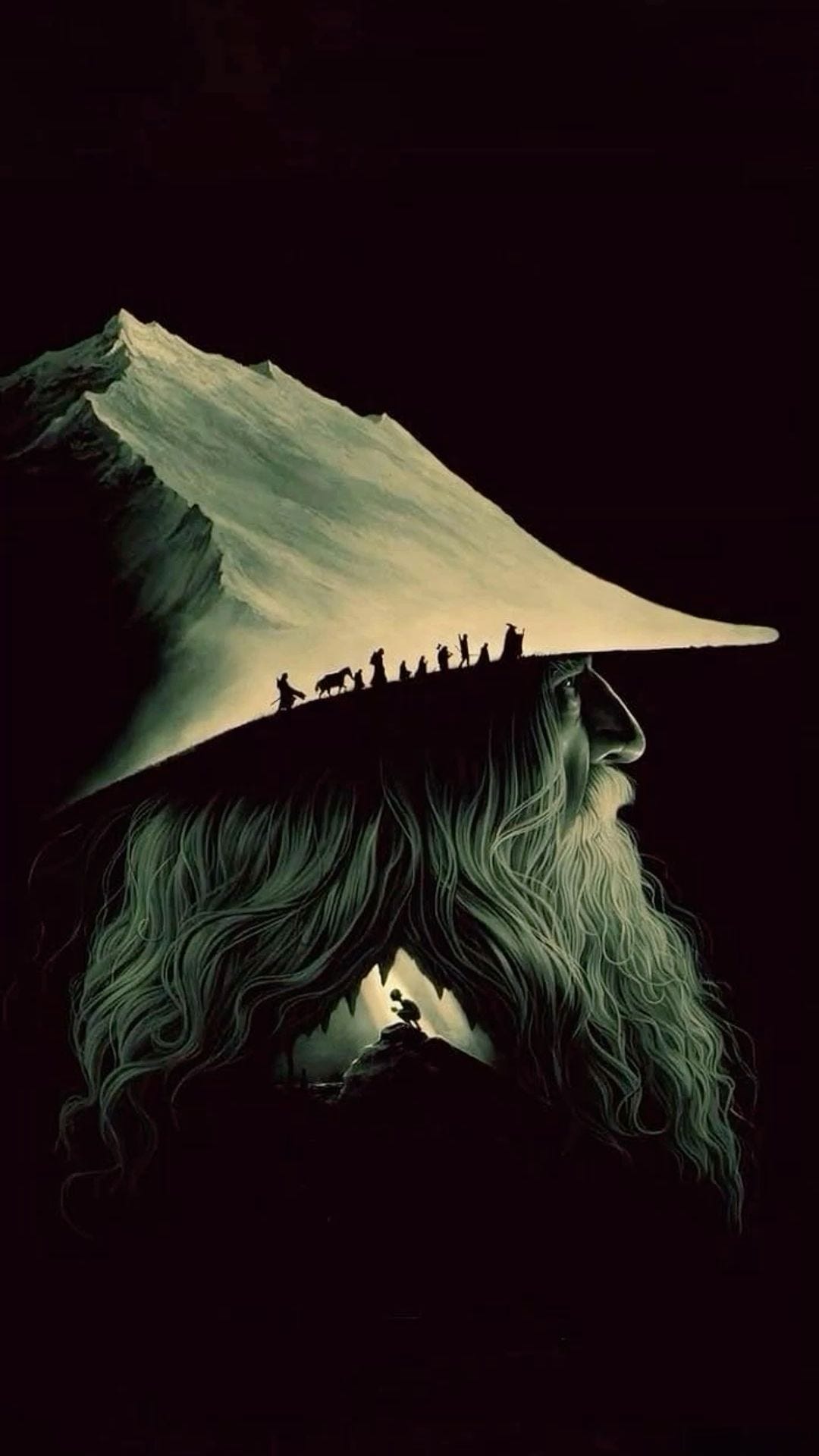
Folks, here we are, at the end of all things. Countless ages and years have passed. There was a war in heaven, the creation of the world, the delegation to the lesser gods, and the coming forth of the children of Iluvatar, both Elf and Man. The Dwarves arrived, though they were adopted into the family. Things were made which could not be duplicated, and deeds were carried out which could not be undone. Legends rose and fell, wars soaked the ground with blood, and true love ascended to the stars.
The Lord of the Rings is not just a saga that starts and ends in the Shire with Frodo. It is the sum total, the end of thousands and thousands of years of history and planning and design by an omnipotent hand. It begins with The Silmarillion and it rewards the reader who diligently pores over its words. When reading The Lord of the Rings you see a timeless world of beauty and tragedy; when reading The Silmarillion, you see why all of it matters. Everything connects backward to the beginning, to the god that set it in motion, and the relief that waits for his creations when their lives are through.
It is appropriate, then, that the final chapter in this collection is a glimpse at the origins of Sauron, an endless being who still underwent his own process in his earliest days and through the most turbulent events of his existence. He attached himself to Melkor and helped him build his power in the world. When Melkor was defeated, Sauron even repented a little out of fear, but such repentance doesn’t last, and he soon fell back upon what he really trusted: his ability to gain power over others.
Case in point, he filled the void left behind by Melkor the Morgoth’s absence, and built his own primeval empire throughout the Second Age and into the Third.
The remainder of this chapter is mainly familiar ground. In fact it sums up everything from the Last Alliance, to Isildur claiming the Ring, to the Ring betraying Isildur and falling into Gollum’s hands, and finally coming to rest with the Bagginses.
Since this chapter is only 25 pages, what you get is a super abbreviated summary of the War of the Ring, the kind that could be used as an outline for a couple of Rankin & Bass movies, up to and including the destruction of the Ring itself, and the Elves’ departure from Middle-earth.
One extra bit of valuable information concerns the Istari, or Wizards, five of whom come to Middle-earth and three of whom are named (Saruman, Gandalf, and Radagast.) Saruman became very interested in the workings of Men, while Gandalf was closer to the Elves, and Radagast took an interest in animals and nature. You also find out what happened to the seven Dwarven rings, the Nine rings for men, and the three Elvish rings, which were hidden from the world when Sauron made the Ruling Ring.
Of the first two Elvish Rings, Elrond and Galadriel were bearers, while the third went to Gandalf. In fact, Saruman felt slighted when the ring was offered to him, because he outranked Gandalf, and it was one of a few factors that contributed to him going down his own path of power.
So there are pieces of information in this closing chapter that you don’t explicitly get from the films, though they might show up in particular pages in the books. It’s been a very long time since I read the print editions of The Lord of the Rings, as I’m primarily an audiobook reader. That just means I’m overdue to read them now.
In closing, it’s important to know how the Third Age ends, because it was all built upon the First Age history that made it not only possible, but necessary. Thus I close my summary of The Silmarillion and its component parts: this is a complex, beautiful, moving work that has relevance to anyone with a soul and a dream. I may lament that I was a less mature reader in my youth and couldn’t fully appreciate what it was, but that just means that reading it now is almost like reading something perfect for the first time, and that happens rarely enough indeed.
Thank you all for following along on this journey. I hope you’ll read The Silmarillion for yourself and share your thoughts.
Until next time, drive safe, see you out there.
Get your paperback copy of the Silmarillion! This is an affiliate link, so if you buy a copy through here, I’ll get a small commission.