

Art in this post is from Keith Thompson’s website. Visit keiththompsonart.com
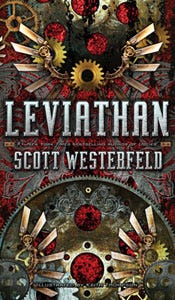
In 2009, YA author Scott Westerfeld kicked off his Leviathan trilogy that plays with the history of World War One by adding genetically modified monsters and giant mechs. Unlike a huge amount of young adult books from that era, this one has aged well and it’s stood up to multiple readings since it wrapped in 2011.
The audiobooks are narrated by Alan Cumming, who does great voice work and accents, while the print edition has some awesome artwork from Keith Thompson. So whether you pull these books into your brain through your ears or your eyes, you’re in for a treat. Frankly I recommend both methods, they’re just that enjoyable.
The worldbuilding is really strong here; Europe is divided mostly into two factions based on technology. There are the mechanical Clankers with their heavy diesel mechs, and the biologist Darwinists who use animals for just about everything. Political alliances are mostly the same as they are in our world, so when Archduke Ferdinand is assassinated, the Great War kicks off, and we see the story unfold through the eyes of two young protagonists.
Westerfeld caps off each book with an afterword that explains the true history in contrast to what he changed for his books. He does take a leftward view of certain events and figures, like Churchill, but not to the detriment of a good story. Without that perspective, key characters wouldn’t have the reasons they need to go on a globetrotting mission, so it actually drives the plot across the map. Even I, an aggressively red meat stick-shift-capable trad dad can appreciate what he’s made here. It passes the test for quality over ideology.
As I am often wont to do, here is a book-by-book summary of the series with some spoilers. Even if you read the following, you should still read the books for the full impact and for the art.
Let's dive in.
Book 1: Leviathan
Our focal characters are Prince Aleksander—an Austrian boy who is the fictional son of Franz Ferdinand—and Deryn Sharp, a Scottish girl who wants to join the British Air Navy. On the night the Archduke is murdered, one of his counts takes Alek on the run from the Kaiser’s loyalists, who want to assassinate him too and take control of the Austro-Hungarian Empire. (In this timeline, Franz Ferdinand successfully petitioned the Pope to legalize Alek as an heir, despite his mother being of common birth. IRL the Pope refused to do so).
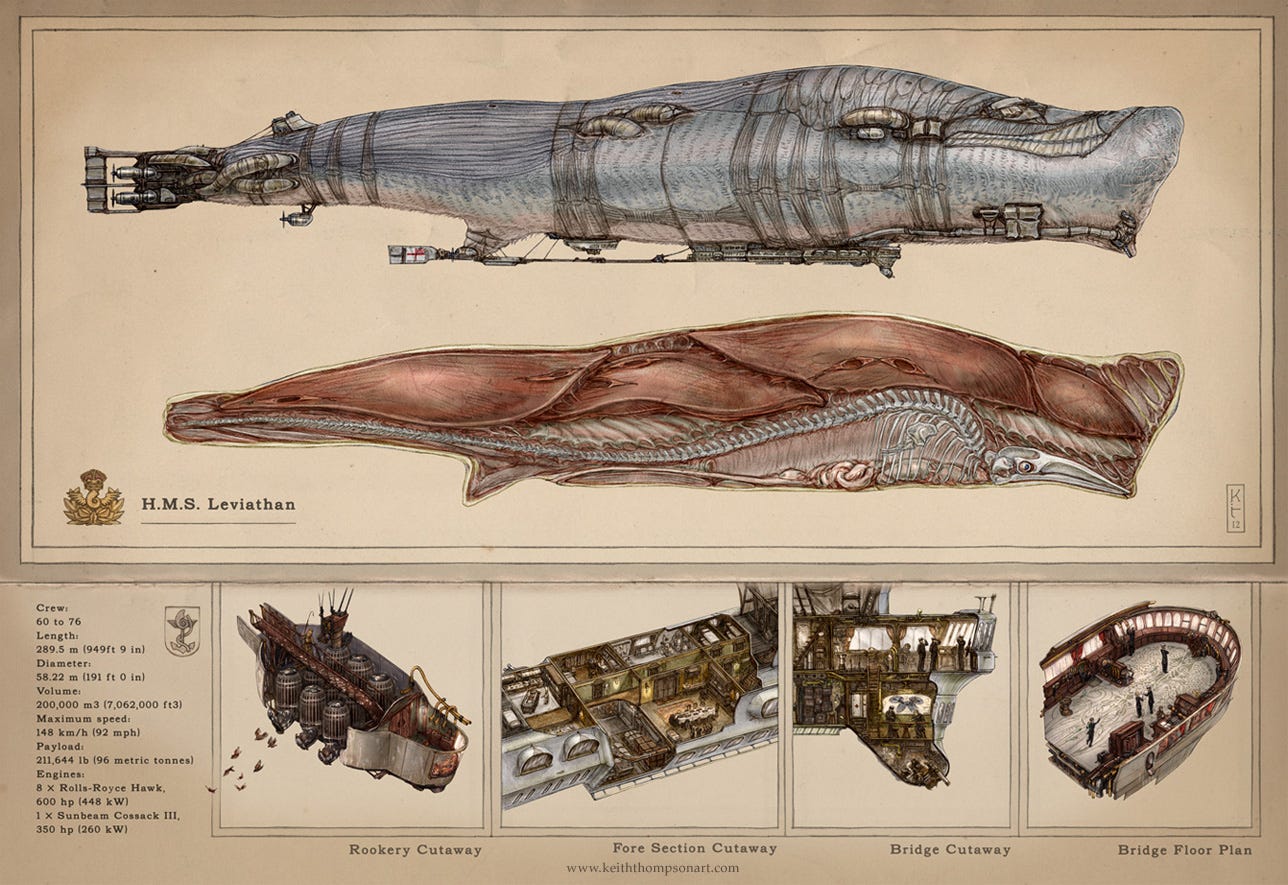
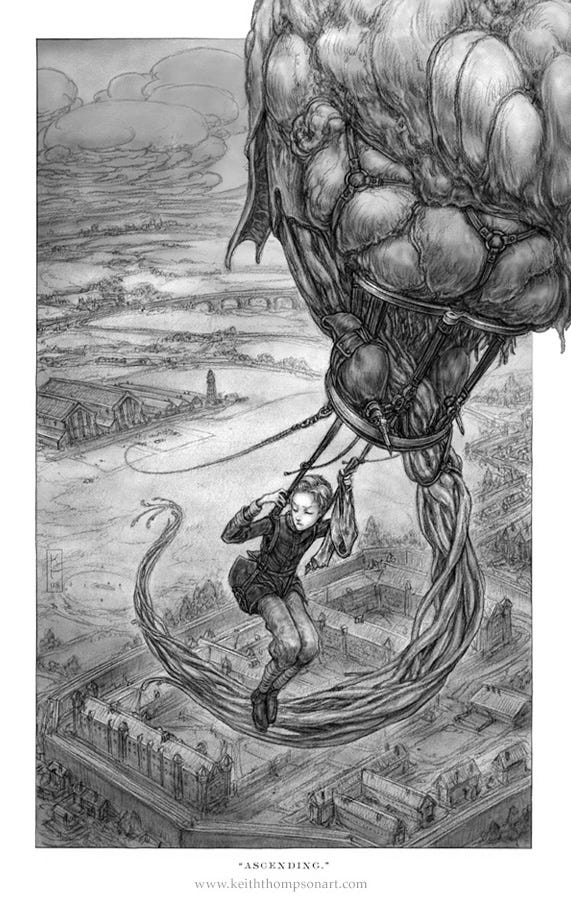
While Alek and his royal loyals are on the run in a giant mech, Deryn is pulling a Mulan so she can join the Navy and fly airships like her late father. During a test run in a small Darwinist balloon (made from a hydrogen-breathing jellyfish) she gets caught in a freak storm that drags her across England, where she’s eventually rescued by the HMS Leviathan—a massive airship made from a genetically engineered whale. Since war is breaking out across the continent, the Leviathan is on a diplomatic mission to secure an alliance with the Ottomans and now Deryn is along for the ride as a midshipman.
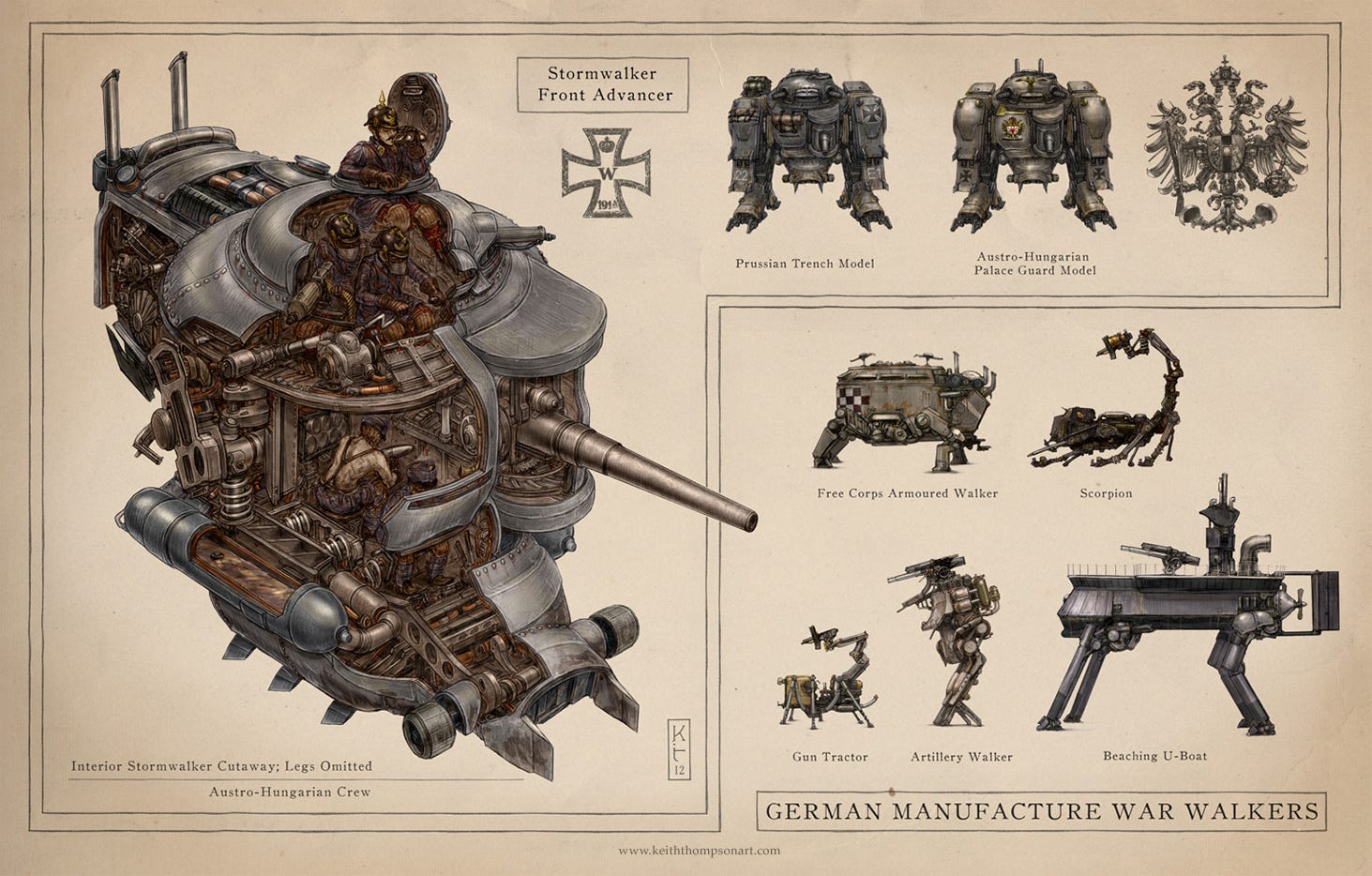
After walking across Europe in the mech, Alek and his men take refuge in a castle in the Swiss Alps where they can wait out the war and retake the throne. While the Leviathan is flying over Switzerland, German planes shoot it down and it crashes in the mountains, not far from Alek’s castle. Spurred by the need to help, he heads out with supplies for the survivors, which unfortunately complicates things because he’s not supposed to tell people who he is. One of the diplomats on the Leviathan makes some clever deductions over the next day or two, based on things Alek accidentally reveals, and the Brits put it all together.
Since the Leviathan needs food to survive, and the Germans are still hunting it, and that hunt will eventually lead it to find Alek’s castle, it makes the most sense for the Brits and the runaway Austrians to team up. Alek gives them food from the castle’s stores. They use the engines from the mech to replace the lighter, weaker propeller engines on the Leviathan, turning it into something more powerful that can escape mighty German walkers and zeppelins.
Throughout this process, Alek and Deryn become friends, though he doesn’t know she’s a girl (she goes by the name of Dylan in the service.) Deryn becomes an assistant to Dr. Barlow, the female diplomat on the airship, which presents a hazard because she’s very astute and might figure out Deryn’s secret. Alek’s assistants include the reluctant Count Volger, who is trying to honor the wishes of his best friend—Alek’s late father—while also being a loyal servant to the throne (Alek). But Alek is a headstrong and foolish young man at times, much to Volger’s frustration, and the two characters are very good foils for each other. Their dynamic does great things for the story.
The first book ends with the Leviathan underway to Turkey. The ship’s captain is aware of Alek’s royal blood and the potential alliance that can bring for the coming war. He assigns Deryn the job of keeping an eye on the Clankers aboard the ship, and reporting their activities to him.
Book 2: Behemoth
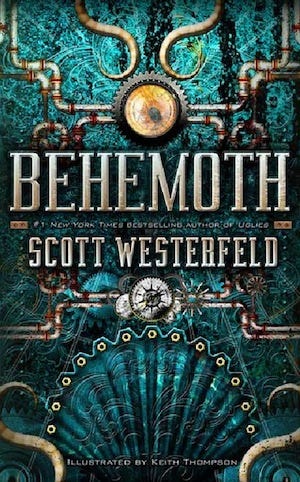
The Leviathan sails into the Ottoman Empire, which is an odd hybrid of Clanker and Darwinist ethics, and remains formally neutral in the European conflict. However, the Germans are eager to pull Turkey in on their side, while the British are just as eager that they not get involved.
The situation is complicated by a recent diplomatic scuffle: the Turks paid Britain to build them a dreadnought, but once it was built, Lord Winston Churchill decided not to deliver it, in case Turkey joined the Clankers. (This did happen in real life, and yet critics of Churchill never give him credit for the fact that when the Ottomans did join the Kaiser, they didn’t have a dreadnought to use against the Allies. So.)
While the Germans have pledged two of their own dreadnoughts to the Ottomans, the Brits try to buy time for themselves and their allies by promising the Leviathan to the Sultan. This is actually just a stalling tactic so that they can deploy covert agents, led by Midshipman “Dylan” Sharpe, who will sabotage the anti-kraken nets that protect Turkey’s seaports from Darwinist monsters. During her mission on the ground, Deryn succeeds in sabotaging the nets, but then must flee into Constantinople/Istanbul to hide from the Clanker forces.
This is fortuitous, because Alek and the other Clankers on the Leviathan had already realized they were in a bad tactical position among the Darwinists, and were basically being set up as political prisoners. During their attempted escape, Alek is able to get away with two of his assistants, but Count Volger remains behind to cover his flight.
While in Constantinople, Alek and his allies cross paths with local rebels and decide to take up their cause, thinking that destabilizing Turkey will help to end the budding war in Europe. While engaged in this effort, Alek and Deryn run into each other and join forces. Deryn is able to offer up tactical advice as well as intel on the Leviathan’s future movements: while the airship had to leave Constantinople, it’ll be back in a month once the anti-kraken nets are completely destroyed, and they can bring in the eponymous Behemoth, a super sea-monster that will destroy the German ships and neuter Turkey’s military strength.
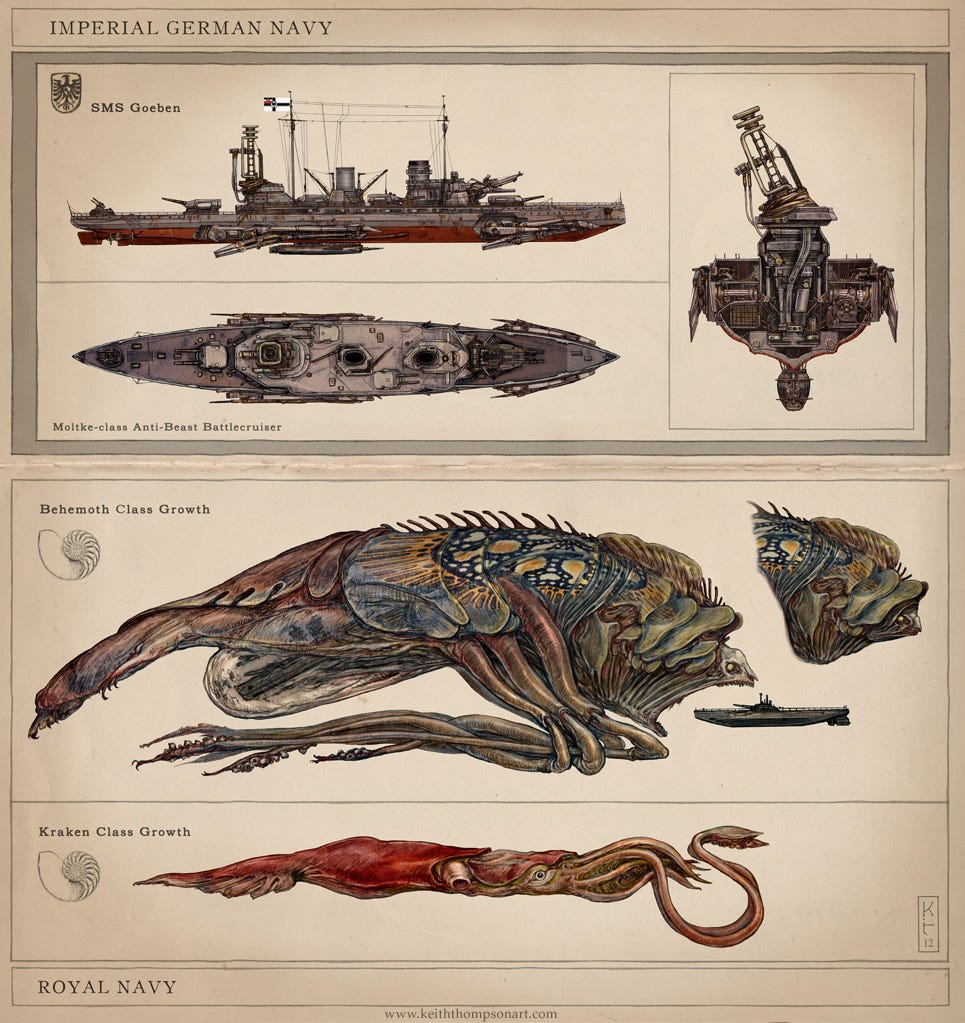
The rebellion syncs up with the Behemoth’s arrival and they’re able to gut the German forces, just as the Sultan is forced to flee and the Ottoman Empire undergoes a rapid unforeseen change in leadership. With Turkey thus out of the war, Deryn and Alek return to the Leviathan, having changed throughout their ordeal.
The biggest change for Alex comes with the news that the Pope has died, meaning Alek’s papal declaration of royalty might no longer be valid, in which case he may not have the political power to stop the war.
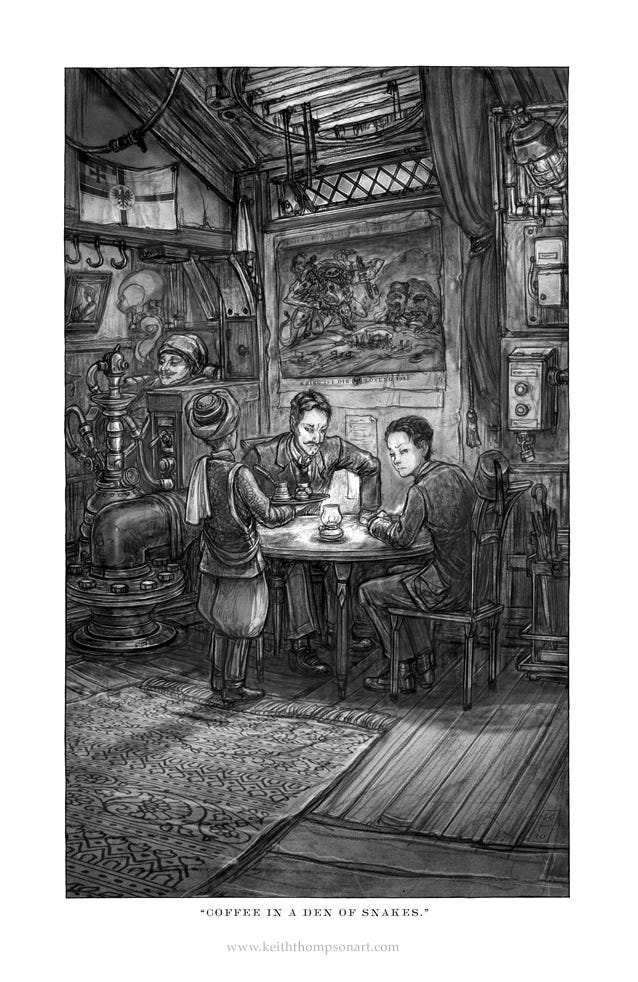
For Deryn, her own feelings toward Alek become even more tangled, and on top of that, Count Volger has deduced that she’s actually a girl. Leveraging her secret against her, he uses her for intel as he continues to seek the best outcome for Alek, and Austria-Hungary on the whole.
Now they enter a new leg of their journey as the Leviathan heads off to Siberia on a long, eastward journey to New York City. Miles to go before they sleep…
Book 3: Goliath
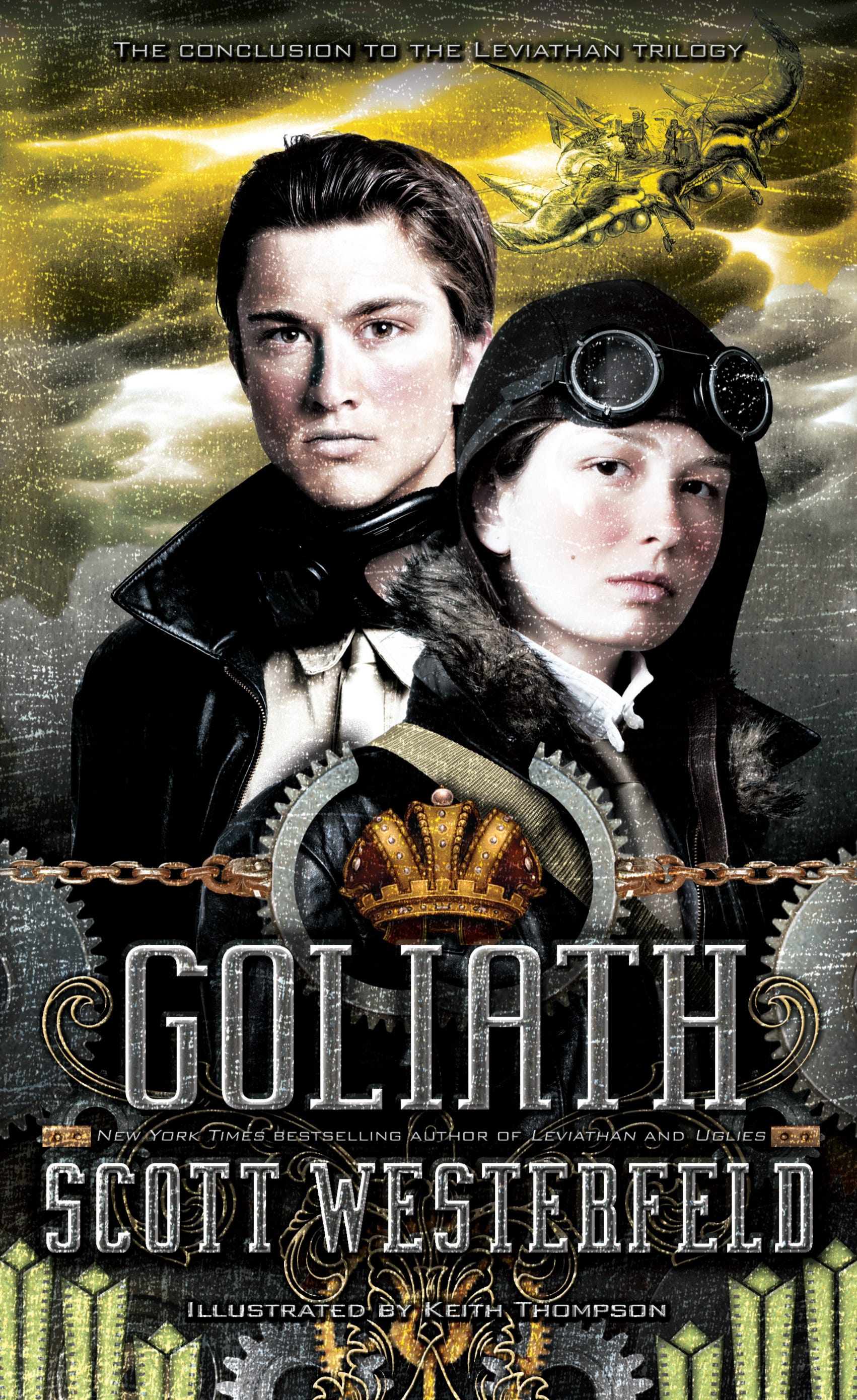
As the Leviathan sails over Siberia, they receive new orders to head to the remote region of Tunguska so they can rescue a doomed expedition. They come across the wreckage of a Darwinist airship and a whole pack of angry, starving bears in the midst of a forest that was obliterated by an unknown superweapon.
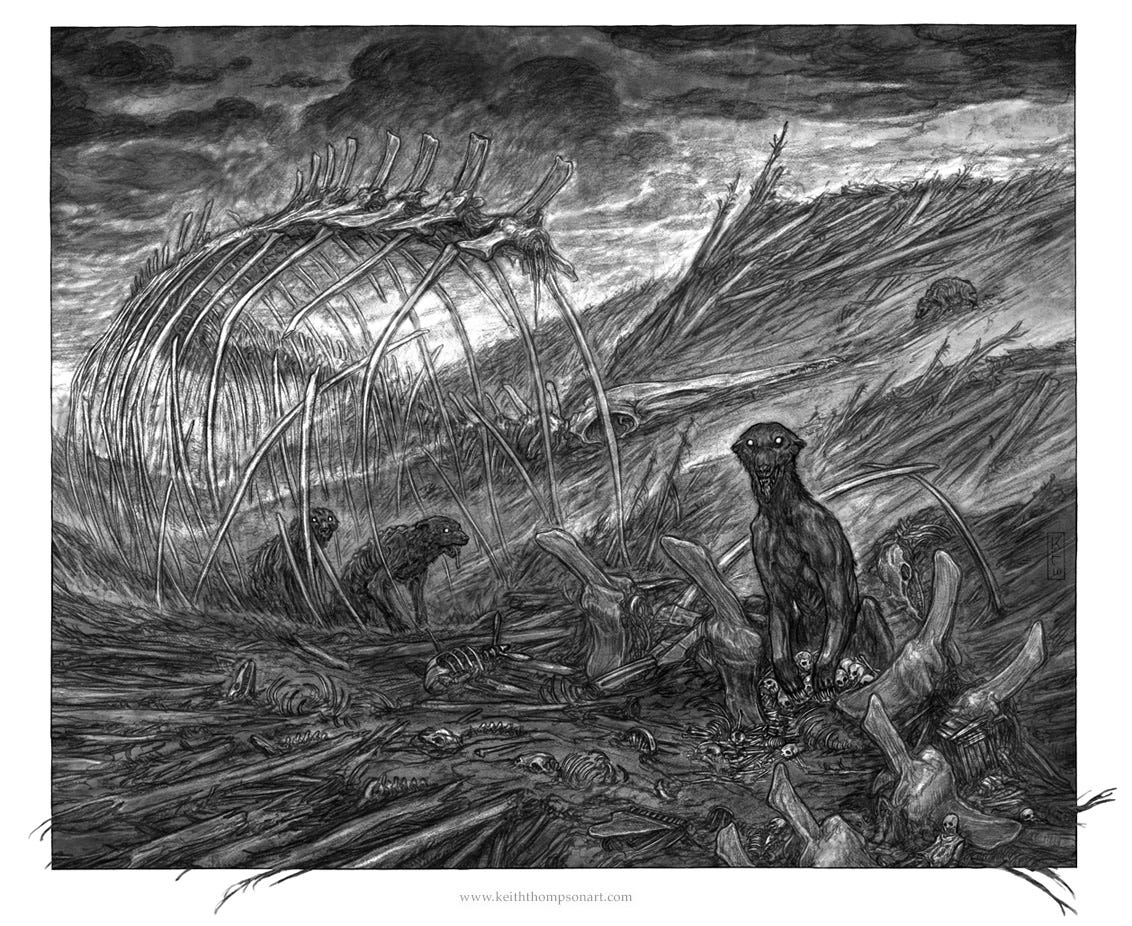
The weapon, called Goliath, was built by genius inventor Nikola Tesla, who went to Tunguska for proof of Goliath’s efficacy. The Leviathan rescues him and his team, encouraged by the promise of this weapon; if he can prove that it works, its threat alone could end the budding war before it really gets underway.
From here the Leviathan goes on a globetrotting adventure with stopovers in Japan, California, Mexico, and New York City. Each stop showcases a culture that hasn't gotten much coverage in the series so far, while also serving as a stage for major developments in the story.
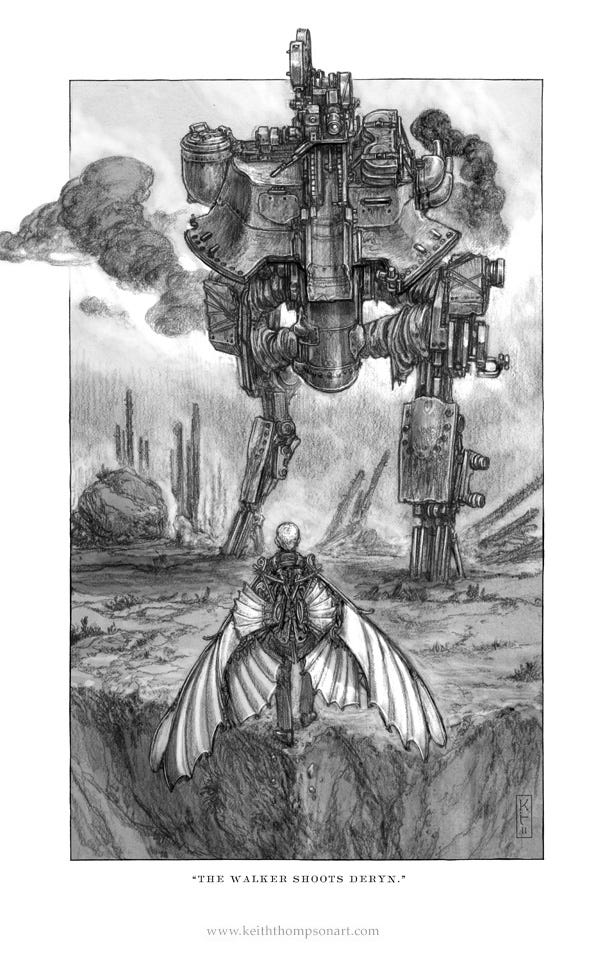
Early on, Alex discovers Deryn's secret, as does the diplomat, Dr. Barlow. The role of journalism in the story expands, especially with cameos from William Randolph Hearst and Pancho Villa. We also get more time with fictional reporter Eddie Malone, who becomes entangled with Alek and Deryn on multiple continents.
The main thrust of the story deals with the role of media manipulation in wartime and the threat of superweapons in a changing world. Alek has to wrestle with the morality of such a weapon when compared with conventional warfare. It can save lives in theory, and it can end many more in practice.
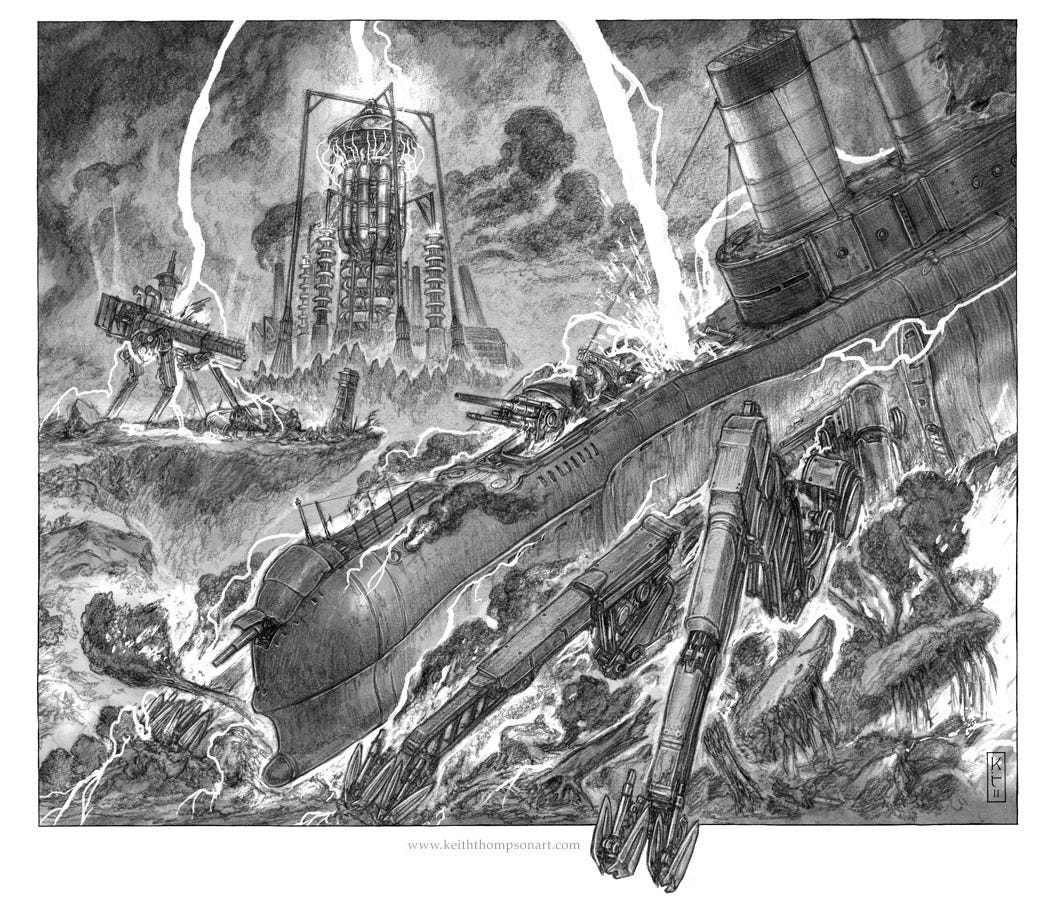
The final confrontation with Tesla is shocking and epic, and provides a fitting closure to this exciting trilogy. The ending shows Alek and Deryn exiting the narrative of the Great War as America enters the fray in the summer of 1914.
Ultimately the trilogy is about these characters and the war itself is just a backdrop. Westerfeld shows a capable hand in this work, with his characters, pacing, world, intrigue, and imagination. Alan Cumming punches up the audio, Keith Thompson punches up the visuals.
If you haven't, go read this series. If you have, check it out again. It has earned its place in the upper tier of late-2000s YA