

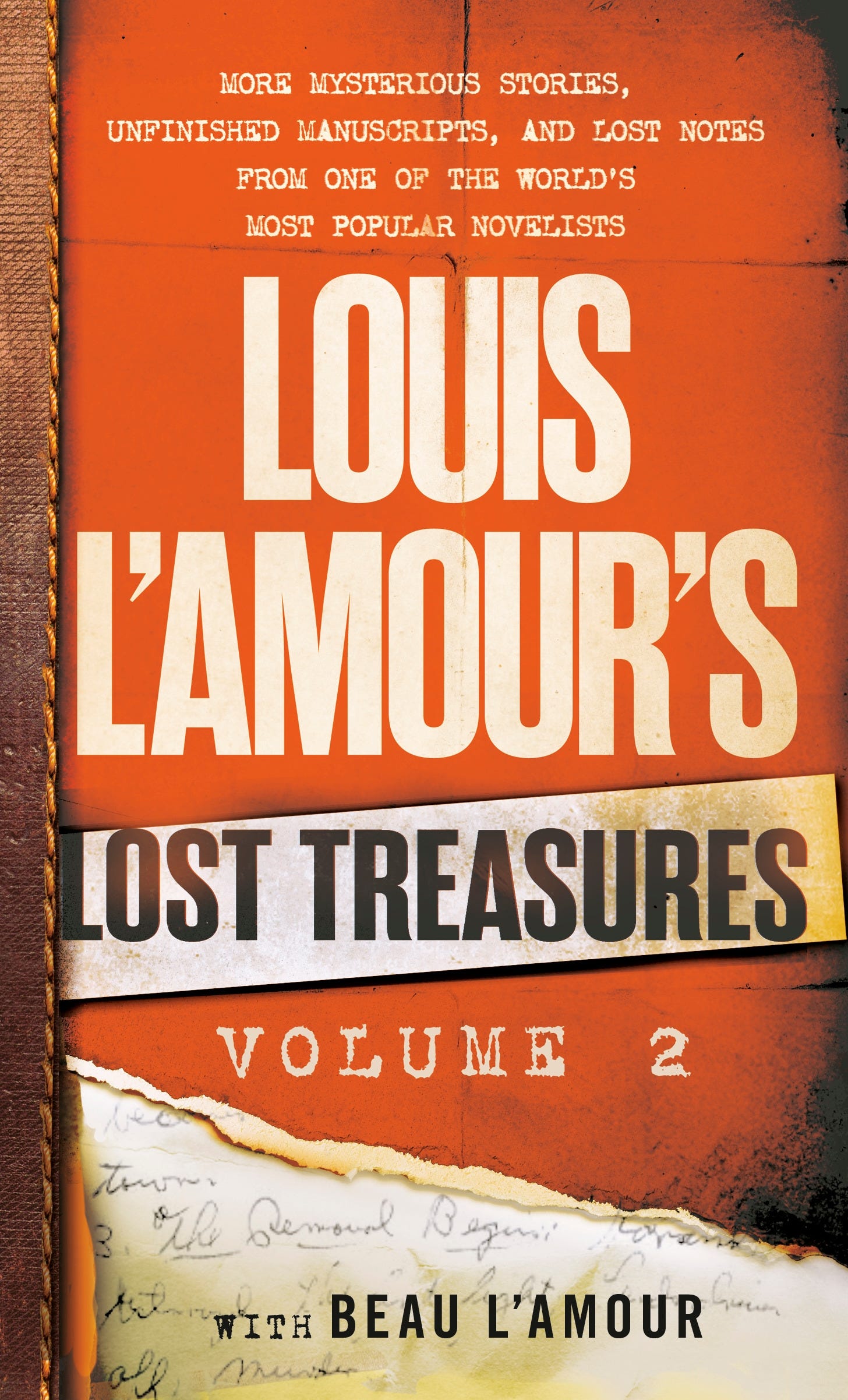
In volume 2 of Louis L’Amour’s Lost Treasures, we get an outline of a story called “Dam And Timber” that Louis planned for a men’s fiction magazine in the 1950s. Louis' son Beau, who curates the Lost Treasures connection, included it as an insight to L’Amour’s process for crafting fiction at speed, since publishing a high volume of stories was basically how he made a living before the paperback.
If you’re a reader but not a writer, the insight into this process will be new to you. He starts by laying out the bones of the story—hero, villain, obstacle, stakes—and then adds a few characteristics to the protagonists. Since this was a short story, he wrapped his notes with “eight high points, thirty pages” so he’d know how to pace it.
But there were gaps in this outline, probably because he never got to the story. It was unclear why the antagonist wanted to stop the hero from taking on a local earthworks project. There were a few dude-fights, a cat-fight here and there, and that’s it.
Makes sense for an incomplete project, but there are plenty of complete stories that still have this problem. I’ve noticed this over the years, when the execution is so poor that you can see what the author wanted to accomplish, but didn’t want to do the work to get there.
“Look man, I just want to have a semi-truck in a dogfight with a stealth bomber.”
Yes that sounds awesome, please and thank you.
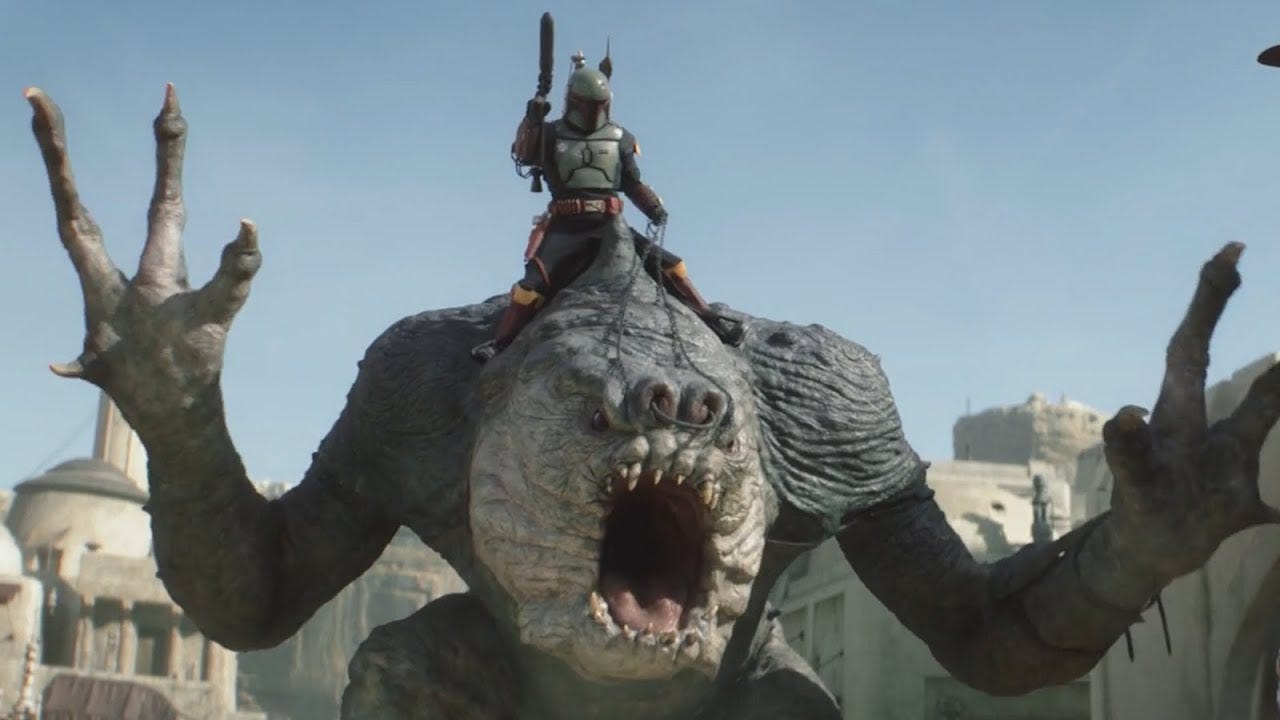
But like Boba Fett riding a Rancor in Star Wars, unless you write it correctly, it doesn’t mean anything. There’s no point to the story. Just sell me the toy and save your production budget.
The first time I noticed this phenomenon was during a rewatch of Finding Forrester from 2001. It’s a movie about literary writers who put down some of the most powerful and influential fiction ever written. Do we see this fiction in the story? Ha ha! Hell no. That stuff is really hard to write. That’s why it’s so rare.
In the climax of the movie, Sean Connery’s character reads a piece that his apprentice wrote, and it blows everyone’s mind. After the first few sentences Connery’s speech fades into the background and we get a musical overlay while we watch people react to his words. The script clearly called for the audience to be moved by this brilliant literary excerpt—so brilliant that nobody could write it in time for the movie, apparently.
There’s a slightly different version of this “holes in the writing” effect from the TV show White Collar, when Neal has to go undercover as a telemarketer, and he pretends to be the slickest and smoothest salesman ever. This is part-and-parcel with his character. He’s a con man. The problem is that cons work like fine writing: they’re hard to fake, and people can tell when they don’t work. (You’re not hearing from Nigerian princes any more, for example.)
I’d wager the writers for this episode had a script that said “Neal convinces Peter by using his con man skills as a telemarketer.” If you’ve ever worked in a call center, you know this whole scene is crap, especially when Neal seals the deal by promising the client “Oh you’ll get super rich if you buy from me.”
The script called for something really rare and really hard to do. The writers couldn’t do that, so they hurried over it to get to the next scene. If you did this in real life and the customer on the phone bought it, I guarantee you’re dealing with someone whose age matches their credit score.
In fairness, a lot of TV works this way. Shows aren’t built on fine writing, they’re built on spectacle. The writing is often there to shove you into the spectacle. That’s why TV with fine writing and spectacle rises to the top. It does the hard part of transcending the demands of the script.
This happens in print, too. A few of the Jack Reacher novels go this route, although Lee Child has said he’s not an outliner, he just writes every day from where he left off the day before. I’m assuming he has some rough idea in mind and is writing towards it—the books certainly read that way—and once he gets to the big reveal or the big action set piece at the end, the conclusion comes across rather rushed, because he’s done what he wants to do. Jack Reacher wandered somewhere, got into trouble, punched he way out of it, had sex once or twice, and moved on to the next town. Man simple, man enjoy punchy-sexy-book, man go on with life.
It’s also why romance is so formulaic—especially summer vacation stories, autumn family reunions, or small-town Christmas stuff. These aren’t books for audiences that appreciate books, they’re for audiences that want to fantasize moments they’ve never had, or re-live ones they enjoyed in the past. The “story” is only there as glue that’s juuuuuuuust strong enough to string those moments together. It doesn’t matter if it’s different. It matters if he’s wearing plaid and has a five o’clock shadow and tells the woman she was right about something once.
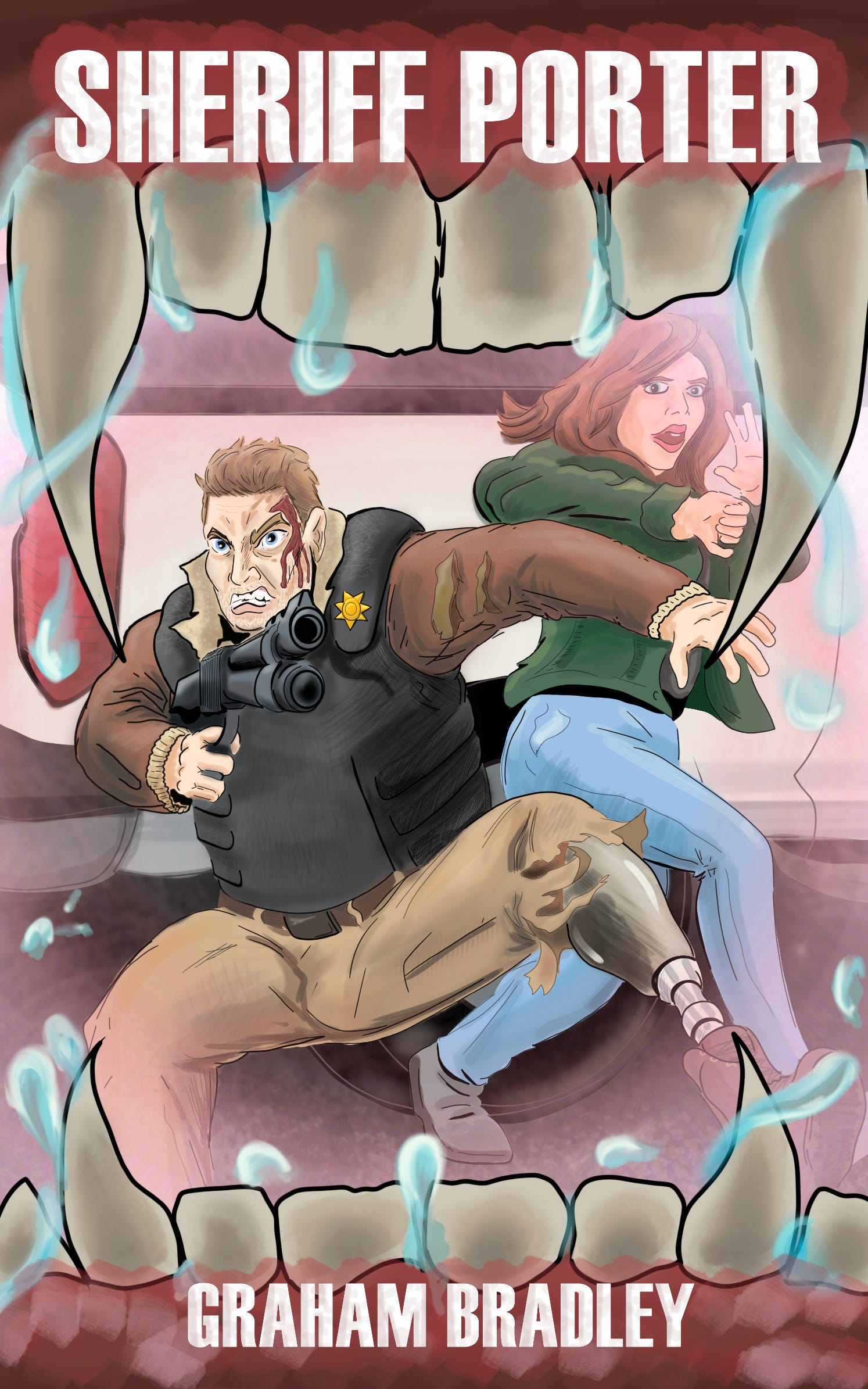
These are different methods of seeing the script through the holes in the writing. Depending on the audience, they don’t care about the holes. I’ve certainly written this way myself; SHERIFF PORTER was always built around a redneck with a giant bear trap killing a vampire grizzly in a small town, but I like to think I did the hard work of creating a character and putting a plot together.
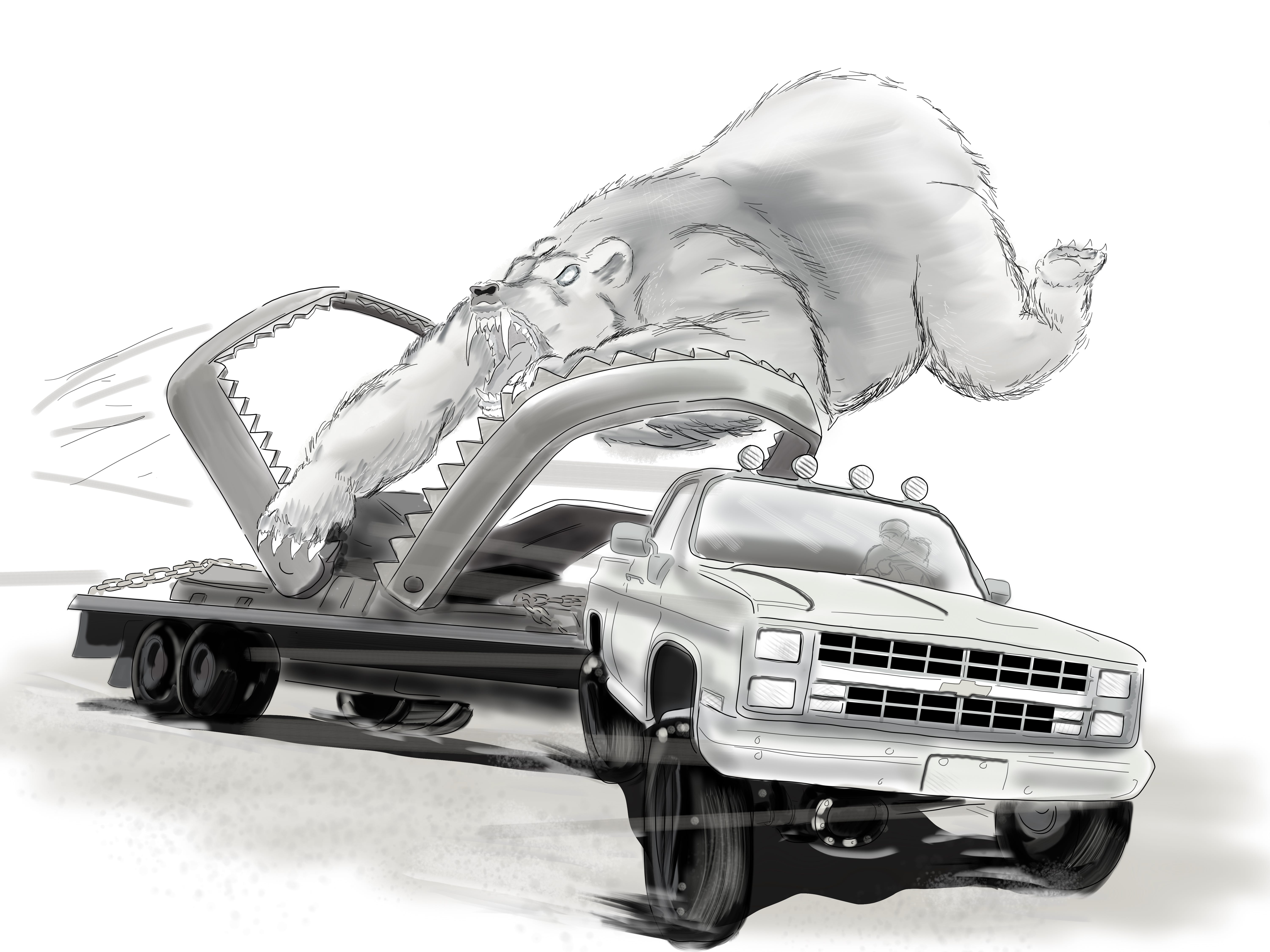
(Go buy the book and find out.)
Anyway, the point is that stories succeed when they fill the gaps in their script with great writing, characters, plot, and ideas. This is true for books and movies alike. It’s the rare exception, for my money, that a story still works when the writers paint over these gaps.
I mean, Finding Forrester has been a top-five movie for me since I saw it in ‘01, despite the above scene being a key depiction of this action. Watching it as a writer, I can tell that the screenwriters probably didn’t know how to get that response out of people.
But watching it as a viewer, not hearing the words give them a fluid quality that allows them to fill the space and take the shape of whatever’s holding them. In this case: you.
That’s all. Go read a book now. Peace.