

About 5 years ago I started getting into the American Civil War with my audiobook reading; I blame Chernow’s biography of Ulysses Grant, followed by Gwynne’s book on Stonewall Jackson (both made my 2020 best-of-year list).
In subsequent years I’ve picked more biographies as well as soldiers’ memoirs, and other titles that focus on particular through-lines of the conflict. Lately I’m reading more in the vein of apologetics, although this term is a poor fit; we can call it a contra-narrative, highlighting contemporary sources to show the flaws in the modern consensus of the war’s origins.
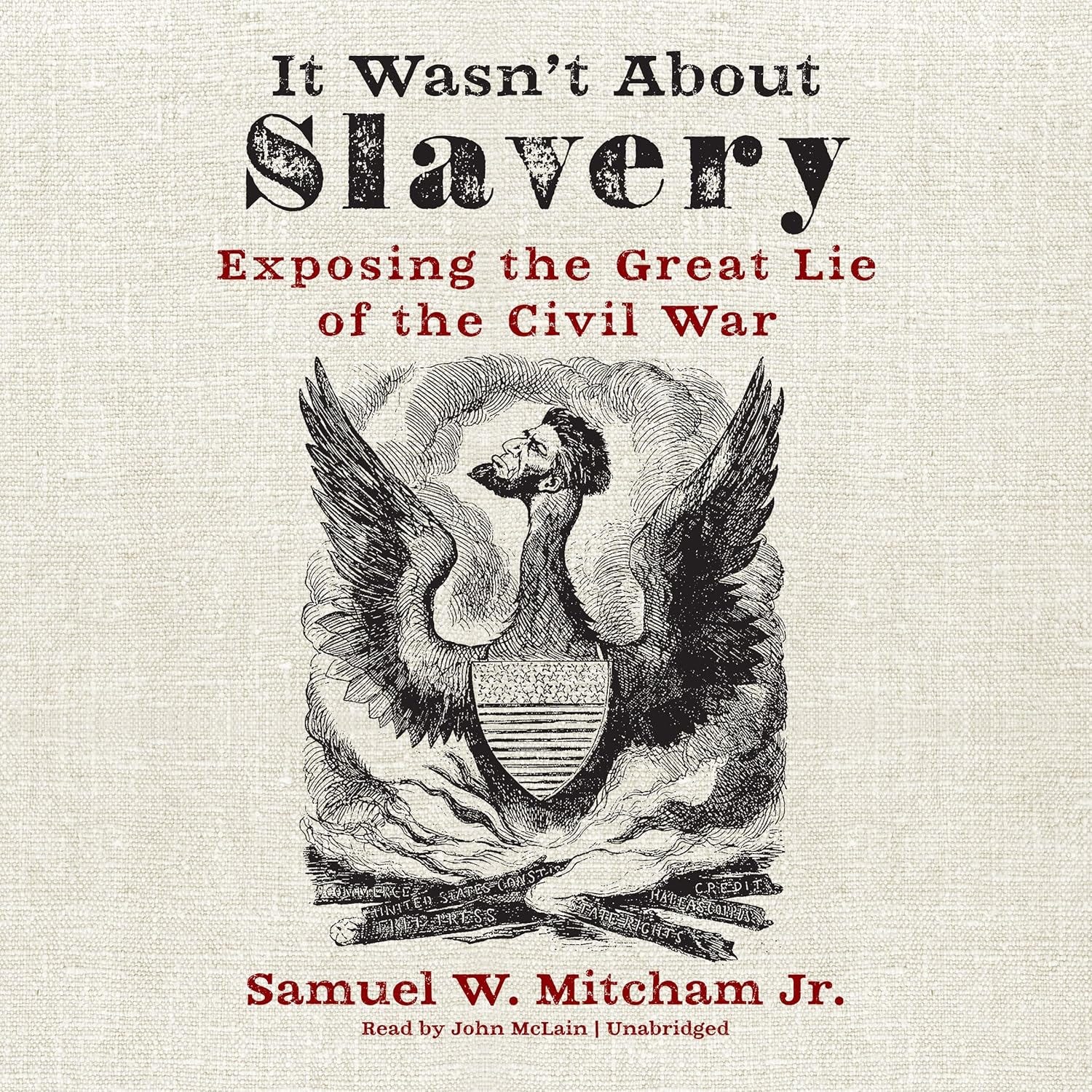
Even from that perspective, Mitcham’s title is itself a bit of a miss. He acknowledges the role that slavery played, and thus that it was integral to the overall conflict, but his thesis centers on the role of money and power in the run-up to the war. He also highlights the laws that Lincoln broke during his tenure in the Oval Office, something none of Lincoln’s defenders deny, always with the addendum that he did so to preserve the nation.
(Ironic timing—I read this book a few days ago, and just this afternoon Trump tweeted a Napoleon Bonaparte quote in defense of his own actions as chief executive. Several Lincoln-admirers will find issue with Trump saying this, while failing to realize that they share the Confederate view of Lincoln on the same grounds…but I digress.)
160 years after the end of the Civil War, we’re still arguing over whether Lincoln was right to do what he did and how. I find this line of thought worth pursuing, only because we live in an age where so much about the Public School Narrative of American history has fallen apart under basic scrutiny. Ask most graduates in all fifty states—or hell, examine pop culture—and you’ll get some explanation about how the South was racist and the North wanted to free the blacks. Now I want to know what else was taught wrong.
Mitcham is extremely thorough in his analysis of this claim in particular, debunking it with a decades-long run-up to the war and a bibliography besides. If nothing else, he’s showing his work. I think this would make a great contrast to Tim Ballard’s THE LINCOLN HYPOTHESIS, especially the chapter where he defends Lincoln’s actions point-by-point and tries to make the case that the South would never have ended slavery without the war.
Mitcham’s argument runs contrary to that. They can’t both be right, so maybe some time in the future I’ll sit down and hash it out with both of these books. For now I find IT WASN’T ABOUT SLAVERY to be an informative read, and very digestible despite the combative tone of its title. It’s the second book I’ve read by the man, the first being a fantastic biography of Nathan Bedford Forrest, reviewed here about 3 years ago.
If you’ve read either of these, let me know what you think.