

I just got back from seeing The Mandalorian and Grogu. I expected to enjoy it and I had a great time. The story isn’t monstrously complex; the same producers/creators (Favreau and Filoni) who made the successful streaming show were also in charge of this film. You could describe it as a fourth season of that, compressed into about 3/4 of the runtime, with a little tighter focus.
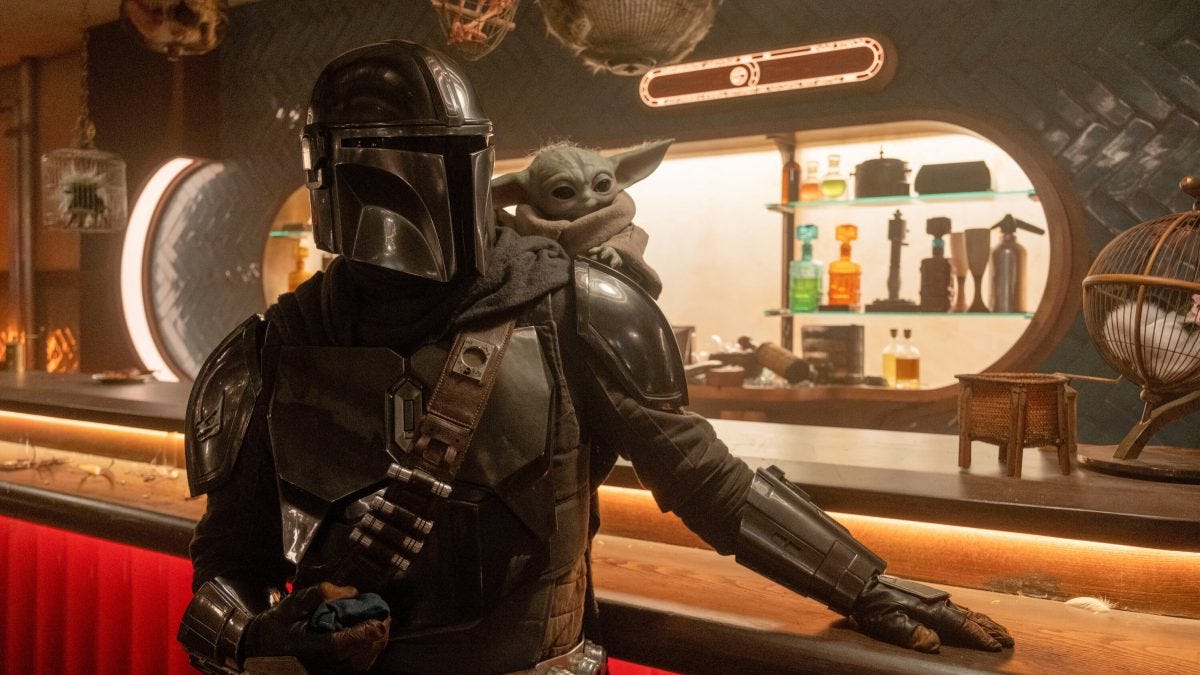
It’s possible to oversell it, so I won’t. Basically the story is that the New Republic is still trying to clean up pockets of Imperial holdouts, and they contract guys like Mando to catch the really elusive ones. They equip him with another Razor Crest (the ship he had in the first two seasons) and he, naturally, starts making friends with ease.
He’s hired by shady figures, he completes the job, it’s Not What He Thought, he calls an audible, double-crosses the villains, gets in trouble, needs to be bailed out by his allies, then kicks wholesale a$$ in the climax. The locations are varied (you get a snow planet, a beach planet, a swampy jungle planet, and a grungy crime planet) and the set-pieces are beautifully designed. Favreau and Filoni take a hands-on approach to creating a world that feels real and lived-in, and while there’s a truckload of CGI, there’s plenty of practical stuff for the close-ups.
The final product is more elevated than a simple description of the plot. Casting Jeremy Allen White was a swing for the fence, having an actor who prefers gritty and dramatic roles to then voice the son of Jabba the Hutt. There are probably callbacks to the streaming shows that I haven’t watched (there’s an evil bounty hunter who I think is supposed to be recognizable to the audience) but you don’t need to have watched it all to get this movie. It’s a well-executed version of an otherwise well-trod path by experienced creatives who return to form.
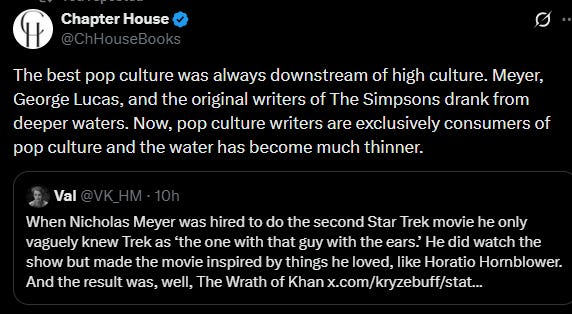
And I think that’s the key. We saw season 3 of Mando go off the rails because the writer’s room was filled to the gills with ideologues instead of artists. It was a departure from the strengths of the first two seasons in the hands of lesser creators. The tweet at the top of this post nails that problem at its core.
Great artists consume high art and use it to elevate otherwise low art. George Lucas was never a good writer, he’d probably admit that. He was more interested in themes and psychology and chasing ideas. Mostly he liked fiddling with technology and making things. Even though his dialogue was usually bad, the underlying themes to his Star Wars stories were strong. The best description I’ve heard for the prequels is “It’s a great story told poorly.”
The Mandalorian and Grogu is a good story told well. The visual element of that storytelling was beautiful, at times even serene, like a protracted sequence on the swamp planet when Grogu befriends a local fisherman. You can’t evoke feelings you’ve never had, and the filmmakers managed to hit a wide array of feelings. Very kino, as the kids say.
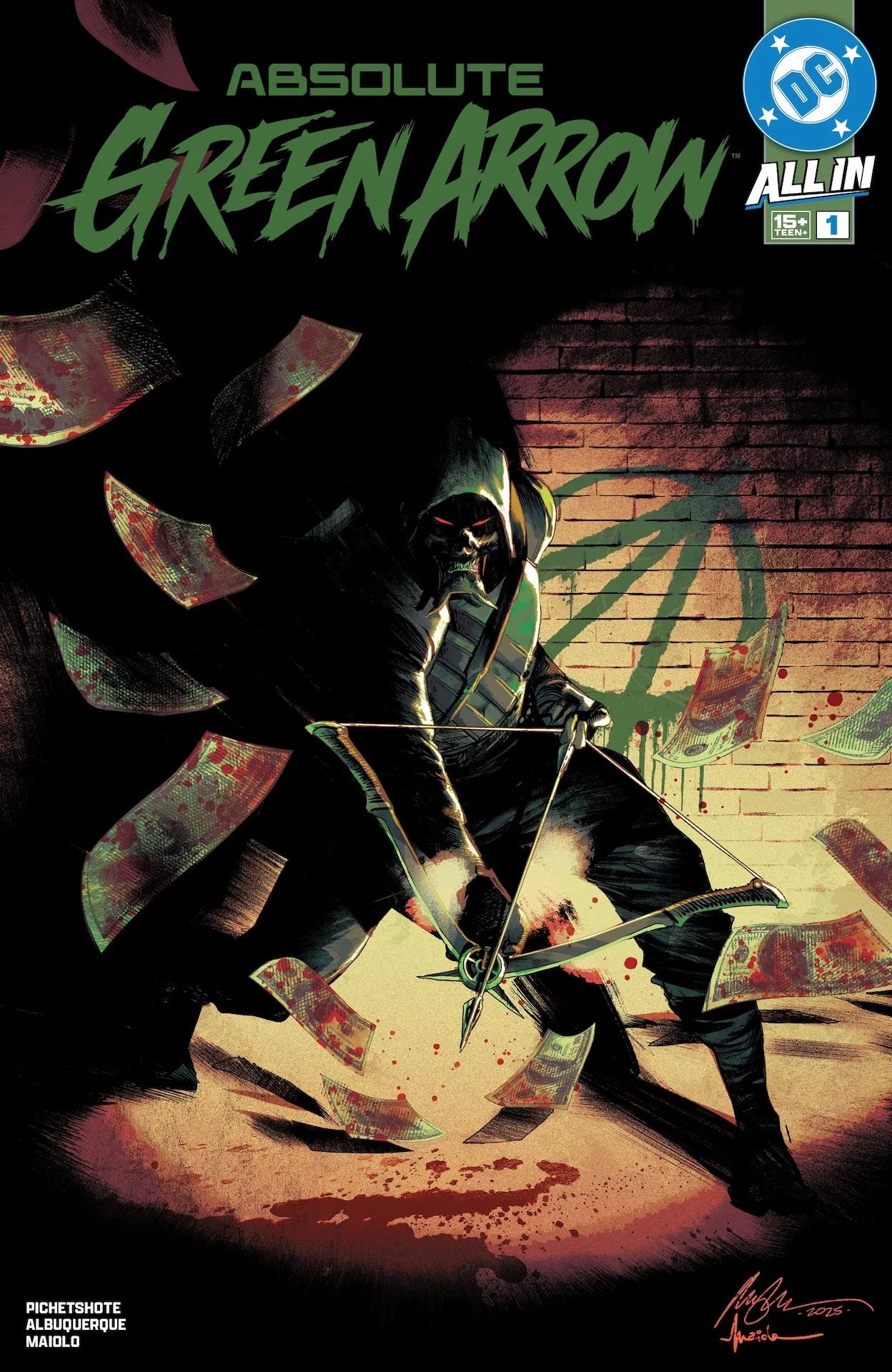
I’m gonna contrast this movie with something else that dropped this week: issue #1 of Absolute Green Arrow. This is an alternate universe version of several key DC characters, and I’ve been reading many of them. Absolute Superman remains the best one, and I check in on Absolute Batman and Absolute Wonder Woman from time to time. I was curious how they’d take on Absolute Green Arrow and after reading the first issue, I can’t say I care about what comes next.
Why? The inputs are clearly low-caliber and “ripped from the headlines” of current events through a lefty lens. Oliver Queen, Jubal Slade, and Hector Hammond are Zuckerbergian techbros who sexually assault women and embezzle money. Queen was killed after launching a “Greenarrow” trading app that is clearly modeled after the RobinHood platform. There are evil health insurance oligarchs who are being executed by a serial killer archer in a style similar to Luigi Mangione, and a few pages are dedicated to a discussion of who deserves it and why. All of this is portrayed against the backdrop of a tech-addicted populace who consume all their news through streaming and social media.
It’s current-day-crap. The input and output equation feels like I’m reading the front page of Reddit, not reading a Green Arrow story. (Oliver Queen is dead, so either that’s a rugpull in waiting or there’s something else going on here.) I get that these Absolute variants are supposed to be grittier and grungier, but they don’t have to be built on a foundation of Internet SEO buzzwords and victimhood fantasy. Absolute Superman is written by an enviro-leftist who still cares about the story first, and while it’s had its speed bumps, it’s a great read. Whatever his inputs are, the output is higher-caliber for it.
Absolute Green Arrow feels like the For You Page of a TikToker who’s addicted to Bernienomics and Late Night TV tropes. Maybe it evolves from the first issue. I’m not going to worry about it. The greater takeaway is, once again, the tweet at the top of this article.
Great artists consume, digest, and understand high art. It colors what they make in their popular creations. I know this because I’ve traveled on this arc myself; I always wanted to be a writer based purely on my consumption of low-grade entertainment that appealed to me as a kid. That stuff is all fine and good but you can’t make a steak from a Big Mac. It only works in the other direction. I had to read a lot more, and read a lot better, before my stories were worth anyone’s time.
You can’t just write your political fantasies into a book or a script and expect it to touch the same part of people’s souls as Homer or Virgil or Shakespeare. People can get that anywhere, and they can get it faster than your book and movie will deliver it, and they can get it for free. Don’t make them pay for that experience. If they give you time and money, be worth it.
I think Disney/Star Wars is finally figuring that out. Ditto for Marvel. (Season 2 of Daredevil Born Again has had some truly great moments in it.) The same is true of many of the comics I’ve been reading. You can tell who’s putting in the work when they put their work out.
Food for thought. Improve your outputs by examining your input. Aim higher.
Nothing is "Absolute" about any of the books in the series. More like "Fever Dream" versions of the characters done with no sense of nor respect for the original versions of the characters.