

Chapter eleven is called Of the Sun and Moon and the Hiding of Valinor.
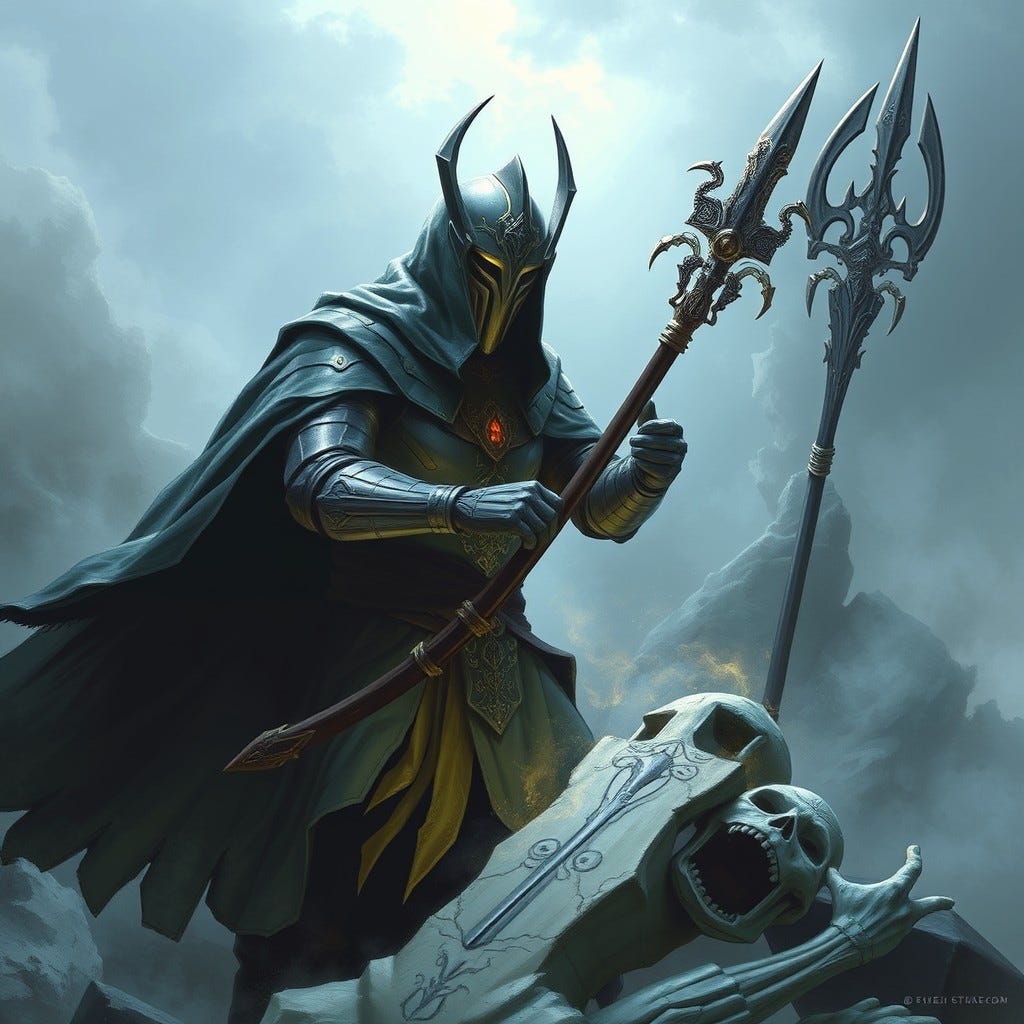
Mandos of the Valar, Keeper of the Dead
As Ilúvatar once said, now Manwë shall say.
Back in the Ainulindalë, we saw how Ilúvatar could take Melkor’s destructive works and turn them to his good purposes. This did not change the evil nature of Melkor’s deeds, but showed Ilúvatar’s wisdom and power, that his plan would not be thwarted.
Manwë cites this specific thing when he assesses Fëanor and the Kinslaying.
“Dear-bought those songs shall be accounted, and yet shall be well-bought. For the price could be no other. Thus even as [Ilúvatar] spoke to us shall beauty not before conceived be brought into Eä, and evil be good to have been.”
To which Mandos replied:
“And yet remain evil. To me shall Fëanor come soon.”
Going all the way back to Tolkien’s preface in the first installment of this series, he cites the similarities between the Fall of Adam in Christian theology and the Fall of the Elves in his own work. The latter is not an allegory to the former but as they are both a Fall from divinity, they will have similar mechanics, and here is where we see this play out.
Among different sects of Christianity you will see different interpretations of the Fall and our relation to it. If the Ilúvatar of Arda is meant to be similar in methodology to the God of Abraham, then the Fall was not an insurmountable obstacle to his plan. Rather, it was something he could fix and his plan would still work.
Mankind would experience mortality and be subject to sin after the Fall of Adam, but through Christ we could be resurrected from death and saved. Thus we would return to God with knowledge and experience that we otherwise could not have had, making us more than we were. This does not change the fact that we have done evil or wrong things in our lives, but it is the healing and the redeeming part that is beautiful.
Manwë, the leader of the Valar, declared that Fëanor’s actions would be made into something good. Mandos, the keeper of the dead, made sure to emphasize that what Fëanor did was still wrong, and that he was going to die soon.
Sin is still sin, but that is not insurmountable to Ilúvatar in this world any more than it is to the God of ours. I’m confident this is what Tolkien was saying here.
“Man it’s dark out here…”
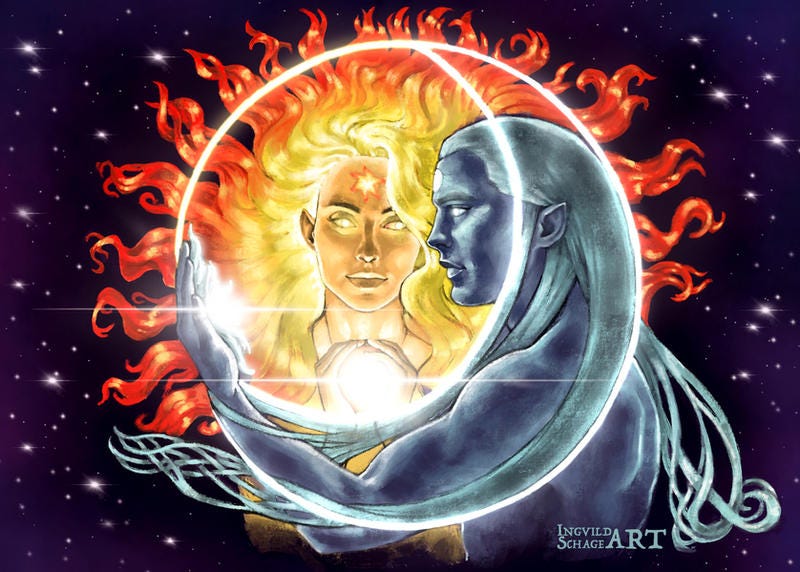
Arien and Tilion by Ingvild Schage
First, Varda—the Vala of light—made the lamps. Melkor knocked them down.
Then, Yavanna and Varda made the Trees. Melkor knocked THOSE down.
Now, without the Silmarils—and the light from the Trees that is inside them—Varda and Yavanna will have to try a new method, and just to show they’ve learned their lesson, they won’t put this new light on the ground where Melkor can reach it, else he’s probably gonna…well, you know.
Whisper whisper, murmur murmur, and folks, we’ve got a solution.
Varda gave the trees their light. Yavanna made the trees to begin with. Now we see Nienna, the Vala of healing, put her full effort into saving the trees. She isn’t able to return them to what they were, but they each grow one final leaf; Telperion makes a silver one, and Laurelin makes a gold one. The silver leaf goes into a vessel that becomes the Moon, carried by a Maia named Tilion (male), while the gold leaf’s vessel is the Sun, pulled by a Maia named Arien (female). They chase each other across the sky in a circular path, and whenever Arien sees goblins or Melkor, she hits them with the ol’ Superman heat-vision-fire-eyes, and they scatter, which is why goblins can’t go out into the sunlight.
With these lights far beyond his reach and under the protection of Maiar, the world of Arda will finally have a regular night-and-day cycle. Even better, Melkor generally has to stay hidden underground, and his lands have to be shrouded in darkness, or else Arien will nuke his wicked backside.
Build the Wall!
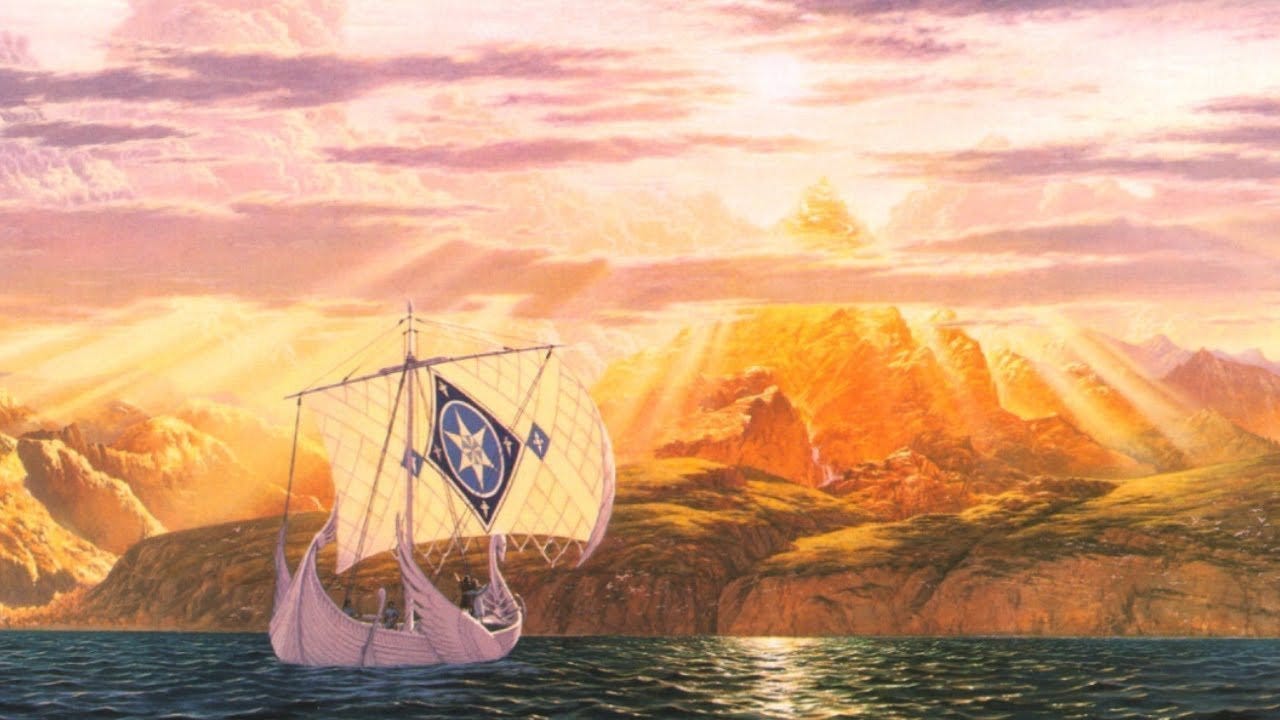
This chapter ends with the Valar cutting Valinor off from the rest of the world. It’s a minor segment, describing some geographical changes to the continent and the lands around Valinor itself; Melkor destroyed the very first realm of the Valar on Arda, called Aramen, and they don’t want him to do it again. While he’s occupied with his business in Middle-earth they decide to fortify, and secure themselves within. Very few are allowed in or out from then on.
This time for sure! Excelsior and Huzzah!! Seriously, thank you for breaking down the Simarillion into delicious little bite-sized pieces!