


Technically this is chapter 1 of the Silmarillion itself, as the previous two installments (The Ainulindale and the Valaquenta) were books unto themselves.) Chapter 1 is 10 pages long and covers the changing of Arda (the world) from a perfectly symmetrical home of the gods into a broken-yet-repaired place fit for “the Firstborn” (Elves and Men). The relevant points are as follows:
Melkor really hates Tulkas
Melkor, the Vala (lesser god) who rebelled against Ilúvatar out of jealousy, is constantly going around and messing up the other Valar’s creations in Arda. Whenever he rears up from his dark places, it’s Tulkas (the wild Chad) who chases him down, laughing all the way and giving Melkor a huge wedgie whenever he catches him. That’ll be relevant later.
The Two Lamps
Yavanna, the Vala of trees, creates two giant lamps so that Varda, the Vala of light, can charge them up with her power. They cover Arda with light from the north and south poles. Night doesn’t exist yet, and darkness is the domain of Melkor, so now the Valar go around the whole world making it beautiful according to their individual gifts. The richest zone is at the equator where the light from both lamps can mix together, so everything is extra lively there.
Valar rest, Melkor strikes
This period is called the Spring of Arda. Things are going nice, the world is pretty, everything’s good. Melkor, though, is biding his time, and when the Valar take their rest and have a feast, he launches a sneak attack and topples the lamp at the north pole. This breaks the world for a while. The Valar are pissed at Melkor, who runs and hides in his fortress like a supervillain.
Strongholds at War
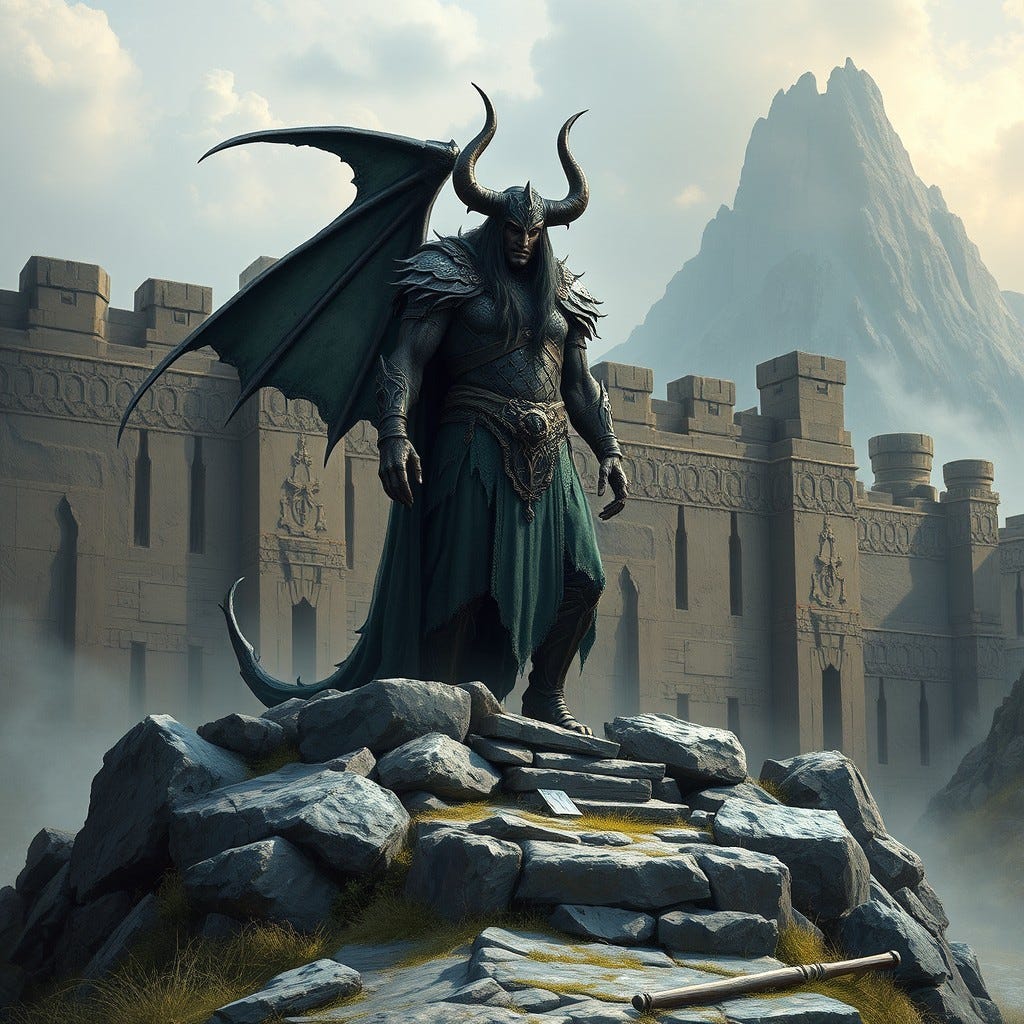
Melkor has a fortress deep underground called Utumno. The other Valar create a place called Pelóri, which is like their version of Olympus. (My comparison, not Tolkien’s.) Here they hold council, make plans, go out to fulfill assignments, and figure out how to go about repairing their creations. Even when Melkor is quiet they know he’s out there, gathering power to attack again.
Two Trees and Keeping Time
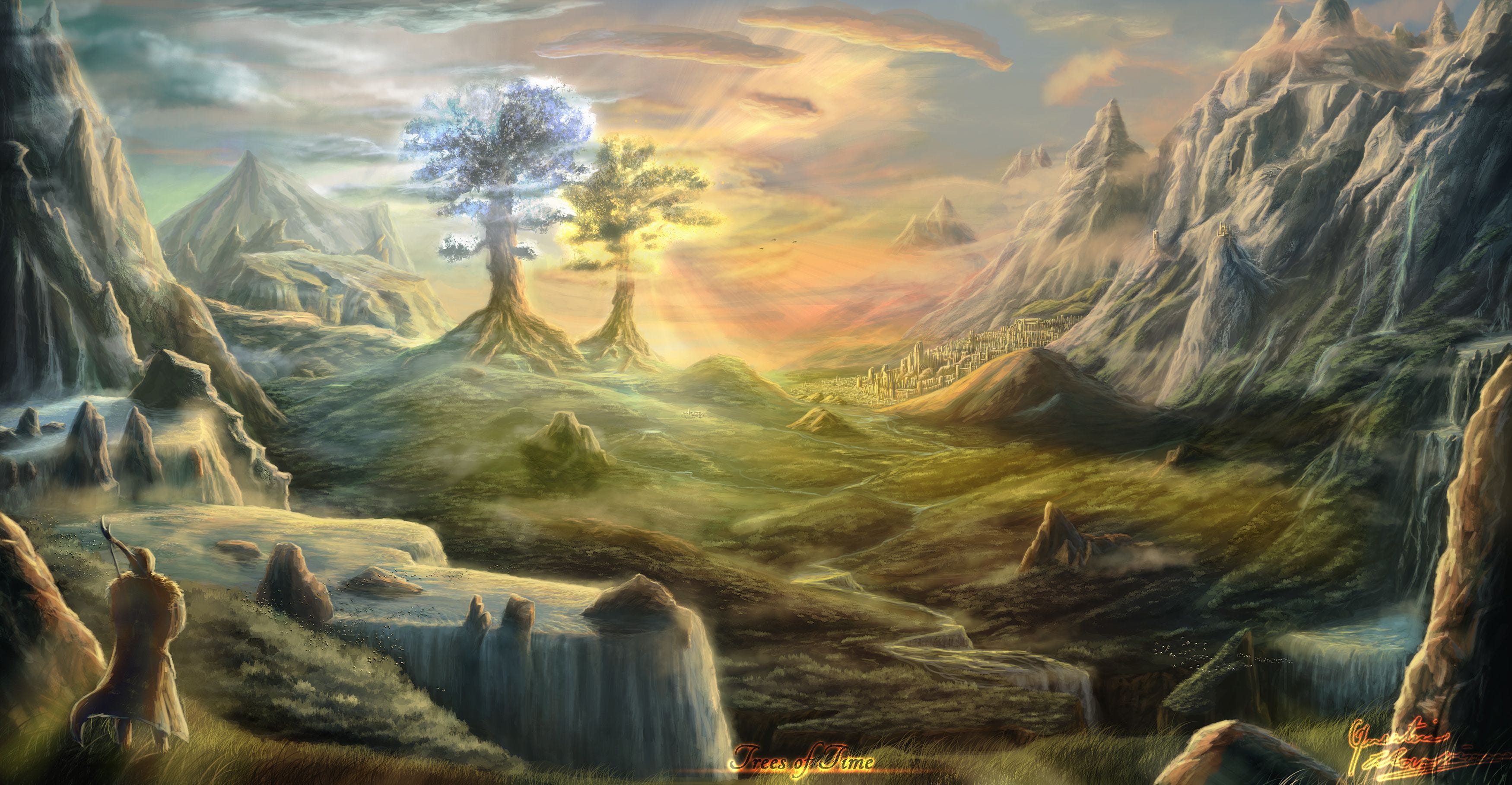
Art by MrSvien872
Eventually Yavanna and the other Valar take another crack at this whole “covering the world with light” thing, and create a pair of trees named Telperion and Laurelin, which wax and wain with their light every seven hours. There’s a brief overlap between the period when one is winding up and the other is winding down, which creates the difference between night and day, and now the Valar start keeping time in Arda. To eternal beings who don’t change, time is an unnecessary thing, but they’re preparing the Earth for Elves and Men, who will operate differently. Keeping time is sensible.
The Persistence of the Gods
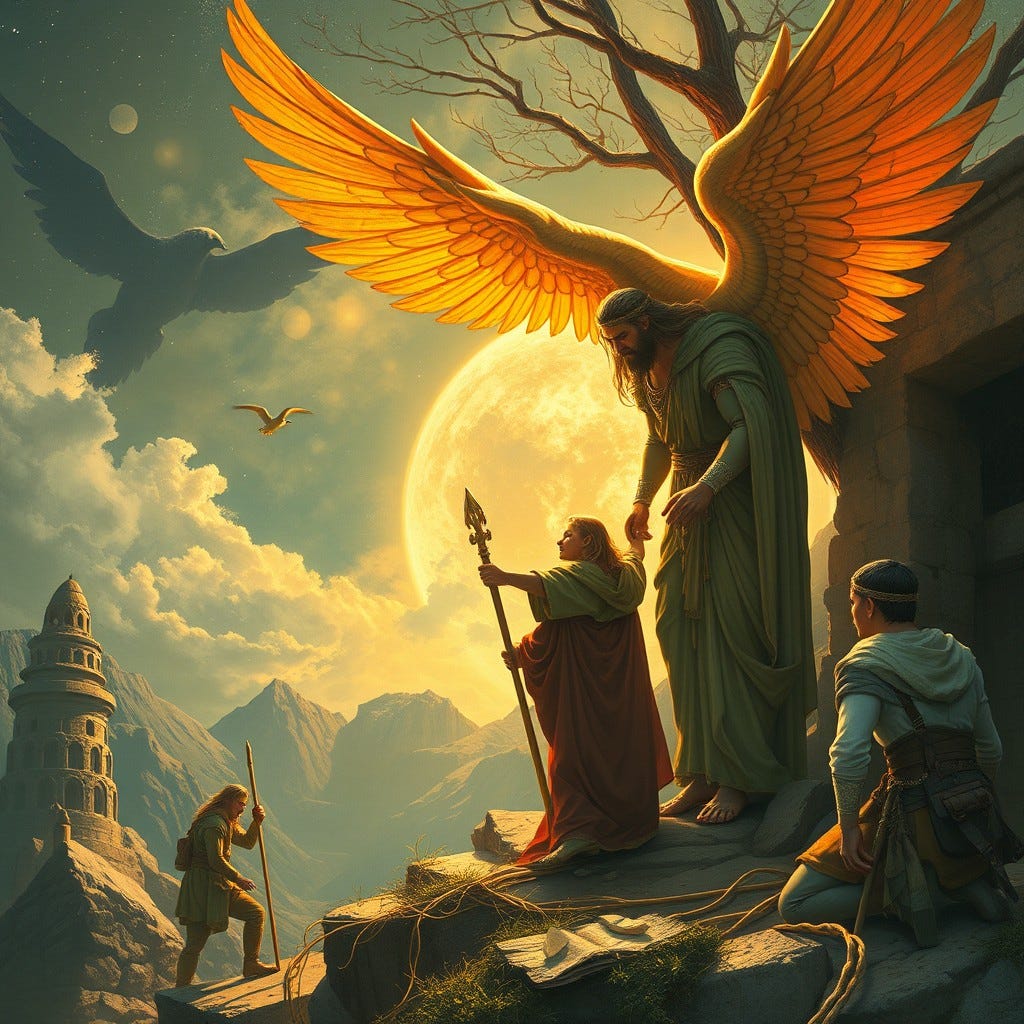
As it happened in the Ainulindalë, the Valar are able to take whatever destruction Melkor caused and make it work to their ultimate benefit, but it’s a constant struggle. He’s responsible for all the ugliness in the world and it’s their job to turn it into something beautiful. As this is Melkor’s only cause, he pretty devoted to it, and the Valar are equally diligent about countering him.
The Peculiar Gift to Man
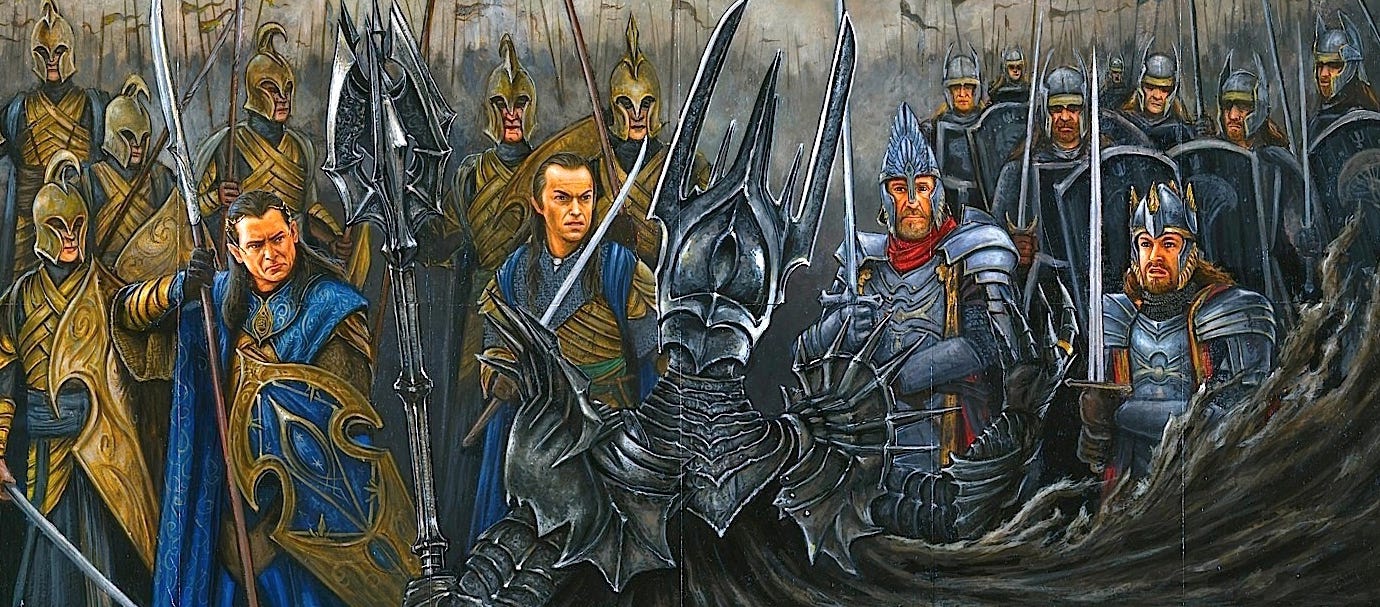
Finally, Elves and Men are created and placed in Arda, and they have different traits. The Elves are immortal but unlike the Valar, they can die from either injury in battle or extreme grief. Men on the other hand are given freedom and mortality as their gifts, which puts them in a different mindset as to the value of their lives and how they ought to use their time. Understandably this can put them at ideological odds with Elves from time to time.
My Favorite Part
There’s a profound couple of paragraphs at the end of chapter 1 which reveal Tolkien’s own thoughts about the purpose and virtue of mortality. This is a great example of fusing fiction with spiritual truths, using the power of myth to turn the reader’s mind to higher things.
Death is their fate, the gift of Ilúvatar, which as Time wears even the [Valar] shall envy. But Melkor has cast his shadow upon it, and confounded it with darkness, and brought forth evil out of good, and fear out of hope.
—The Silmarillion, p. 36, mass market paperback edition
This is an idea that will echo throughout Tolkien’s legendarium for the rest of his life, the purpose and value of death. I like this perspective that it’s something the Devil would have us fear, rather than being a means of hope. It’s noted elsewhere in this book that even the Elves don’t know what happens to Men after the die, for Ilúvatar guards that secret and leaves it only to those who go to it.
You should read it yourself and see what you think about it all.