

Since it’s Mayflower Month, and I’m a guy who’s read a book or two about the Mayflower, why don’t we examine one of the more colorful personalities among that ship’s voyage: Captain Myles Standish. In his case, the color is red. Red for his beard, red for his temper.
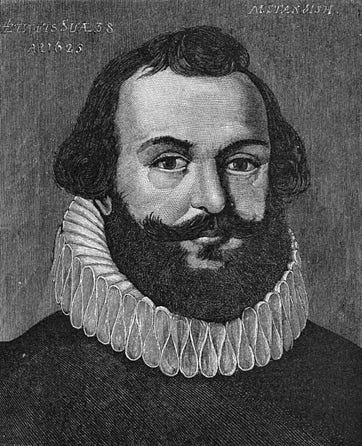
Born in England, he got a military education as a young man and fought in the Netherlands. The religious Separatists who would later be known as the Pilgrims also spent some time there, a little over a decade during the 1610s, and that’s probably where he met William Bradford and William Brewster. If you’ve ever read anything about Myles Standish, you probably know him as the short guy who could fight like a beast.
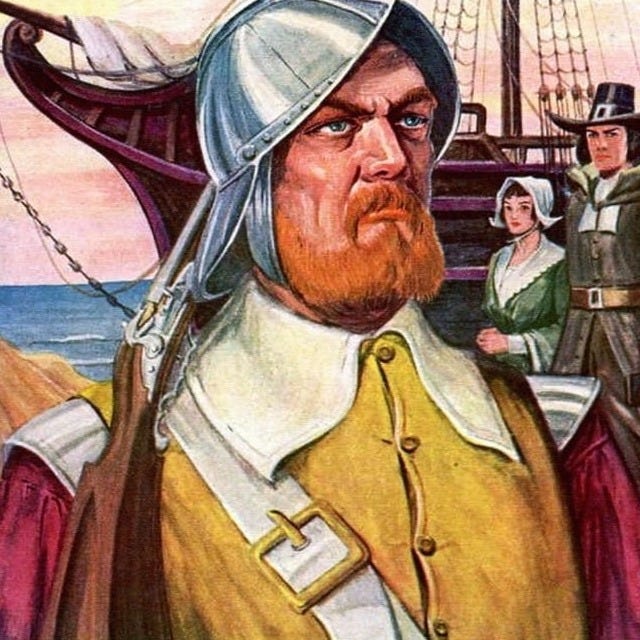
Other than the finer details of his involvement at Plymouth, not a lot is known about his life. He was born “circa” 1584, making him 400 years older than me, and he died in 1656, so he would have been around 70. I’m going to beat him by 30 years on that scale but this isn’t about me.
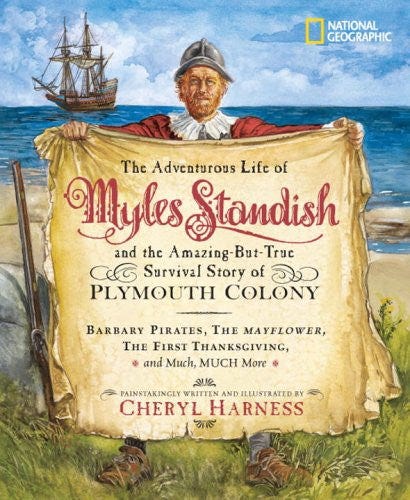
Earlier this week I read THE ADVENTUROUS LIFE OF MYLES STANDISH by Cheryl Harness. (Get your copy through that affiliate link so I can earn a commission.) While the focal figure is Standish, the title is still a bit of a misnomer, as it really encompasses the Plymouth expedition on the whole, and Standish’s life is more or less what brackets the tale. I’d say overall, fifteen to twenty percent of the narrative is about him and the rest is about the voyage across the Atlantic in 1620, and the ensuing years at Plymouth.

That said, Harness’ book is one of the best when it comes to contextualizing the events around the Pilgrims and their journey. She gives a concise explanation of the Gregorian calendar (created in 1582) and why the UK moved off of the old Julian model in 1750. Thus the dates listed in the Plymouth records are off by ten days according to our reckoning.
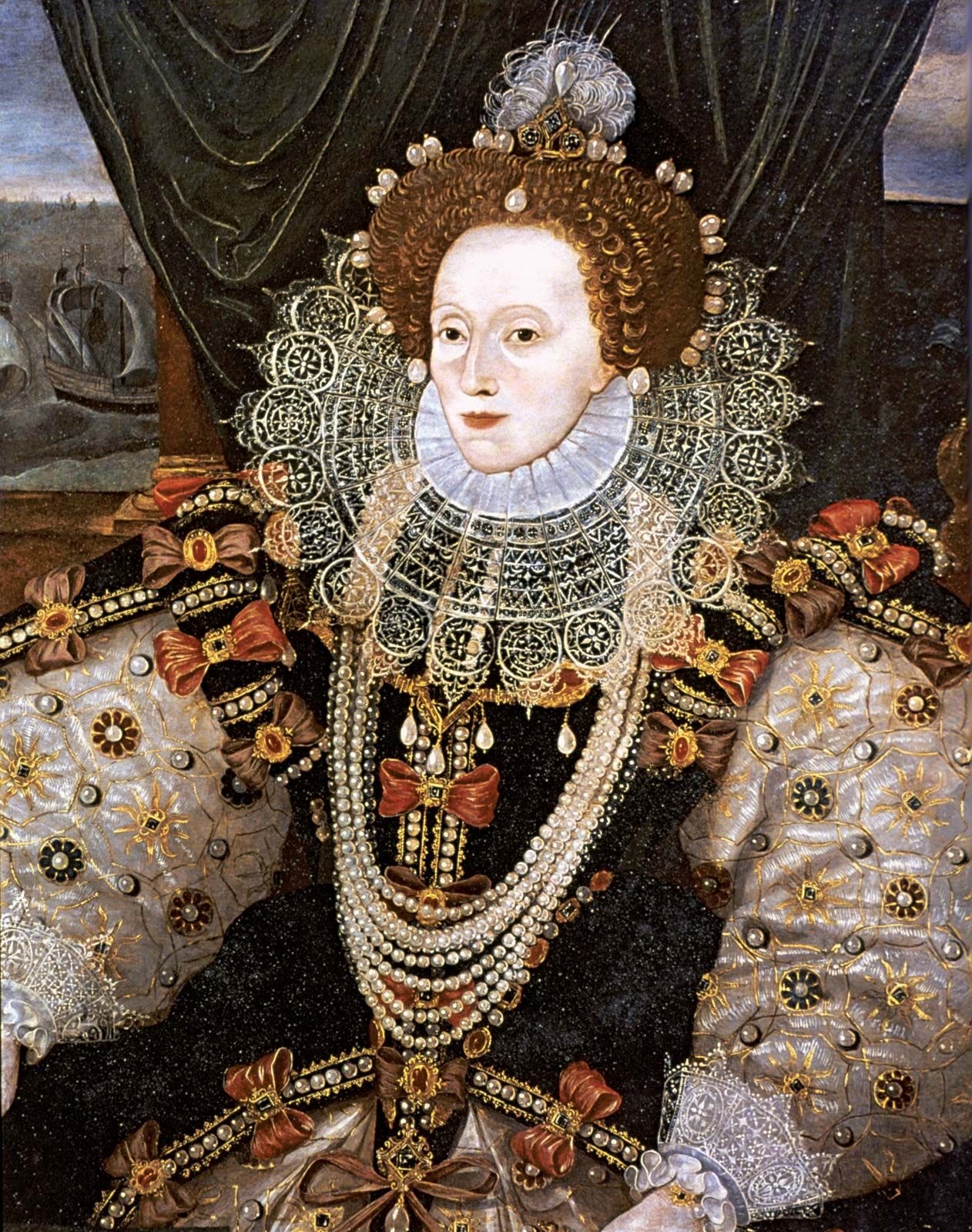
She also explained how King James’ predecessor, Queen Elizabeth I, allowed religious liberty in England until 1603 when she died. James was her cousin and when he took the throne, he told his kingdom they were all gonna be Anglicans and nothing else. It was this loss of a pre-existing freedom that drove the Pilgrims to sail to Leiden, Holland, where they could practice their Puritan observances in 1609. However, they were nervous about pending wars between the Dutch and the Spanish—and if you’ve watched my videos about the Captain Alatriste novels, you know a little about those. The Pilgrims were also worried about their kids growing up to be more culturally Dutch than English, so they started looking for a new solution.
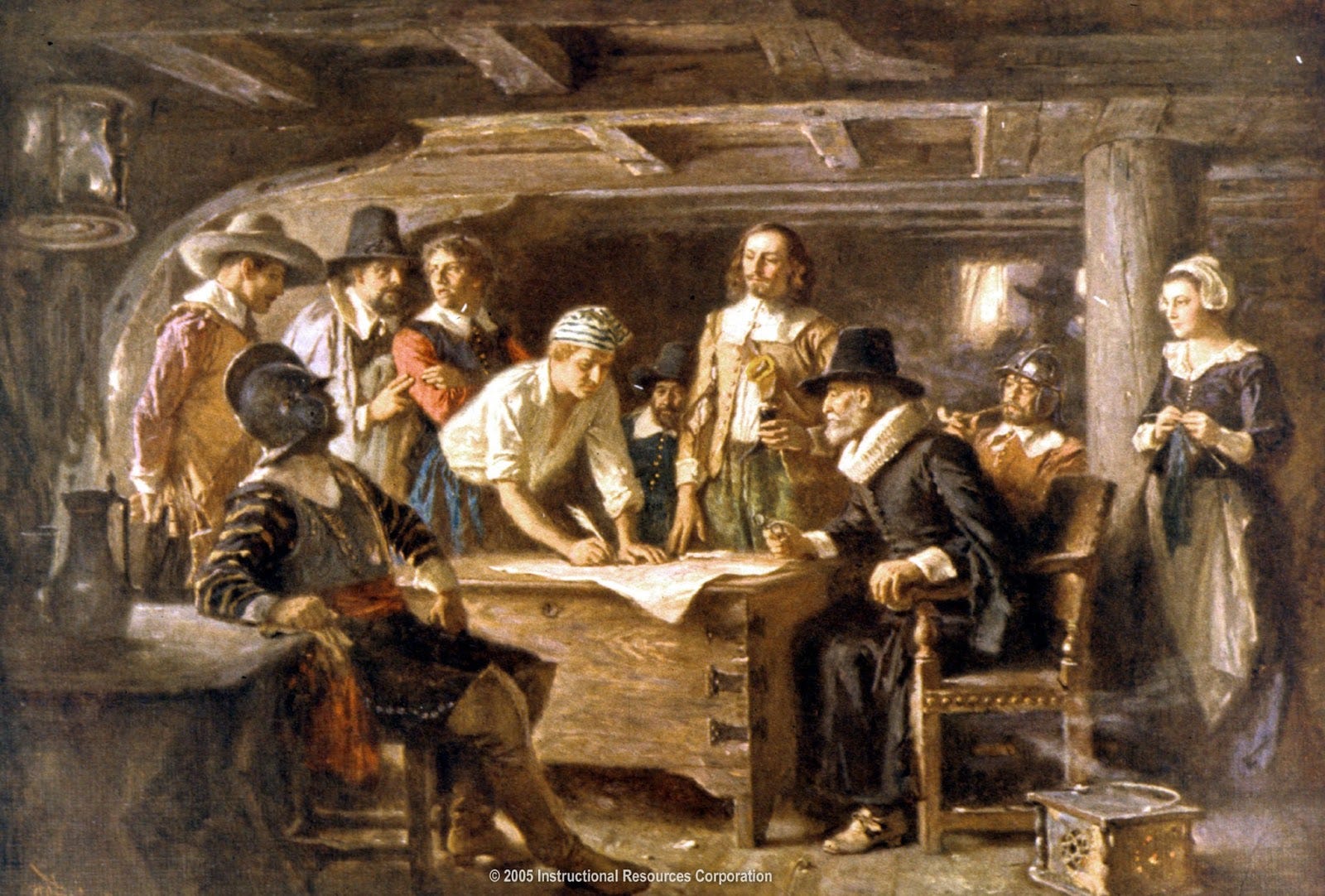
Harness gave one of her best explanations of all when she discussed the Mayflower Compact and why the passengers drafted it. They were punished for trying to practice their religion outside of the King’s permission and they even had bounties on them for trying to leave England on their way to Holland, but if they were to secure a patent to build a colony in the New World, they couldn’t be punished for their religious practices. The problem was that their patent was for farther south than they ended up, and if they went ashore without the proper legal attachments to the English throne, all of their contracts would be in disarray, and they had a lot of passengers on service contracts.
Writing the Compact was one way of saying “We’re forming a mini-government, called a body politic, and we’re still subject to King James, so all those laws still apply, we’re just taking it upon ourselves to make this legal that everything’s on the level.” That is a vast oversimplification but she made it make sense.
All of this is very valuable information from a book that purports to be all about Myles Standish. She does get into his military actions with the Indians, for better or worse, and his contributions to the colony’s security during the early years.
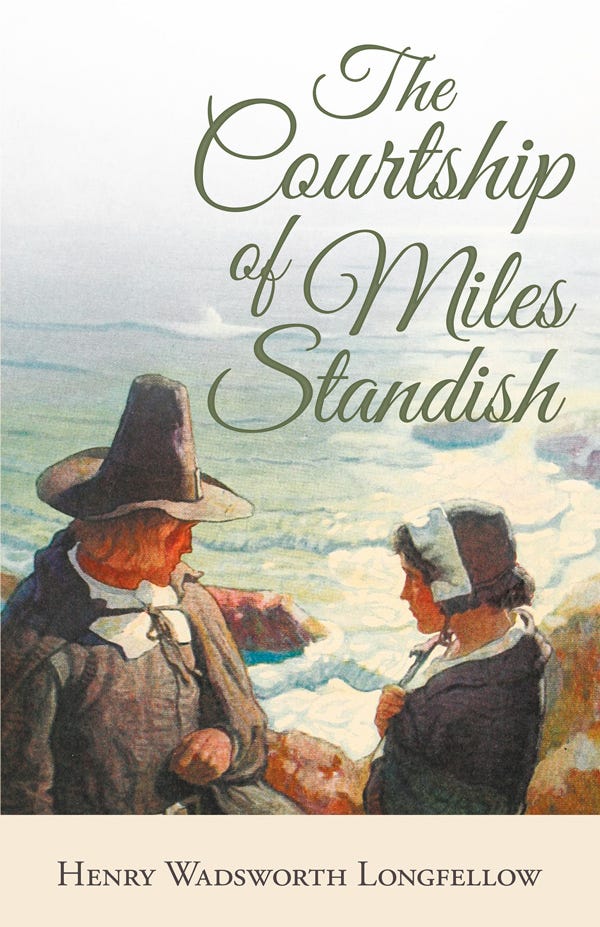
I think she also does a great service to the poem by Henry Wadsworth Longfellow called The Courtship of Miles Standish, wherein Myles sends his scribe John Alden to woo the young Priscilla Mullins on Myles’ behalf. Myles has a very forceful personality and is bad with words, while John is good at that sort of thing, and wants Priscilla to like him. The problem is John likes Priscilla too and they’re closer in age, while Myles is a widower, although these things weren’t hard social obstacles to marriage at the time.
The Longfellow story depicts several true events from Plymouth’s history, condensing them into a very short timeline, but so far there hasn’t been any evidence for the supposed love triangle between Miles, Priscilla, and John. That’s probably just an issue of artistic license. John Alden did go on to marry Priscilla in real life, and Myles married a woman named Barbara who came on another ship. The Standish and Alden families would remain close for decades throughout the colony’s growth.
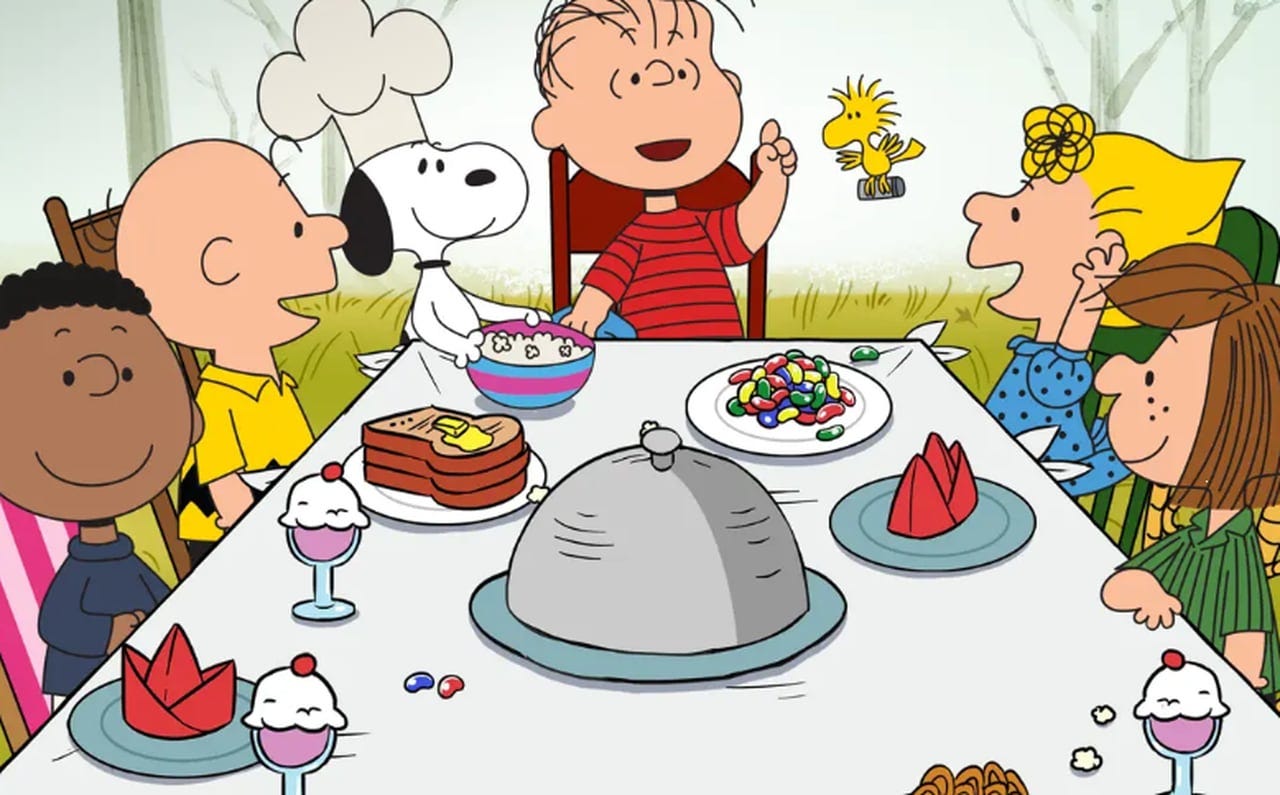
If the Longfellow poem sounds familiar, it’s the inspiration for the Charlie Brown Thanksgiving special in 1973. There’s even a reference from Linus, playing the role of historian, who compares Peppermint Patty’s blunder to Myles Standish’s clumsiness, to which Peppermint Patty replies “This isn’t like that at all.”
Narrator: It was remarkably like that.
Anyway, THE ADVENTUROUS LIFE OF MYLES STANDISH is a very short read and the audio version is quite inexpensive on Audible. To boot, there is at least one version of The Courtship of Miles Standish available in the Plus library on that same platform, so you can read both of these books in a matter of hours.
I highly recommend them as a supplement to your Mayflower and Thanksgiving studies. The provide great seasonal color and will help to round out your understanding of the Plymouth colony early on.
DUDE DUDE Miles Standish is my Ancestor for REAL - as is Priscilla Mullins and John Alden - their children married and the result is... me. Standish is to blame for the all the aggressive redheaded shorties in our Family. EEEEE I love this and I will now relentlessly spam Family with this article throughout the Thanksgiving Season💖🔥💖Thank you Graham!