

Chapter 15 is called “Of the Noldor in Beleriand.”
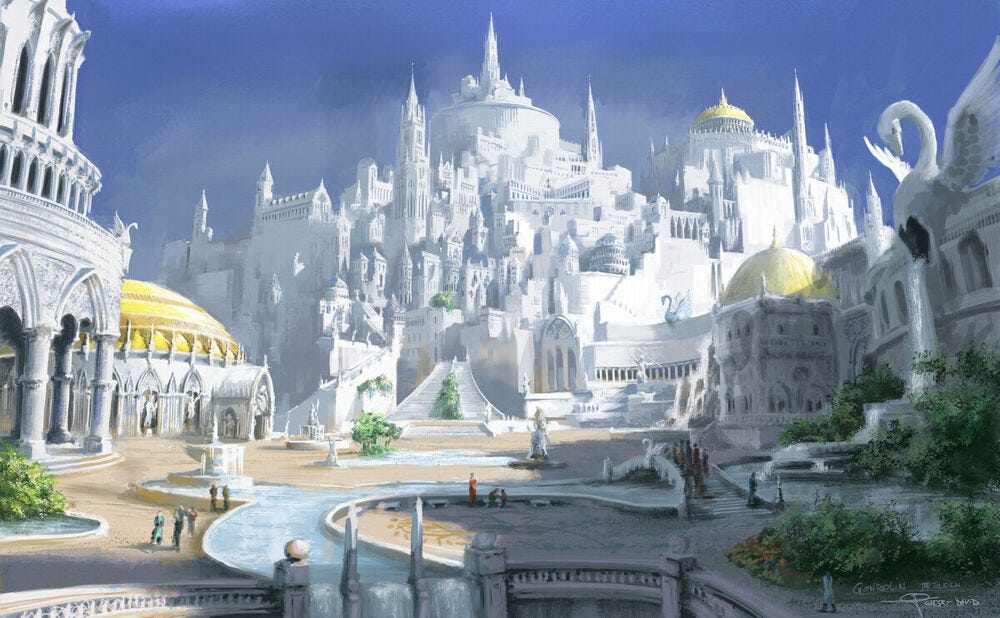
It’s Hard to Find Good Real Estate
Let’s talk about Turgon. Who is he? The son of Finarfin, brother of Feanor. He’s a good man…er, Elf…and for that reason the Vala Ulmo leads him to a secret place called Tumladen, fit for a city to be built in it, and up until now the region has only ever been visited by the Eagles.
Turgon and his ilk get to building, and they erect a gorgeous city called Gondolin. Like other creations before it, it’s a unique and beautiful work of art, sacred and worthy of protection. All the same, Ulmo warns Turgon to eventually prepare for Gondolin to fall and be destroyed.
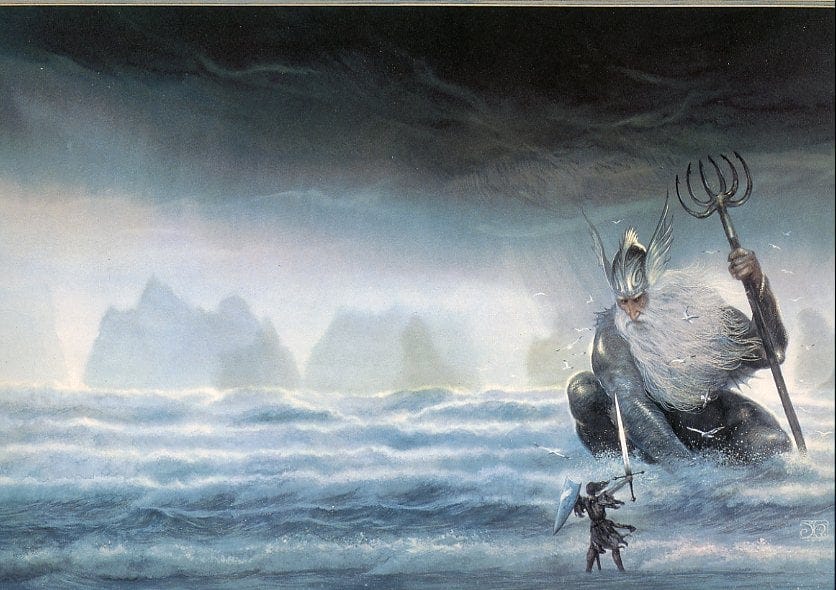
Ulmo, Lord of the Waters, by John Howe
This would take centuries, and yet time was nothing to the Vala of water, nor was it a pressing concern to an Elf. Nevertheless, neither of them had the power to make something permanent just because it was unique; that belonged only to Ilúvatar. So far every beautiful thing the Valar had ever made was destroyed by Melkor. Knowing this, Ulmo told Turgon to create it anyway. There’s a moral lesson in there about how we ought to spend our time and energy.
In a hundred years, nobody is going to be reading my books. (I’d wager Tolkien felt the same way when he drafted this one, and boy was he wrong.) Hell, barely anyone is reading mine now. It’s hard to get readers, that’s part of the game. But I accepted a long time ago that I’m going to create beautiful things to the extent that I am able, regardless of their permanence. I like this lesson between Ulmo and Turgon for that reason.
Unoriginal Sin
A consequence of the Elves’ long lives is a much more severe relationship with death. Men know that they will all die, while Elves who die are far more tragic figures, because it can only happen under dire circumstances. They also put a high value on lineage and family ties because they tend to know their ancestors in the flesh. Imagine growing up and being raised by your fifth great grandfather, who was raised by angels. You’d come to expect the same thing for yourself and your descendants.
This adds an extra layer of gravity to the actions of Fëanor when he slew the Teleri, and encouraged his kin to do the same. Elves will remember this act forever and even hold it against the family and tribe of those who did it. We learn about this when Galadriel, an Elf of the Noldor, visits Thingol and Melian. (The Elf who is married to a Maia.)
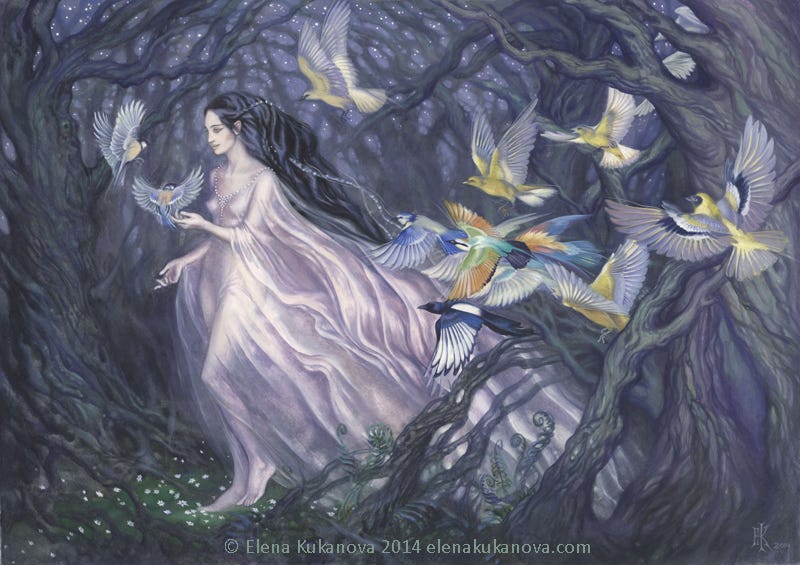
Melian asks Galadriel how the Noldor came to Beleriand, because Thingol hasn’t received any emissaries from the Valar to explain the situation. Galadriel is reluctant to tell her about the Kinslaying, so she just says they weren’t sent, they came on their own. Galadriel won’t say more because she had no part it in and doesn’t want the blame for it.
Even so, Thingol finds out, and when Galadriel’s brother Finrod comes to visit her, Thingol is furious with him about the Kinslaying (because the Teleri are his relatives.) Finrod is able to clear the air and tells Thingol that he had no part in the slaying, although he did follow Fëanor for a time after Melkor stole the Silmarils. Because of this, Thingol kicks Finrod out of his realm for a while, though he says he won’t blame the sons of Fingolfin and Finarfin (brothers to Fëanor) for Fëanor’s crimes. Even so, Thingol bans anyone from speaking the Noldor language in his realm until the end of time. This further cements the uniqueness of the Sindarin tongue.
This pronouncement is no less permanent than the great ill that was done to the innocent Teleri by Feanor and his sons, and far more merciful.
Finrod’s Punishment
In closing, we learn that Finrod doesn’t marry and doesn’t have kids. The Elf woman that he loved didn’t join him on his travels and he didn’t want to pass his legacy on to any son. This suggests a great deal of guilt and empathy and penitence; he was scolded for the acts of Fëanor and doesn’t want that shame passed on to his own descendants, so he chooses not to have heirs.
Taking on himself the full guilt of his entire bloodline is severe, but so is Finrod’s blame of himself for at least following Fëanor in the beginning. If he hadn’t, maybe Feanor wouldn’t have reached the Teleri and wouldn’t have killed them. Finrod has all of eternity to analyze that.
This is an affiliate link, so if you buy a copy of THE SILMARILLION through here, I’ll get a small commission.