

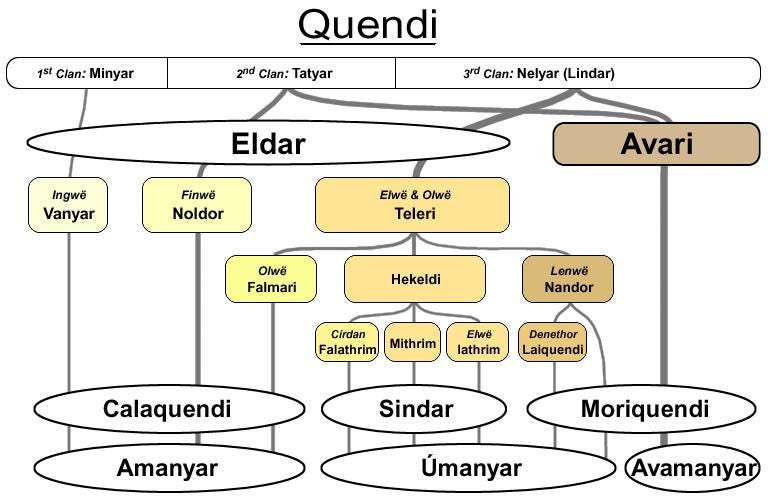
We’re now into chapter eleven of The Silmarillion, “Of the Sindar.” The Elves are already divided into different clans or tribes or what have you, based on lineage, material trade, location, or some other unifying quality. The Valar refer to them as the Quendi, and from there, other names like the Noldor or the Telerí.
The Sindar, or Grey-Elves
The Sindar are an offshoot of the Telerí, and therefore not as old, at least as far as names and culture go. This chapter is a glance backward as far as the chronology is concerned; what happens here is concurrent with Melkor’s imprisonment, so Valinor is still intact and glorious. They live under the rule of King Thingol.
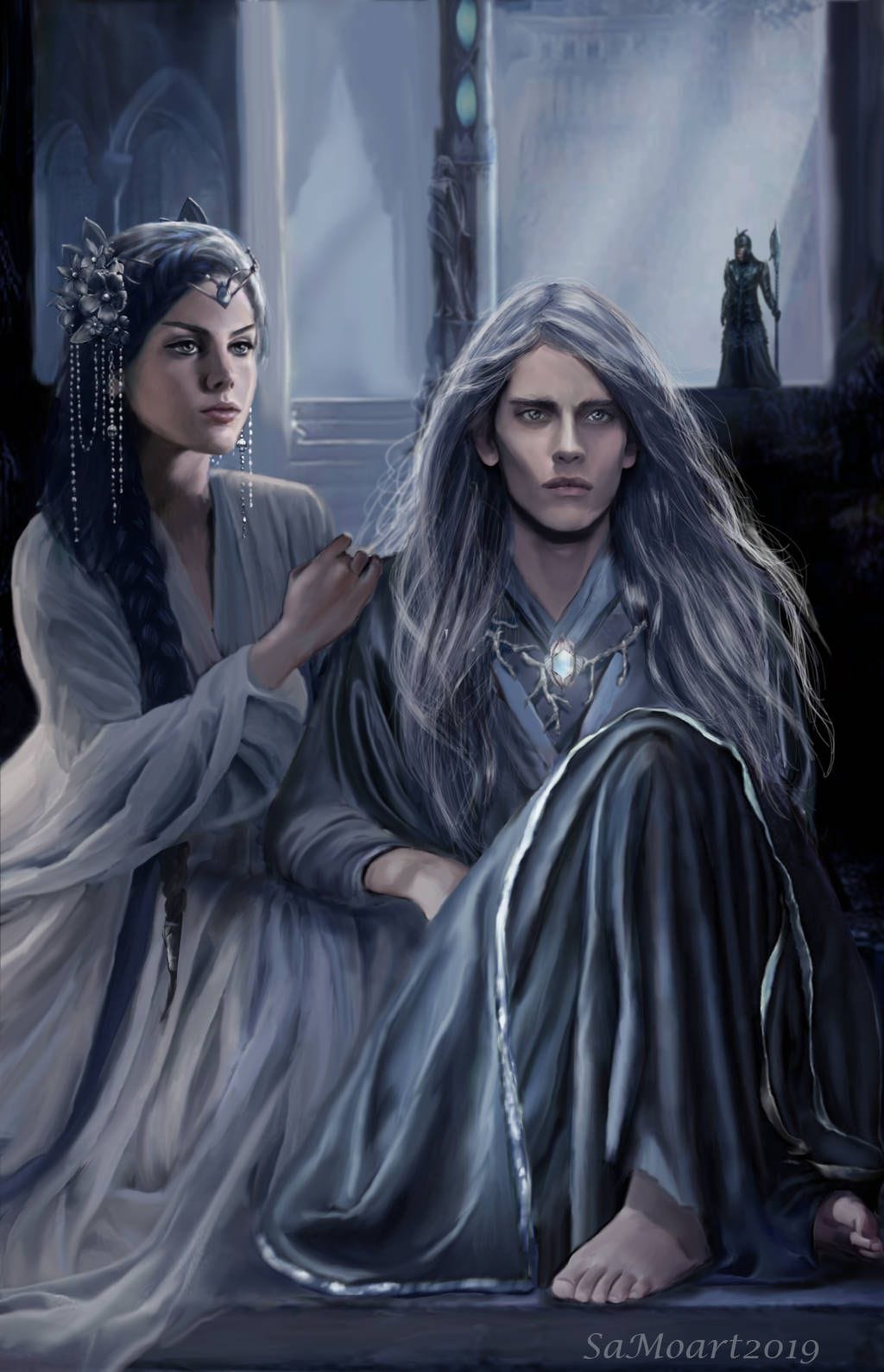
Melian and Thingol, by SaMo-Art
Speaking of him, let’s check in on Thingol and Melian—he’s an Elf and she is a Maia. They have just given birth to their first and only child, an Elf princess named Lúthien. This is the very Lúthien who was based on J.R.R. Tolkien’s wife Edith, and there will be an entire chapter/arc dedicated to her love story later. As you might expect from the union of an Elf and an angel, she’s the most beautiful ever.
The Dwarves and the Elves continue to have commerce together, but more often it’s the Dwarves coming to do business with the Elves and not the other way around. They have different words for each other in their different languages. Despite the Elves’ long lives, it’s the Dwarves who are more keen to learn another tongue, so they pick up the Elves’ language and use their terms for things.
They work together to build beautiful halls and buildings, partly for their own sake, and partly in preparation for the eventual return and rise of Melkor and his forces. Melian’s future visions compel her to warn Thingol about this, that the peace is only temporary, and so the Dwarves and Elves made their preparations. A long time passed, but eventually dark things from the north began incursions into Dwarven lands, signaling the gathering of Melkor’s power.
Thingol called for weapons to be made and the Dwarves answered. Now it’s the Sindar’s turn to learn something new, and they start crafting weapons for themselves, learning techniques from the Dwarves.
A Brush with Death
All of their preparations pay off; when Melkor and Ungoliant flee Valinor and cross the ice between Aman and Middle-earth, they pass through Beleriand, which is ruled by Thingol. Despite the considerable power of those two, Thingol’s armies repel them. largely because Melian’s strength is the deciding factor. It takes an angel to fight a demon. Remember: Melkor was only able to sucker-punch the Valar and then flee. He didn’t face them openly.
In the coming years, more orcs would press the borders of Beleriand. Dwarves and Elves would fight and die all the time against this new foe. They’d have victories and losses, including significant leaders. As the forces in Beleriand focused on repelling Orcish attacks, Feanor and the Noldor arrived on the northern shores in the Telerí ships, fresh off the Kinslaying.
My Thoughts
This chapter is another example of how much thought Tolkien put into his world and its history, at how he kept track of his people and their relevance to the legendarium. YouTuber Little Platoon recently said that The Lord of the Rings is not a conclusion to a story that started in The Hobbit; it’s the conclusion to what started all the way back in The Silmarillion, and the more I read here, the more I see he’s right. This is a detailed and complex narrative and yet once you understand the building blocks of it, you can easily work backwards or forwards, the way you would with actual history and scripture.
That will be even more apparent in the following chapter when we take a look at the origins of the sun and moon over Middle-earth. Now that the Trees are gone and the world is dark, there must be some new instrument to light it all. You’re going to like this.