

Writers exist in different tiers of intensity. We all want success but we don’t all work for it at the same level, even if that doesn’t always translate to who sells the most. Some people are just grinders. Sit them down at a computer, or a typewriter, or a notebook, and they go at it. Their minds and hands are in constant motion.
Some writers were so productive in their day—and continue even after their death—that their estates remain busy with the interminable task of managing their legacies. Louis L’Amour, Frank Herbert, and Michael Crichton are definitely in this tier, but perhaps none was so dedicated to his own legendarium as J.R.R. Tolkien.
The sheer body of work that he created for Middle-earth is mind-blowing in its breadth, depth, and intricacy that his son Christopher spent forty-seven years managing and distributing it all after his father died. When you see the number of stories released after the Professor’s life, the iterations they went through, and the monumental effort of Christopher to collate it all, you begin to see the scope of this world as it existed in Tolkien’s mind.
There’s a lot to appreciate here. Christopher had to pore over pages and pages of manuscripts and notes to get these books released, adding his own annotations and explanations along the way. But here’s the key thing: only the Professor’s name and his name appeared on the cover, with the latter being an editor and not a writer. Nobody else got to jump into the sandbox and change what he’d made because it wasn’t theirs.
Recently I was made aware of this older interview from George R.R. Martin when he was in Australia. The question asked was whether he’d let anyone else write A Song of Ice and Fire after he dies, and he had an answer that I really like. The video should start at 4:54, that’s where his answer is. Give it a listen.
Now, I’m no fan of Martin or his works, but I’m a huge fan of this perspective. Consider the other writers I mentioned: Crichton, who died in 2008, had a book set for launch and another unfinished that was under contract. The former was delayed by a year and the latter was finished via collaboration. Since then his widow has been releasing “trunk novels” from Crichton’s archives or authorizing collaborations with other writers under the Crichton brand. I’m not opposed to the trunk novel approach, but the “Deceased Author as a Sales Gimmick” tactic has never sat well with me.
Brian Herbert, son of the late Frank, has also managed his father’s legacy with varying degrees of satisfaction among Dune fans. Collaborating with Kevin J. Anderson, the younger Herbert has released more than a dozen titles in that world—twice the number that Frank produced—and while readers aren’t as divided over the quality as they are with, say, Star Wars, there is still plenty of debate as to what’s worth reading or not. I’ll let you decide.
And finally, Beau L’Amour has undertaken the “Louis L’Amour’s Lost Treasures” project, born out of the thousands and thousands of unpublished pages that his father left behind, which thus far has been a delightful success, and deserves its own focused piece at another time.
If I were to take these four writers and look at how their surviving family handled their posthumous work, I could show you things that I liked and didn’t like about them. Ultimately it comes down to who gets to carry the torch, or rather, when the torch should just be planted in the ground with a steady feed of fuel to keep it going, and readers can approach it where it is without it being taken to them on their terms.
And to tie it all back to Martin’s statement above: spoiled descendants cutting up an ancestor’s work for a quick buck is just a tragedy, and akin to dousing a torch in a snowstorm.
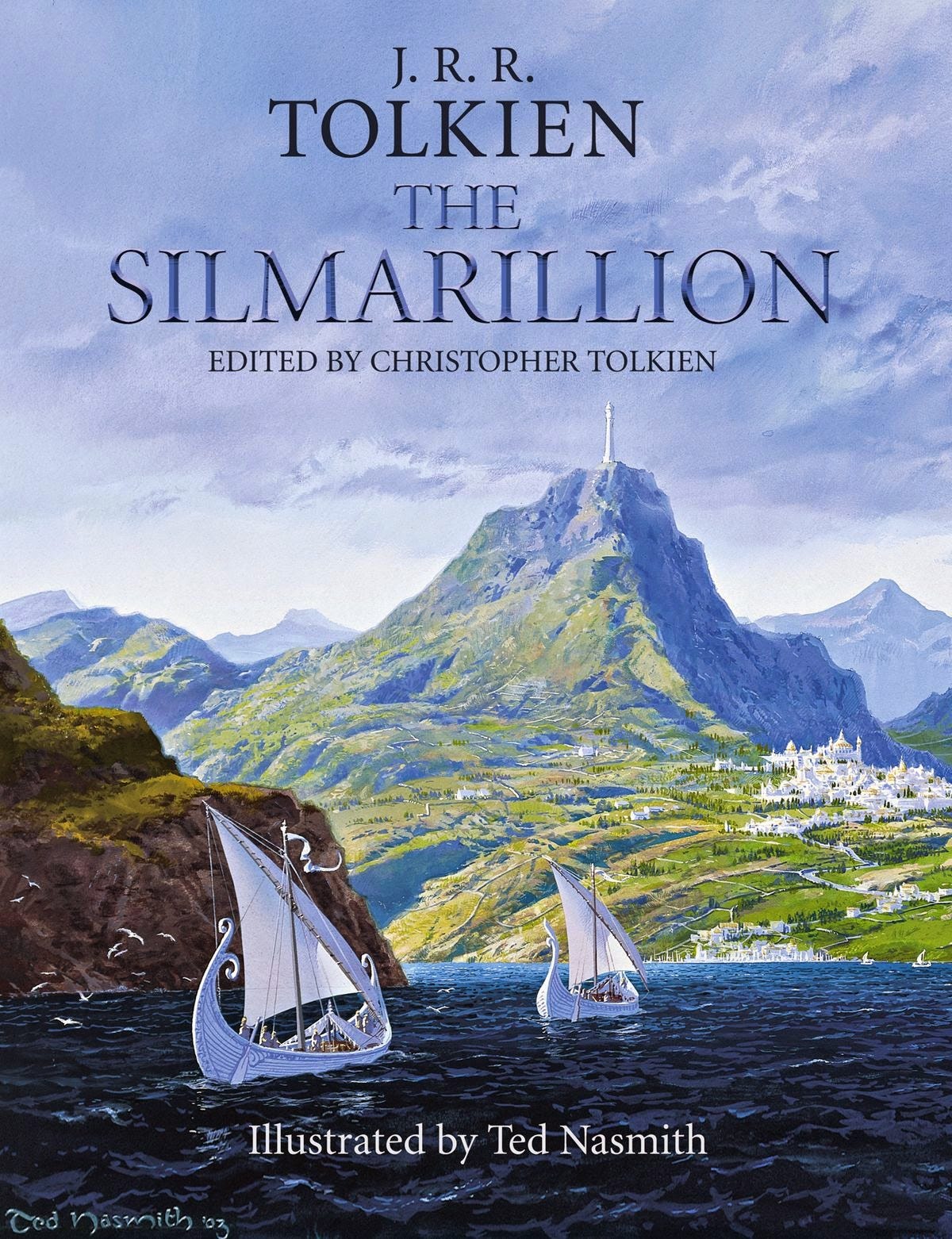
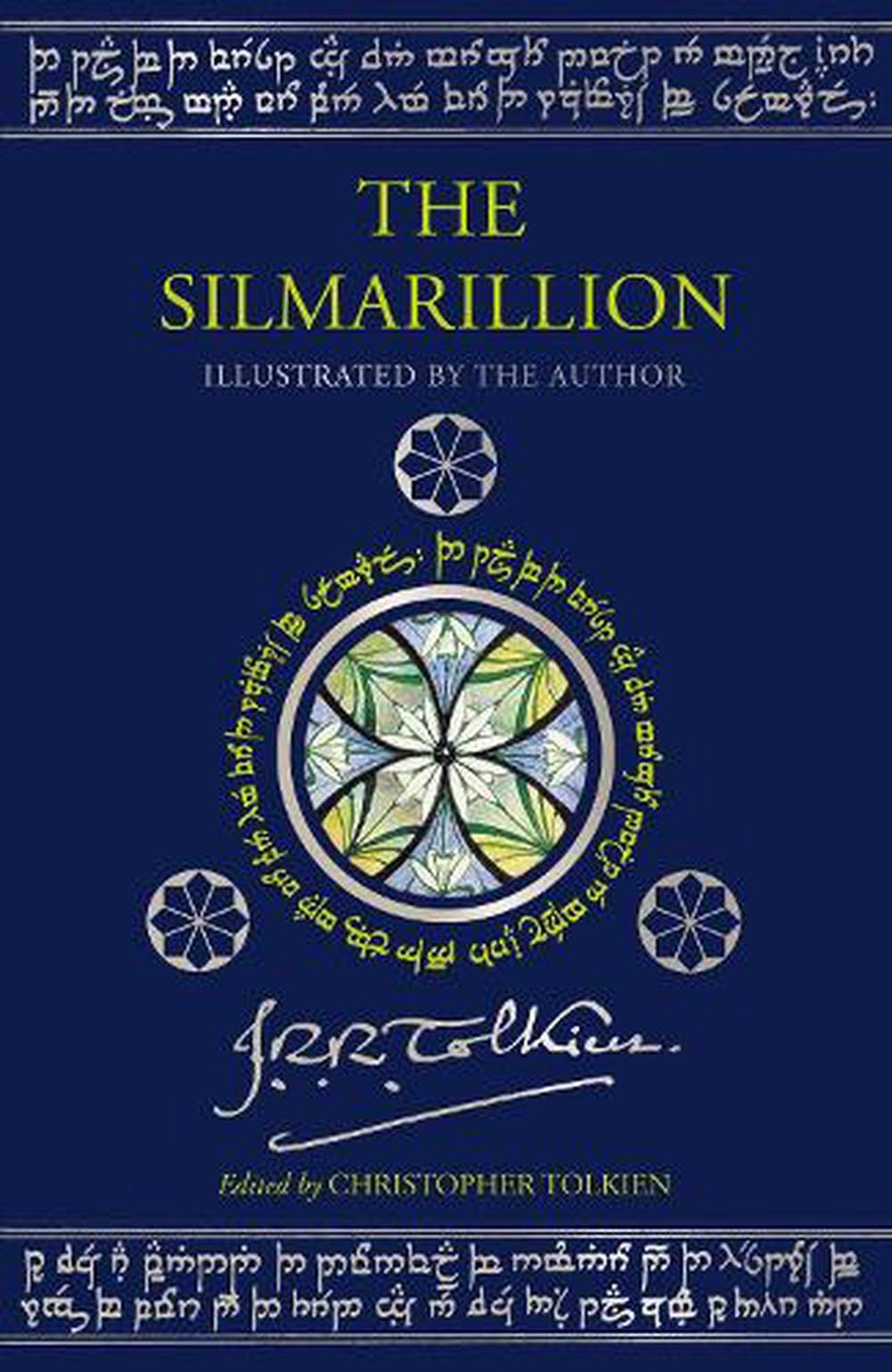
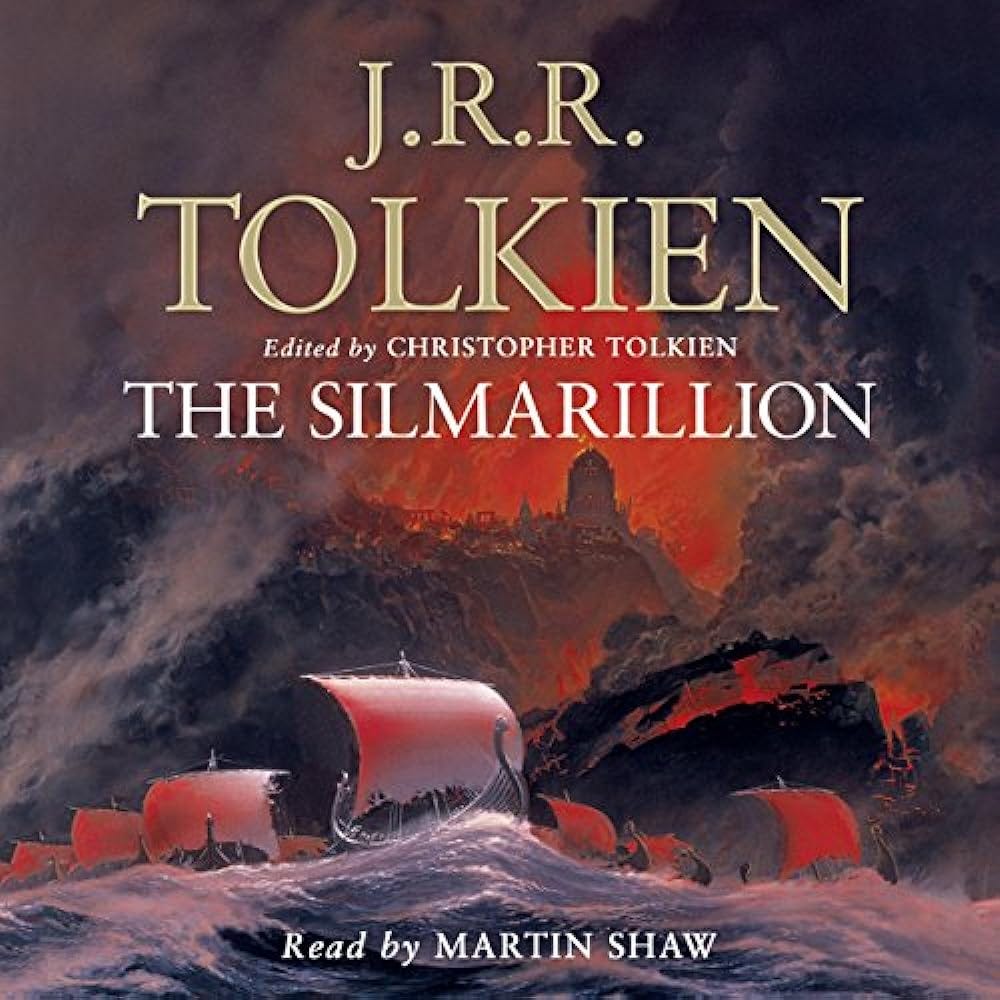
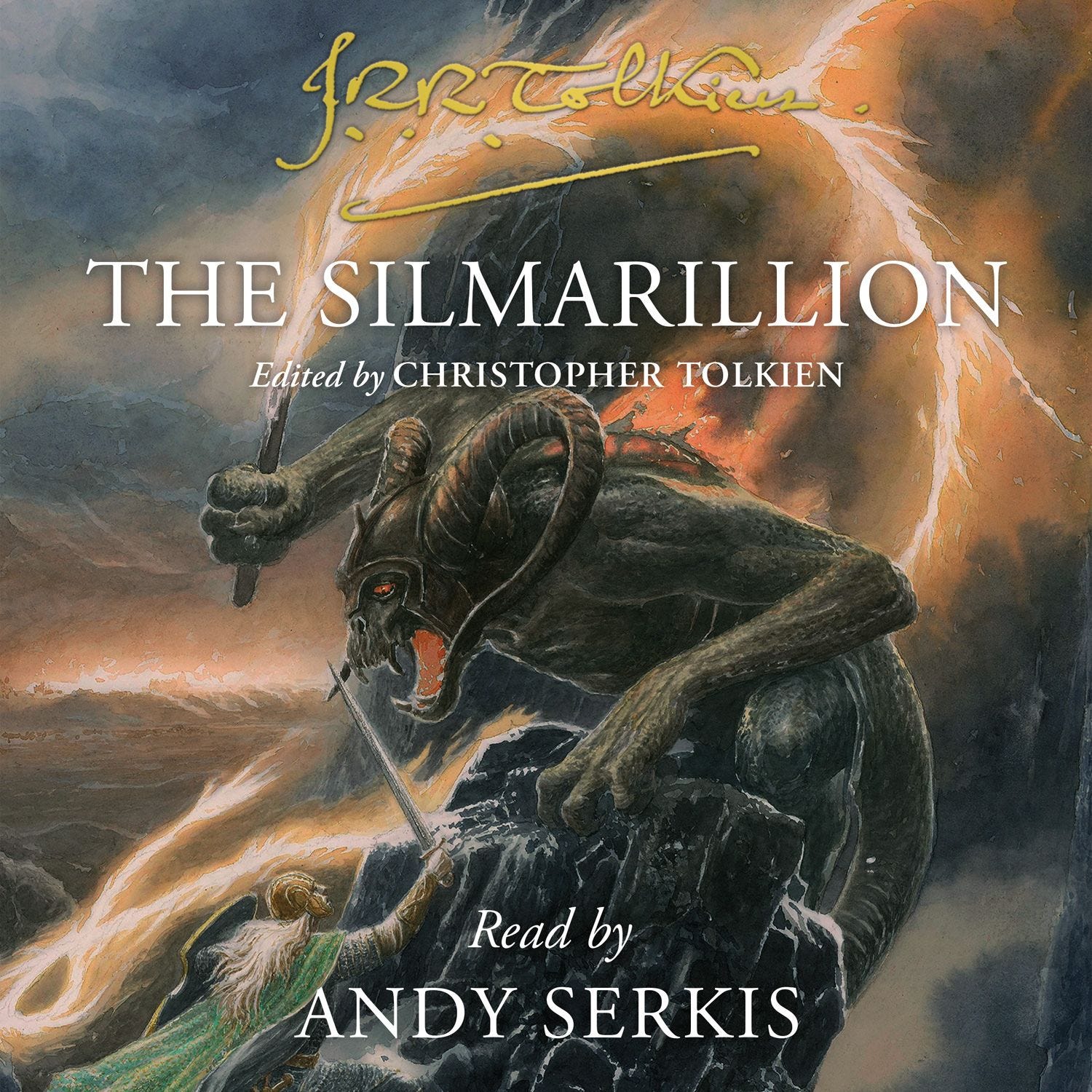
Thus we come to my reading of J.R.R. Tolkien’s THE SILMARILLION, edited by his son Christopher, who spent his years being the fuel line to J.R.R.’s torch, fending off those who would wrest it from its place. You don’t see J.R.R. Tolkien’s name with collaborations by Dean Koontz or James Patterson or Danielle Steele because it’s not that kind of work, they aren’t that kind of writer, and it’s not for that audience. In fact, the audience for this book is…quite narrow. Even among the devoted Lord of the Rings fans, THE SILMARILLION is an endurance test due to its complexity, profundity, and especially, how different it is from just about anything else in the fantasy genre.
Have you ever sat down and read The Bible purely for leisure? Have you pored over the Old Testament with a keen eye to who begat who and what cardinal sin was committed and which generational curse was visited upon which nation a thousand years hence? Probably not. And so you probably haven’t read THE SILMARILLION, because it covers a lot of that same territory, it being the creation myth and the history of the First Age of Middle-earth.
Yet this book continues to sell, readers continue to read it, fans continue to parse through it, and the diehards continue to memorize it almost as the faithful would devote their lives to reading The Bible. (Granted, it is markedly more readable than that.) I would ask you: why?
I suppose the answer depends entirely on the person answering. Like scripture, THE SILMARILLION’s value is relative to the determination of the reader to understand it. I’ve taken more than one run at it over the years myself. On my last reading I got this idea, to break down each chapter or tale within its pages and provide you with a quick summary of its contents, as well as any key details that will help you understand the larger world that Tolkien created.
The point is not to replace your own reading of THE SILMARILLION; this is a supplement, an outline to give you a general framework of each chapter, so that the overwhelming scope doesn’t steer you away from the mythos. I’ve found this tactic to be helpful when it comes to reading Shakespeare’s plays from time to time, especially when the supplemental material provides some historical context for what the play is about.
I think that’s why THE SILMARILLION—or at least the five different versions that I own—opens up with notes from Christopher Tolkien and an essay-letter from J.R.R., explaining why he wrote it in the first place, and the purpose it serves in supporting the Middle-earth legends in total.
And so I present to you the first in what will be twenty-seven essays (and video scripts) in my FIVE MINUTE SILMARILLION series. This introductory essay is completely my own, while subsequent writings will digest and analyze the different chapters of this book, starting with Christopher’s foreword and J.R.R.’s letter to a colleague. From there we’ll break down the Ainulindale, the Valaquenta, and then the individual chapters of the Quenta Silmarillion itself, concluding with the Akallabeth and “Of the Rings of Power” at the end.
It will be hard to commit to a steady schedule on this, especially as I’m getting a book out in the next three months, so bear with me as I will do the best I can to be disciplined here. I’m excited to tackle this because I think it will help more people see the value in this unique and beautiful book. I had my own hurdles to jump over as I’ve tried reading it (first attempt: 2003, at age 18.) Here’s what got me through it.
Thanks for reading. See you soon.