

Aulë Goes Off-Script
Chapter 2 of THE SILMARILLION is called “Of Aulë and Yavanna.” These are two of the Valar; the former is a male in charge of earth/soil, and the latter is his wife, who is in charge of fruit and other agriculture. They have a lot in common because they like to make stuff from the ground.
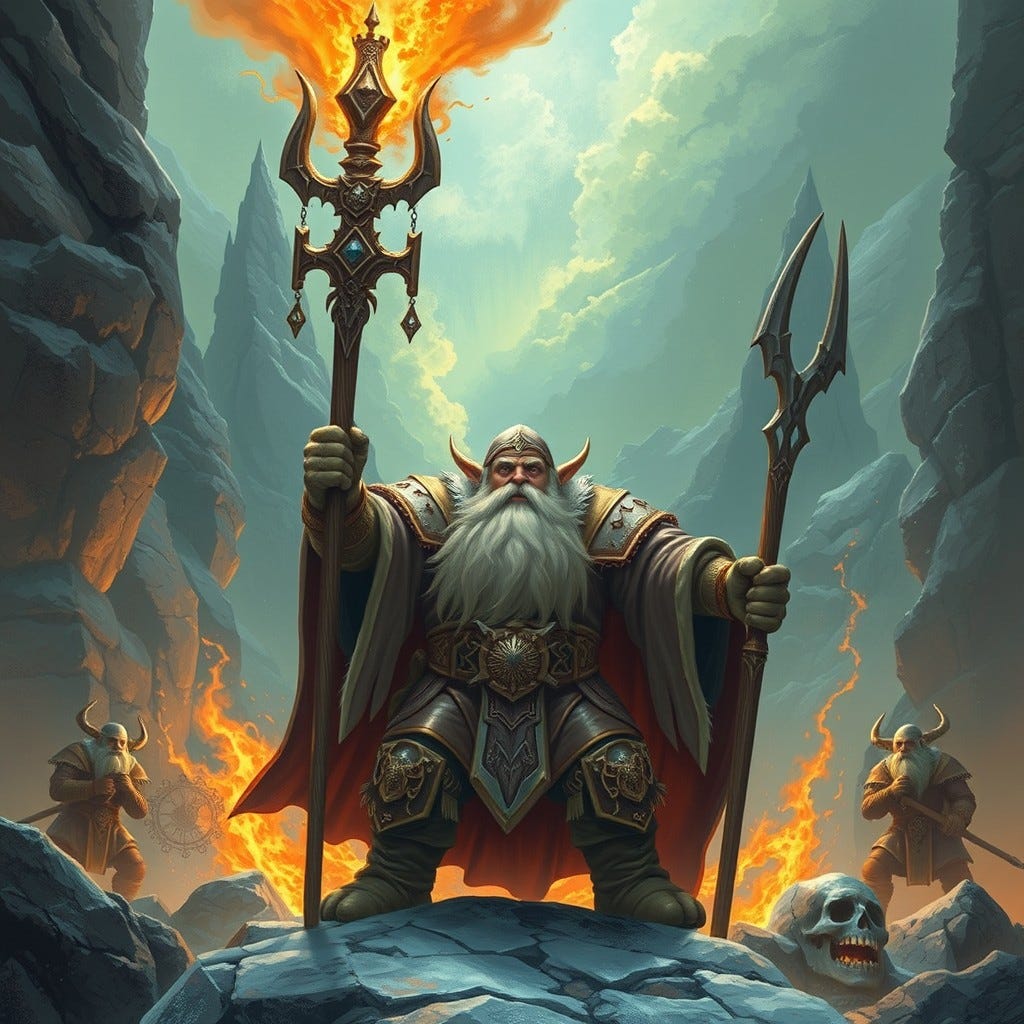
Of all the Valar, Aulë shows a little impatience, wanting to make something in the same way that Ilúvatar did, namely, an entire species that will do what he teaches them to do. He creates the Dwarves, which don’t look exactly like Elves or Men, and are a little more rough around the edges. He knows the other Valar would try to stop him if they found out so he keeps it a secret, but Ilúvatar knows everything, and he confronts Aulë about it.
Aulë is a little embarrassed and tells Ilúvatar he’ll destroy the Dwarves if that’s what’s required of him, but Ilúvatar tells him not to, and that they’ll have their role to play later on. This echoes what Ilúvatar did with Melkor’s destructive works during the Song of Creation, taking his misguided actions and making something functional—even beautiful—out of it all. The difference between Aulë and Melkor was their intent, that Aulë did it out of pure love and desire to magnify his own talents and to glorify Ilúvatar, whereas Melkor wanted to usurp Ilúvatar.
Still, because the Dwarves are Aulë’s creation and not Ilúvatar’s, they are adopted into Iluvatar’s stewardship without being given any preference over them. He specifies that they’re children of his adoption while the Elves are children of his choice (p.38, mass market paperback).
Why Dwarves and Elves Don’t Like Each Other
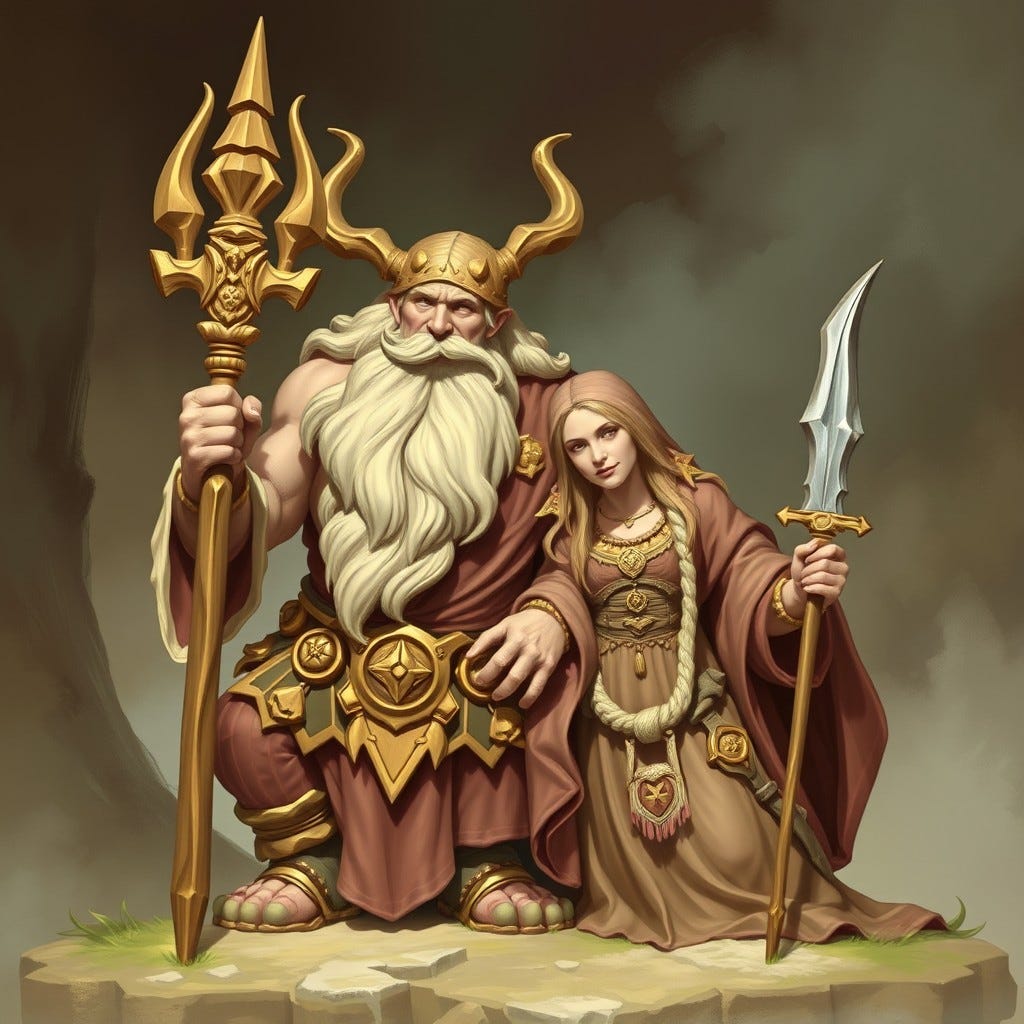
This is the start of the beef between Dwarves and Elves, but it’s not the whole beef. That enmity is the result of a stack of differences. Still, Aulë made the Dwarves “strong to endure,” because he knew they’d come into the world around the time of Melkor’s powers, and they’d need the durability.
When Aulë tells Yavanna what he did, and what Ilúvatar decided about the Dwarves, she warns Aulë that the Dwarves will only care for their own works and for Aulë’s works, but they won’t be careful when it comes to digging in the earth, and that they’ll chop down trees. These things are in her dominion. The Dwarves’ disregard for trees will also land them in hot water with the Elves over time, although Aulë reminds Yavanna that the Elves and Men will use trees and such too.
The difference between Elves and Men and their use of agriculture versus that of the Dwarves is similar to the difference between Melkor and Aulë in this scenario; Elves and Men will be good stewards of these things and use them with gratitude, while the Dwarves will care more for what is under the ground, and will destroy a lot of plant life in the process. Use, versus abuse.
I get the sense that Yavanna’s speech about the vulnerability of trees and plants here is an extension of Tolkien’s own environmental sensibilities; he was known to talk to trees, to name them as he wandered about, and they played a formidable role in his imagination. If I read his Letters and find out that this exchange between Aulë and Yavanna is a representation of his own views on industry versus conservation, I won’t be surprised.

My Own Thoughts
Back in the beginning of this project, I noted from Tolkien’s preface that he described this book as a story of the Elves’ fall, yet it was not supposed to be an allegory of the Christian tradition of Adam and Eve, because Tolkien hated allegory. Still, there would be mechanical similarities between the two things, and as I read THE SILMARILLION in depth, I see those similarities pop up.
Different sects of Christendom will have different ideas about the Fall of Adam and God’s attitude toward it. My assessment is that it was an event God foresaw, because He has all knowledge and all power; He would have purposely created the Garden of Eden with the fruits of the two trees in it (Life and Knowledge), then gave Adam and Eve commandments, and then allowed Satan into the Garden to tempt them. They’d fall into temptation, and He would provide them with a Savior. As a result they would become mortal and have progeny, who would then become the human race.
The similarity, then—insofar as I see it—is that Ilúvatar is also meant to be an omnipotent figure in Tolkien’s legendarium, and as such he cannot be surprised or subverted; his progeny may rebel against him out of malice, or take actions that they are not authorized to take out of well-meaning impatience, but in the end, he will find a purpose for all of it, and make it work according to his will.
In the cases of Melkor and Aulë, the difference is one’s willingness to submit to Ilúvatar’s plan, rather than demand Ilúvatar’s plans work around his own will. Pride versus humility. Damnation versus repentance. These things don’t erase the consequences of their decisions, and just as Melkor was stripped of his privileges as a Vala, Aule too would face consequences for coloring outside the lines. Nevertheless, Iluvatar didn’t punish or destroy Aule’s creation. He fit it into the plan, and not ahead of his own designs.
At least that’s what I’m reading out of this, and that makes it one of the more impactful chapters in this account so far. I see the mechanics of an omniscient god who has a plan, knows his children, and follows a set of rules that provide justice and mercy where needed. Ilúvatar doesn’t behave in exactly the same manner as the Christian God might, yet there’s an overlap in their mechanics, as there necessarily would be.
Read it yourself and tell me what you think.