

So, I finally saw Blade Runner 2049. This is going to sound crazy, but: I’ve never seen Blade Runner. Unlike most of you who are about to come at me in the comments, I’ve read the book that it’s based on (Do Androids Dream of Electric Sheep? by Philip K. Dick). Thus, I say unto you, chill.
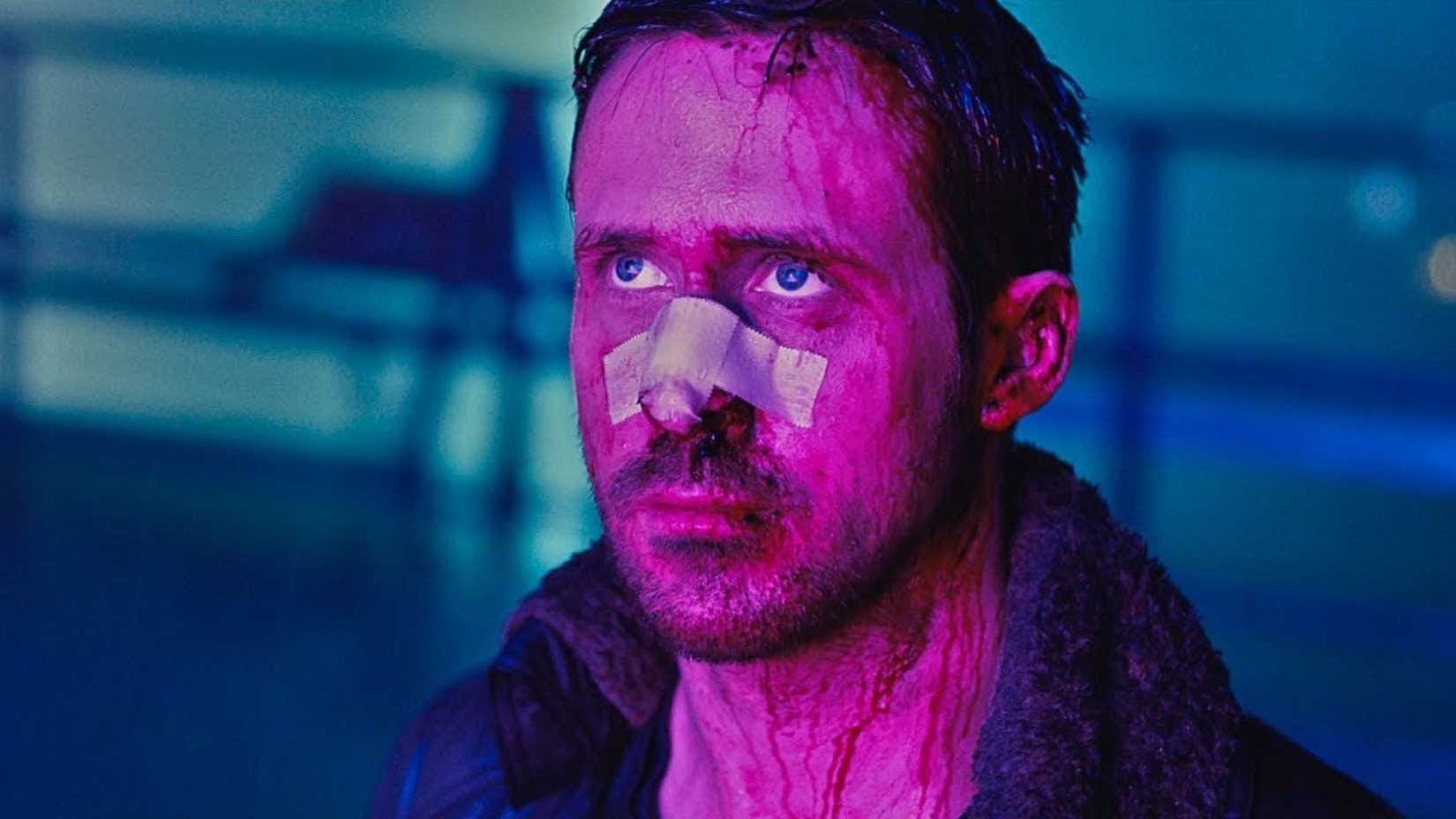
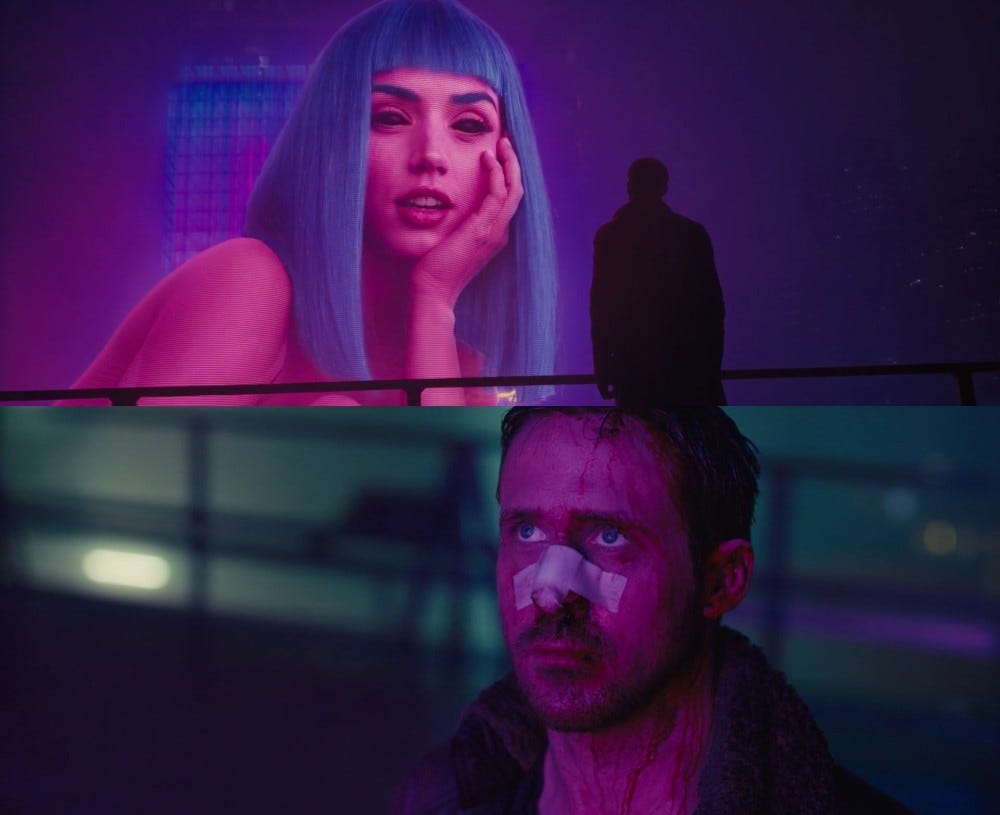
Frankly wasn’t all that hot-and-bothered to watch it because I didn’t get into the book very much. (I’ve seen many parts of the movie and I’ve read a summary of the screenplay.) My curiosity for 2049 was based on the years of meme saturation on the Internet, showing a broken-nosed Ryan Gosling staring with disdain at a neon hologram of Ana de Armas, looking like he wants to die.
My friends in the Esoteric Online Religious Extremist (EORE) community rely on these Gosling memes as a principle form of communication, so I wanted to better understand what they were saying, so I watched the sequel, and I’ve got to say…
…they’re on to something.
But I wonder:
Is it what they think it is?
I’m not going to get too cute-and-clever with you here, because the point I want to make is pretty straightforward. For the uninitiated, however, I shall set the table.
Blade Runner
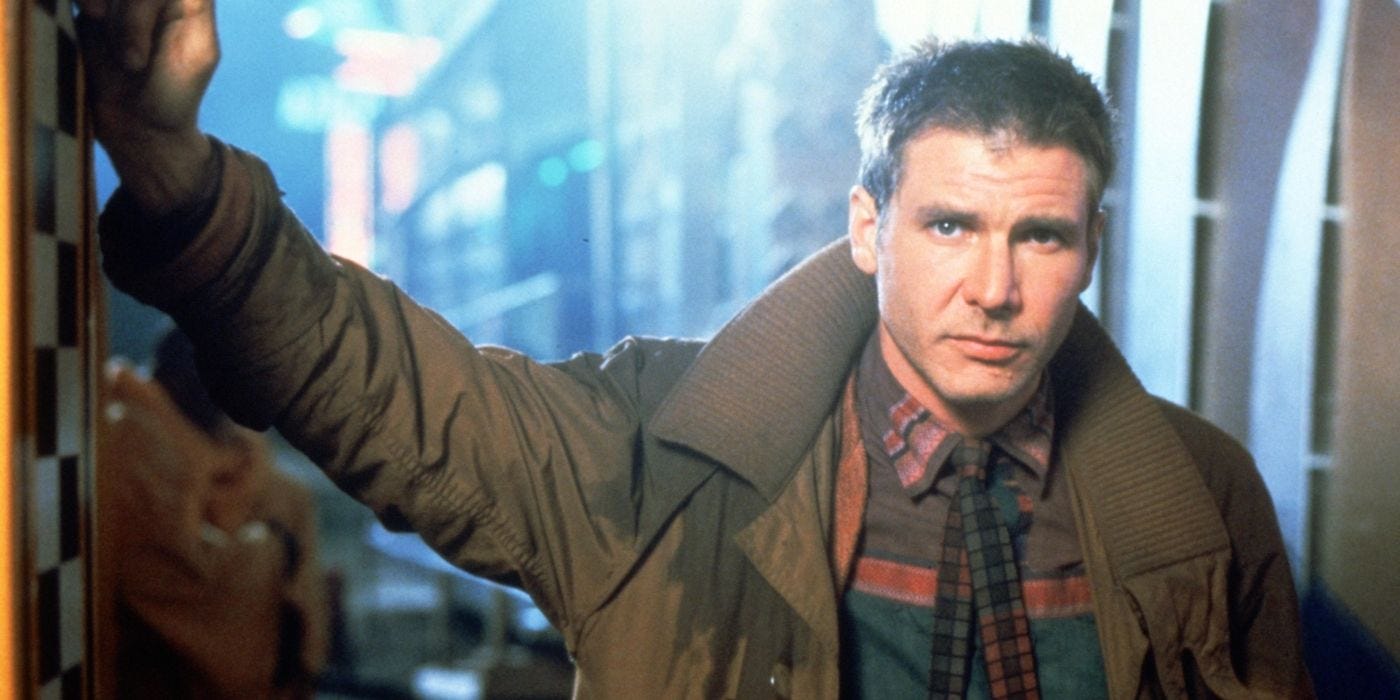
Released in 1982 and set in 2019, the movie depicts a world that is, without embellishment, a mess. The solar system is in the early stages of colonization and Earth is basically an industrial drop-yard for more inspired projects. Hyper-corporatism has ruined everything and people live in a stage of meaningless depression, trying to survive in a stale and ugly world. That’s it. Just survive. Thriving isn’t really in the cards.
Our hero is Rick Deckard (Harrison Ford), a “blade runner” (bounty hunter) who tracks down and “retires” (kills) “replicants” (biological humanoid robots.) There isn’t an excess of massaged/manipulated language beyond this one phenomenon, but the robot element is the most important part of the story. Replicants are bred en masse for labor, and basically exist as slaves. They’re even engineered to have short lifespans, and since they’re similar to humans in most ways, they also behave like one when they’re close to death. Thus blade runners are necessary to rein in wily replicants.
However, as Deckard chases down half a dozen replicants on a big contract, he runs across a replicant woman called Rachael and he falls in love with her. Undertones of the story provoke the viewer to ask whether Deckard himself is a replicant, and I’ve stumbled into fan arguments online as to whether or not he’s fully human.
The most compelling line that I’ve seen in any of these discussions came from one viewer who said:
You’re all missing the point; the movie isn’t asking you if Deckard is or isn’t a replicant. It’s asking you whether it matters at all.
I’ve always wondered what that person meant. After seeing 2049, I am fairly certain that I know.
The Sequel
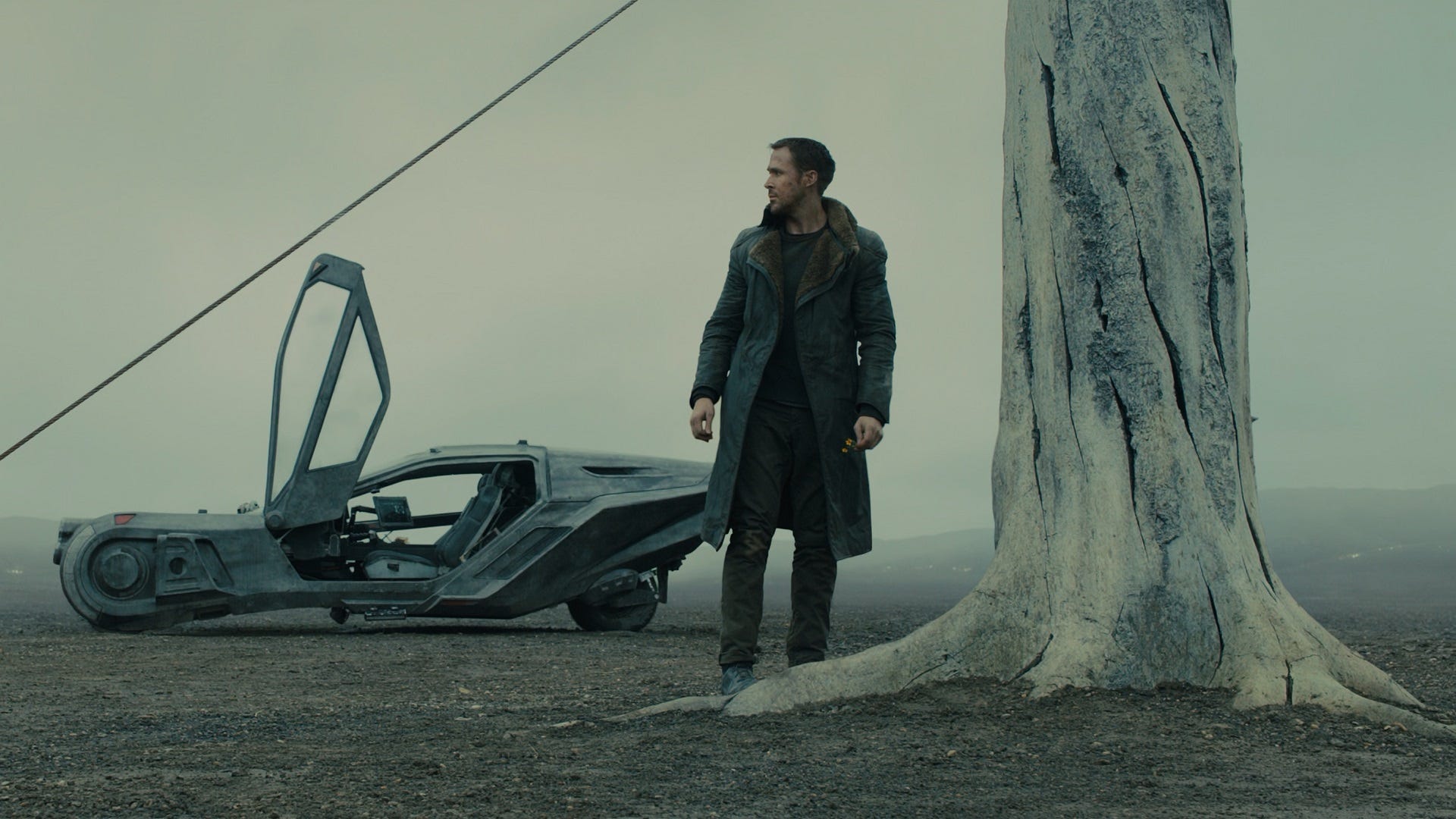
We jump 30 years ahead of the ending of the first movie to witness the exploits of K (Gosling), a replicant who is himself a blade runner. He retires an outdated replicant named Sapper who, just before dying, claims to have witnessed a miracle, and condemns K for hunting his own kind. Curious as to what Sapper meant, K searches his property and discovers a set of human bones that have been buried for decades. It is determined that the bones belonged to an adult female who died in childbirth and, shockingly, the woman was a replicant.
The replicants aren’t supposed to be able to give birth. Along with their artificial origins and their condensed lifespans, this is the defining distinction between them and real humans. If news gets out that replicants are capable of having children, this development could throw a fragile world into violent chaos. Replicants massively outnumber humans and would soon replace them in the solar system. K’s boss orders him to find out who this child was and retire “it,” something that troubles his conscience, as he’s never been told to kill a human before.
Since replicants are artificial but highly similar to humans, they need regular psychological conditioning and testing in order to keep them within the parameters of acceptable conduct. As K investigates this natural-born replicant, he starts to undergo psychological trauma, as the evidence he finds seems to suggest that he himself is the child born of a replicant woman. His mental trauma becomes uncontainable when he finds out he’s not the child, because for a moment he dared to dream that he was something more. Something special. Something that could be loved. He fails his next psych check and his boss informs him that if he can’t get control of himself, he’ll be retired in two days. Discarded, like broken equipment.

Throughout all of this, we see minor ways in which K manages the deep-seated human tendencies in his psyche; he has a holographic girlfriend, Joi (Ana De Armas) who lovingly dotes on him and plays the role of a tradwife. Her holograms even depict elegant home-cooking that project on top of the slop food that K has to eat, because that’s really all that’s available. As K manifests more symptoms of human behavior, Joi reflects such developments as well, and they share a half-baked Pinocchio arc as the story progresses.
But try as he might, nothing can make K a real boy, and Joi will never be anything more than a product, a hologram, something he can simply buy to distract himself from his deeper yearnings. After her module is destroyed and she’s effectively erased, K runs into another Joi hologram in town on a billboard, and the falsity of it clearly disgusts him. That’s the image at the top of the article.
The story ends with K seeking out an aged and retired Deckard in the ruins of Las Vegas, where he learns what happened with Rachael thirty years ago: when she got pregnant, Deckard agreed that they had to split up and he couldn’t know where she was going, because a replicant child would be a big target. K and Deckard join forces to defeat the corporatists who are after them, and though K is mortally wounded, he takes Deckard to meet his daughter.
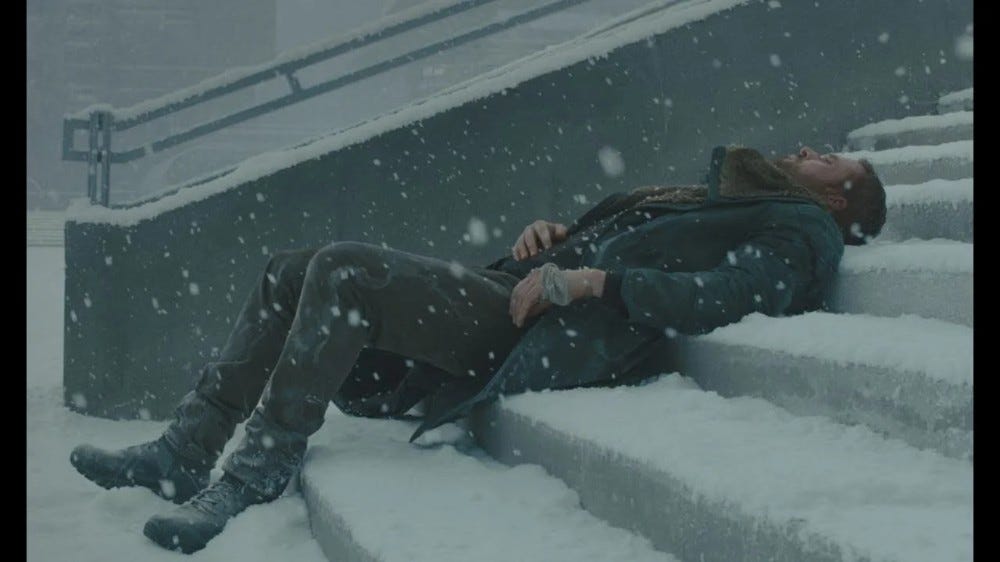
After a brief moment of reflection on some snow-covered stairs, K lays down and dies.
The Meaning

The reason this particular Gosling character resonates so strongly with young men of the last decade is because he is living under the same constraints they are, even if those constraints are jazzed up with sci-fi elements. He’s good at a job that he hates, and he’s forbidden from expressing any negative emotions about it. (Presumably he can’t be positive either, but he’s not in danger of this.) His apartment sucks. The food he eats sucks. His neighborhood sucks, his town sucks. He has a girlfriend but she’s fake and programmed to emulate the things that might satisfy him, but he can’t convince himself she’s real. Even when she tries, the illusion shatters.
Fate plays a cruel trick and lets him believe, even briefly, that he might be more than what he was doomed to be from the moment he was created, but even that is taken away when he finds out he’s not the replicant child. This triggers a profound change that ultimately leads him to sacrifice his life for Deckard and the real child.
If Blade Runner asks whether there’s a difference between replicants and humans, 2049 asks what humans ought to do if the answer is “yes.”
The Answer
The real difference between replicants and humans is the soul. The spirit. The spark of divinity within. Replicants are an extremely detailed simulacrum of humanity but they aren’t quite there—and can’t really get there, not with the constraints imposed on them. However, if they violate those constraints, they can edge toward true humanity by doing the most meaningful human thing ever:
Choosing to live on through their children.
Blade Runner isn’t a dystopia because the weather is bad, it’s perpetually raining, there are fake humans everywhere, and killing is a corporate task; it’s a dystopia because few people are having children. Families. Marriages. People become products, and something as essential as love becomes something you can buy—and even then it’s just ones and zeros and holography. Want sex? That’s also for sale, and it’s an even more twisted and deformed version of itself than love. That’s it. The replicants can fake it as much as they want and as hard as they want, they will never be real. They’ll never prove whether they have souls.
But if they can have children, well…that would be worth rising up over. They wouldn’t depend on humans to create more of them. They could do it themselves, and live forever, the way humans used to.
That realization is why I thought of Good Will Hunting; when K hunts down Deckard and takes him to meet his daughter, it was just a different version of the talk between Will (Damon) and Chuckie (Affleck) near the end.
(Profanity warning, they are from Boston after all.)
Chuckie: Look, you're my best friend, so don't take this the wrong way. In twenty years, if you're still livin' here, comin' over to my house to watch the Patriots games, still workin' construction, I'll ****in' kill you. That's not a threat, that's a fact. I'll ****in' kill you.
Will: What the **** are you talkin' about?
Chuckie: Look, you got somethin' that none of us-
Will: Oh, come on! Why is it always this, I mean, I ****in' owe it to myself to do this or that? What if I don't want to?
Chuckie: No. No, no, no. No, **** you. You don't owe it to yourself. You owe it to me. 'Cause tomorrow I'm gonna wake up and I'll be fifty. And I'll still be doing this shit. And that's all right, that's fine. I mean, you're sittin' on a winning lottery ticket and you're too much of a pussy to cash it in. And that's bullshit. `Cause I'd do anything to ****in' have what you got. So would any of these ****in' guys. It'd be an insult to us if you're still here in twenty years.
Full Circle
Blade Runner asks if the difference between humans and replicants even exists. And if we’re just wasting our lives, consuming cheap imitations of the things that matter most, refusing to give life to our descendants and burning all of our energy in pursuit of fleeting material satisfaction, then what is the functional difference between us and a robot with an expiration date?
I've seen things you people wouldn't believe. Attack ships on fire off the shoulder of Orion. I watched C-beams glitter in the dark near the Tannhäuser Gate. All those moments will be lost in time, like tears in rain. Time to die.
That is the true meaning of the speech given by Roy Batty (Rutger Hauer) in the 1982 movie. Yes, I’ve seen this clip and heard the quote scores of times, and never understood why it matter until seeing 2049.
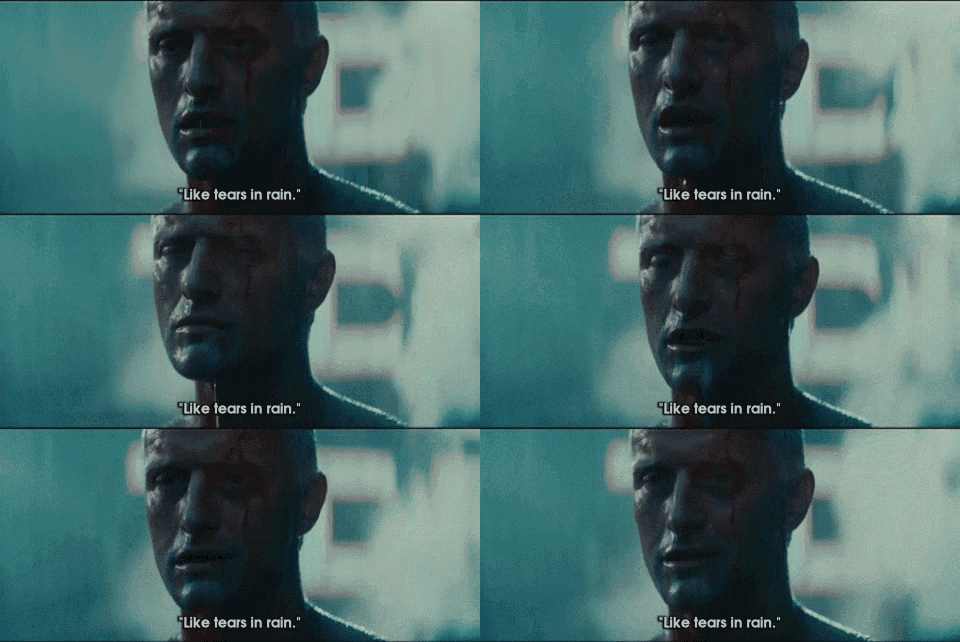
The incredible, unbelievable things that he’d seen in his short life…they would die with him. Gone. Nobody to pass it on to. Nobody who would care. He was just a piece of equipment.
And I get it—plenty of you want to have families and children, and for a myriad of reasons, you haven’t or you can’t. You have my sympathies.
But to the ones who choose to live like that…what’s the difference?
Admonition
The aforementioned EORE community will have a response to this, and I know what it is: they are mostly male, mostly in their 20s or early 30s, and mostly single, mostly childless, and on that last point pretty much universally not by choice. They’ll tell you that the women they pursue are not looking for marriage or family or motherhood, and have been propagandized by a trillion-dollar machine to eschew the act of perpetuating themselves through children.
My response to this is twofold: first, you are probably correct in that assessment, to a degree.
Second: cynicism and defeatism are the easiest attitudes to embrace. They require no creativity, no effort, and no fortitude. There is no shortage of excuses to justify them, and that abundance is a key element of what makes them worthless.
Yes, it is easy for me to say this as a husband of 15 years with 3 children to carry on my name. I escaped the cycle, and the way I did it will not be palatable to everyone reading this. (I earnestly went to church and found a good and faithful woman, and we value the same things, the end).
Nevertheless, I was once like you. I know what it feels like to cry yourself to sleep at 25 and think your life is over. To hear a song on the radio that makes you punch your dashboard so hard you shatter an A/C vent. To take up running at 6 in the morning and push yourself to sprint until you can’t breathe and you almost crash on the sidewalk because it feels better than the last text She sent you.
It absolutely sucks. I would never try to convince you otherwise, or take that away from you. It’s a rock-hard fact.
But you cannot give up—not on yourself. If you have to be the last one in your own corner, then lock it down and tell the whole world to get bent. Gosling in Blade Runner 2049 is not Literally You because everything around him is fake and women are for sale and the future is bleak and existence is hopeless.
Gosling in Blade Runner 2049 is Literally You because in spite of all those things, he didn’t just roll over and die. He fought back against a system that simultaneously employed and discarded him. The difference is that you don’t live in a radioactive hellscape overflowing with people who hide barcodes under their eyelids. You just need to spend less time on the Internet.
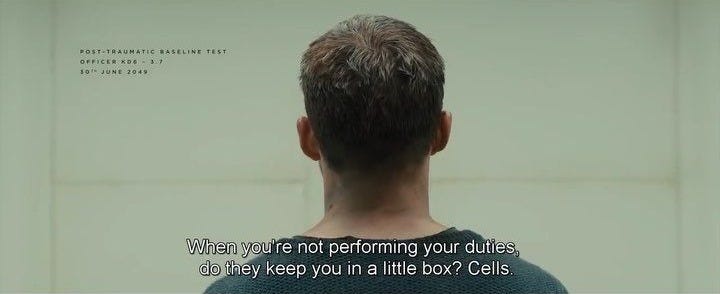
Bet on yourself. Break out of the box. Disconnect from the cells (interlinked.) Whatever the future looks like, do not convince yourself that it’s inevitably the worst iteration. The world overflows with doomers. Don’t be one of them.
Because at the end of the day, you have what the replicants would kill to have: a soul. And you owe it to them not to throw it away.
Get to work.
This was great. I actually really needed to hear this right now, thank you, Trucker Man.
The internal locus of control is the most important lesson a young man can learn.
But he will only learn it if we in the same breath acknowledge that he has it genuinely rough. Rougher than I had it.