

“Electoral Brawlage” examines the first election and inaugural address of each U.S. president from Washington to Trump. This project will conclude in December 2026.
If you like shootouts, car chases, dogfights, and American history, read Heartlanders!
Subscribe to get these articles via email. Become a paid subscriber to help me buy more books.
Buckle up, kids. This one is a ride.
In 1972, Nixon coasted to re-election over his Democratic opponent, George McGovern (D-SD, Senate.) McGovern had picked Sargent Shriver, a founding member of the Peace Corps, as his VP.
There’s no way to spin this as anything less than a massacre. Look at these numbers.
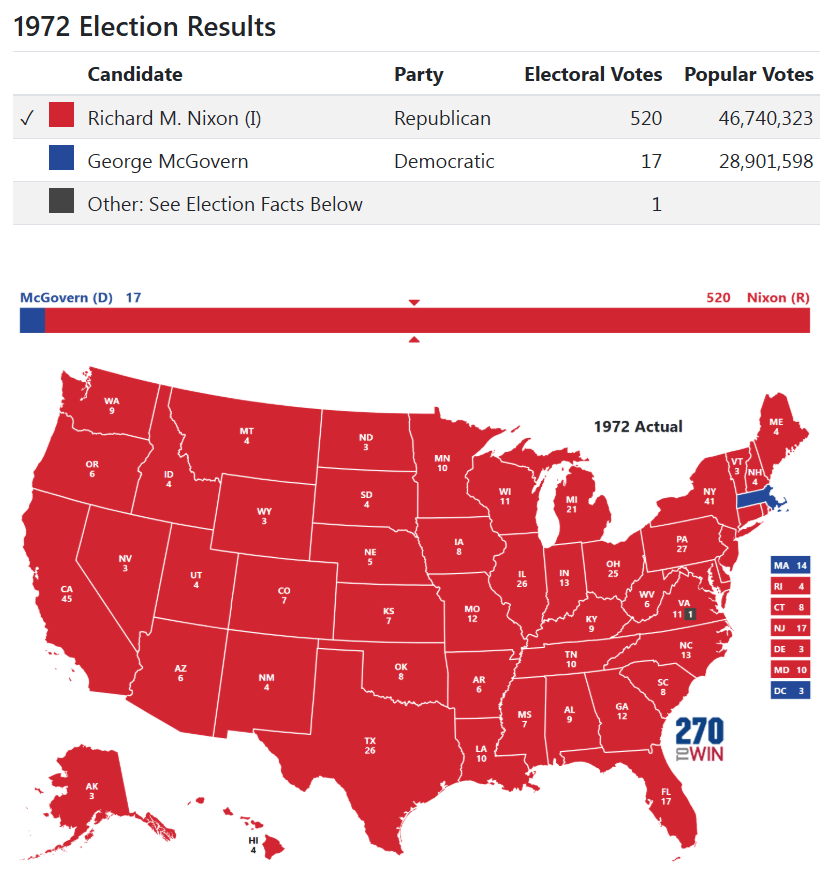
520 to 17. Are you kidding me? The only districts McGovern won were Massachusetts and D.C.! He couldn’t even take his home state! The popular vote margin was greater than 20 points! It doesn’t matter, it’s just funny!!!
Nixon was one of the most popular presidents of the 20th century. Honestly that makes what came next a little baffling to me, and I need to read some books to get a better understanding of the circumstances.
Agnew
First: Nixon’s V.P. Spiro Agnew took a hit for some financial “irregularities” during his tenure as governor of Maryland. Six figures of money went missing, and this is back when money had gold behind it, so it’s a LOT more now. This is why you can’t take kickbacks as a public official: yes everyone is doing it, but when they need to get rid of you, they’ll expose YOUR kickbacks. Taking out Nixon’s V.P. was part one of taking down the man himself.
As part of his plea deal, Agnew left office and basically disappeared into the history books.
Ford
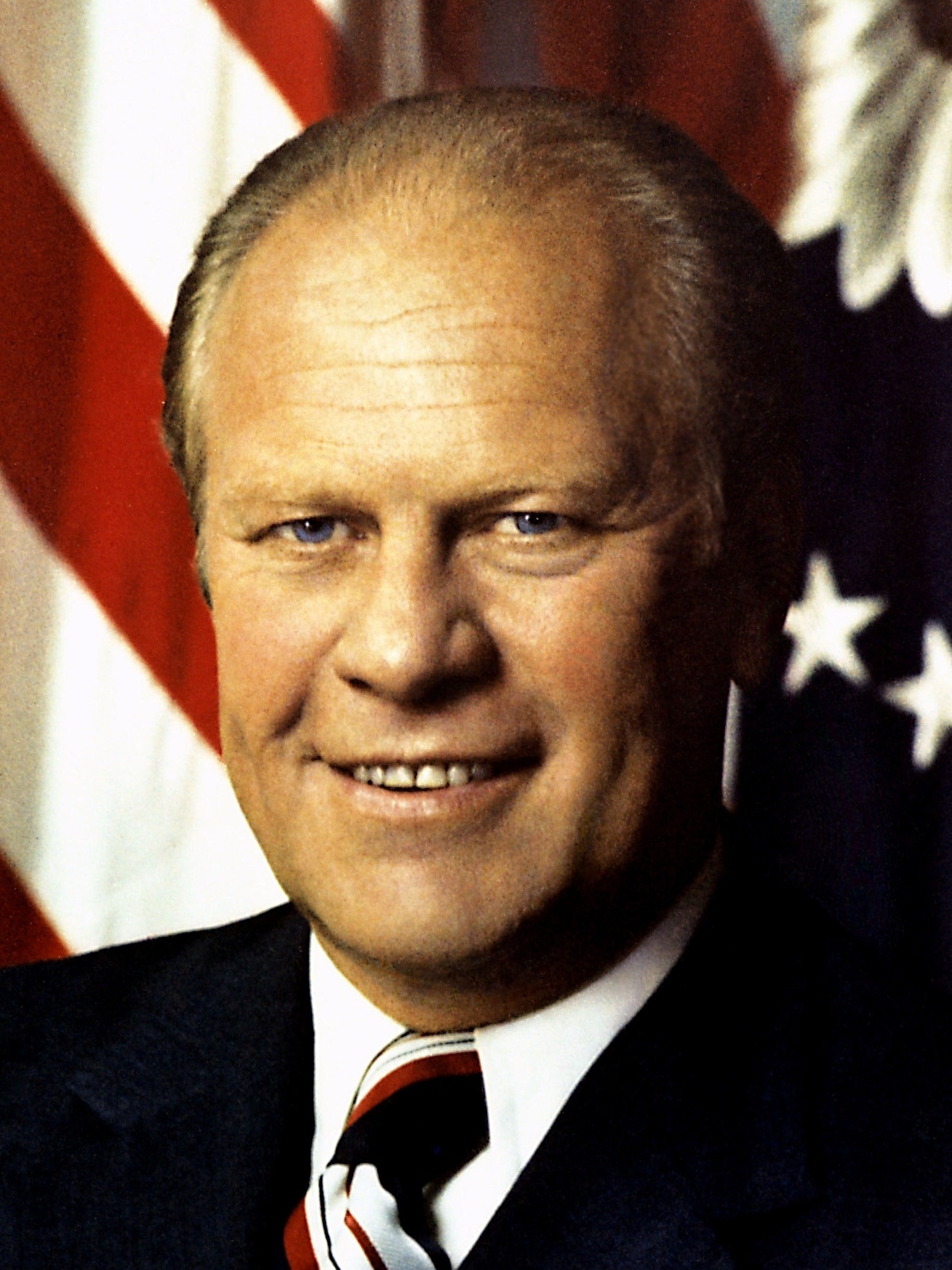
Nixon was the first president to use this fixture of the Twenty-Fifth Amendment: he replaced his V.P. while he was in office. He nominated House Minority Leader Gerald R. Ford, a man with more than a dozen House terms under his belt.
If you’ve heard me tell this story before, let me correct the record, because I got something wrong: I misread somewhere (several years ago) that Ford was Speaker of the House when he got picked. This is incorrect; Nixon was president during the Democrats’ forty-year uninterrupted hold on Congress. Ford wanted to become Speaker but he was in the House Minority the whole time. Let’s continue.
Ford was confirmed as Vice President in the fall of 1973. Nixon wanted someone else (his former Treasury secretary, John Connally) but his advisors told him the Senate would never approve him. Ford was liked by both parties and Nixon needed a smooth transition.
Watergate
But Ford wouldn’t have much time to get comfortable in the V.P.’s lodgings, because soon The Machine came for POTUS himself. This is another incident that I want to read about in detail because most of what I know about it come from high school history classes and cultural osmosis: the Watergate Scandal.
Basically Nixon was accused of sending operatives to spy on the Democratic Convention for political intel, and investigators later found evidence of him directing different agencies to stymie one another as they gunned for him. (Specifically he was said to have used the CIA against the FBI; again, I need to read about it.)
The evidence must have confirmed something because Nixon became the first—and to date, only—president to resign from office, promoting the thirteen-term Congressman into the highest position in the White House. In August of 1974, Ford became our thirty-eighth president.
Ford’s In-Not-Guration
Most of these inaugural addresses have been filled with statements of faith and some admission of humility in victory, but Ford’s remarks here (which he explicitly describes as not an inauguration) are truly those of a man out of his depth. He’s shaken, as the whole nation was shaken after seeing the most popular president in history get booted out of office less than a year after a resounding victory in the polls. Ford knew he wasn’t elected and that he’d only gotten in office through the good will of both parties in Congress.
As such, he sought to be the leader of both parties and of all Americans. The “long national nightmare” was over, the Constitution worked, and the Republic was built on laws, not men. The people couldn’t be afraid and couldn’t slip backward. There was only the future.
(And in less than two years, the country would celebrate its bicentennial.)
It must have been a heck of a thing to live through. The next election would be…really something.
Side note: I addressed Nixon’s resignation in HEARTLANDERS (link below) as a potential scheme by apostate Kryptonauts to interrupt the Bicentennial Renewal of the American covenant at the Heartland Shrine.
If none of that makes sense to you, repent and read the book.
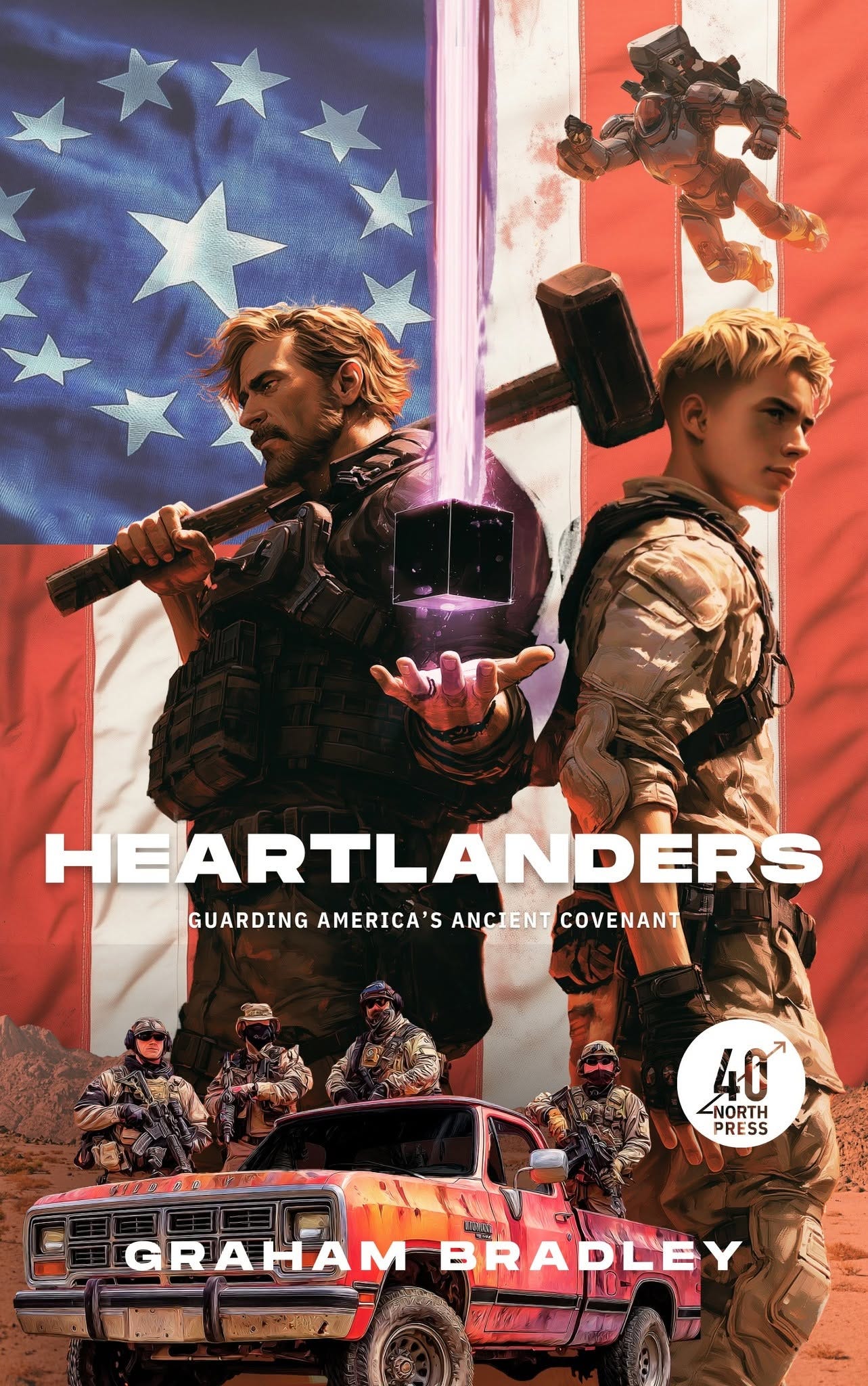
Visit Nauvoo Supply to order HEARTLANDERS, the most American novel I’ve ever written. It’s like if National Treasure happened during Fallout with G.I. Joes.
It’s short, it’s fast, it’s full of smarts and action, and you’ll love the characters.