

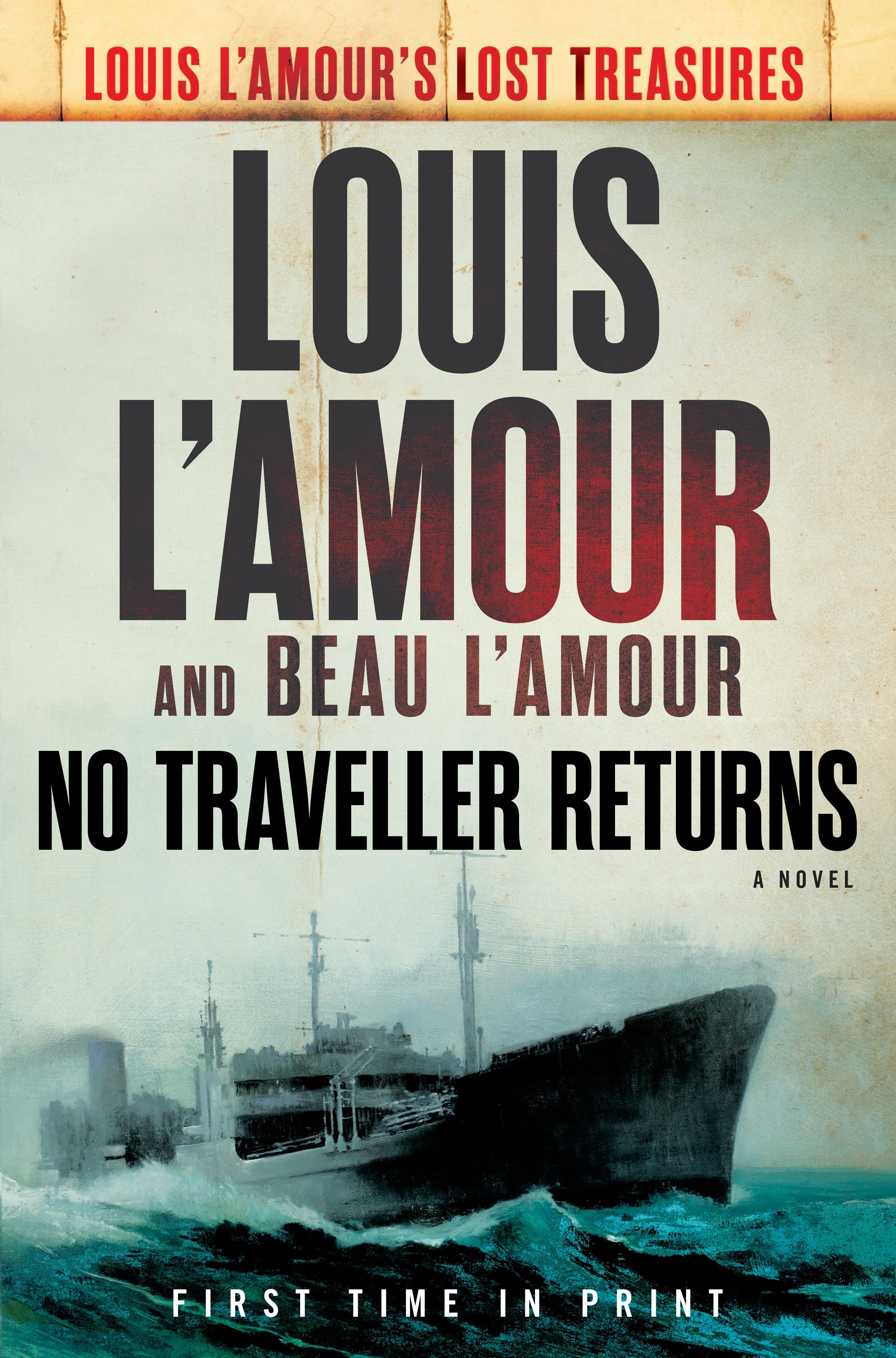
You ever read a book and you completely forget the plot like a day later, but you remember individual scenes and the general theme throughout? That just happened. Reading NO TRAVELLER RETURNS by L’Amour was a lot like reading the general overview of my career in trucking. I understood what he was saying (to an extent), and I related to a lot of it, it was just so close to home that I don’t remember the characters specifically, or the plot generally. I’ve lived the underlying beat of this tale for ten years.
Before L’Amour was a published writer, he did a lot of other jobs, none of them more impactful than when he sailed the world as a deckhand/laborer on various ships. This was a dangerous job, undertaken by dangerous men who would backstab you one minute and then rely on you to save their life the next. Such was the nature of the work environment, mixed with the nature of societal castoffs who do work few others wish to.
The economies of the world depend on this work being done, though. Stuff’s gotta move in order to sell. Nations thrive internally when the trucks keep rolling, and they thrive externally when the ships keep sailing. The high seas are far more perilous than the highways, and so it is that sailors face mortality with higher regularity than truckers.
Nevertheless, I found a gutpunch in the overlap between L’Amour’s trade and my own. The title refers to a Dante quote about death and hell, a place whence “no traveller returns.” And yet the seas aren’t all that different, in that they pull a man in, they call him back when he’s on land, despite the anchors on that land that call him home. L’Amour himself almost became a fulltime sailor and would have pursued an officer’s berth or a captaincy, if he hadn’t moved his family to Oklahoma and started developing stronger roots here.
His son Beau is the curator of the “Lost Treasures” series of books, annotated with information from his own childhood and his posthumous research into his father’s voluminous archives. This title was never published. Louis wrote it earlier on in his career and set it aside. Not only does it give the L’Amour completionists something to enjoy, it gives a crucial insight into the mind of a young man at sea, and the men with whom he sailed.
Much like my reading experience with the A-10 Warthog guy or the Top Gun founder guy, I was particularly moved by a scene wherein a sailor came home after a long time away. His wife was almost bored with him and wanted him out, and his son had grown significantly in his absence, and he saw what was happening when he wasn’t home.
Even though I have a home-daily job, I work 60 hours a week on the night shift, so while I’m home, I’m asleep when my kids are awake and man, I feel that. I dare say L’Amour got lucky by not going back out to sea. Surely he was happier as a fulltime writer, but more important, his family had him home, and now we’ve got this great series from his son, keeping his father’s work alive.
Loved this book. Very moving.
Now I have to read this. Or something else by L'Amour.