

“Electoral Brawlage” examines the first inaugural address of each president in U.S. history, with some commentary and analysis. Check back on Mondays for more.
Subscribe to get these articles in your inbox. Become a paid subscriber to help me buy more books.
We are within the most recent hundred years of our history, and FDR’s presidency marks a milestone in this project because most of my grandparents were born during his reign. “Reign” is an appropriate description, the man had aspirations of monarchy under the guise of democratic elections.
Teddy, Taft, and Wilson in 1912 were the big turning point that ultimately made FDR’s model viable, but he would never have gotten past the Republicans in 1932 if catastrophic disasters hadn’t destroyed the economy in 1929.
The Election
The 1932 election was never going to be anything but a bloodbath for the incumbent. An industrialized society is inseparably intertwined with a robust economy, which in turn relies heavily on the greased wheels of finance. The 1929 stock market crashed blew the bottom out of our financial system and everything downstream of it suffered, with the exception of traveling hobos and self-sufficient agricultural operations. (The 1936 Dust Bowl would upend much of those, further exacerbating the problem.)
Herbert Hoover, the GOP incumbent, faced nothing but a token challenge for re-nomination, and his VP Charles Curtis also stayed on the ticket. They had to know they were dead in the water and for that reason I respect them for campaigning anyway. The stock market crash wasn’t their fault, and government intervention wasn’t going to undo the damage; it would just expand the reach and intrusion of said government, and FDR was all about that noise.
Roosevelt, known to the country as a Naval secretary under Wilson, a VP nominee in 1920, and the recent Governor of New York, won the Democratic nomination after a couple of rounds of ballots. His main challengers were Al Smith, who got his sausage stuffed backwards by Hoover in 1928, and and John Nance Garner of Texas. Roosevelt made a deal with Garner to put him on the VP ticket if he’d release his delegates, giving FDR the edge over Smith in the final round.
Smith, I assume, was hungry for a shot at redemption and assumed that his election would be guaranteed if he got the nomination. (Safe bet.) He was outmaneuvered by Roosevelt and Garner, proving once again that a three-way split will screw you every time, so don’t vote third party. Focus on primaries. (This was one. I digress.)
Aaaaaaaaand we all know where this is headed, so let’s just examine the outcome:
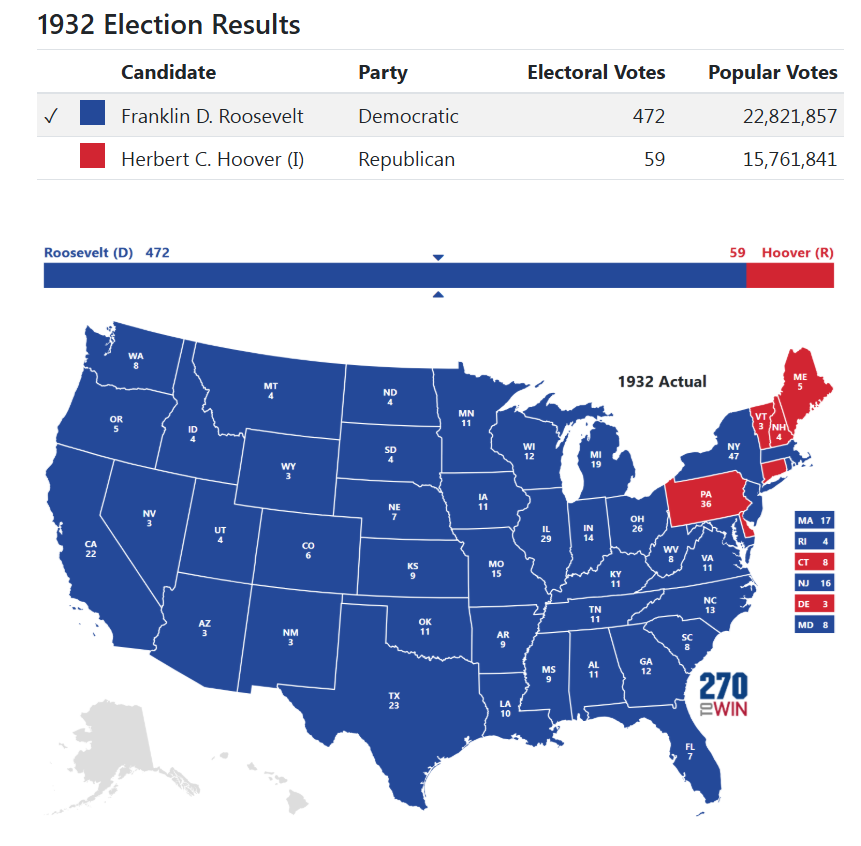
For a 1928 Democrat this must have felt like a fairy tale, seeing such a dramatic swing in the other direction. Hoover effectively won amongst elite blue-blood establishment Republicans in the northeast and, somehow, Pennsylvania. Delaware isn’t a real place so I don’t know how he pulled that one off. The country pinned all their woes on one man. FDR swept up everything else. The end.
The Speech
“The only thing we have to fear is fear itself.”
Here’s a brief simplification of the policy initiatives laid out in FDR’s first inaugural address:
Create a public works program to put people to work and capitalize on the country’s natural resources.
Block foreclosure of homes and farms.
Reduce the costs of government at federal and state levels.
Major government oversight of banking practices, especially speculation.
Provide a sound currency. (The Fed would play an expanded role here.)
“Good Neighbor” foreign policy, emphasizing fulfillment of mutual obligations (wouldn’t that be a thing.)
Restore the domestic economy before worrying about international trade.
National planning for interstate communication and transportation initiatives (a forerunner to the eventual Eisenhower interstate system, among other things.)
Get relief activities on the same page to make them more efficient and effective.
There’s a reason my grandparents were FDR Democrats for most of their lives. The policies he championed in his first term weren’t bad on their face; they made sense and they gave people optimism after four years of getting kicked in the financial nuts (their bank account is the nuts in this metaphor).
His first hundred days and the implementation of the New Deal promises were a fast response to the overall scope of challenges facing the country. The Republicans hadn’t moved that quickly in four years mainly because they thought the economy would sort itself out and recover naturally, and it went against their philosophy to give the Fed too much power. FDR didn’t have those scruples, and while that provided immediate relief to the country’s problems, it also established a precedent that has since been abused.
We could write a lot about this approach to centralized government. For the sake of simplicity, it’s enough to understand that the office changed drastically during FDR’s time there. The man had no reservations when it came to simply taking power, though he often gave Congress the illusion of choosing to extend it to him. He had this approach to all three branches of the government—branches that were explicitly separated to avoid creating too much power in one office, as per Hamilton. Whenever a current-day communist in Democrat clothing talks about “expanding the [Supreme] Court,” they really mean packing it, and they pretty much always refer to FDR’s attempt to do just that.
“But in the event that the Congress shall fail to take one of these two courses, and in the event that the national emergency is still critical, I shall not evade the clear course of duty that will then confront me. I shall ask the Congress for the one remaining instrument to meet the crisis—broad Executive power to wage a war against the emergency, as great as the power that would be given to me if we were in fact invaded by a foreign foe.”
—Roosevelt’s first inaugural address, 4 March 1933
This one statement underlines the core of his governing philosophy, to treat every problem as if barbarians were at the gates of Rome, and the Senate must be dissolved so that Caesar could handle the problem. Several post-FDR presidents have taken this same approach—or worse. But it started with him, right there in 1933.
The Future
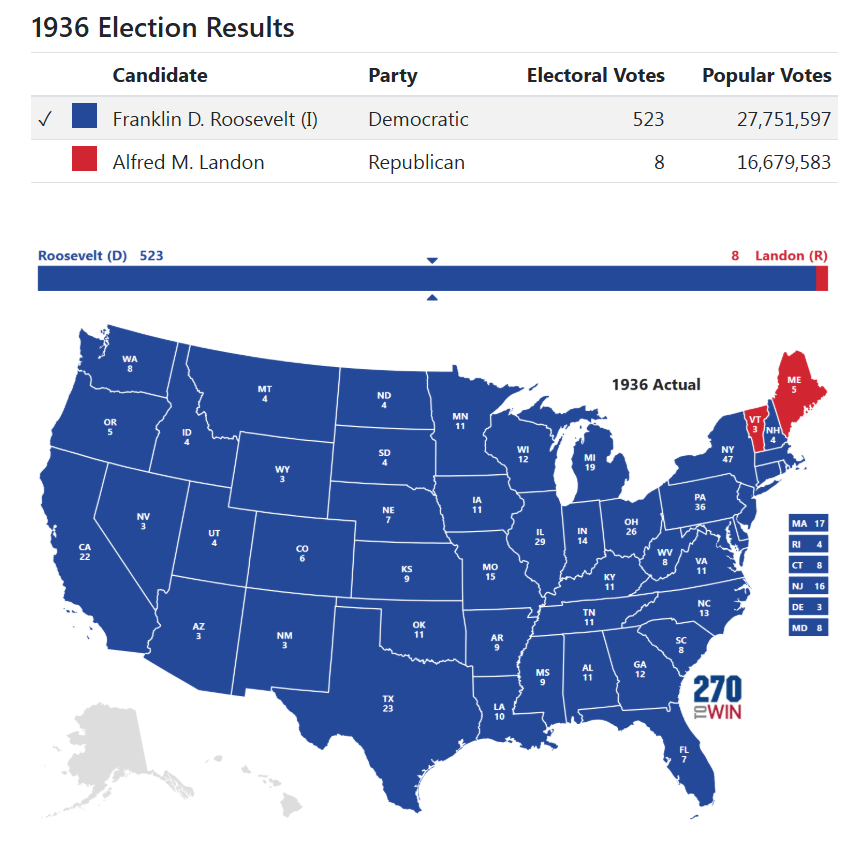
In 1936, FDR retained Garner as his VP and handily won the general. His New Deal was paying people money and offering relief, even if it wasn’t solving their problems, and the Oklahoma Dust Bowl was like a second wind—pun intended—for the Depression, like it was timed to remind everyone why they voted for him before.
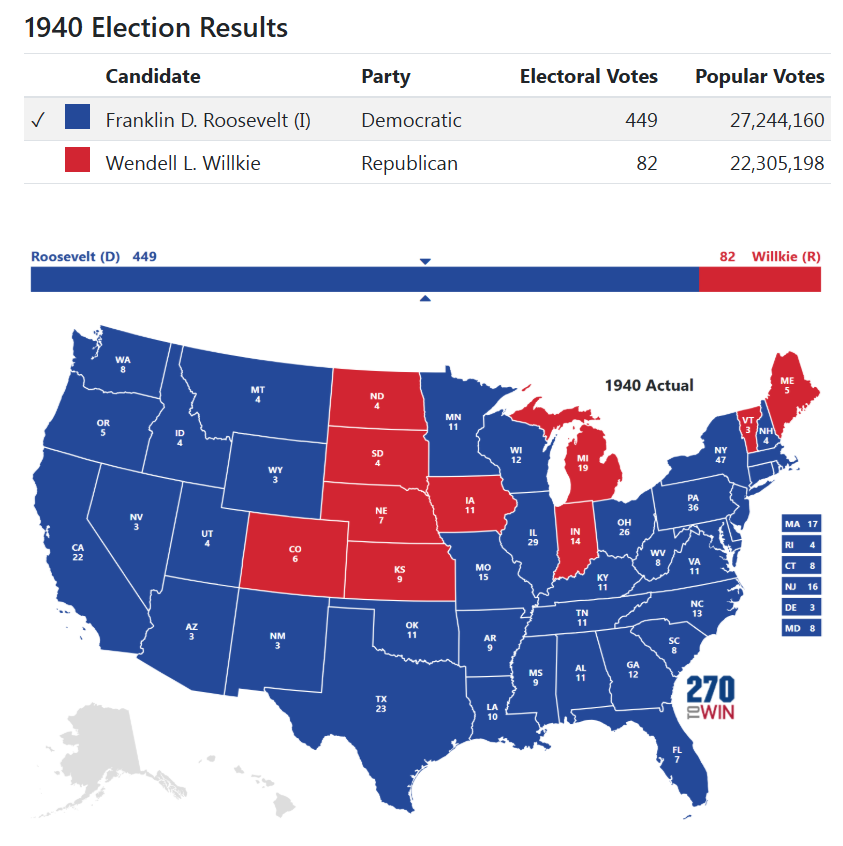
By 1940, war had broken out in Europe, though it wasn’t quite here just yet. FDR ran for a third term and was the first to win one. He replaced Garner with Henry A. Wallace, who had been his Secretary of Agriculture in his first two terms.
I continue to think that farming woes had an influence on Roosevelt’s decision to pick him, and the nation’s decision to retain them both; even so, the Dust Bowl appears to have swayed the Plains states back toward the GOP. Interestingly enough, Wallace—a native of Iowa—had joined Teddy’s Bull Moose Party in 1912, bringing this whole damnable mess full circle. After his stint in the party that handed control of the country to Wilson (bastard), Wallace went back to the GOP, where he stayed until 1936. Four years later, Roosevelt would take him into the White House.
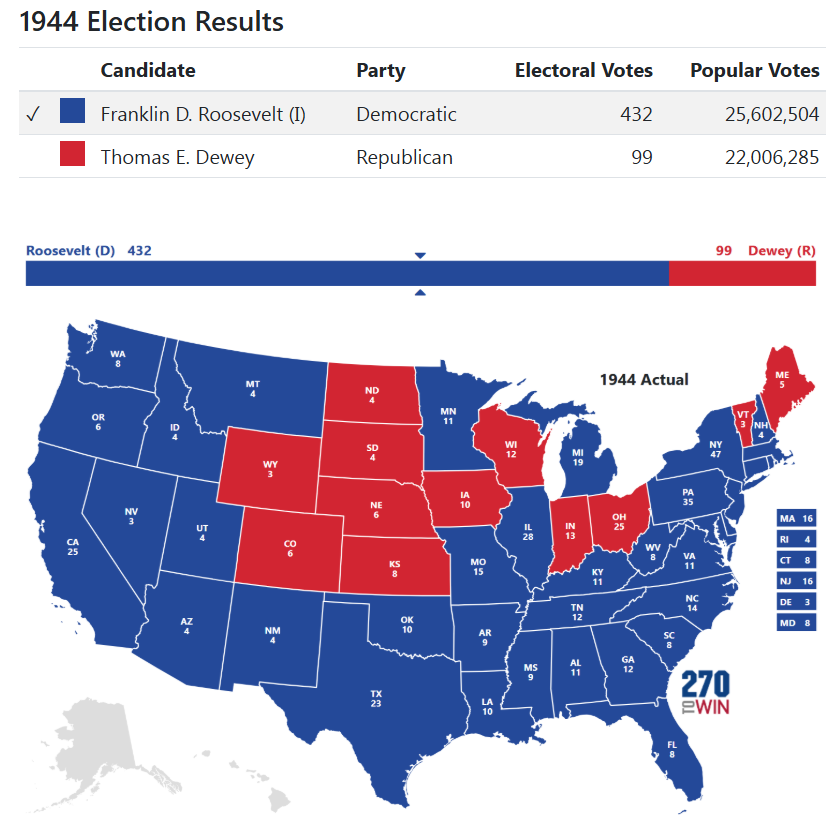
FDR’s final election was in 1944. Barring another Constitutional Amendment, nobody will run for a fourth term as President again. Pearl Harbor happened less than a year into his third term, and we hadn’t yet dropped the nukes on Japan (they were still in development.) D-Day was less than a year out.
FDR’s support continued to erode, even though he remained very popular. GOP confidence grew in the Mountain West, the Midwest, and on the Plains. Victory in the War wasn’t certain, and thus the country decided that staying the course made sense.
I can’t remember why, but Roosevelt chose not to retain Wallace for a second term. There was a battle to replace him, resulting in Harry S. Truman becoming VP in his stead—a fateful decision, as FDR would die just a few short months into 1945.
We’ll see what that was like next week.
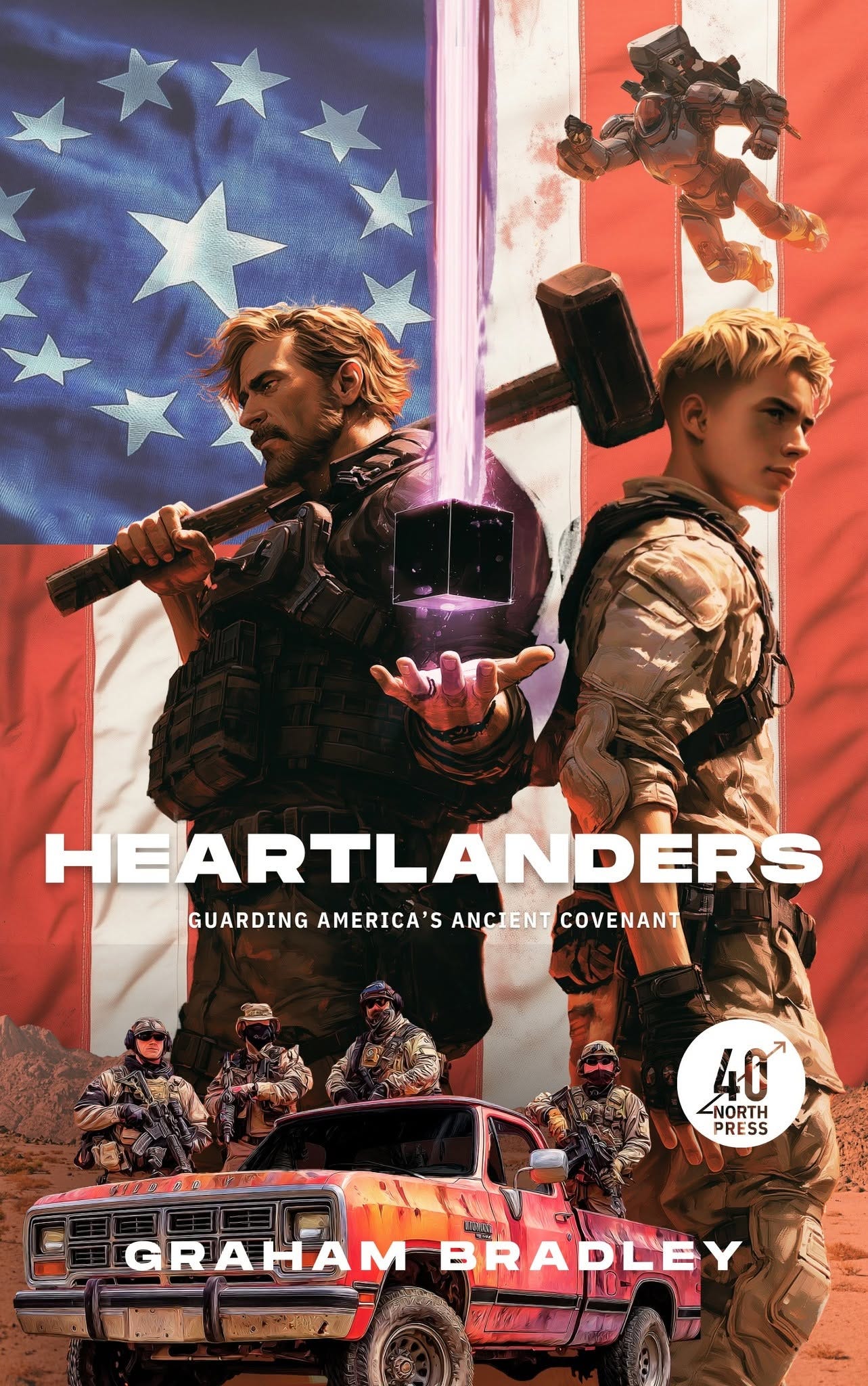
Visit Nauvoo Supply to order HEARTLANDERS, the most American novel I’ve ever written. It’s like if National Treasure happened during Fallout with G.I. Joes.
It’s short, it’s fast, it’s full of smarts and action, and you’ll love the characters.
It was partially because Wallace turned socialist, which FDR didn't like. Wallace would run as a third party candidate for President unsuccessfully in 1948.