

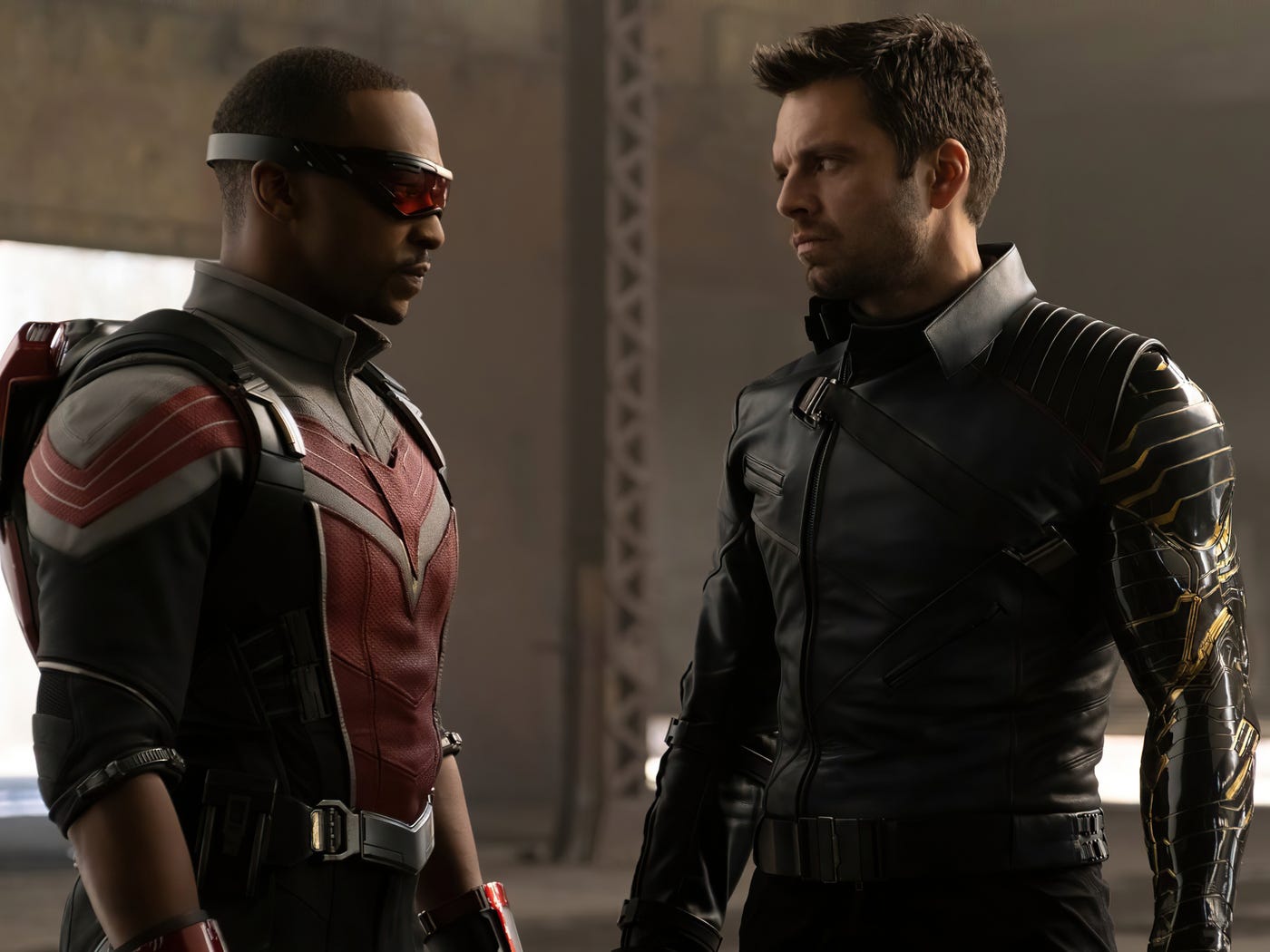
After Endgame in 2019, Marvel Studios had their “Beatles are Bigger Than Jesus” moment and decided they could do no wrong, so they went on a cultural crusade against their own viewers. Every story dripped with dialogue about feminism, black empowerment, or other Current Day-isms that diminished the enjoyability of these films.
This sucks, because the characters are still fan favorites, and the movies would be more popular if the studios focused more on story than on agenda. Since the Captain America movies were my favorite out of all of them, I was most looking forward to 2021’s miniseries The Falcon and The Winter Soldier, and I was ultimately let down. Everything had become about race, and you could see through the gaps in the script where Black Lives Matter had nagged their way into a seat in the writers’ room.
Since the show wrapped four years ago, I’ve often chewed on what went wrong and what the right version of this story would have looked like, setting up this particular wing of the franchise for continued success.
First, let’s revisit the show as-is.
What They Wrote:
After the events of The Snap (Infinity War/Endgame), the world’s population has effectively doubled overnight, leaving resources strained across the globe and billions of people homeless. Marriages and families were broken up, banks were strapped, governments were in disarray. A global Senate was formed to deal with the logistical problems, and the Avengers were rightly criticized for unilaterally reversing The Snap without a real logistical plan, and without consulting the world governments that would be stuck with the aftermath. Captain America/Steve Rogers retired, passing the shield to…
Sam Wilson/The Falcon
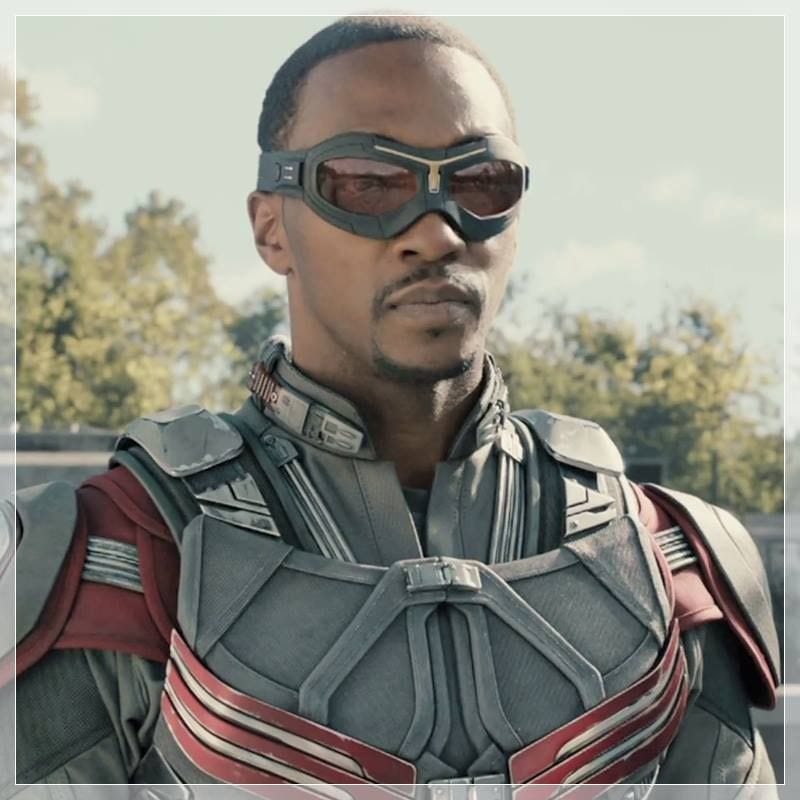
…who immediately gave it up. Put it in a museum, give a speech, peace out. He’s busy trying to get his Louisiana family back on their feet, namely his sister and two nephews. He still flies missions for the government as The Falcon so he can pay the bills. When a group of terrorists pops up in Europe, Sam teams up with Captain America’s oldest friend, Bucky, to go track them down and stop their antics.
Along the way he has a poorly-written discussion with Bucky about why he didn’t want to take up the shield, and he also gets lectured by a black veteran about how evil-bad-racist America is (this veteran was in the Army in the 1950s, we’ll come back ot him.)
When the man who does take up the shield turns out to be a raging psychopath, Sam decides he’ll take it back and become Captain America, even though America is evil-bad-racist…(seriously, the films had never gone down this poisonous route, yet this show suddenly decided it had to be 1954 again).
With the help of the Wakandans, he now has a super high-tech vibranium wingsuit thing, and he carries the shield.
Bucky
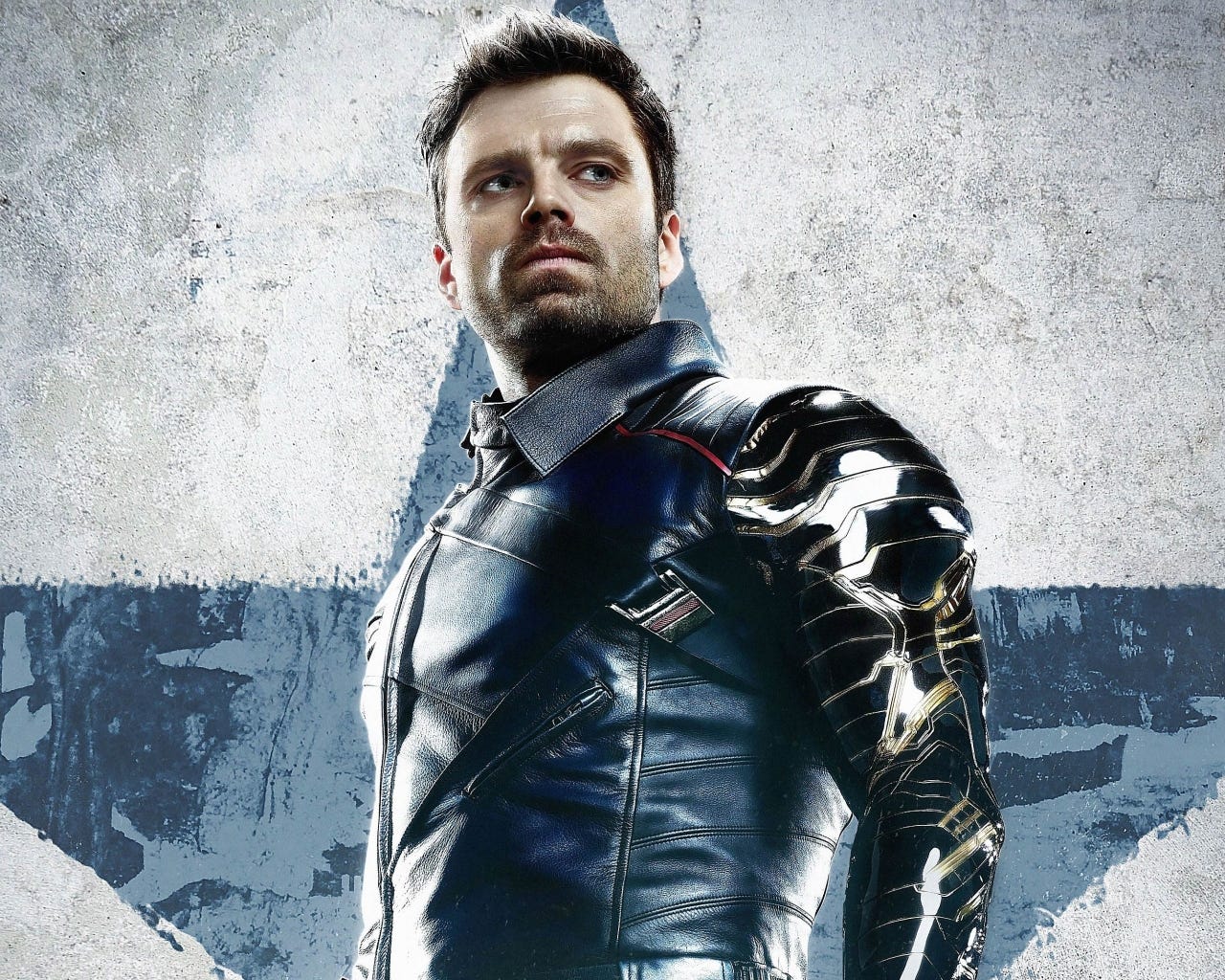
Due to the decades of assassinations he carried out as the brainwashed Winter Soldier, Bucky is on a redemption path, using his deep Hydra knowledge to root out corrupt assets in the government. He’s mad that Sam gave up the shield that Steve Rogers gave him. He teams up with Sam all the same in order to catch the terrorists in Europe.
During this excursion he and Sam meet John Walker, the new government-issued Captain America, who has the shield. They hate him because he’s a tool. They also spring Baron Zemo from prison so they can use what he knows in order to find the terrorists, who have super-soldier serum. When John Walker takes some of that serum and goes semi-insane, Bucky and Sam have to kick his and a$$ take the shield back. Bucky’s personal arc ends when he apologizes to a Japanese man whose son he killed during his original stint as the brainwashed Soldier.
Fade to black, we see no consequences of that interaction(we don’t even see the man’s reaction), Bucky is just sad. There is no substantive resolution compared to where he was at the beginning of the show.
Walker
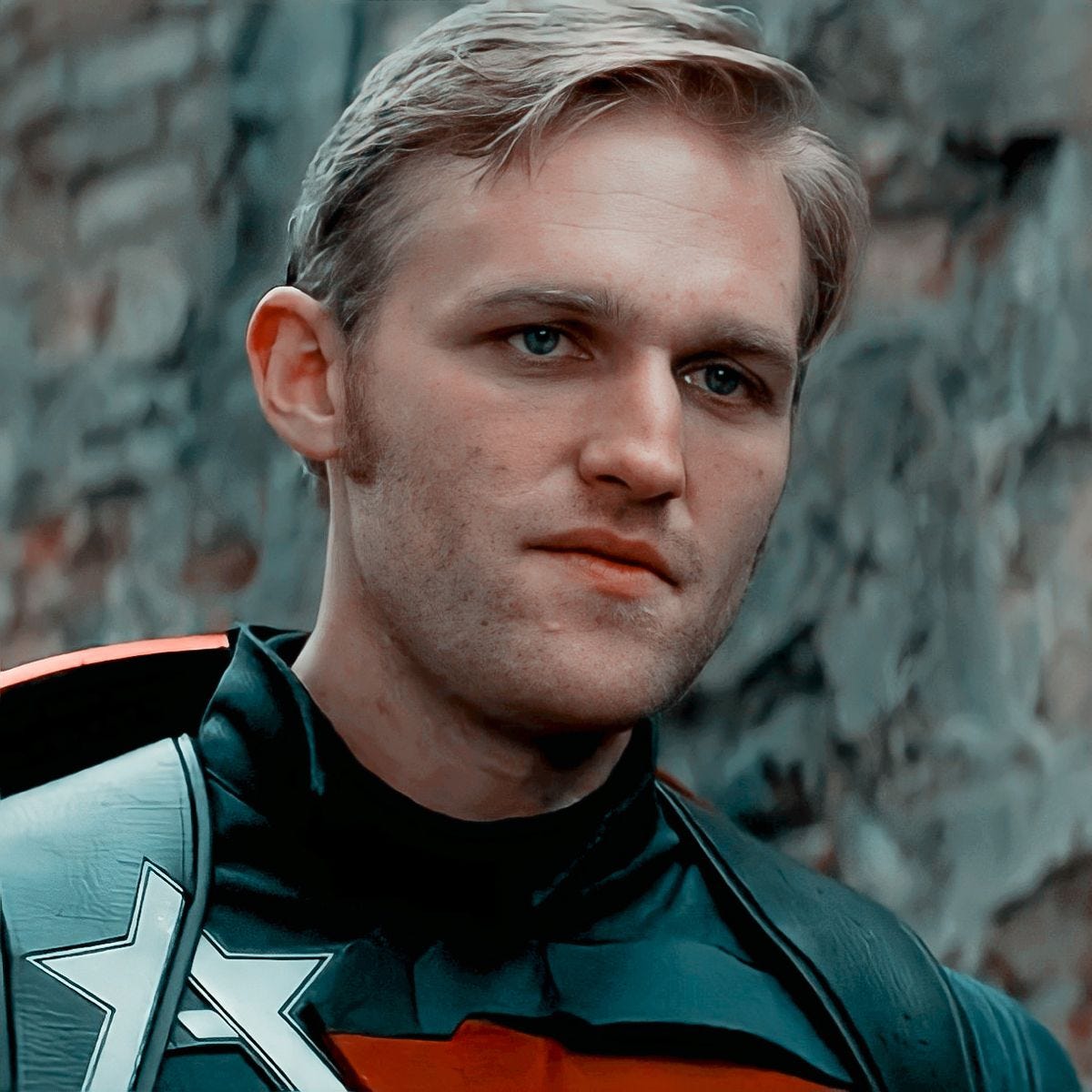
John Walker is the new corporate-sponsored, government-issued Captain America. He’s a physical specimen all on his own, but he gets outclassed by regular Joes who used the super-soldier serum, and this makes him sad. When he gets the serum himself he briefly goes insane and kills a terrorist with the Cap shield, in front of scores of witnesses. This causes him to suffer the worst fate that anyone in the Internet age can fathom: demonetization. The only way out is a rebrand, which he gladly accepts, although he really has to try to sell the name “US Agent” from the comics. We’ll wait for you to return in a sequel, Johnny!
Isaiah
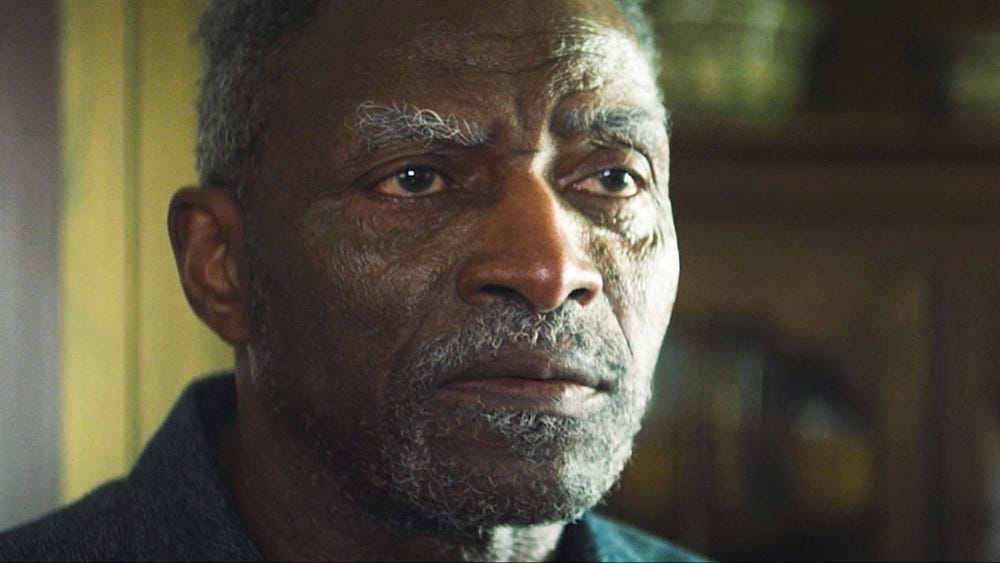
Isaiah Bradley in the comics was one of a few Captains America, with his background based on the Tuskegee Experiments (where the government basically injected a bunch of black dudes with syphilis to study what would happen.) Yes, this is a bad thing that the PHS and CDC did because, like all 3-letter agencies, they are actually run by psychopaths with no conscience, and have been for a century. But I digress.
Bradley’s story was adapted for the show to where he was injected with an experimental super-soldier serum, along with several other black Army soldiers. (Their version of the serum was synthesized from Steve Rogers’ blood samples in the 1940s). Isaiah Bradley’s iteration of the serum worked, so he was locked in an Army cell for 30 years and pumped for blood by the military, trying to figure out how to make more of it.
As a result he—understandably—hates the government and, being a man of his era/life experience, he thinks America is and always will be evil-bad-racist. He has conversations with Sam about this, saying outright that America will never let a black man carry the Captain’s shield. (Disregarding that a man who served in World War 2 handed it to Sam to begin with, and it was Sam who turned it down.)
In the end, Sam fights for Isaiah to get recognition for his service in the military, including his time in Korea (when he fought the Winter Soldier behind enemy lines.)
Zemo
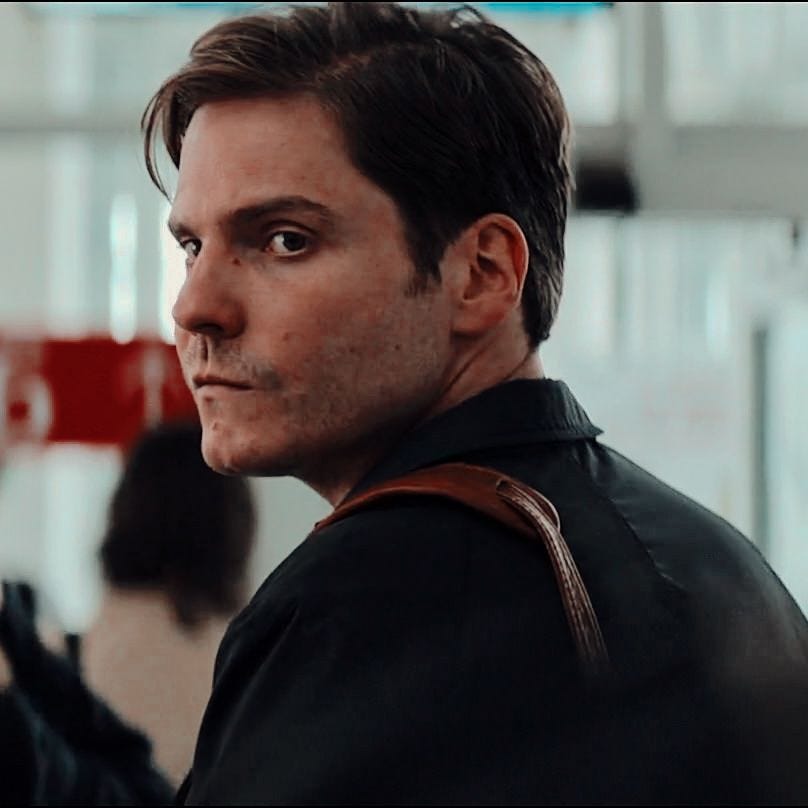
This is the former Sokovian Special Forcers operator who single-handedly turned the Avengers against each other with just his mind and his cunning, leaving them in disarray when Thanos arrived. He gets busted out of prison by Sam and Bucky because the script demands it they need what he knows. He helps them find the super-soldier serum. His escape angers the Dora Milaje—the special lady-warriors of Wakanda—because Zemo killed their king back in Civil War. This brings the Dora Milaje into the story and since Bucky has a history with them, their presence generates more conflict and more opportunity for backstory.
Zemo’s role in this story was at times awkward but useful and charismatic. I don’t love it, I don’t hate it, there was probably more they could have done with it. He was a means to an end.
Sharon
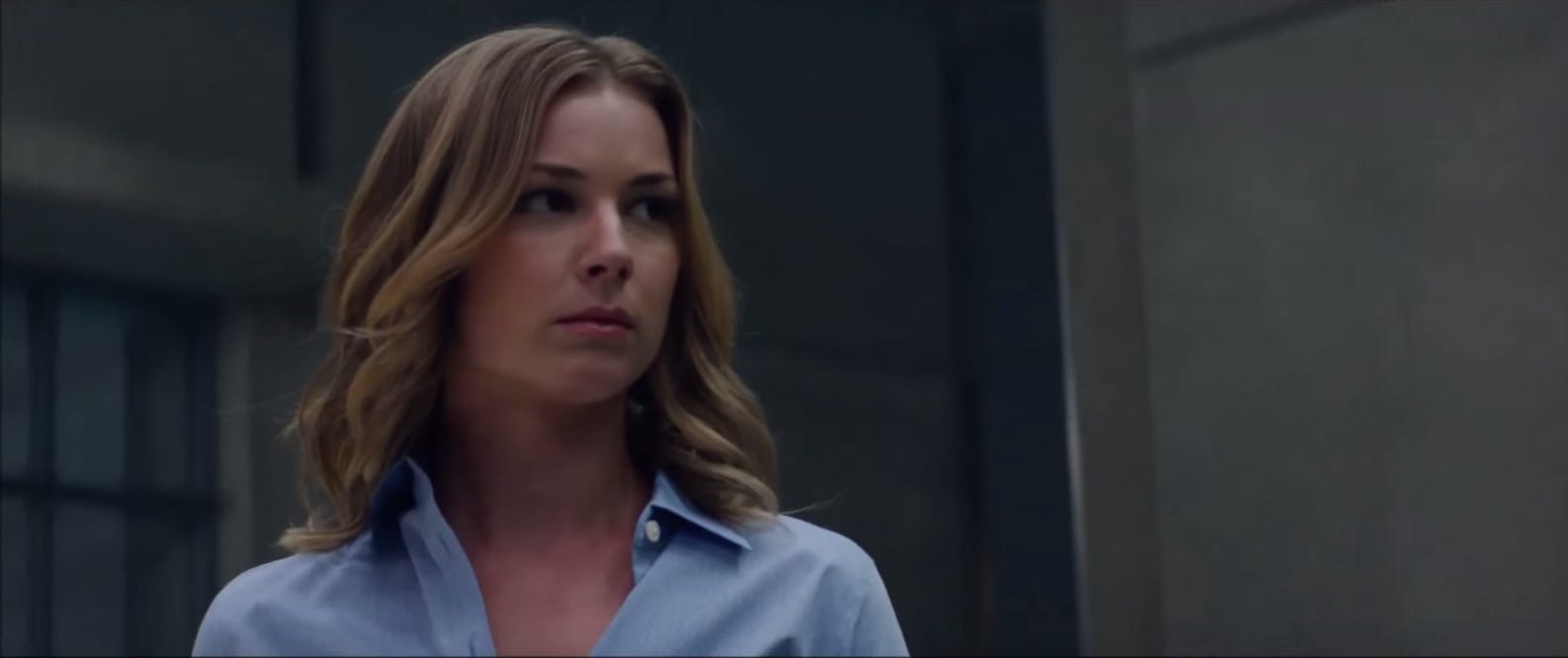
While Sharon did have consequences to face for helping Steve escape in Civil War, the idea that she wouldn’t have been pardoned after this is a harder sell than what they actually came up with for the show, where she movies to southeast Asia and becomes a crime lord with a far-reaching empire worth millions. This was a dumb arc for this character. Granted, someone needed to create the new version of the super-soldier serum, and the Power Broker is a character from the comics, but this was a bad idea.
Morgenthau
“Karli” Morgenthau is a ginger girl in her twenties who, for reasons inexplicable to the viewer, is supposed to be an inspiring leader of an antifa-style terrorist group who wants free food and housing. Sam and Bucky track down the “Flag-Smashers” and learn there is super-soldier serum out in the world, setting a large part of their story in motion. She dies in the end, the end. Dumb villain who is nowhere near as effective or charismatic as her supporting cast would demand you think she is.
A Better Version
Sam
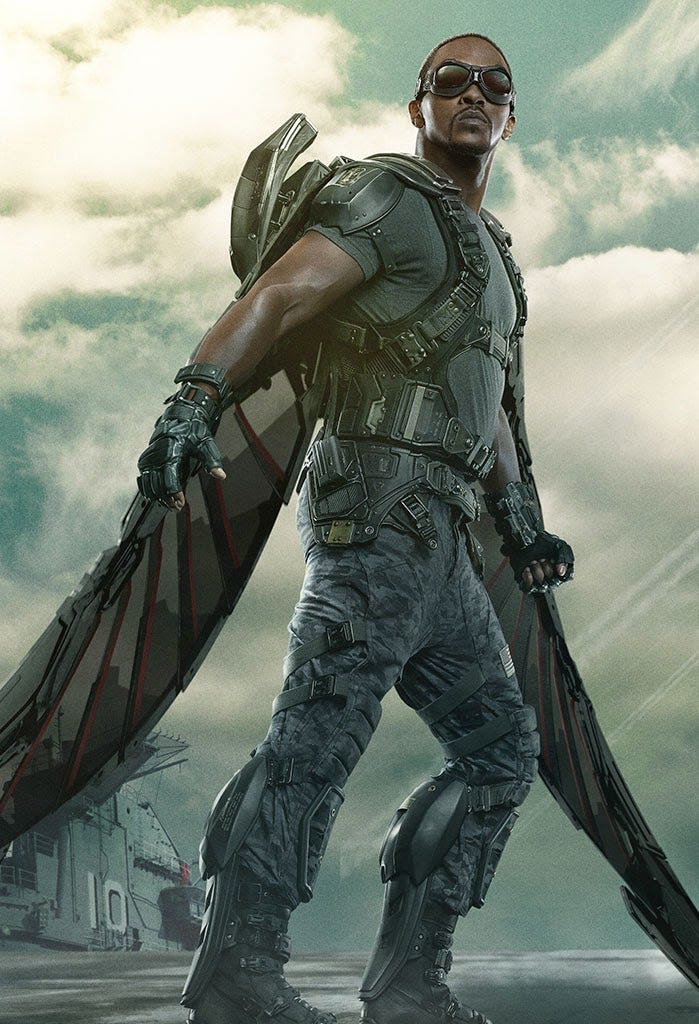
For the sake of the challenge, let’s say we’re going to do a couple of things that the studio still wants: they want Sam in the Cap suit, they want him carrying the shield, they want him taking up The Mantle. Let’s say they also want to have a commentary on being black in America. Finally, they want to establish Sam as the new leader of the Avengers.
The thing is, to achieve this, you wouldn’t need to make drastic or dramatic changes.
Start with Sam working for the military again, as the Falcon, chasing down guys like Bartroc the Leaper. It makes sense for him to cut his teeth on this guy to prove that he can do the kind of stuff Steve Rogers did, even with a different skillset. You can also show that he’s strapped for cash the way half the world is—this makes it possible for him to at least grasp the problem that the Flag-Smashers use for their rallying cry. Finally, you can even give him a tough buddy-cop angle with Bucky.
Sam ran alongside Captain Rogers for four years in this story. That’s a whole tour of duty—at least as long as Bucky in the 1940s. Yet he’s not friends with Bucky—they have different styles, different attitudes, and he has a hard time expressing to Bucky that he doesn’t want the shield. Deep down he doesn’t need it, and doesn’t want to have to alter his entire skillset to adapt to it, but he feels obligated because of the circumstances of its inheritance. He doesn’t like that Steve and Bucky made the choice for him, and that feels like an order from two men who he thought were his equals as Avengers. There is your conflict.
Then Sam and Bucky find out about the Flag-Smashers. They think it’s just a terrorist group that has thus far evaded the current global Senate’s forces. They move to intercept, only to get their bells run when they find out the Smashers are super-soldiers. Now it’s time to figure out how that happened. This leads them to Isaiah, the only other living super-soldier that Bucky knows about, due to his Hydra intelligence. Bucky doesn’t want the Senate to know about Isaiah, so he and Sam have to do this next part of their operation off the books—yet they need more intel and resources, and this leads them to pick Zemo as their next asset. Again, you don’t have to change much.
Right about here is where Sharon Carter COULD appear. If they needed to include her, it would have made more sense for her to be more on a budget, working in the shadows overseas, until she gets recruited by someone in the Flag-Smashers, at which point she breaks cover and reaches out to some friends back in America to tell them what’s going on. Have her use her skills as a former S.H.I.E.L.D. agent in a meaningful and apt way, not…whatever the hell this was.
With Sharon’s intel, Sam, Bucky, and Zemo track down the real Power Broker (more on him in a minute), only to be intercepted by John Walker, just like in the show. Now it’s a standoff between two veteran Avengers doing the job on a shoestring budget, versus the new kid on the block (who has the shield) with the backing of the world government.
I will say that it’s important to have the Dora Milaje make an appearance here, though they can be written better than they were. Show those glimpses into Bucky’s time in Wakanda, that’ll matter for Sam’s story. Wakanda has an interest in seeing Zemo face justice for killing T’Chaka. Let this story beat play out like normal.
Walker gets the serum. He kills one of the Smashers. Bucky and Sam take the shield back. They return stateside. Sam acquiesces (reluctantly) to Bucky that he should have kept the shield, doing so would have spared a lot of the headache on this run. He still struggles with the idea of being the Captain, and wonders whether he—without his wings and without the serum—can handle guys like the Flag-Smashers.
He goes to talk to Isaiah about living with that kind of strength, what it changed in him, etc. Did Isaiah ever struggle to keep his mind, like John Walker did? Isaiah can largely give the same speech here that he does in the original show: express contempt for how he was used, and reaffirm his mentality that America still hates black men like it did in his day. “They will never let a black man be their Captain America.”
This is an idea that I personally do not hold, yet it makes sense for Isaiah to hold it, given what he lived through. The writers actually had something there.
Sam leaves with even less clarity than he had before. He hasn’t had the same experience as an American veteran but he is also a product of a different time. Yet he knows someone else who is a product of that time…he goes to talk to Bucky.
Like the original, Bucky and Sam can have a conversation about this. But here’s the critical difference: Bucky can tell Sam that yeah, things were rough for blacks in America in the 40s in a way that he never had to experience, but the great unifier was the work they did. “Look at the Howling Commandos. Dugan was Irish. Jones was black. Morita was Japanese. Nobody cared. We were all in the trenches at the same time.”
Furthermore, Bucky can share something he learned from his time in Wakanda: when T’Challa needed to fend off a challenge to the throne and unite the five tribes, he reached out to the Jabaris, who historically had been antagonists of his own group. M’Baku, the Jabari chief, said they were wronged in the past and he didn’t know why he should care what T’Challa needed.
T’Challa specifically told M’Baku that he would not apologize for past kings, and he was not going to rule like them either. The lesson in that for Sam is that he can still be the Captain. He doesn’t have to be Steve Rogers and he doesn’t have to apologize for what his nation did before he was born. What matters is how he’s going to lead going forward.
Bucky and the Wakandans then present Sam with a new set of vibranium wings (John Walker destroyed his originals), and once again hand him the shield.
The Smashers come back stronger than ever and move to attack the Global Senate, for their own reasons (see Morgenthau below.) Huge epic battle at the end, good guys win, bad guys die, and maybe we can understand the difficulty of the task facing the Senate re: feeding, housing, and funding the return from the Snap. Don’t have Sam yell at them to “Do better.”
Sam’s role in this battle will change a little bit. He does his best to fight with the shield, but once again, it’s just not his style. It’s counter to his entire methodology, his reflexes, everything. Plus, he doesn’t have the super-soldier serum, and even if the shield is invincible, he isn’t. He has to fight different. During this big epic battle he’s able to hurl the shield to Bucky and fall back on his instincts, boosted by the new Wakanda tech. Bucky pulls some epic moves with the shield, bad guys get owned, the day is saved.
In the end, we’ll cut to a scene where Sam is painting the vibranium wings in the colors of The Falcon, but with an American flag patch on the shoulder. We’ll get a small cameo from Rhodes/War Machine, who is also Air Force (like Sam) but outranks him (Lt. Col.) to inform him that Sam is promoted to the rank of Captain, in War Machine’s chain of command. This makes him Captain Wilson, the Falcon, leader of the Avengers, and the U.S. Military is still “in the loop.”
When asked about the shield, he tells Bucky to keep it. “If Steve and Tony could figure out how to work together, you and I can too. This is an instrument for your time. And you’re a better fit for it than I am.”
Boom. The studio gets their (brief) time with Sam as Captain America. It doesn’t work, and they have a great reason for him to keep being The Falcon, while also handing the shield to Bucky. Now we move forward with Captain Wilson leading the Avengers.
Bucky
Something that has bothered me about Bucky’s arc ever since Civil War is that too many people blame him for what he was forced to do against his will. He was literally mind-controlled but the aggrieved parties act like he chose to kill people.
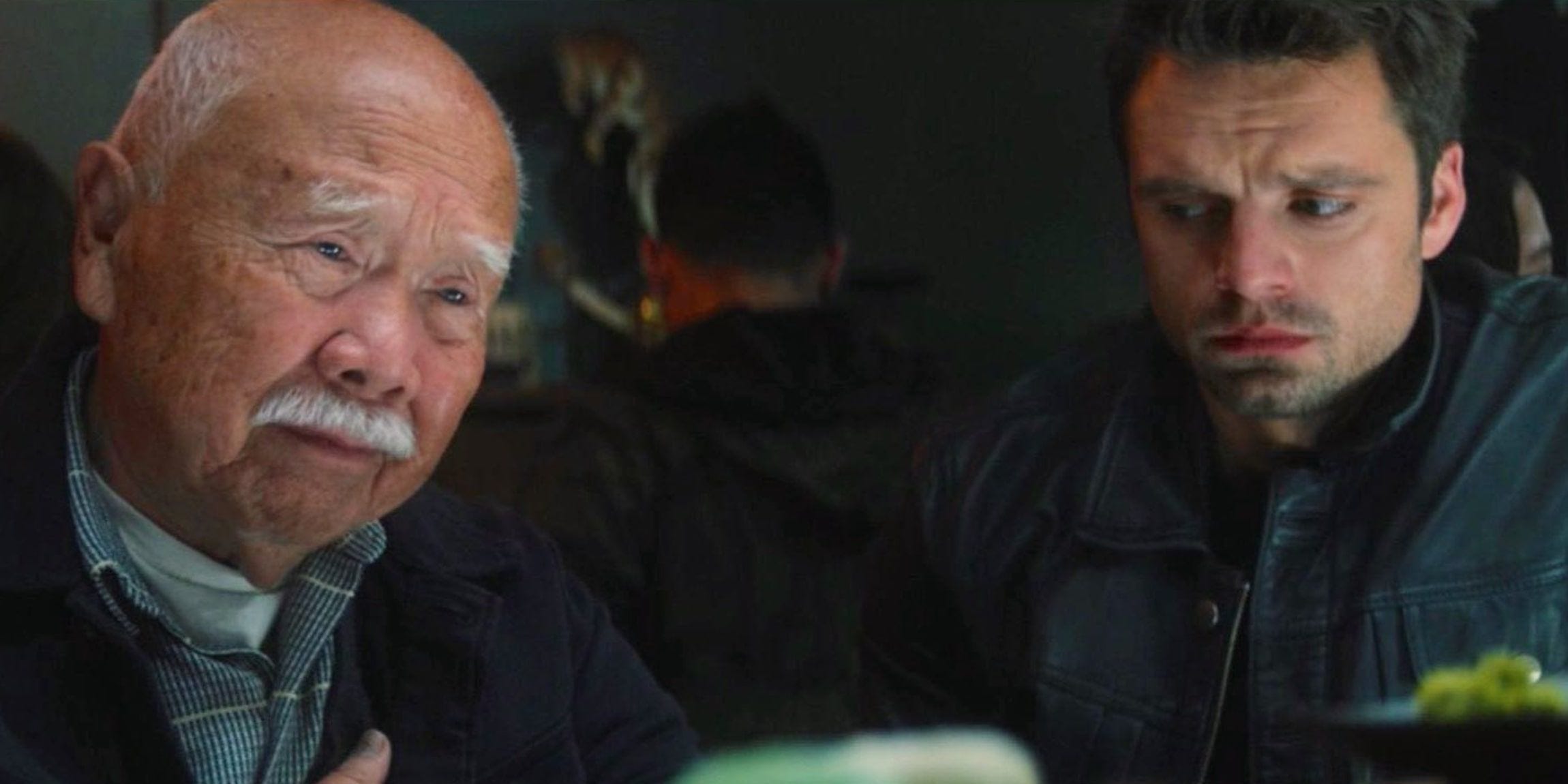
It’s one thing for Bucky to have PTSD about his actions as a Hydra asset. It’s another thing for the whole world to pile on him about it. Once again, without changing too much from the show as constituted, a better character journey for Bucky is his self-forgiveness. Have him befriend Yori (the father of the Japanese man he killed back in his Hydra days.) Have him struggle to admit to Yori what he did—but Bucky has to admit it in order to gain closure.
Have everyone around him—Sam, Rhodes, his therapist, anyone—tell him that it wasn’t his fault for what he did, but have Bucky resist accepting this idea because none of them were affected by what he did. You can even flash back to the fight between Steve and Tony in Civil War: Tony knew that Bucky was brainwashed and still said “I don’t care, he killed my mom.” It’d be normal for Bucky to think Yori couldn’t forgive him.
Then, when Bucky finally confesses to Yori, who greatly misses his son, he can be the one to forgive him, because he understands that Bucky didn’t have a choice in the matter, and that two friends can share their pain together better than they can alone. This can be a powerful emotional moment and a satisfying resolution to Bucky’s overall journey in the MCU. This is where he starts to heal.
In the end, he’ll finally start to feel a little bit worthy of the shield—and we can reveal that Steve actually offered it to him once, but Bucky turned it down and said Sam was the better man. Now that is all resolved. Now the next iteration of his story begins.
Walker
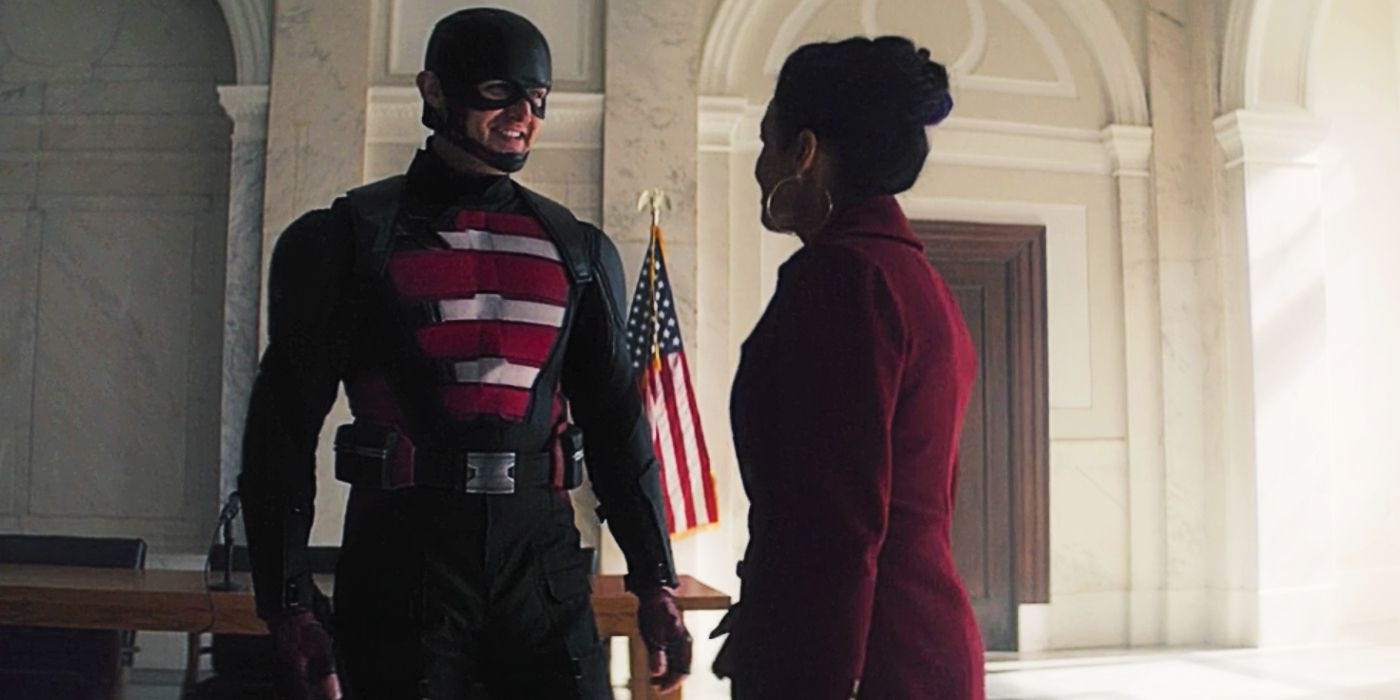
I don’t think there’s a terrible amount of work to do with this character, he accomplished what he was put into the story to do. I think we can pretty much leave him as he is, they’re bringing him back in Thunderbolts.
Isaiah
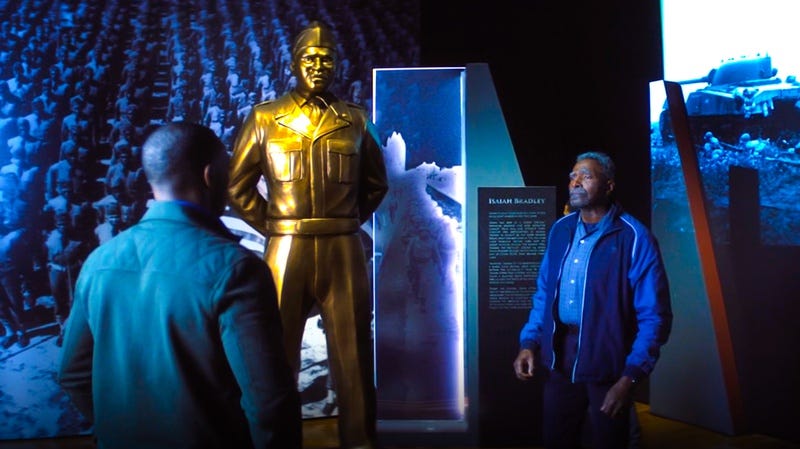
Again, you don’t need to change his character for this version. The real story is about Sam, who needs to wrestle with what Isaiah tells him about his own experience. Sam will fight for recognition of Isaiah’s heroism in the Korean War, and could even pursue an admission of wrongdoing in the historical record against the officials that ordered his imprisonment.
Zemo
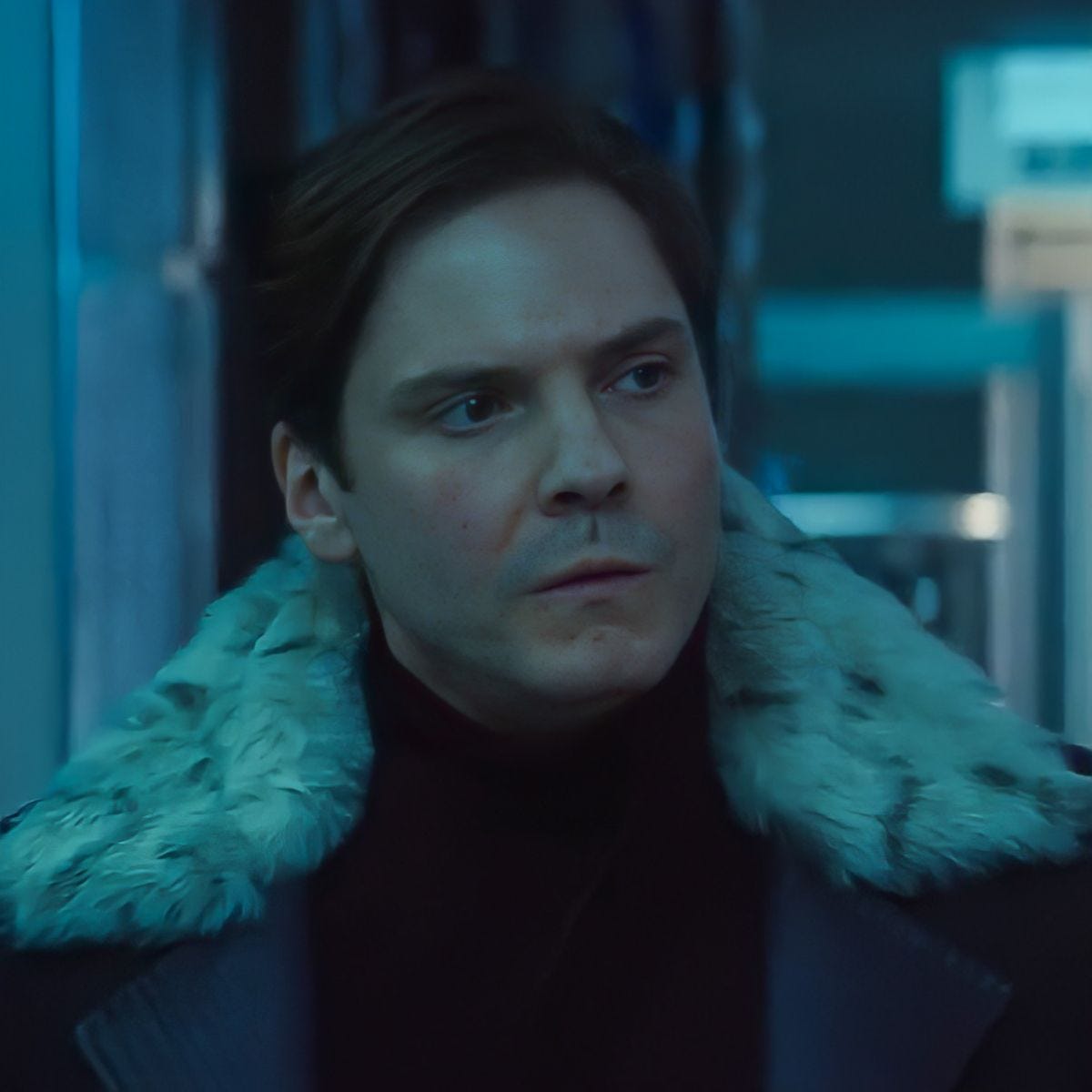
The main thing I would change about him: tone down the attempt to reconcile Zemo to his comic book iteration. They wanted so badly to give him the purple mask yet there was no damn reason to and he looked stupid as hell.
Sharon
I’m fine with some appearance by Sharon Carter that gives viewers closure after her role in Civil War, where she made herself an enemy of the state by aiding Captain Rogers. She’s just not the Power Broker.
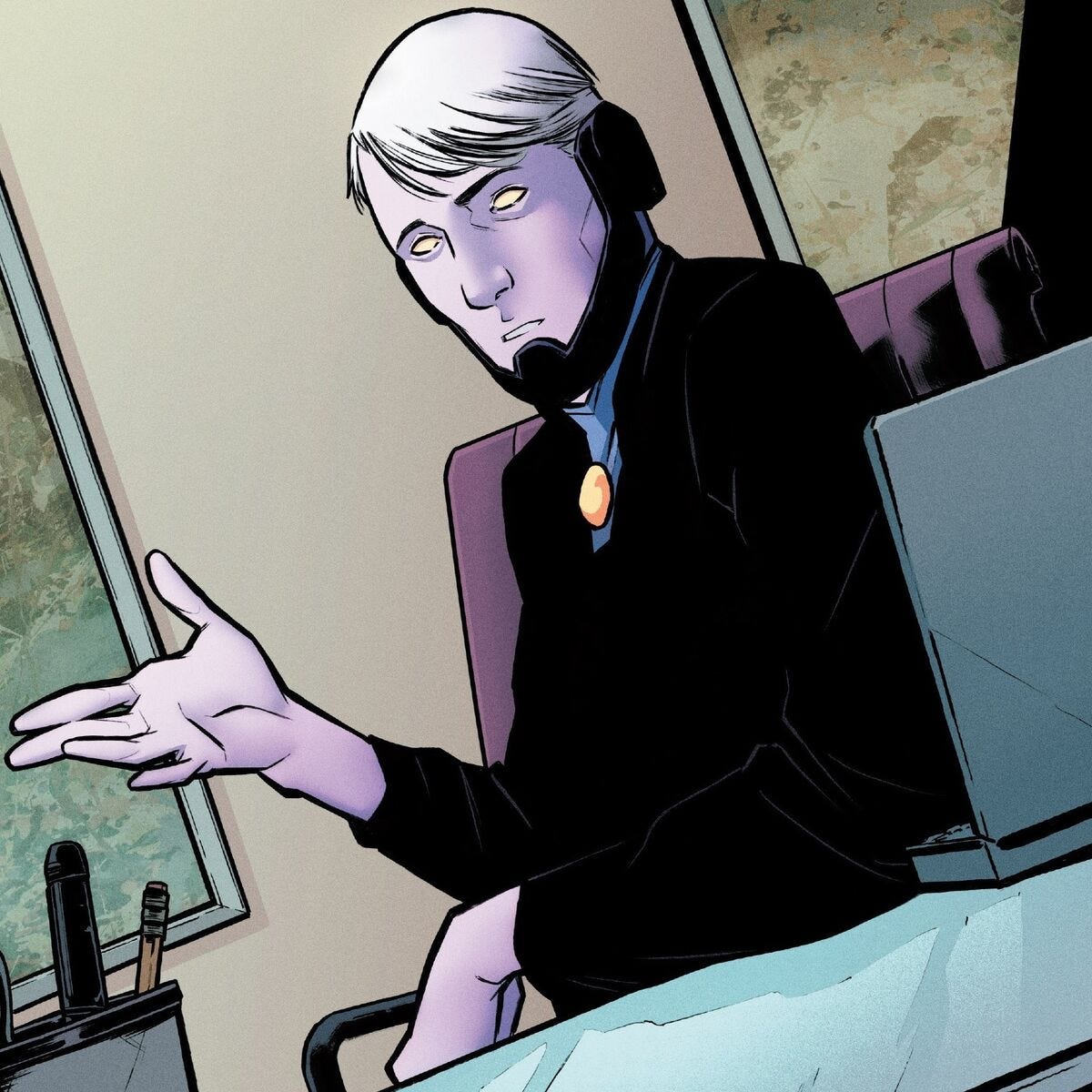
Now, there are two version of the Power Broker in Marvel lore, and the second one is less-defined, making it a little more malleable: this is where a writer with some long-distance vision could establish the Serpent Society, which is the villain in the upcoming Brave New World movie. Pick some powerful figure from that group and have them fund/organize the Flag-Smashers in an attempt to destabilize this new Global Senate. Why? Well…
Morgenthau
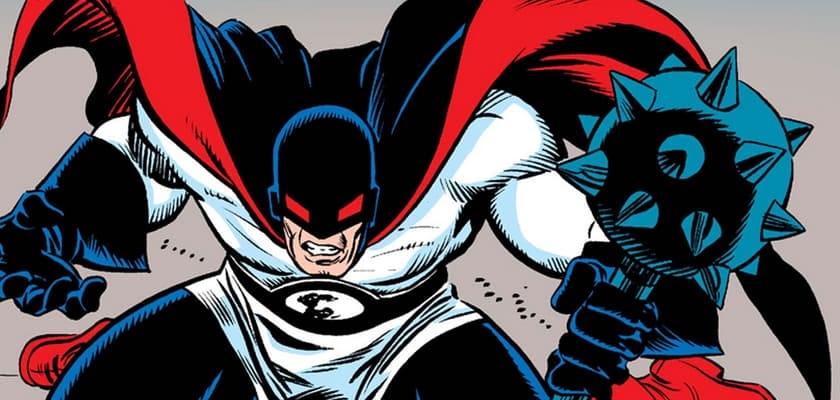
Say it with me: KARL Morgenthau. KARL. He’s a DUDE. “Oh, but his name sounds so German!” Yeah, and Captain America historically fought some Germans, it makes sense, stop crying. Give us the man from the comics, give him the moniker of Flag-Smasher, and for crying out loud, give him a better motivation besides “We’re hungry, give us free stuff.”
That’s the exact same problem that half the world is dealing with, the Smashers are just being arseholes about it. Their motivation should be understandable yet problematic. With a name like the Flag-Smashers, their goal should be to sweep the leg on weak governments as they stagger to form the Global Senate, destroying their ability to organize and assert power over the world.
Why?
Because they’re operating at the behest of The Power Broker. That entity ultimately wants power for itself, and it’ll operate in the shadows to get what it wants under false pretenses. If two super-soldiers (Steve and Bucky) could fortify the Avengers, then a dozen could make the Flag-Smashers formidable! Show their reach and their versatility by having them steal the data on Steve’s blood, synthesize the formula from Isaiah’s blood, and make a new formula that’s even better than both.
When they ultimately fail, we can then find out that they were manipulated—along with the Power Broker—by the Serpent Society, who used them for a test run against the new Avengers and their allies in the government. While the Avengers lineup is more solid, and they have a leader, and the shield is back in action, they also have a clearer view of what they’re up against. With that, we can head into Captain America: Brave New World, only this time, it gets to be the Falcon movie that Anthony Mackie never got.
Conclusion
In the end, the most dramatic changes are to the villain, but only to make it A) more coherent, B) more compelling, and C) more conducive to a meaningful sequel down the road. And Marvel is in dire need of meaningful sequels.
With the Infinity Saga out of the way, Marvel’s “villain problem” can become a more episodic thing, instead of an ongoing soap opera of movies and streaming shows. Give people an easy in and easy out, and you’ll broaden the accessibility of the audience.
But the one thing that they absolutely have to stop doing is using these productions as pulpits for whatever political and cultural cause du jour they’ve taken up. They have years of empirical evidence that doing this destroys their craft and their product. Stop it. Dare I say…
…do better.
Marvel thought it could rely on the old man [Disney]'s money, but they went too far. But you know it doesn't matter to me, anyway.