

2026 is America’s 250th birthyear. To celebrate, I’m highlighting 50+ significant American documents from our history. Find them all under the American Documents tab!
Subscribe to get these articles in your inbox. They’re free. Upgrade to paid and there will be additional perks, including essay subjects at your request.
Buckle up kids, this one gets wild.
The next American Document on my list was “Japanese Relocation.” I knew it happened in history but I had never read the law that made it so. I figured the language would say something like “Ha ha round up all them Japs and make them camp outside for two years because I’m FDR and I can do whatever TF I want, lmao racism.” To my absolute surprise, the word “Japanese” doesn’t appear in the article a single time. In fact it doesn’t mention any specific ethnic group, and there is a very good reason for this:
The Justice Department was fighting the E.O. inside the White House.
Here’s the full text of Executive Order 9066, if you haven’t read it. It’s pretty short. Scroll down to the transcript; the top half of the page is editorial.
The three key figures in the passage of this Order are FDR (President), Henry Stimson (SecWar), and Francis Biddle (AG, DOJ). Roosevelt and Stimson both directly and explicitly wanted to round up all of the Japanese-Americans and herd them into internment camps under the auspices of national security, and between the racial striations of the time and the desire to prevent anything like another Japanese sneak attack (Pearl Harbor was only two months behind them), the public would go along with the effort.
The problem for them was Biddle, who would challenge any E.O. with racial language in it. He was “forward-thinking” in this regard, and even though there was no legal mechanism for foreign-born Japanese to naturalize and become citizens (such were the immigration laws of the day) he didn’t want to give the President power to just target people based on race.
Side note: while the Allies were at war with the Axis powers, and that included Germany and Italy along with Japan, you may often hear complaints that the U.S. didn’t shove German-Americans or Italian-Americans into internment camps because they were white-passing. Let me remind you that this was 1940s America and pretty much everyone was born with a Master’s Degree in Racial NoticingTM. In my opinion, this was more of a matter of logistics than racism. There were tens of thousands of Japanese-Americans but there were millions of German- and Italian-Americans.
The former category was isolated into tight-knit, geographically concentrated communities, while the latter were spread out coast-to-coast. Their pigmentation and food preferences may have skewed closer to Ye Olde Heritage American, but that wouldn’t have spared them the odd raised eyebrow in this time period. My grandfather, a Jersey Italian who was born here in 1924, served as an MP in WW2 over in Italy and he still got called a “wop” after the war. German-Americans would often Americanize their surnames if they could get away with it, especially if they had been here for generations. Ishimoto and Kagasaki didn’t have that option. I digress.
The fight behind-the-scenes for 9066 was pretty intense, and Roosevelt didn’t want to roll out an E.O. that would then be undercut by the Justice Department and overturned at SCOTUS. He didn’t have time for that and he didn’t want the optics. It would undermine his momentum and he wanted to get the military ball moving. That pesky Constitution still got in his way and he didn’t have the authority to override the AG. Replacing him was probably another bad look, and besides, a new one would have to be approved by Congress.
The workaround, then, was an expansion of SecWar Stimson’s authority under a very specific context: he could declare Military Zones over which he would have the authority to exclude people based on his own criteria, and if that criteria just so happened to be “Your blood is Japanese,” well, that was up to him. We’re at war, you see? Do you want the bad guys to win?
It just so happened that the Military Zone of Exclusion was uhhhhhh the entire West Coast, specifically the western halves of California, Oregon, and Washington. About 120,000 Japanese Americans—40,000 of whom had moved to the U.S. from Japan, and the other 80,000 were their U.S. citizen, second-generation children—were given removal orders to report to the internment camps. Some of those were in eastern California and others were further inland in the Mountain West, including as far as Wyoming. (Manzanar, California is one of the better-known camps—I went there on a family road trip when I was 16 but I don’t think I have pictures.)
You don’t need to have a wild imagination to guess that conditions in those camps sucked. Summers in the California desert were murder. Winters in the high plains of Wyoming were more so. The ones who lived through the entire internment (2 years—FDR rescinded it in 1944) went back to their homes which had, in many cases, been looted or vandalized in their absence. The fact that any of these people or their descendants ever voted for another Democrat is fascinating. Again, I digress.
This whole thing was done under the auspices of national security. Did the internment camps actual prevent sabotage or espionage by Japanese operators on U.S. soil? I don’t know. It’d be foolish to suggest it’s not possible. Maybe there’s something on that in a book that I haven’t read. I’m not so naïve as to think that FDR and Stimson weren’t trying to kill two birds with this move—showing Americans they were serious about the war effort, while also quelling the growth of an ethnic minority on the West Coast. Biddle did the right thing by challenging it, and he even regretted coming up short when he wrote his autobiography:
“The decision had been made by the president. It was, he said, a matter of military judgment. I did not think I should oppose it any further.”
“I was new to the Cabinet, and disinclined to insist on my view to an elder statesman whose wisdom and integrity I greatly respected.”
“Decisions were not made on the logic of events or on the weight of evidence, but on the racial prejudice that seemed to be influencing everyone.”
He “could probably have withstood the popular pressure without loss to the tenacity of his leadership—pressure of a highly vocative minority in the West.”
“I do not think [Roosevelt] was much concerned with the gravity or implications of this step. The Constitution has never greatly bothered any wartime president.”
“This mass evacuation illustrates the influence that a minority, uncurbed and substantially unopposed, can exercise. Through lack of independent courage and faith in American reality, a superb opportunity was lost by the government in failing to assert the human decencies for which we were fighting.”
—Commonly attributed to “In Brief Authority” by Francis Biddle, 1962.
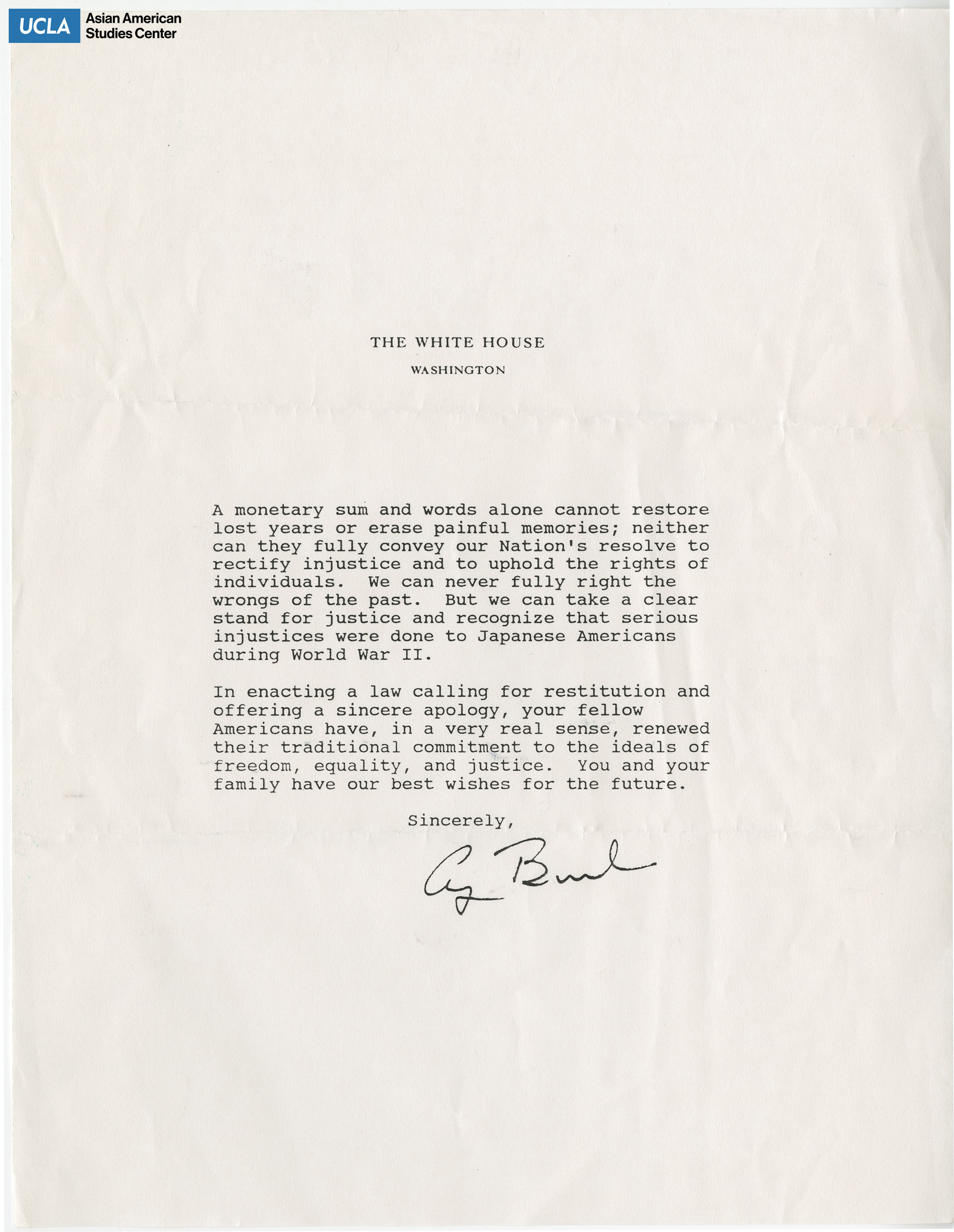
President Reagan issued a public apology to the interred Japanese-American citizens in 1988. As part of the Civil Liberties Act of that same year, survivors of the camps received 20,000 dollars, tax-free, in reparations. The payouts were mostly issued during H.W. Bush’s term, and some of them continued under President Clinton.
Overall, this episode of history is a valuable lesson in how tyrants exploit high emotions to do things they oughtn’t. Worth remembering.
Visit Nauvoo Supply to order HEARTLANDERS, the most American novel I’ve ever written. It’s like if National Treasure happened during Fallout with G.I. Joes.
My Amazon page has my other books, including FOSSIL FORCE for young boys and Engines of Liberty for all ages.
I post several times per week on YouTube.
Subscribe here for more book reviews and for articles on what I continue to learn as I read.