

Last summer I read AMERICAN PROMETHEUS, a book by two communists about J. Robert Oppenheimer. Since the movie was coming out and I didn’t have plans to see it, I figured I would read the book instead.
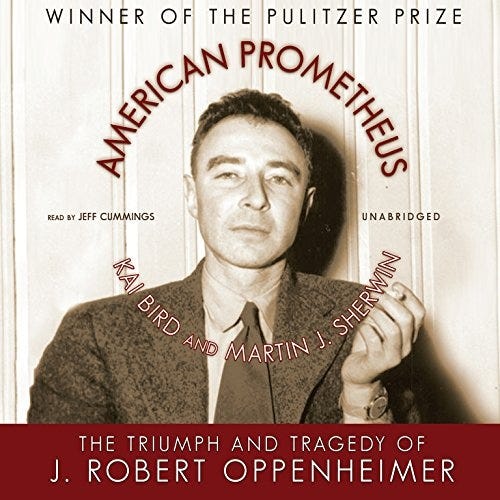
My overall impression of it was positive, although you have to understand the biases of the writers in order to appreciate their tack, and that their work in the latter half of the book is more apologetic than purely biographical. They were very concerned with making the reader understand that Oppenheimer was not himself a card-carrying member of the Communist Party (true), while downplaying the fact that he was married to a communist, who was widowed by a communist, and also he was cheating on her with a communist, and his friends were communists, and it’s just communists all the way down (also true).
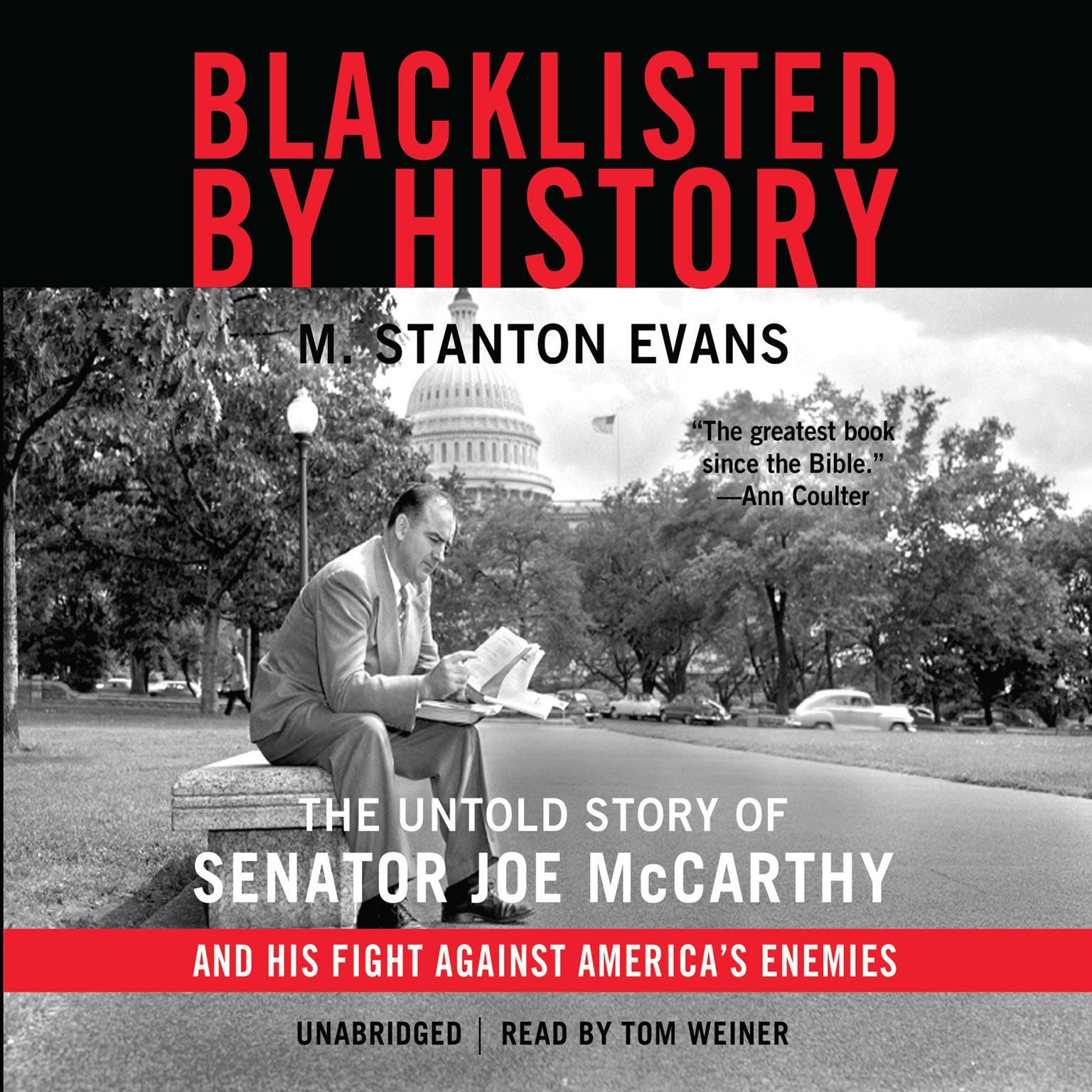
AMERICAN PROMETHEUS is one of those double-billing books that I recommend side by side with BLACKLISTED BY HISTORY—a book that also heavily cites facts, often to its detriment as an easy-flowing narrative. (The text is full of transcripts and dates and makes for rather dry reading.) Nevertheless it’s a valuable book because it seeks to reclaim the truth about Joe McCarthy from the editorialization of popular history, namely that he was a zealous nutjob who saw communists in a piece of toast (face check false).
As I often say Senator McCarthy was right about the communists, he was just too late to stop them, because the infection had already spread wide enough to fight him and he was short on antibodies. Which is why public school textbooks paint him as an angry drunk who never actually found commies anywhere, why would you even ask, tut tut…
Anyway, all that aside, let’s talk about Oppenheimer, the 2023 Christopher Nolan flick starring Cillian Murphy, Emily Blunt, Matt Damon, and Robert Downey Jr, along with basically every other actor in Hollywood, because holy hell the cast is loaded in this beast.
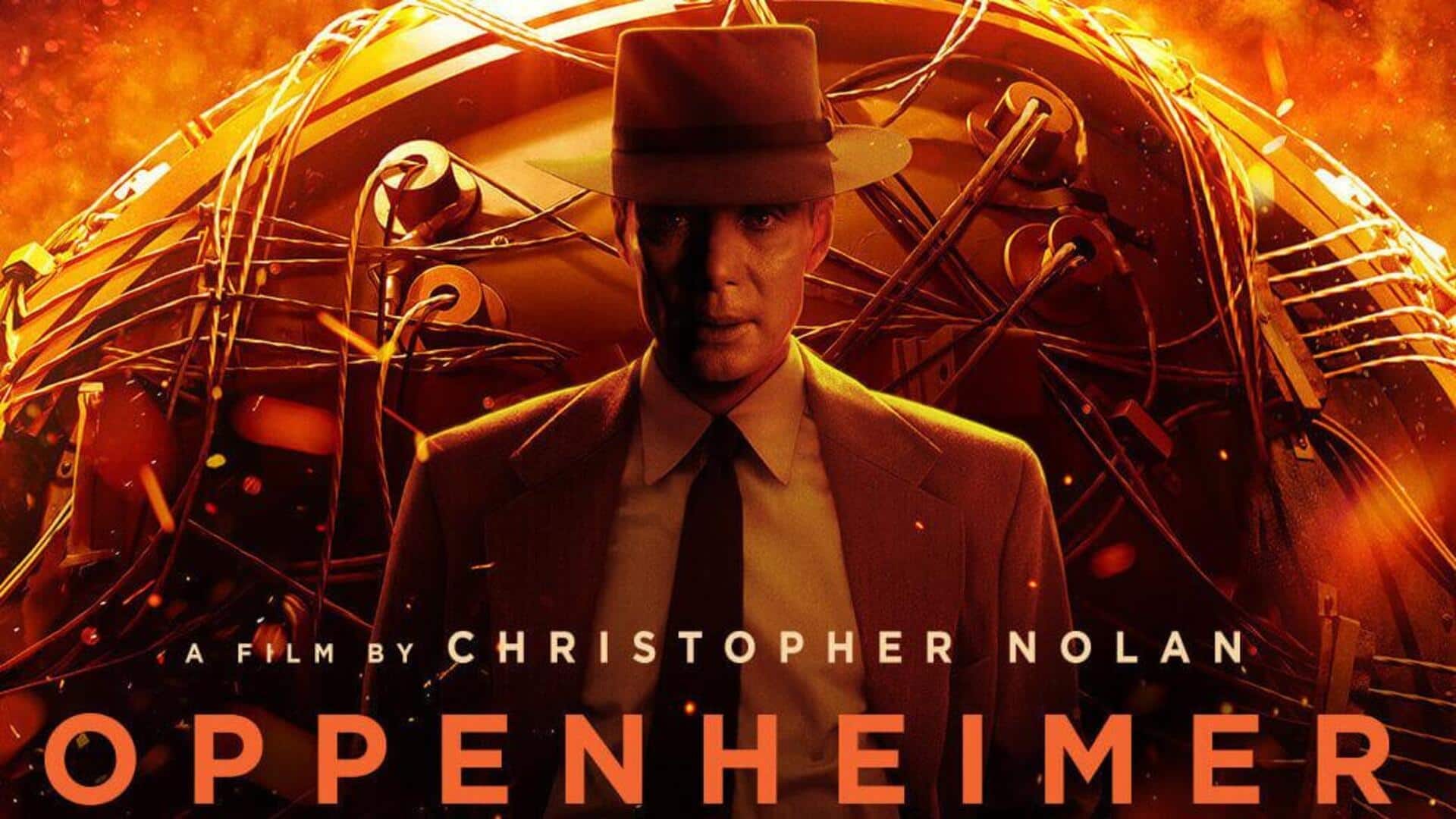
This isn’t the first time Nolan has adapted a book to screen (The Prestige) but it is the first time he’s done a biographical one. The narrative is partly about the building of the first atomic bomb, but in a larger sense it’s about the political and diplomatic consequences of such a thing, especially in the time in which it was undertaken. The Soviet Union—our ally against Hitler in WW2—was never supposed to have the bomb, but they got it in 1949, a mere 4 years after the successful test at Los Alamos, due in part to Klaus Fuchs secretly being a Soviet spy.
Naturally, Washington wanted to know how, and who was to blame. The way the film tells the story, Admiral Lewis Strauss decided to use the event to humiliate Oppenheimer as a way of paying back his own humiliation from years prior; Oppenheimer had testified against Strauss’ opposition to sending isotopes to Norway. Oppenheimer did so with humor, making Strauss look dumb, so in typical Washington fashion, this dude went nuts with revenge.
I can’t remember how the details of that process play out in the book compared to the movie. Nolan certainly punched up the script to make the viewer sympathetic to Oppenheimer, which is just good storytelling (he is your protagonist, after all). It wouldn’t surprise me if the facts were drier than all that.
At the end of the day, Oppenheimer didn’t have his security clearance revoked, the government just didn’t renew it. The way the film portrays this, you’re meant to see it as clever, malicious maneuvering of the government against Oppenheimer because he was friends with people that the big bad capitalists didn’t like.
I also seem to recall differently whether Oppenheimer advocated for dropping the bomb on Japan once Germany had surrendered, but I could be wrong on that. I don’t own a copy of the book so I can’t check. I will say that if the commies who love Oppenheimer really wanted me to admire him, they shouldn’t excuse his marital infidelity, which was a regular thing. (And I really didn’t need to see him banging Florence Pugh, that was a hard cut with no narrative value.)
On that note, I can’t see why this movie had to be R-rated at all. Interstellar, Dunkirk, and Tenet all had language in them, this one didn’t have to go to that extent, and the nudity/hard sex were similarly detrimental to the quality of the film. It would have been more successful if it were tonally similar to the rest of Nolan’s corpus of work.
As with all of Nolan’s movies, the technical/practical elements were superb, the visuals and sound engineering were fantastic, and the casting was phenomenal. He loves to recycle actors through different projects and he has plenty of alumni on call here, including Murphy himself, Matt Damon, Gary Oldman (briefly), and Kenneth Branagh. Then there were newcomers in small but significant parts, like Casey Affleck, Dane Dehaan, David Dastmalchian, Remy Malik, Matthew Modine, Alden Ehrenreich, Josh Hartnett, and Jason Clarke. Oh, and David Krumholtz.
Hartnett was a cool choice too, I feel like he disappeared for about twenty years but then came back better than ever, I liked the part he played.
Final note, I’m a sucker for snappy dialogue and the script here delivered that in spades. Even though Matt Damon was a heel to Oppenheimer’s babyface, he was quick on the draw with his lines, and knew which emotions to hammer into them.
Overall I’d give it a solid B+, teetering on the edge of an A-. I only started to notice the runtime in the last twenty minutes or so. Nolan continues to perform very well with unlikely subjects, and there’s a reason why I’m interested in whatever he puts out. See the movie, read the above books, tell me what you think.