

Okay! Now that we’re in chapter seven and we’ve discussed everything from the war of the gods to the creation of the world, let’s find out what the named subject of this book actually is! Behold…
THE SILMARILS!
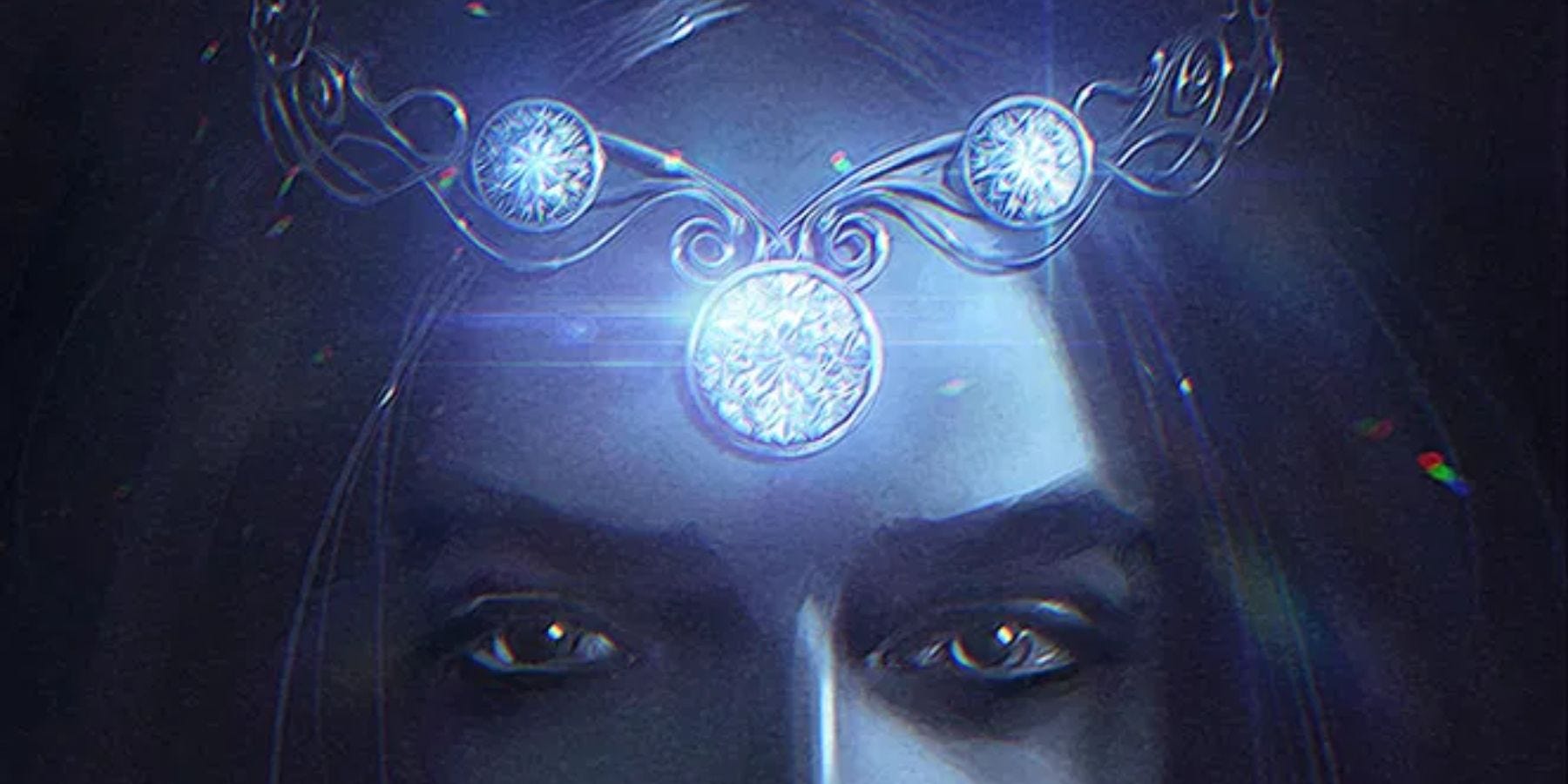
Chapter seven is called Of the Silmarils and the Unrest of the Noldor. The Silmarils are gems made by Fëanor to preserve the light of the Trees in the Blessed Realm. To remind you of their origins, the Trees are a combination of Yavanna’s powers and Varda’s blessing, after Melkor destroyed the lamps at the North and South Poles of Arda. Fëanor got some inkling that the new, undulating light from the trees (Telperion and Laurelin) was also vulnerable to Melkor, and that he needed to protect them forever.
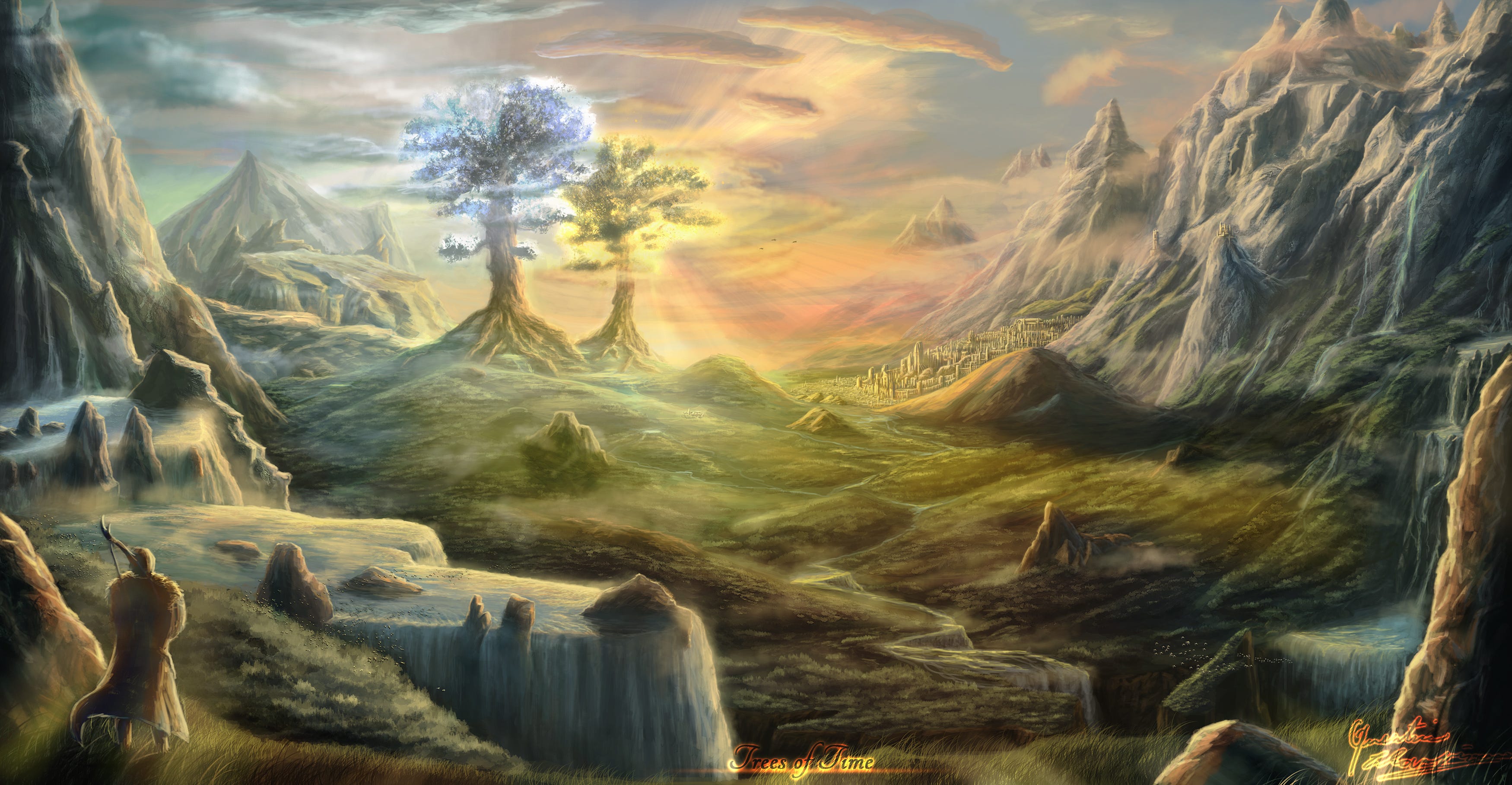
So it was that he, having maxed out on all of his character attributes and skills, set to work making gems that could harness that divine light in vessels that Melkor could never destroy. Tolkien writes:
Like the crystal of diamonds it appeared, and yet was more strong than adamant, so that no violence could mar it or break it… Yet that crystal was to the Silmarils but as is the body to the Children of Ilúvatar: the house of its inner fire…
And the inner fire of the Silmarils Fëanor made of the blended light of the Trees of Valinor, which lives in them yet, though the trees have long withered and shine no more.
-p. 69 of The Silmarillion, mass market paperback
In addition to being the works of Fëanor, the Silmarils were blessed by Varda (goddess of light) so that nobody could touch them who was impure or had ill intent, so these things are extra powerful—like Thor’s hammer, but in gem form, and very discerning.
“We Can’t Anymore, We Don’t Know How…”
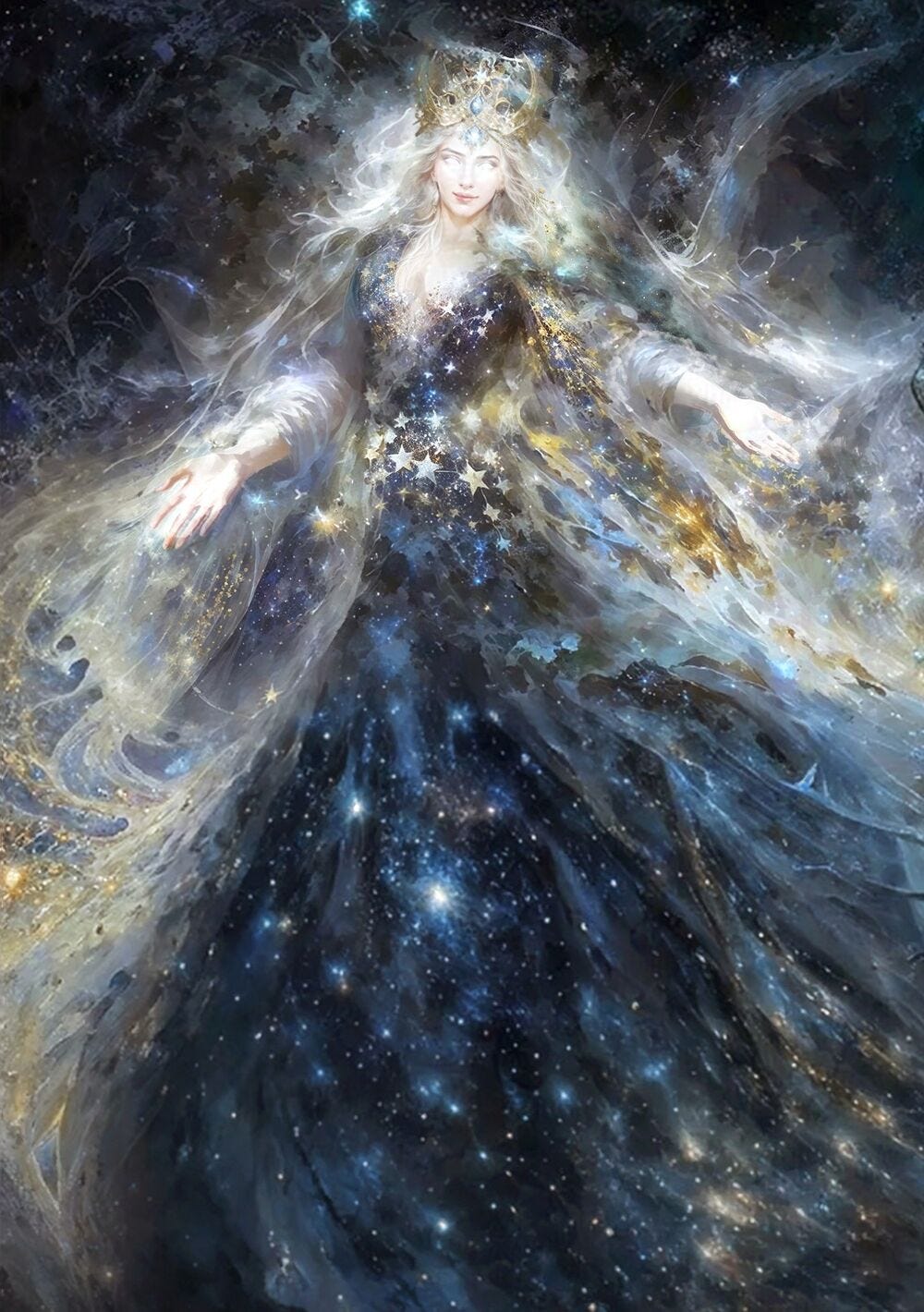
“Varda” by Sepide Donne
It’s not overly emphasized here, but in the coming chapters you’ll notice a pattern when it comes to certain unique creations like the Silmarils; they are the product of extra-powerful beings, and they are utterly one-of-a-kind, so much so that nobody can figure out how to replicate them and even the people who made them cannot make them again.
You might wonder how this can be, and Tolkien himself is sparse when it comes to the technical details, which I think works to the benefit of the story. After all, the book of Genesis doesn’t explain exactly how God made the Earth, only that He did, and the same quality echoes here in the origins of Tolkien’s world.
Fëanor made the Silmarils and he can’t make more, which means he can’t replace them if they’re lost. Yavanna made the Two Trees, and after they’re gone, she’ll also declare that she can’t make them again, nor could Varda bless them with that same light again, despite them literally being gods of botany and light. Later when Fëanor needs ships to cross the sea to Middle-earth he tries to take them from the Telerí (sea Elves), but their proud fleet is a similar thing, one that they could not create again if they were lost.
Why does this idea pop up so many times? I think it imbues these creations with a quality that makes them more than just inanimate objects; they’re the absolute unmatched apex of the creative talents of their maker, on par with a child. After you’ve given birth to a firstborn you can never have another. You may have a second, a third, and more, but each is inimitably unique. These creative acts of the Noldor, the Vala, and the Telerí (among others) transcend the kinds of things that we mortals might make, no matter how extensive our talents in any field. If they can be mass-produced, they lose their value, and cannot be revered the same as something that can never be duplicated.
“I Want That.”
Melkor hasn’t changed at all, it’s almost like prison makes you more racist whether you’re from a low tax bracket or you’re an original Ainu. He hates the Elves and he lusts for the Silmarils. Immediately he starts scheming for a way to have them. He’s clever and patient, taking his time in sowing discord between the Elves and the Valar, and they’ll both come to regret not being more wary of him.
The main driver of Melkor’s tactic here is the coming of Man to Arda; the Elves don’t know it yet but the Valar do, so Melkor steers the Elves into being upset about the withheld knowledge. I mean, speaking of racism, this starts to really bug the Noldor, who are given to pride, and none more than Fëanor.
Speaking of Fëanor, he likes to flaunt the Silmarils. He’s got a crown that he wears with all three of them on his forehead, and he just walks around with them at parties and feasts, reminding everyone that he’s better than they are, and check out this cool thing he made. This is just more fuel for Melkor’s jealousy. While he had every right to boast of the gems themselves, “he seldom remembered now that the light within them was not his own.” (p. 71).
How about we make…weapons?
The slow burn of enmity and pride has driven the Noldor to stop making beautiful things and start making swords and armor, just in case they…you know…might want to…you know…use them sometime. Great idea!
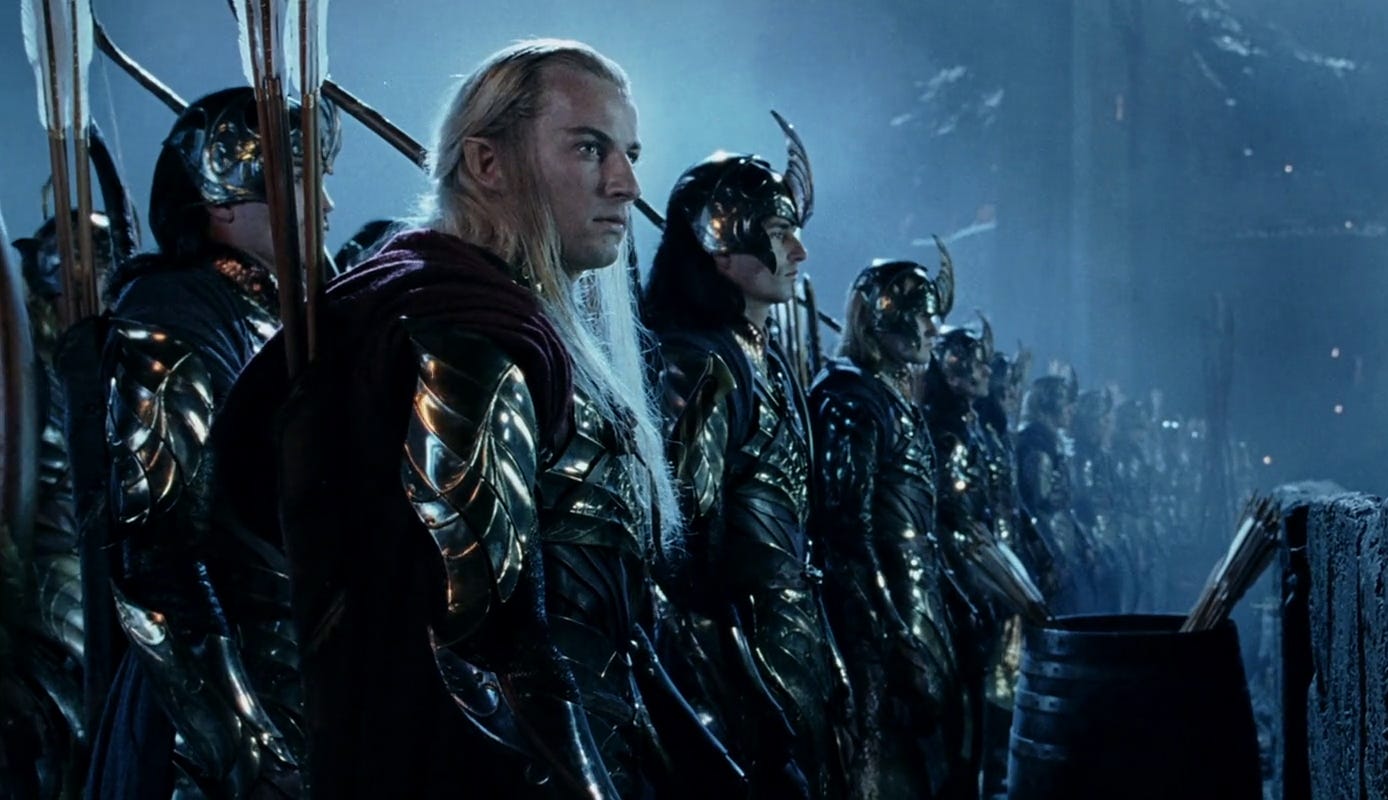
It all comes to a head when Fëanor catches his half-brother Fingolfin talking to their father Finwë about the local beef, and he draws his sword in anger, threatening his own flesh and accusing them of scheming against him. The Valar are made aware of this and since they still haven’t picked up on Melkor’s actions being the cause, they think it’s Fëanor who’s been pissing everyone off, and now everyone hates everyone, and they’re armed, and this whole thing is about to become an episode of Jerry Springer.
Fortunately before the entire debacle can start claiming lives, the Vala figure out who was truly behind it all, and Tulkas immediately gets up to find Melkor and give him yet another super-wedgie. (I literally laughed out loud when I imagined Tulkas being like “THIS AGAIN?!” and heading off to fight.)
Still, Manwë and the others hold Fëanor responsible for his own role in the contention and they banish him from Valinor for twelve years. He takes his seven sons and the Silmarils with him to an adjacent kingdom and his father Finwë goes with him voluntarily. This is important for later.
In closing, Melkor leaves Valinor, escaping his latest beating from Tulkas, but his absence isn’t enough to undo the damage he did. Just as the Elves learned different crafts and talents from the other Valar, they picked up malice and envy and wicked pride from Melkor, and they took those things and ran with them. A thing once done is not easily undone, and there will be consequences in the years to come.