


Despite spending the last week listening to this book, I still struggle to get the entire title out in one go because it’s an absolute vomit-fest of otherwise disconnected terms that no human in the history of ever has ever tried to intertwine. The Kandy-Kolored Tangerine Flake Streamlined Baby will test your sanity with every attempt to remember the order of the words in its title. That said, there were some extremely good pieces in this collection.
This book came recommended as part of the “Make Graham Read Something” promotion, available exclusively to TMR’s paid subscribers. There are ten of you. Two have responded to the offer. The other eight can weigh in at any time. Shout-out to David who thought I would like this title; he was right.
Tom Wolfe was a traveling writer in the 1960s who specialized in exploring micro-cultures across America. I don’t know which magazines or newspapers published his articles, and I assume that some of them were multi-parters because of the length, but he must have enjoyed a broad audience in his his time; the copyright years are noted as 1962, 63, and 64, and they cover scenes from Vegas to New York. There are 22 articles in all, and by the time you get through them, you’ll realize how much our culture has changed in the last 60 years…but also how our concerns are largely the same, albeit on a different scale.
He opens up the collection with a look at Old Vegas, when it was transitioning from the hotspot for Hoover Dam workers to the glitzy sin stop that we know today. Having grown up in the Vegas Valley, I have some memories of the old skyline—I remember seeing the Stratosphere (“Stupak’s Stump”) coming together, the opening of the Excalibur, and each individual construction of Steve Wynn’s repetitive triskelion attractions (Mirage, Venetian, Bellagio…I might be getting them mixed up now.) The Luxor lit up for the first time in my early teens and it quickly became the southernmost anchor for the Strip, with each mega-resort’s profile stretching out in a distinct line from left-to-right. (I’m from Henderson, that’s the order from there.)
But Wolfe’s examination of Vegas predates all those gargantuan, over-the-top attractions; Vegas was still growing, with most of the casinos being attached to individually-owned hotels, and the real magnetic pull of the place was its neon lights and crafty signs—signs that now occupy their own piece of real estate as a museum to yesteryear. That was the skyline he saw, not the one I know from my childhood, which has already changed in my lifetime.
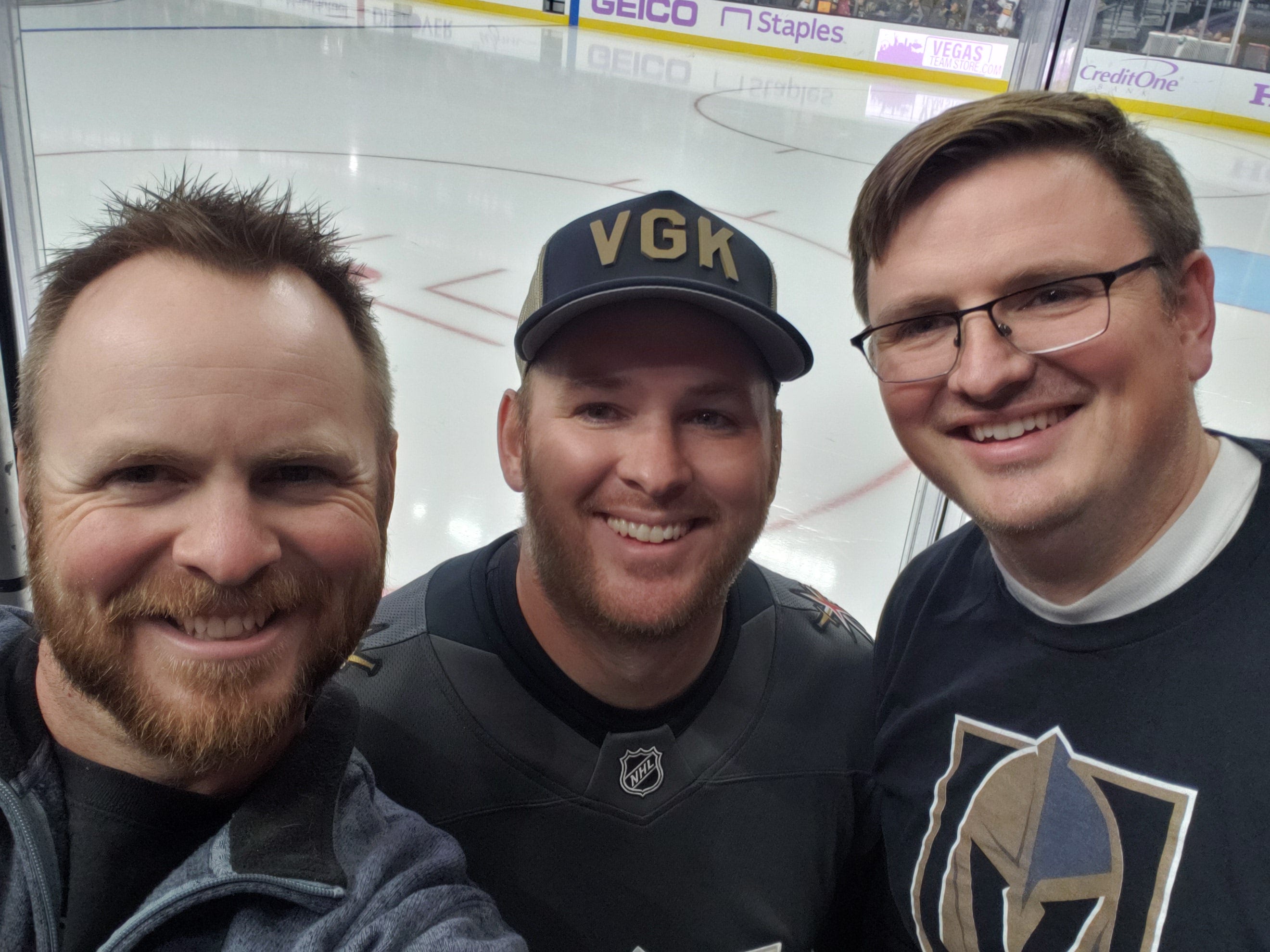
(Fun little aside: I have driven a flatbed truck inside T-Mobile Arena while it was under construction—the exact center of it, on the dirt, where the Vegas Golden Knights now play hockey. There was a lot going on and I don’t have a picture of it to my regret; when I attended my first game in October of 2019, it was my second time inside that place. I digress.)
In a lot of ways, Wolfe’s Vegas article captures the core theme of his articles, or at least a recurring one (until he gets to the New York pieces.) The postwar boom brought cash to the middle class, and they built their own culture monuments, which were largely a working-class idea of what “fancy” was. Vegas became the American Versailles, a comparison that makes perfect sense if you know about America and Versailles.
From there he delves into the origins of such iconic American activities as demolition derbies, stock car racing, moonshine running, and other bareknuckle motorsports that concern themselves much more with spectacle than with precision. (Very American.) The 60s was a hell of a time to invent the demo derby…that should have come around in the 80s, those cars were all garbage. What a waste of beautiful, irreplaceable steel…yet Wolfe’s history lesson and artful editorialization make the whole thing worth reading.
His observations on the music scene probably had the most to offer to contemporary parents who wonder at the inane popularity of livestreamers and worry about oversaturation on the Internet. Turns out these were similar concerns among parents in the 60s, when disc jockeys had a disproportionate influence over teens, and young people were always tuned in to their transistor radios. He covered Beatle-mania, and how a stateside radio host ingratiated himself among England’s most famous quartet, thus becoming an unofficial fifth member—and a short time later he covered the surging popularity of the Rolling Stones who, by fashion and genre, were the complete opposite of the Beatles.
Again I’ll point out ways in which the 60s are similar to our day, namely that when a musical sensation bucks fashion trends and gains significant favor among young female listeners, young male listeners will adamantly assert that said musical sensation is a bunch of fags; we said it about the Backstreet Boys as our fathers said it about Mick Jagger. War never changes.
When Wolfe segues into nationwide phenoms, he starts to examine how the cashed-up middle class seeks recognition and elevation while still retaining its roots at the ground level; they liked knowing that they were working-class yet they sought after the social sophistication of actors with aura, like Cary Grant, or athletes who carried the aspirations of an entire ethnicity on their backs, like Cassius Clay (before he became Muhammed Ali.) There seemed to be an unhealthy fixation by the middle class on either lifting themselves up to glam-and-glitz status, or bringing the A-listers down to their level, and this is where celebrity gossip magazines started to do the heavy lifting. Grocery checkstand tabloids got their start here—writers would gossip or even make stuff up to move copies and earn a buck, and the people would eat it up as if their opinions of celebrities mattered at all.
The value of a book like this is that it shows us our time is only unique in its technology and social norms; human behavior largely is what it has always been, and even sixty years ago people were responding to new stimuli in unexpected (and self-serving) ways.
I’ll spare you an overwrought summary of the New York chapters, other than to say that the “Nanny Mafia” was an unknown thing to me, if entirely credible, and Wolfe’s description of the dating scene for mid-twenties divorced single moms is much closer to the nationwide norm now. (The sexual revolution and its consequences…) Wolfe’s choice to open the compilation with Vegas as the “low high culture” and close with New York as the “actual high culture” provided a strong contrast in two degrees of American haute couture, both coming from money, but one was the new money and the other is descended from legacies and trust funds. In between, you get a glimpse into different pockets of America and the things they build when they get the time and space to do so.
If I were going to assess the overall value of this book to me as a reader, I’d say it reveals (or amplifies things I already knew) about what we as a people prioritize when we can otherwise “get away with it.” That’s not a condemnation, just an observation, and to anyone with an interest in understanding what drives history—or for writers, how to build the culture of a world—you could do a lot worse than Kandy-Kolored…
As for the title, well, that’s a nickname from one of the articles for a custom-made car. But I’ve divulged enough about it already; I could spin my own couple-dozen pieces out of the contents of Wolfe’s writing here, and I’d only end up diluting the points he was making throughout it. If for nothing else, read it for chapter 8, “The Last American Hero.” It’s one of the longer (if not the longest) chapters in the book, and Wolfe successfully connects moonshine runner culture to an elevated Medal of Honor recipient count from World War 2.
Special thanks to David for recommending this one. It was an edifying read and I’m sure I’ll go through it again.
If you want me to give a book the essay treatment, become a paid subscriber. Thanks guys!
Drive safe, see you out there.
The Golden Knights- part of Las Vegas' efforts to conquer team sports....