

Chapter twelve is called “Of Men.”
It’s Raining…Them
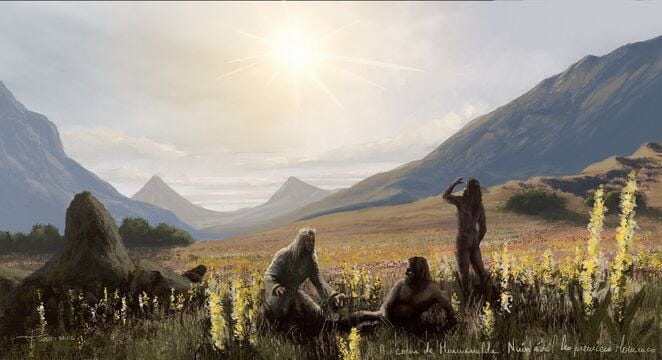
Tolkien has mentioned the race of Men in his writings prior to this chapter, but this is their first showing with any major role in events. He refers to them as the Younger Children of Ilúvatar because the Elves are the Firstborn. Men appeared initially in a place called Hildórien, east in Middle-earth. They have a particular preference for the sun and sunlight, and thus they follow the sun across the sky.
However, because this isn’t our world, and the Sun is actually a leaf from a tree-lamp blessed by the Valar, flown around in a chariot by a Maia, it doesn’t always move in the direction we’re accustomed to.
“…but the first Sun arose in the West, and the opening eyes of Men were turned towards it, and their feet as they wandered over the Earth for the most part strayed that way.”
I admit, this confuses me a little. Possibly the capitalizing of the West means an origin point on the ground, which is where the Sun and Moon were created by the Valar in the last chapter, and that was what Men saw from Middle-earth. It makes sense as opposed to thinking of it as the cardinal direction, which would be (lowercase) west. Kind of like how men are men but Men are the race of mankind, being men and women.
That brings us nicely to…
Tolkien’s Mixed Chronology
I’ll say this a lot throughout this series, but Tolkien didn’t write every piece of the Silmarillion at once, or necessarily to be read all as one book. That’s what makes this chapter-by-chapter digestion such a useful method for understanding it. The more you read it, the more you’ll see that a chapter here and there actually runs concurrent to a chapter somewhere else.
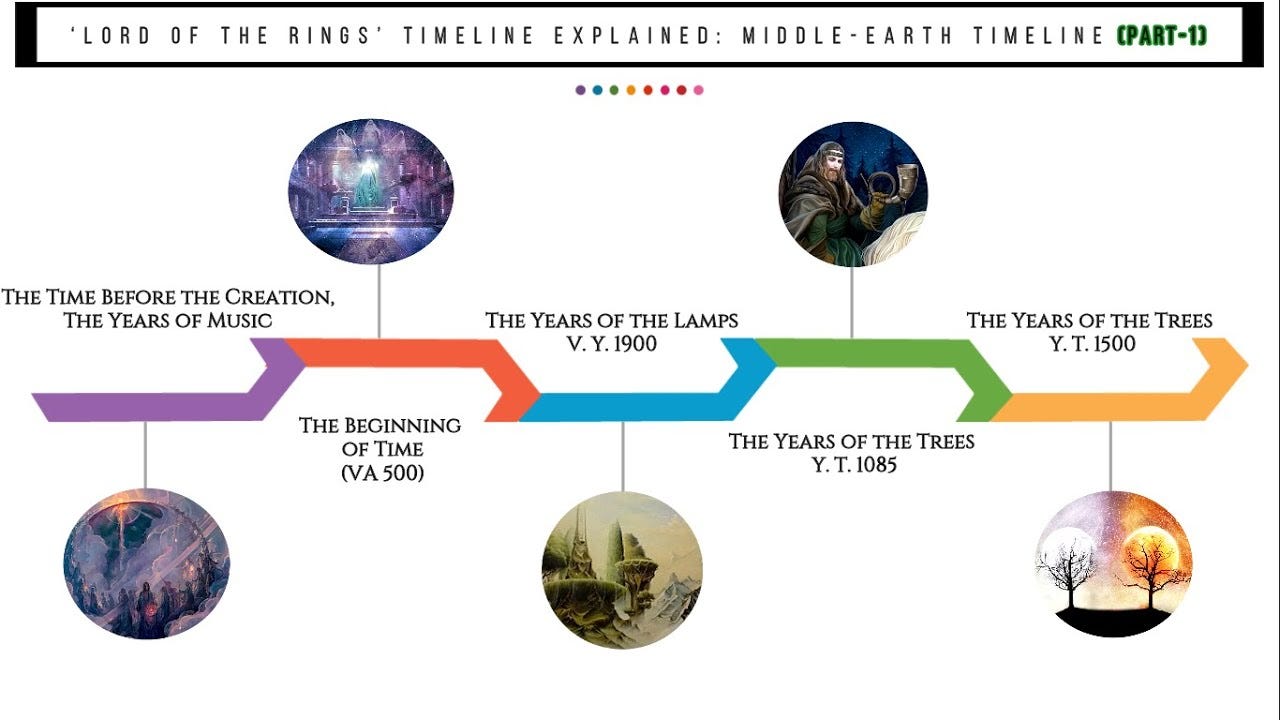
While we do see things that mark the passing of time (day and night begin, Melkor is imprisoned for “three ages,” etc.) we’re still not given hard years yet, at least as far as this book relates to later volumes like The Lord of the Rings. Marking a specific chronology would be no simpler than putting everything together on a map and saying “learn all of this in five minutes.” There are infographics online that you can find, made by readers of the larger legendarium, but this text alone doesn’t provide all those details yet.
Besides, the actual dates are less relevant than the actual places…which Tolkien will get to soon in another chapter. The point is, as you read this book be prepared to put puzzle pieces together as to when different things happened.
Of Gods and Men
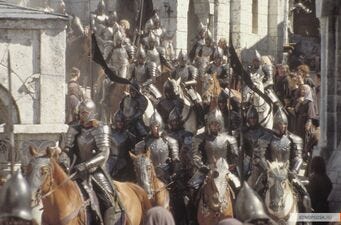
Unlike the Elves, Men didn’t enjoy regular congress with the Valar. None of the Valar came to meet them when they appeared in Hildórien, and Men didn’t seek them out. Ulmo, the Vala of water, did check in on them and tried to send them messages from time to time, but Men couldn’t understand what he was telling them, making it a frustrating experience. This is one of many differences between Men and Elves that will define their conflicted relationship in ages to come.
Despite this detachment, there was still one Vala in Middle-earth, gathering power in the north and preparing to move against the Elves and Men. Morgoth has not been idle, though he doesn’t engage in this chapter quite yet.
Familiar Faces Merit a Mention
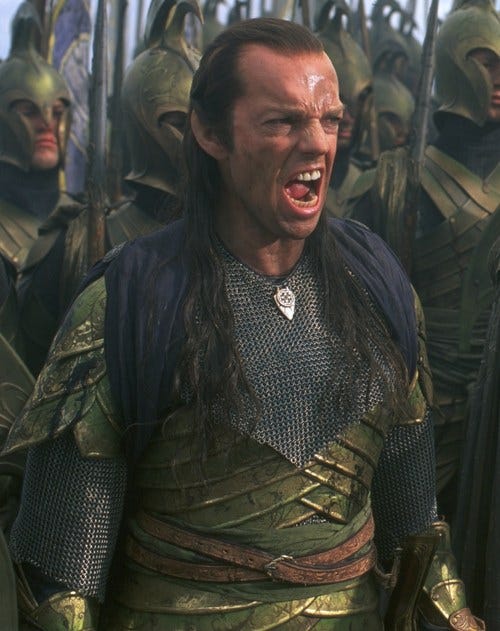
Two names will pop up here for the first time: Beren and Elrond. The former got a shout-out in the extended edition of The Fellowship of the Ring, when Aragorn (who is Beren’s descendent) was singing a song about him. I’ve read BEREN AND LUTHIEN before so I know his story and it’s pretty badass. It’s coming up in a future installment so I won’t spoil it here. As for Elrond, he’s named for the first time, and he’s the half-elven son of two parents who are themselves half-Elf each, so Men and Elves were already mixing by the end of the chapter.
The Value of Death
While Tolkien is listing all of the unique attributes of Man, perhaps none is more significant to the contrast with Elves than their own mortality. They fade fast and so they have to live fast, and live purposefully. They can’t afford the same patience and discretion that Elves can, whose lives are measured in millennia. This is one of those textual concepts that has real-world applicability for the reader: if life has an expiration date, what are you doing with yours that gives it meaning and value? Without death and without the connection to the Valar, what would motivate Men to achieve anything, to strive toward anything? Death and soft agnosticism are the driving factors that make them different from the Elves.
This is an affiliate link, so if you buy a copy of THE SILMARILLION through here, I’ll get a small commission.