

For most of the history of America’s executive branch, the presidency has followed a predictable model: a guy gets elected from Party A. He serves two terms. He gets beat by a guy from Party B. After Party B has their two terms, the VP from Party A last time around gets to be the next candidate.
To me, the outliers are more interesting than the vanilla torch-bearers—especially in an era where the last guy who lost isn’t usually the guy who should have been nominated to begin with. (Bob Dole, Al Gore, John Kerry, John McCain, Mitt Romney, Hillary Clinton, etc.)
One such outlier came around in the late 1800s, in the form of Grover Cleveland, America’s 22nd and 24th president. “A guy so nice, we elected him twice!” as the saying goes. His unconventional path to the presidency was a result of his personal character of honesty in a time laden with scandal. In fact, he went from being mayor of Buffalo to governor of New York to president of America in about a three-year span, one of the fastest such rises in history.
(Side note, this speed is surpassed only by Gerald Ford, who went from Speaker to President to Unemployed in about two years, a century after Cleveland.)
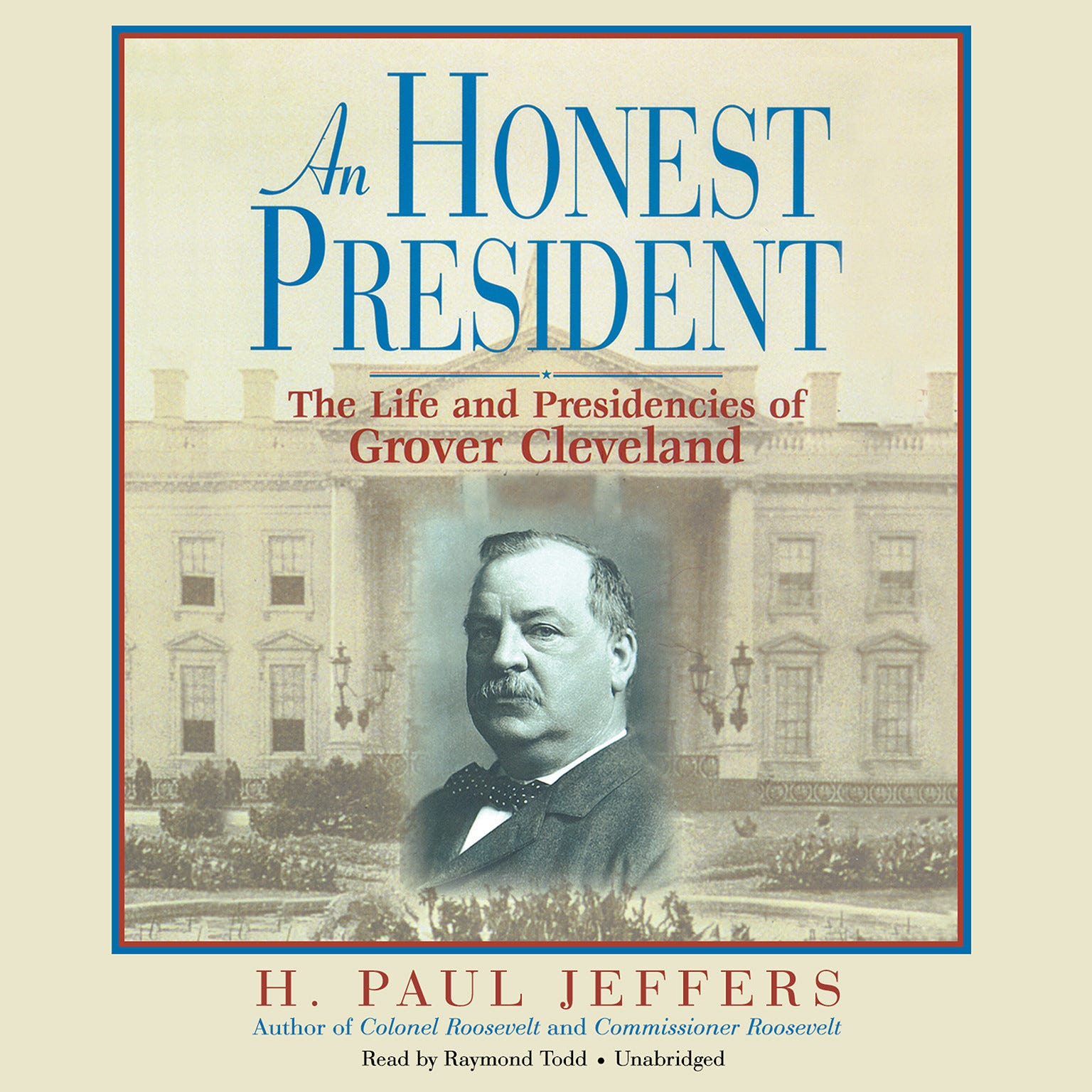
Since he’s the only one to do this (up until now), I thought it’d be interesting to read a biography of the man. This one, by Jeffers, is one of a few books that focuses on upstate New York politicos. He’s also written some tomes on Roosevelt. Here are the facts about Cleveland that make his career worth studying:
—He started out as an apprentice lawyer, and while he passed the bar, he didn’t have a university degree, and would later turn down multiple honorary degrees because he hadn’t earned them.
—He was appointed to be the Assistant District Attorney under an older, ailing DA, making him the de facto DA, and he was hella freaking good at it. On one day alone he had four different jury cases and he won them all.
—He was also a sheriff, a position nobody wanted, but the party machine came to him and asked him to run. His stipulation was that he’d do it if he got to pick who else was on the ticket for the party. Cleveland knew how and when to wield political power.
—In a time when New York was a staunch Republican state, he was the rare Democrat to win where his party wasn’t popular. He even carried Congressman Teddy’s district in his gubernatorial race when Teddy was well-known and well-loved. This is due to his reputation for honesty.
—He didn’t seek the presidency, but was brought to it, and won his first election handily. His only “scandal” came in the form of a child he’d fathered out of wedlock with an attractive but mentally unstable widow. When asked about this, he openly owned his actions, and it was discovered that he’d been providing financially for the child the whole time. He just didn’t want to marry the mother. (Shouldn’t have banged her, but that’s another question.)
—He was over 50 when he got married for the first time. His wife was just over 20. She was the daughter of his late best friend. The marriage took place…while he was president.
—He hated the fact that most of his time was taken up with people asking him for cushy jobs with the government (basically just asking for money in exchange for nothing.) As a result he spent a lot of time telling people to piss off, but in flowery language.
—His second presidential election was a loss, and he graciously accepted the result. This was at a time when the problems facing the country actually had substantive debates around them, and serious but practical solutions were proposed. For example, Party A would want to solve a hunger problem with beans, and Party B would want to solve it with corn.
(Nowadays Party A would pick sugar and Party B would pick sodomy. We used to be a proper nation.)
—From the moment he left office, he and his wife knew they’d be back, and he’d run again in 4 years. He was extremely popular and he took a teaching position at a university in the interim, keeping his ear to the ground on national politics.
—His second term wasn’t quite as popular as his first. The country headed into a recession as a result of complicated fiscal policies, in an era where the US was debating whether to go off the gold standard and implement silver as a secondary currency. He didn’t leave office as high-spirited as he’d gone in.
—The Baby Ruth candy bar is named for his daughter, Ruth, not the baseball player.
And that’s just a handful of the cool things I learned about him. Jeffers was realistic about Cleveland in the afterword to his book, saying that pretty much the only people who know anything about him now are historians and Jeopardy! contestants, or people reading these words.
It’s a good book, and worth your time. Hit it up. I got the audiobook from [unnamed corporate mega-platform that isn’t sponsoring me but should be], it’s in the member catalog.
Get back to work.